
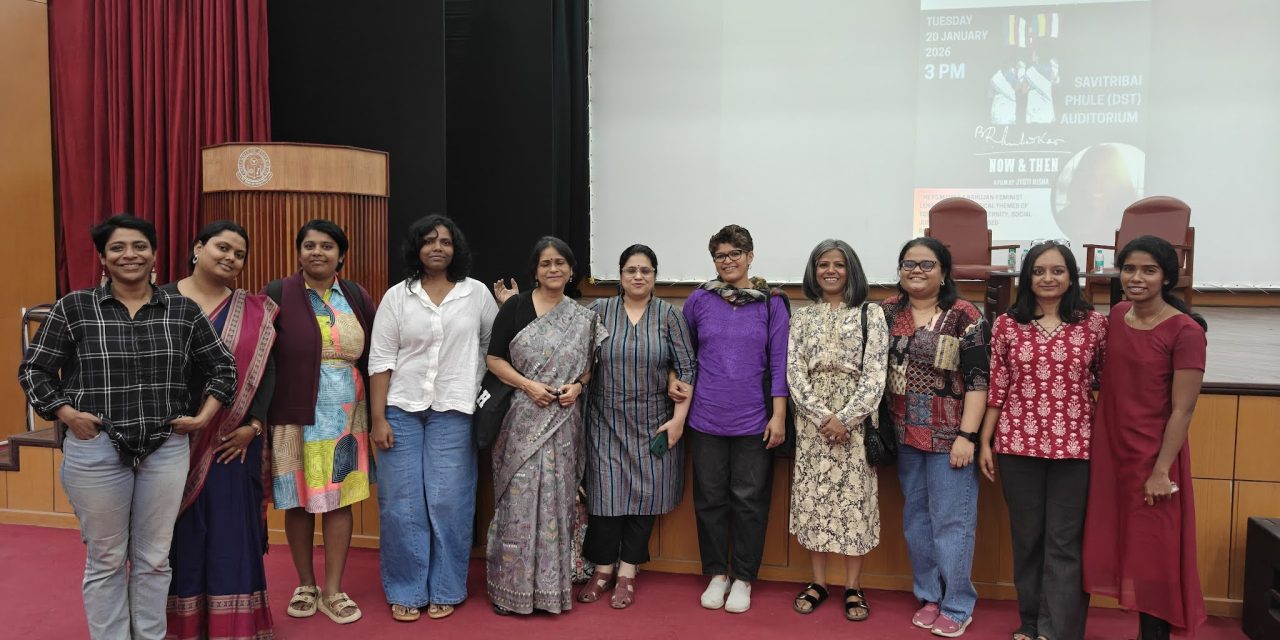
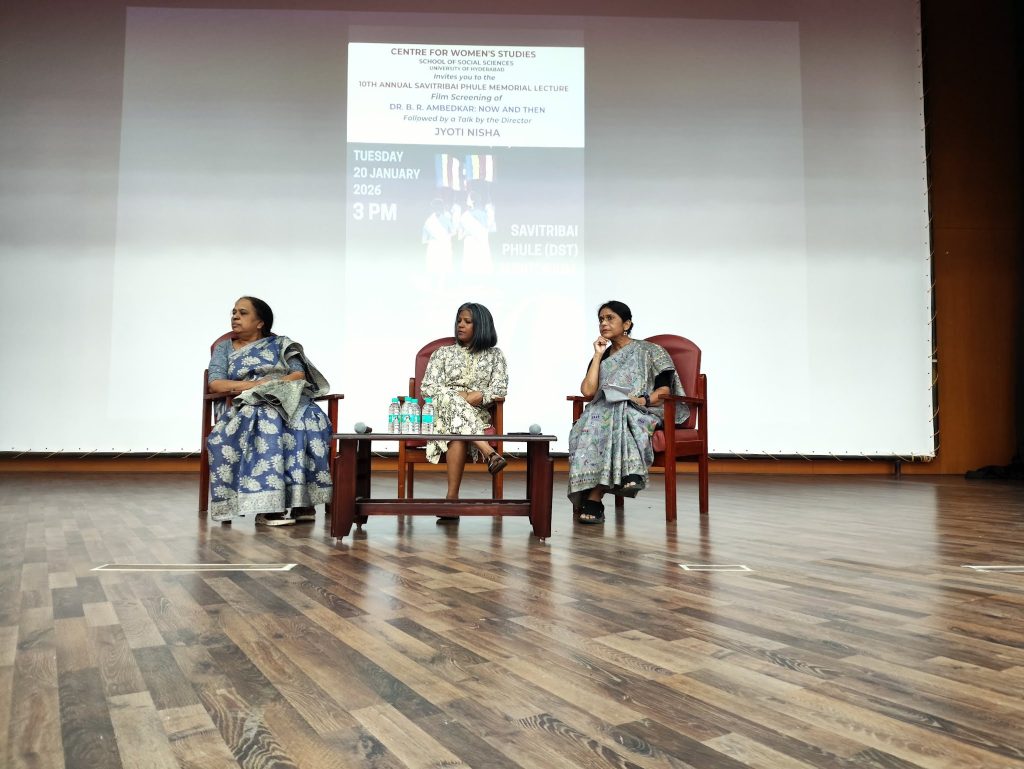
The Centre for Women’s Studies (CWS), University of Hyderabad, organized its 10th Annual Savitribai Phule Memorial Lecture on January 20, 2026, at the Savitribai Phule DST Auditorium. This Memorial Lecture is organized each year in commemoration of the birth anniversary of Savitribai Phule, inviting prominent scholars and activists working in the field of Women’s Studies.
The program began with a welcome address by Professor Deepa Sreenivas, Head, Centre for Women’s Studies, who welcomed everyone and briefly introduced the event. Professor Suneetha Rani, Dean of the School of Social Sciences, spoke about the annual memorial lecture, noting that the series is inspired by the values of Savitribai Phule. She highlighted that past guests—including distinguished academics, scholars, and activists like Professor S. Anandhi, Dr. Meera Velayudhan, Flavia Agnes, Dr. Rekha Raj, V. Geetha, Professor Sonajharia Minz, Dr. P. Sivakami, Dr. Akkai Padmashali, and Dr. Yashoda Thakore—have contributed to valuable discussions on gender and intersectionality.
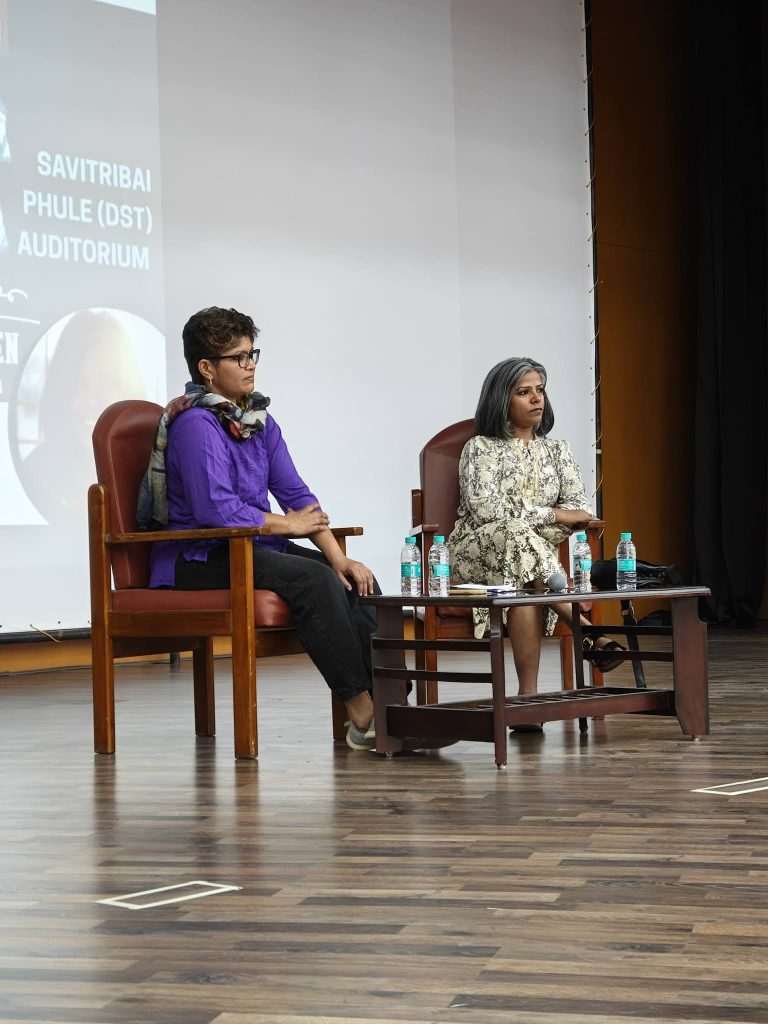
This year’s annual lecture involved a screening of the documentary Dr. B.R. Ambedkar: Now and Then (2023), followed by an interactive session with the director, Jyoti Nisha. The session was chaired by Professor Sowmya Dechamma from the Centre for Comparative Literature, University of Hyderabad. Ms. Abhiruchi Chatterjee, a research scholar at the CWS, introduced Jyoti Nisha.
Jyoti Nisha is a filmmaker, producer, academician, and writer renowned for pioneering the theory of Bahujan spectatorship, which delves into the consumption and spectatorship of popular cinema, dissecting its representation of caste, gender, and sexuality. Her work centres on creating a distinctive, oppositional socio-political Bahujan aesthetic deeply rooted in Bahujan lived experiences, culture, history, movements, and ideology. The documentary is a well-curated story of Bahujan struggles for self-respect over the past decade. From media representation and academia to grassroots movements, the documentary connects it all into an insightful narrative. It is powerful and bold, asserting the reality of the oppression and exclusion of Dalits and Bahujans in India while challenging it in the same breath. The documentary reflects that the theory of Bahujan spectatorship and the oppositional gaze are important tools to challenge upper-caste hegemony in the media. The event saw an enthusiastic audience comprising faculty, students, and members of the university community. During the interactive session, the director engaged with the audience, discussing the process of filmmaking and the importance of Bahujan voices in storytelling.
The event concluded with a vote of thanks by Ms. Debomita Mukherjee, a research scholar from the Centre for Women’s Studies.
(Contributed by Anjalee Kumari, Research Scholar, Centre for Women’s Studies)