
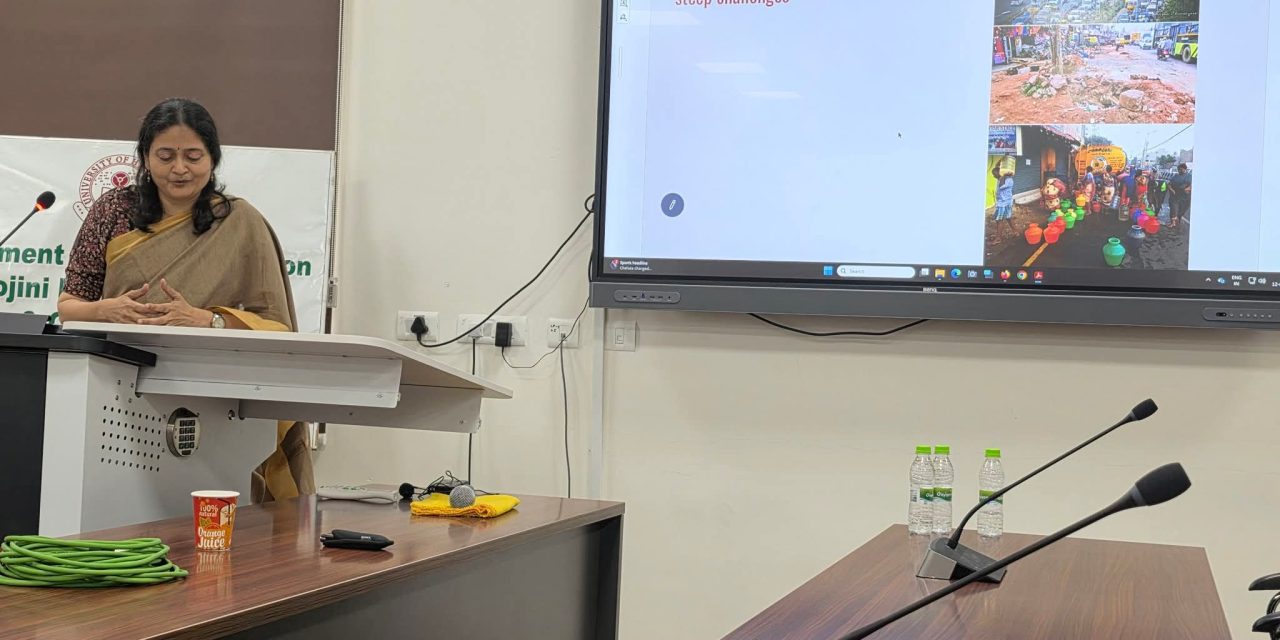
The Department of Communication, University of Hyderabad, organised the 18th CVS Sarma Memorial Lecture on 12 September 2025. Instituted in memory of the late Dr. C. V. S. Sarma, a respected faculty member, this lecture series has grown into an important platform for dialogue on pressing issues in media and communication, bringing together students, faculty, and thought leaders.
This year’s speaker was Meera K, Managing Trustee of the Oorvani Foundation and Co-founder of Citizen Matters. She delivered a thought-provoking lecture on the theme “Why Local Matters – How fixing the gap in the Local Media can strengthen Communities.”
Understanding Urban Realities
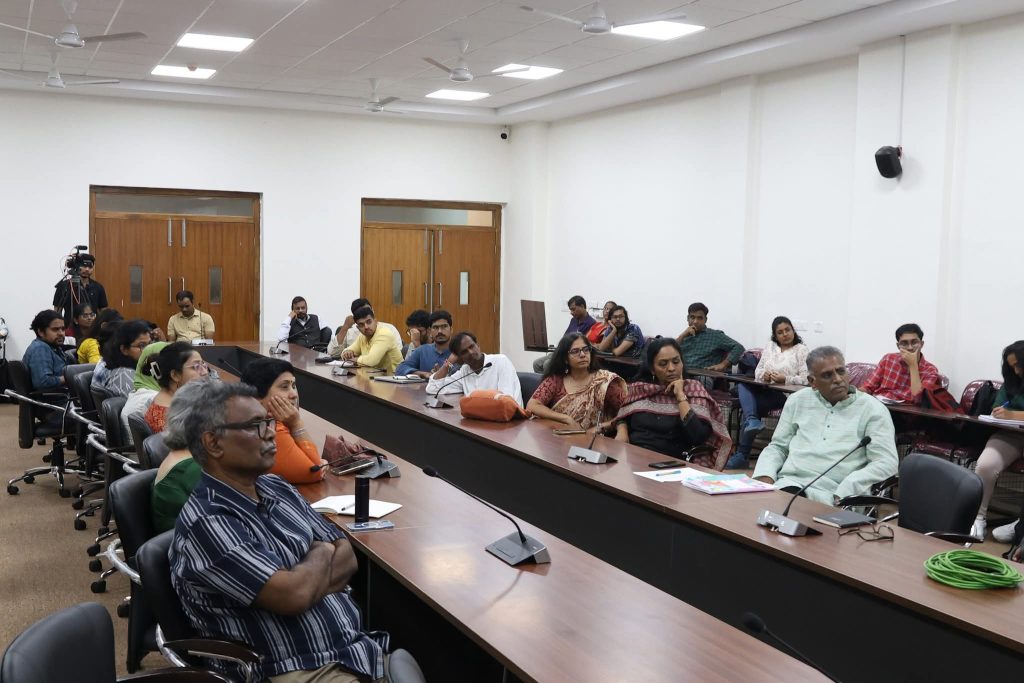
Opening her talk, Meera drew attention to the everyday struggles of Indian cities—traffic jams, pollution, and poor quality of living. These are not small inconveniences, she stressed, but issues that affect physical and mental health on a daily basis. With cities expanding faster than planning and infrastructure can keep pace, and the absence of effective local governments, accountability remains weak.
“Local does not mean small—our neighbourhoods are as big as towns, and our metros are the size of countries,” she observed, emphasizing that ownership and pride in neighbourhoods are essential to building stronger communities.
Local Media as Civic Infrastructure
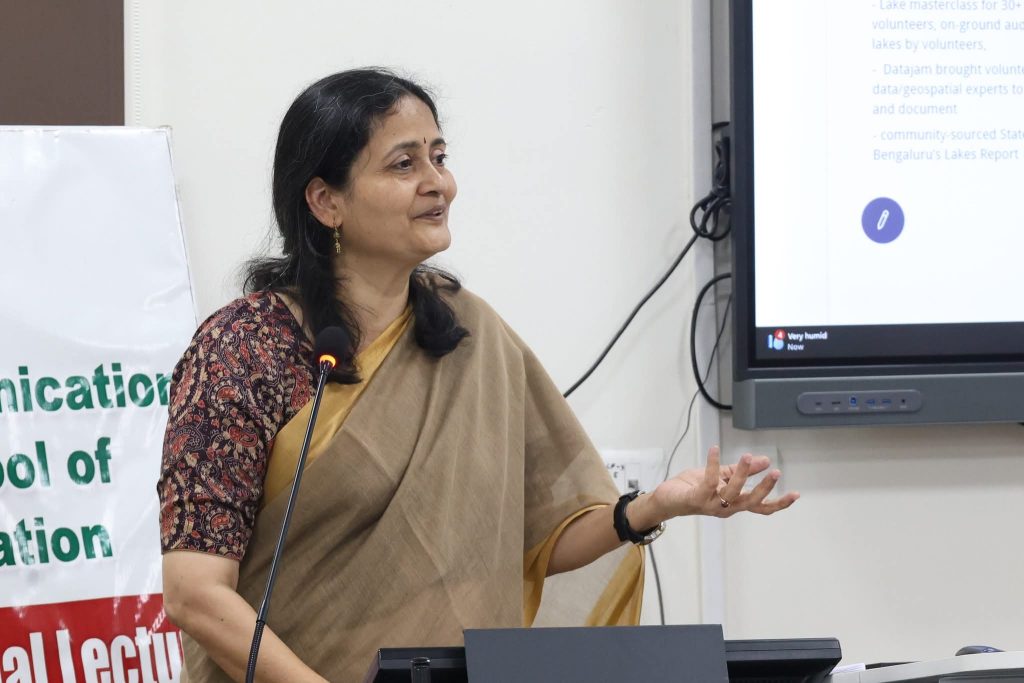
Describing local media as “critical civic infrastructure,” Meera underlined its role as more than just a news source. It should serve as a watchdog, a community bulletin, and a platform connecting citizens to civic concerns.
However, she pointed out that current coverage is often shallow, advertiser-driven, and biased towards elite interests. Peripheral areas and systemic issues are sidelined. “You can mop up leaks forever, or you can fix the tap. Likewise, pothole stories are endless, but civic media should focus on systemic change,” she remarked, drawing an apt metaphor.
The Larger Media Crisis
Moving beyond local concerns, Meera addressed the wider challenges faced by the media today. With traditional revenue models collapsing, local journalism struggles to survive. Audiences increasingly “scroll, not read,” trust in media is at historic lows, and fragmented social media filters erode shared facts. She called these distractions “weapons of mass distraction” that contribute to frustration and alienation.
She argued for stronger non-profit and philanthropic support to sustain civic journalism, ensuring that independent voices and community issues continue to find space in the public discourse.
Citizen Matters: A Model for Civic Journalism
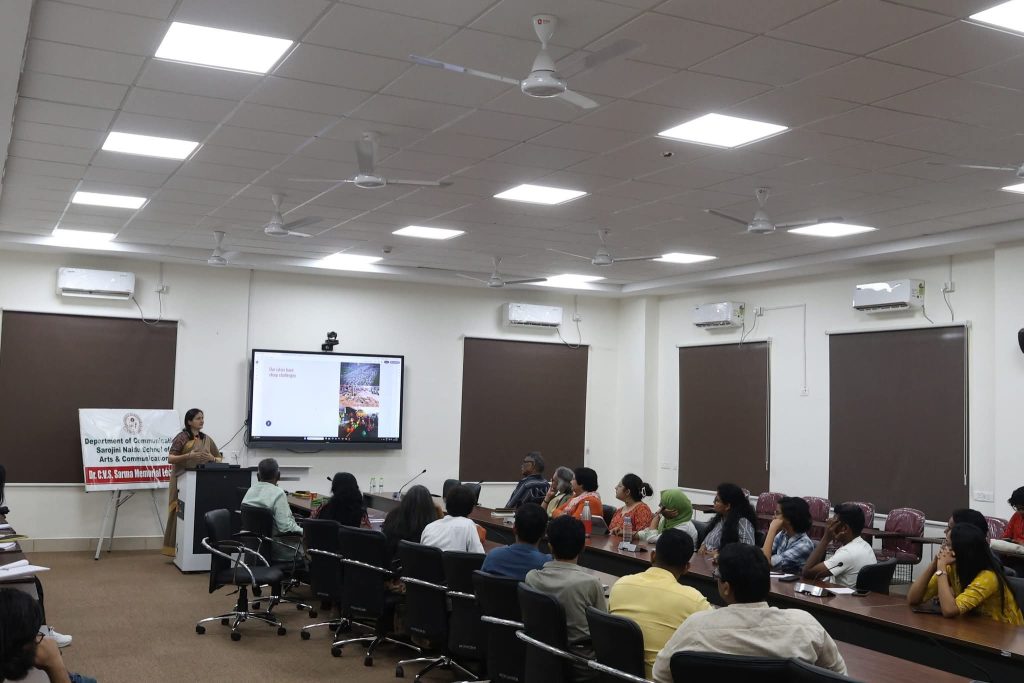
To illustrate possible solutions, Meera presented the model of Citizen Matters, which leverages citizen journalism to amplify ordinary voices. Through explainers, guides, and solution-oriented stories, the platform equips people not just with information, but also with tools to act.
She highlighted OpenCity, a civic-tech data platform developed to bring transparency to urban governance, and spoke about Oorvani Foundation’s capacity-building programmes for civic volunteers. “Local media isn’t just about reporting bad roads or petty crime—it is the community glue that builds collective identity and shared vision,” she said.
“When citizens come together and take ownership of their neighbourhoods, local problems become fixable,” she concluded.
Continuing the Legacy of Dr. C. V. S. Sarma
The CVS Sarma Memorial Lecture series has, over the past 18 years, become a distinguished tradition of the Department of Communication. It celebrates the life and legacy of Dr. Sarma by encouraging critical engagement with contemporary issues in media and communication.
Meera K’s lecture this year not only shed light on the challenges of sustaining local media but also offered a vision of how it can serve as the foundation for stronger, more resilient communities.
- By Mahi Sharma, MA Communication (Media Studies)