
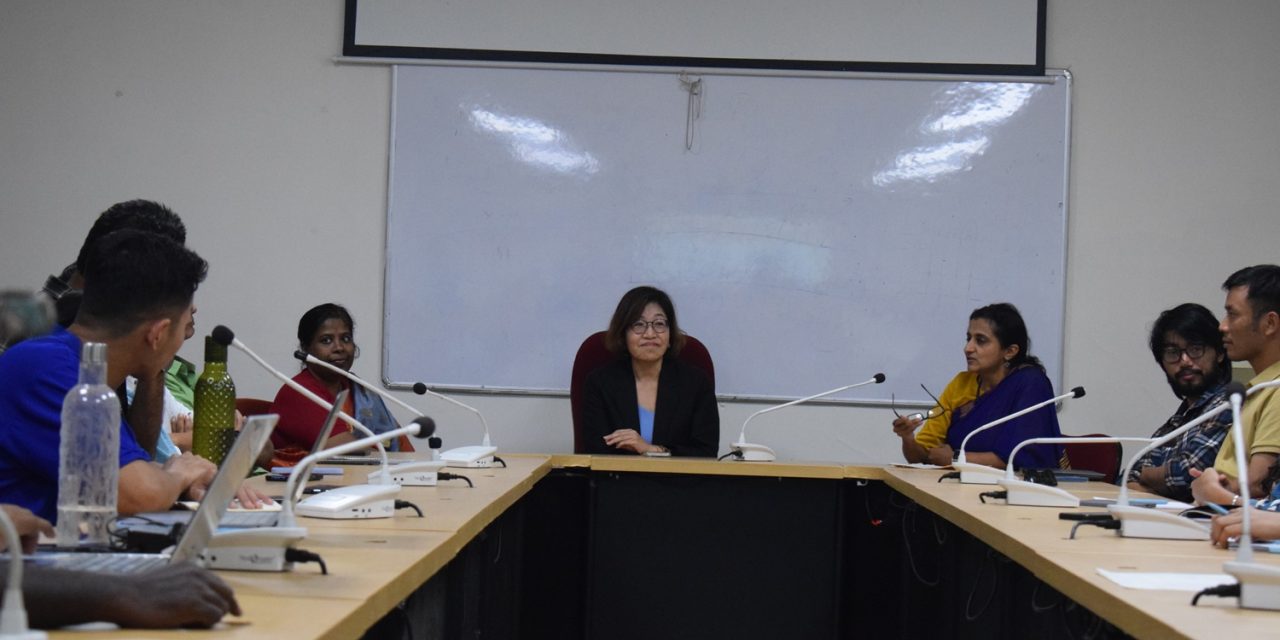
On 16 October, the Department of Political Science, School of Social Sciences, University of Hyderabad, organized a talk titled “Cross-Strait Relations, New Southbound Policy and India-Taiwan Relations” delivered by Kristy Hsu, Director, Taiwan ASEAN Studies Center, Chung-Hua Institution for Economic Research. Dr. Aparna Devare, a faculty member in the Department of Political Science, chaired the session. Dr. Bhim Subba, Assistant Professor, and Prof. K. K. Kailash, Head of the Department of Political Science, facilitated the talk.
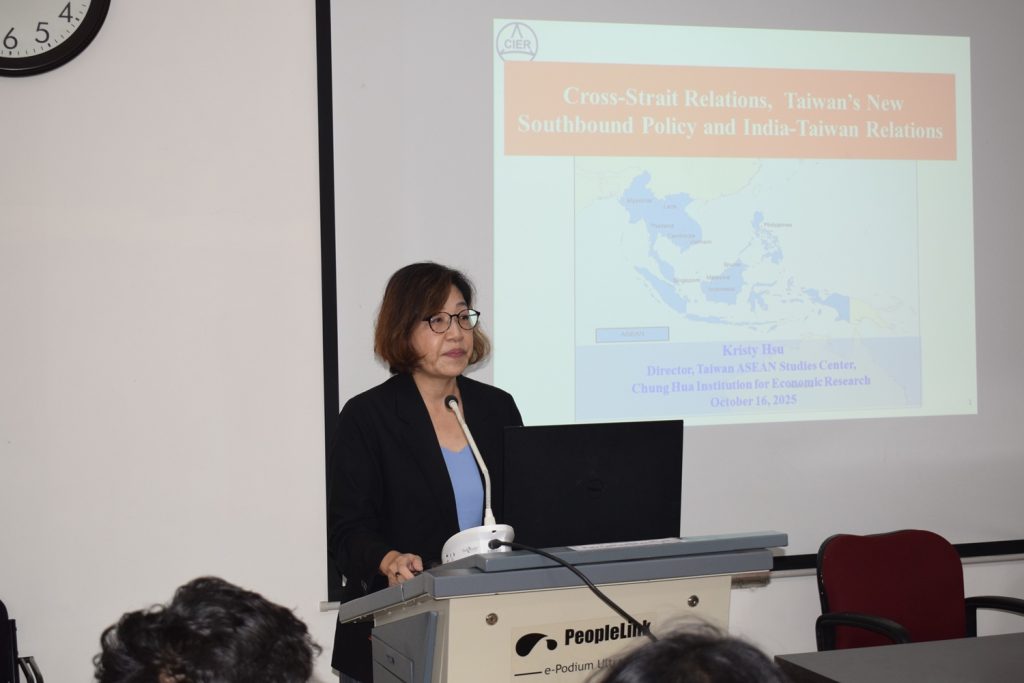
The talk was presented in three parts, with the first focusing on cross-strait relations between Mainland China and Taiwan. In this section, the speaker traced the evolution of relations between the People’s Republic of China (mainland China) and the Republic of China (Taiwan) to understand how international relations, especially with the United States of America, and domestic political developments have shaped Taiwan’s “new normal.” She also touched upon the limited recognition and participation of Taiwan in International forums, due to its lack of sovereign status, and the shift from a labour-intensive agrarian economy to a technology-based one, focused on the production of semiconductors.
In the second section, Hsu addressed the new Southbound Policy (NSP), which expands investment and collaboration from Southeast Asia to the entire South Asia region, including India. She located the policy as an effort to reduce export dependency on China and diversify investment in the Indo-Pacific. She also added that NSP aims to reinforce democracy and build resilience in Taiwan.
In the final section, she elaborated on the economic relations and bilateral trade between Taiwan and India, as well as how India is a priority region under the Southbound policy. Hsu also noted how the Indian government’s ‘Make in India’ policy encouraged Taiwanese investment from companies such as Foxconn, Delta, and PSMC. The collaboration also extends to the joint cultivation of human resources and talent-higher education, vocational training, and research and development. Hsu remarked that the cooperation benefits India by relocating it in the global supply chain.
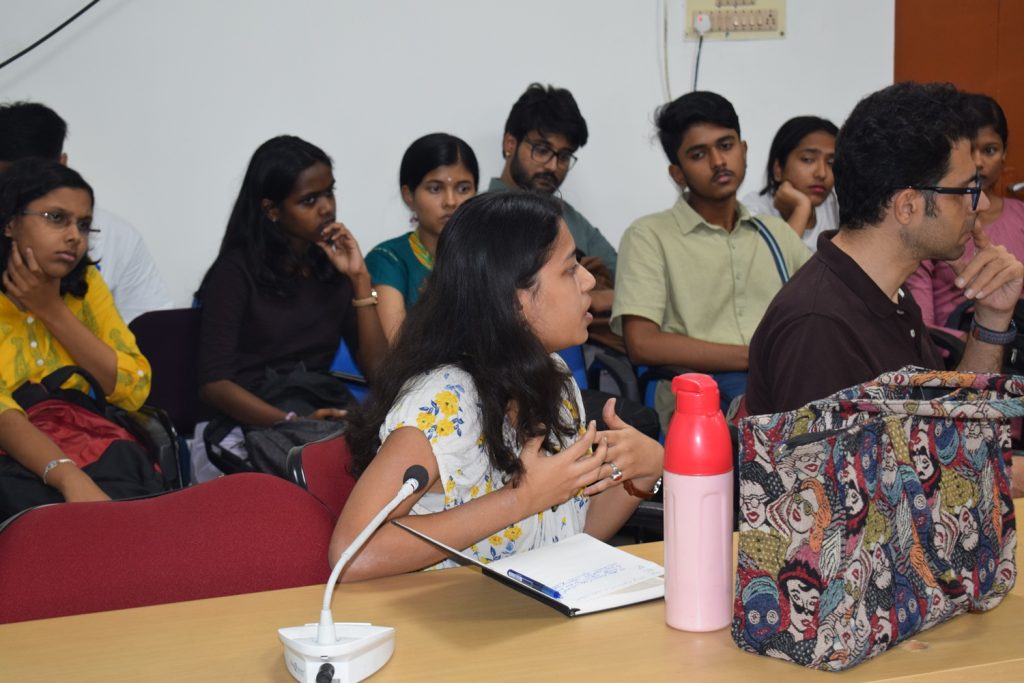
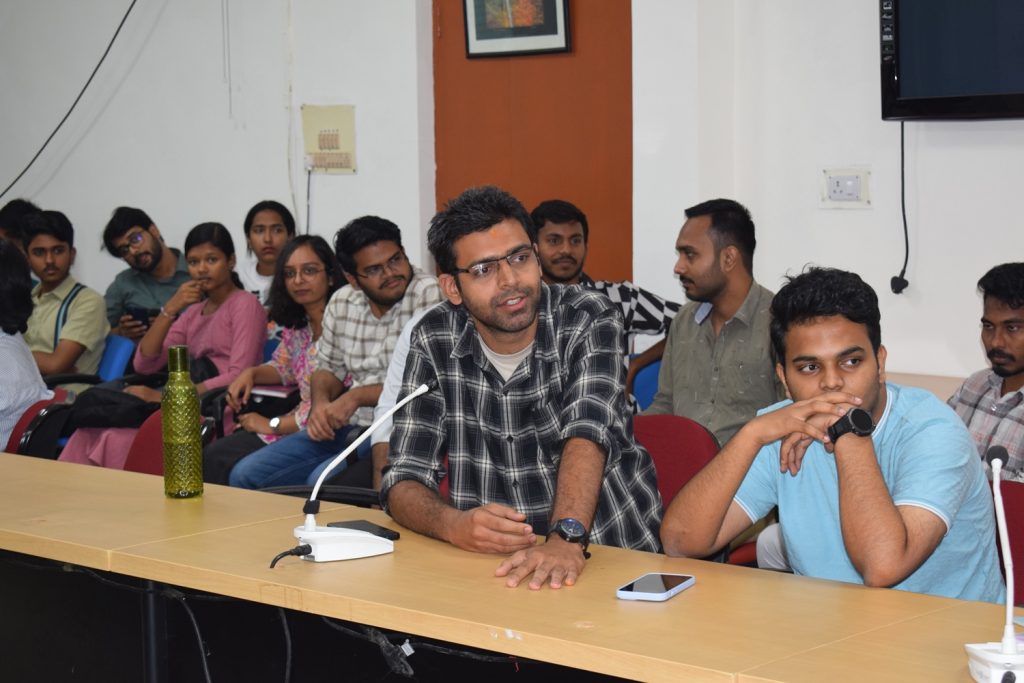
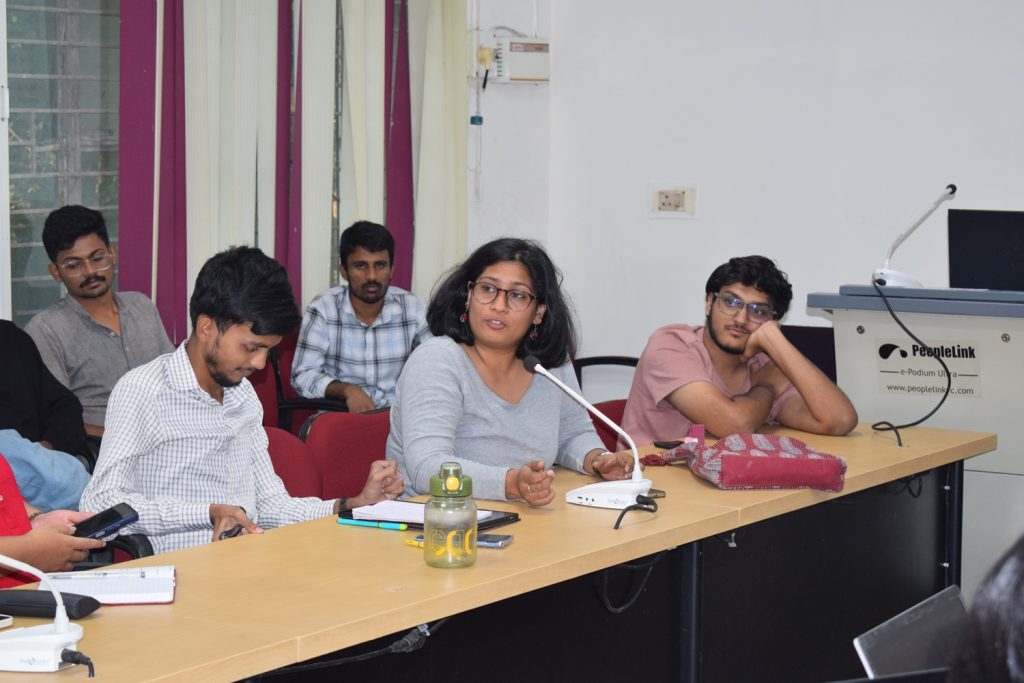
The talk was followed by a discussion, during which Dr. Bhim Subba remarked on the various other industries in which Taiwan has made significant progress, such as horticulture and its robust health sector, which contributes to its global soft power. The following interactive session with the audience touched upon the impact of domestic politics of Taiwan on its international economic relations; Taiwan’s falling trust in the United States; the impact of Taiwan’s green supply chain and no nuclear energy policy on its industries; the implications of the Trump administration’s tariff hike; and the resultant reconsideration of economic strategies in South and Southeast Asia. Dr. Hsu also highlighted the challenges posed by changing global geo-political and geo-economic trends that have upended India-Taiwan relations.
The session was concluded with a vote of thanks, delivered by Ms. Nilisha Lal, a second-year MA student in the Department of Political Science. The talk was an insightful discussion on the changing position of Taiwan in the global economy and the potential of the growing collaboration between India and Taiwan.
Report contributed by Marwa Faisal, Kimpichong Lhouvum, Vaishali Warrier, Gowri Murali, and Vivek Raj.