
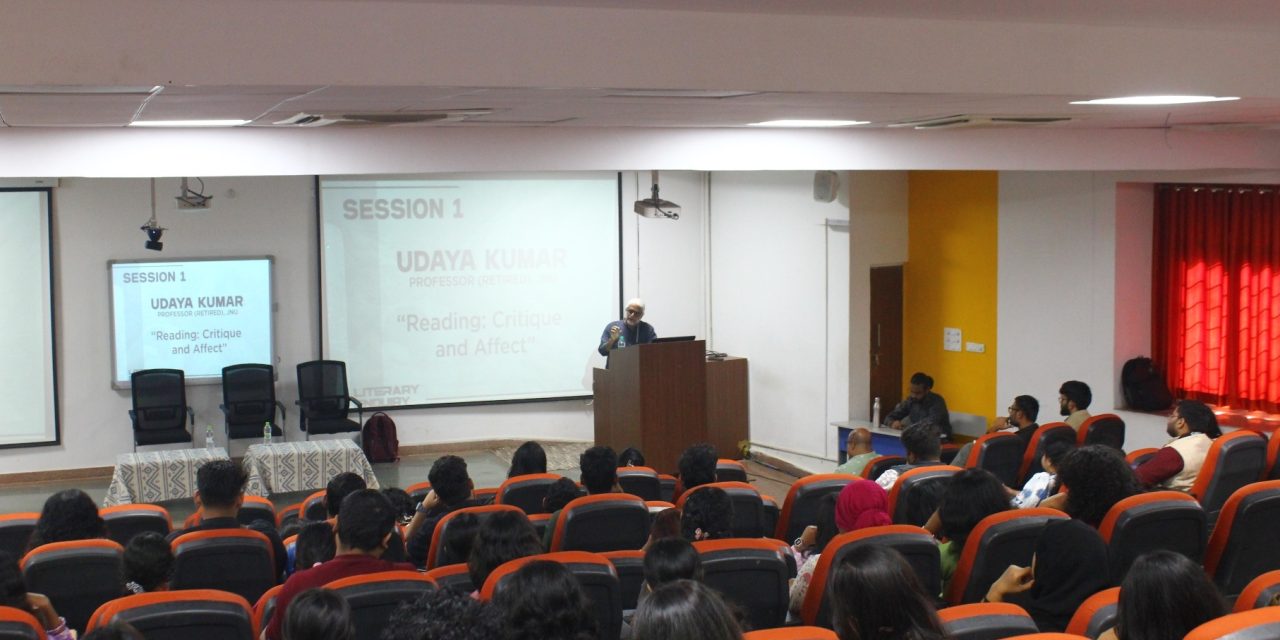
The Department of English, School of Humanities, University of Hyderabad (UoH) under the aegis of the UoH-IoE project, hosted a one-day symposium titled “Literary Enquiry” on 19th January 2026. Over 30 registered participants from other institutions (faculty, research scholars and PG students) attended the event, in addition to the students and faculty of the DoE itself. The symposium featured lectures delivered by four invited speakers, Prof. Udaya Kumar (JNU), Prof. Syed Sayeed (EFLU), Prof. Sanil V (IIT Delhi), and Prof. K Narayana Chandran (UoH), who addressed a number of methodological and philosophical questions pertaining to literary studies research and fostered discussions on the possibilities and challenges of interdisciplinarity in the Humanities.
At the inaugural session, chaired by Prof. M.T. Ansari, Dean, School of Humanities and Prof. D. Murali Manohar, Assistant Director, IoE, Prof. Pramod K. Nayar, Head of the Department of English, expressed gratitude to the IoE Directorate for sanctioning funds for the event and encouraged students to take the lead in organizing such events. Dr. Saradindu Bhattacharya, Faculty Coordinator, formally introduced the theme for the symposium and welcomed the audience to the event.
The first lecture, titled “Reading: Critique and Affect”, was delivered by Prof. Uday Kumar, in which he focussed on the crucial distinction between research “methods” and “methodology”. Prof. Kumar unpacked the multiple meanings of the phrase “literary enquiry”, and drawing on his long experience teaching in English departments, illustrated a historical shift in academic reading practices. He noted that the focus has shifted from analysing literary form, such as plot, style or character, to “diagnosing” sociopolitical questions regarding race, gender, and class within a text. He argued that the goal of critical thinking is to create problems rather than merely solve them, and made a case for “reading” that accommodates both critique and affect and reimagines literature as a distinctive “species” of language. The session concluded with questions on the purpose and extent of delight in reading as an academic practice and how researchers ought to balance these two.
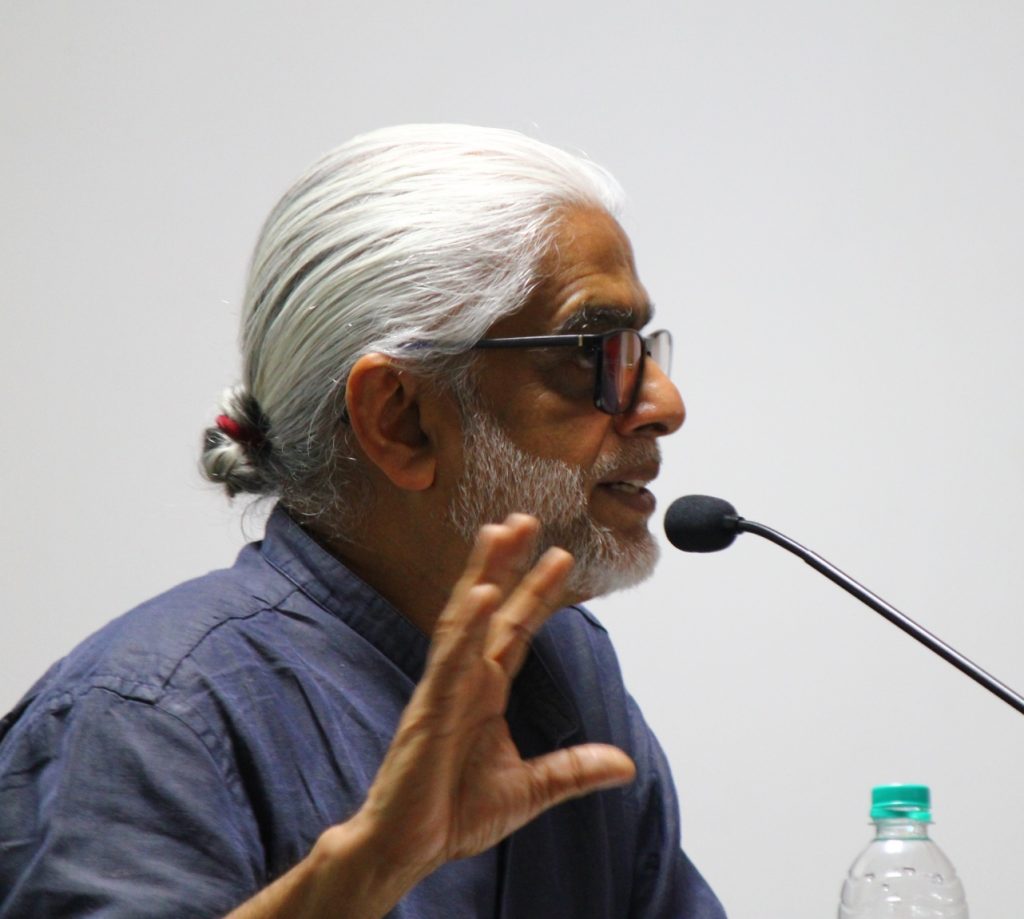
The second lecture, titled “The Very Idea of Literature!”, was delivered by Prof. Syed Abdul Sayeed. Prof. Sayeed interrogated the conceptual foundations of literature and the pedagogical assumptions that structure literary studies. He drew attention to the normative force of the term “literature” and its resistance to neutral definition, and suggested that with the advent of technology, the notion of the lecturer as the sole authority over knowledge in a classroom has become increasingly redundant. While acknowledging that ideas about the ethical and emotional depth of literature cannot be dismissed, Prof. Sayeed challenged the assumption that the use of “extraordinary” or defamiliarized language automatically qualifies a text as literature. A central argument of the lecture concerned art’s capacity to redirect attention away from utility and function toward singularity and form. The lecture ended with a call for the reorientation of the Humanities, free from rigid taxonomies and enlarged in its capacity to engage with the crises faced by humanity in the contemporary world.
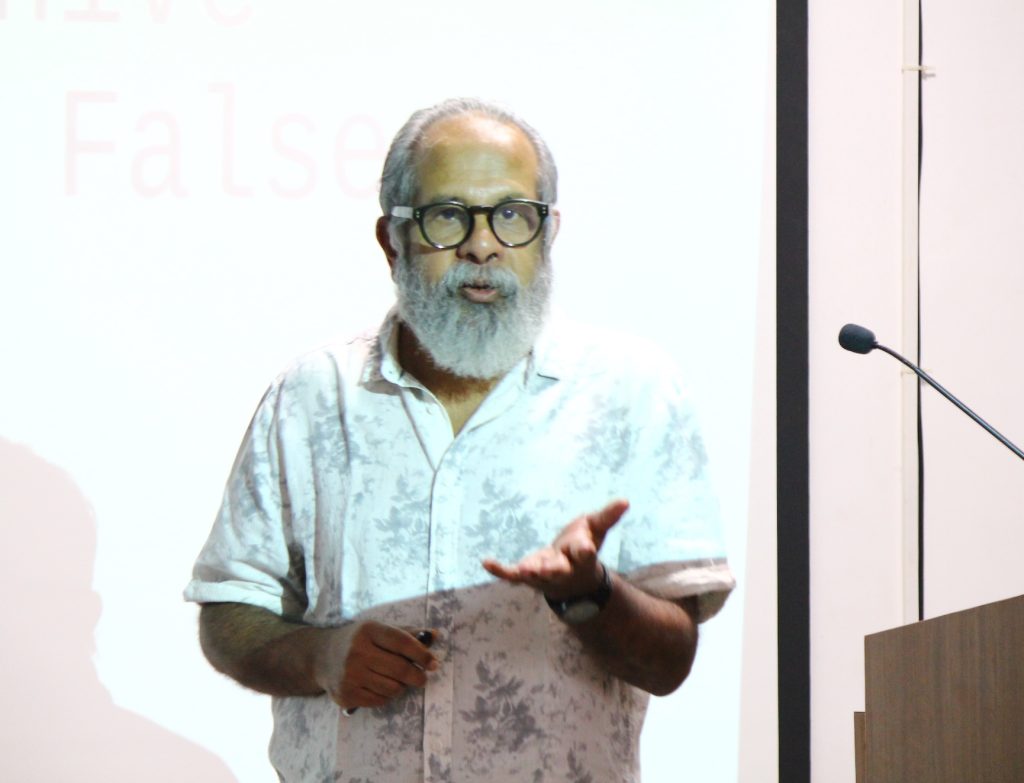
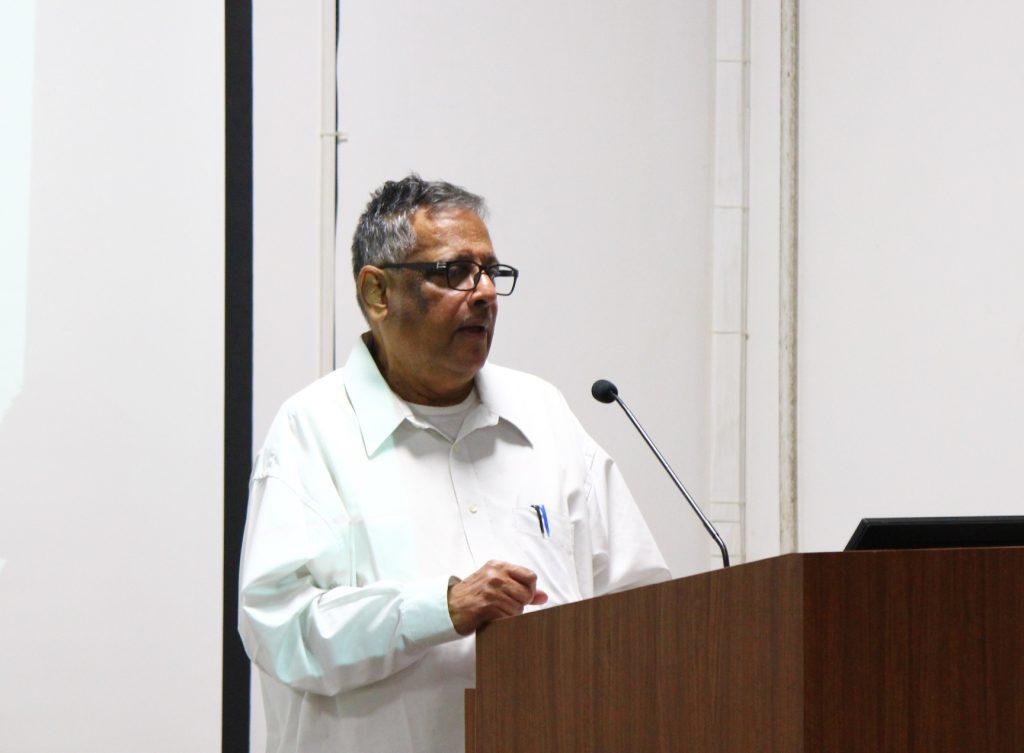
The third lecture, titled “The Future Archive and the Force of the False”, was delivered by Prof. Sanil V. Drawing on insights from philosophy, visual art, literary theory, and media studies, the lecture offered a sustained interrogation of the concept of the archive, its political stakes, and its relationship to truth, falsity, power and representation. With examples from visual media Prof. Sanil challenged the idea that the archive is a neutral repository of knowledge and argued that the archive contained within it not only the true but also the false. The latter part of the lecture engaged with literature and fiction as privileged sites for “thinking the false”. Fiction, Prof. Sanil suggested, does not merely oppose truth, but instead opens up a space where actuality and possibility become indistinguishable. Prof. Sanil concluded his lecture with the argument that the task of criticism was not to eliminate falsity, but to understand its force within cultural and archival practices.
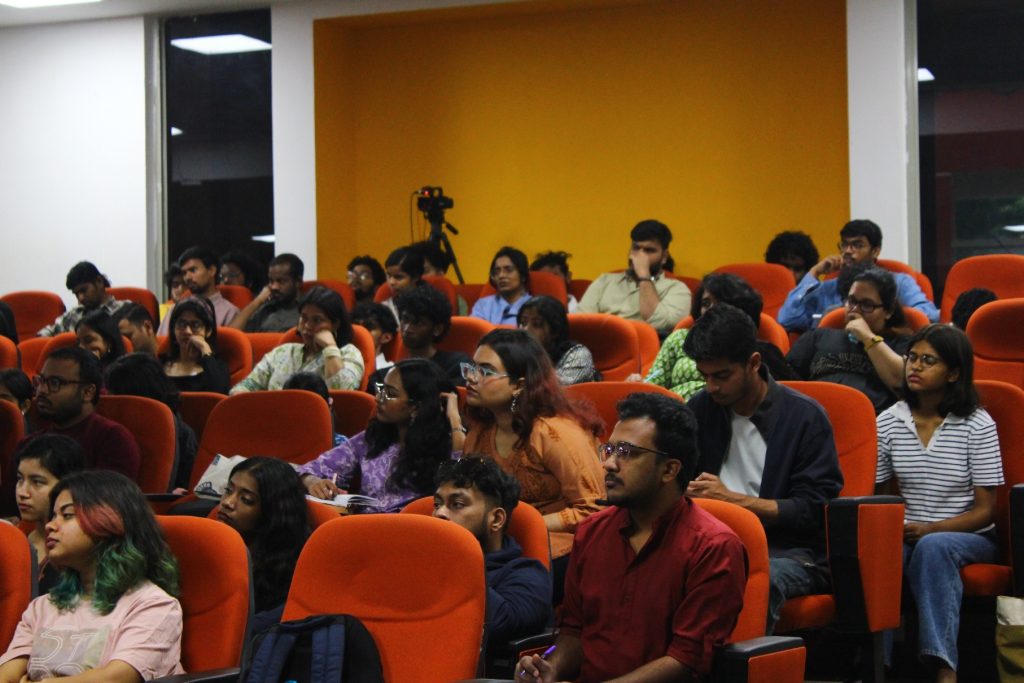
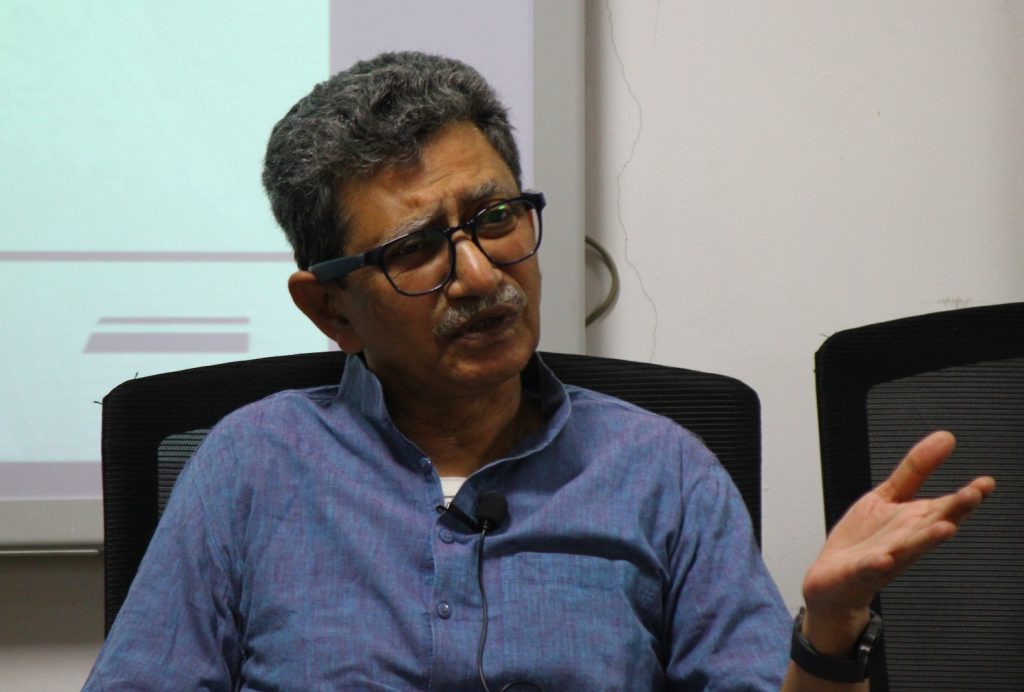
The fourth session of the symposium featured a lecture by Prof. K Narayana Chandran, titled “Evidence as We Know it, and What We Don’t: Focus on English Research”. The lecture examined the concept of evidence as a foundational yet deeply unstable category within literary and cultural studies. Prof. Chandran argued that what counts as evidence varies across disciplines, institutions, and epistemological frameworks, and that disagreements over evidence often underlie unresolved legal, academic, and social disputes. He differentiated between the forensic (evidence based) and mimetic (imitations and representation based) modes, the latter pertaining to the imaginative and creative capacities of an author. Literary texts, he argued, generate evidence not only through explicit statements but also through silences, rhythms and absences, and thereby challenge our assumptions of textual stability. Prof. Chandran concluded by emphasizing that evidence in literary research is provisional and ethically charged, demanding critical self-reflexivity from both the reader and the researcher.
The symposium concluded with a valedictory session, in which certificates of participation were given away to the registered participants by Prof. K Narayana Chandran. This was followed by a formal vote of thanks, delivered by Aravind Prakash, a research scholar at the Department of English and one of the co-convenors of the symposium.