
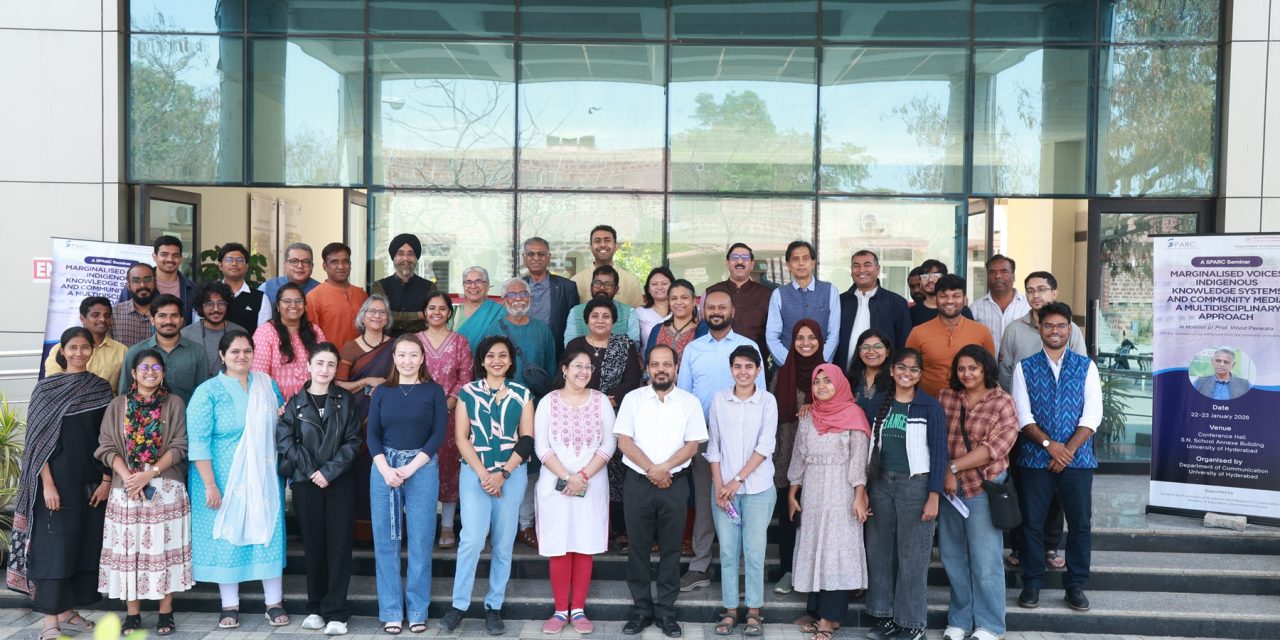
The Department of Communication, University of Hyderabad, organised a two-day seminar on January 22 and 23 as part of its Scheme for Promotion of Academic and Research Collaboration (SPARC) project. The seminar, titled “Marginalised Voices, Indigenous Knowledge Systems, and Community Media: A Multidisciplinary Approach,” brought together scholars, practitioners, and community media professionals from India and across the globe.
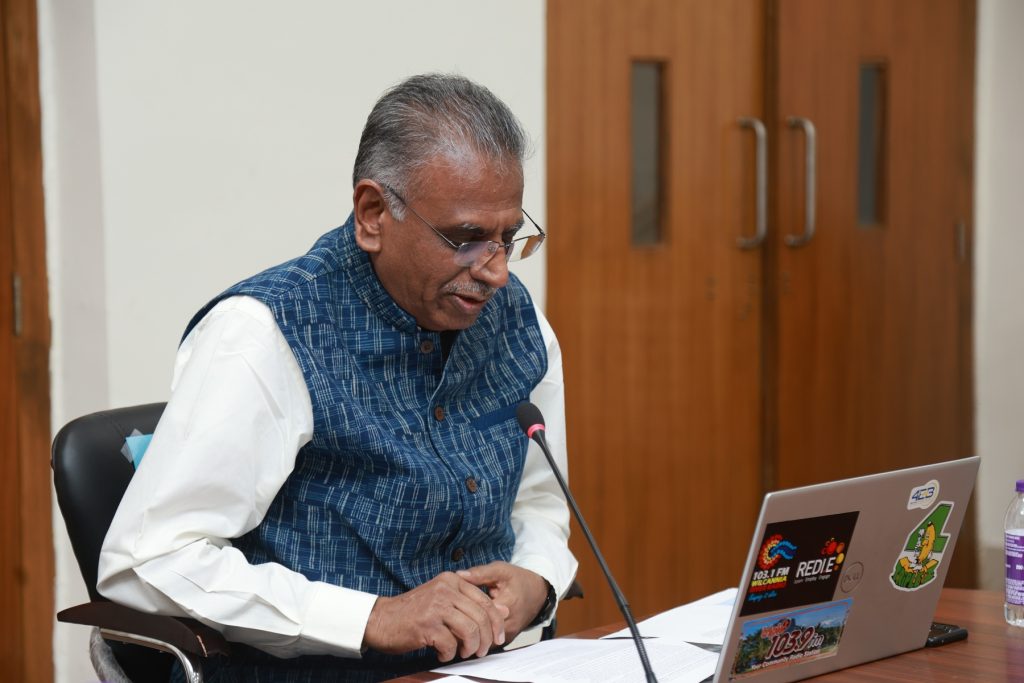
Prof. Vinod Pavarala Charing a Session
The seminar also served as a tribute to Prof. Vinod Pavarala’s distinguished academic contributions and long-standing engagement with community media, participatory communication, and communication for social change.
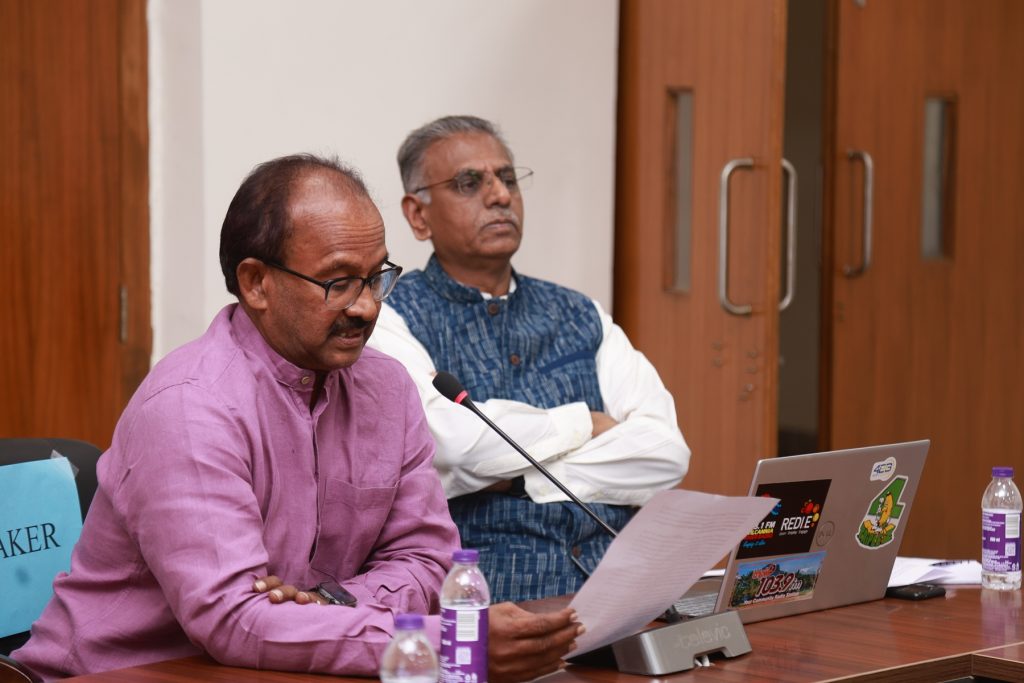
Dean_s Welcome Address
Delivering the inaugural address, Prof. M.S. Siva Raju, Dean, Sarojini Naidu School of Arts and Communication, reflected on his long association with Prof. Pavarala and highlighted his role in strengthening the school and the university. Prof. Kanchan K. Malik, as the seminar coordinator, outlined the SPARC project and the seminar’s objectives, foregrounding its epistemic concerns. “At the heart of this project,” she noted, “is the question of how knowledge is produced and, more importantly, whose knowledge is recognised and valued.”
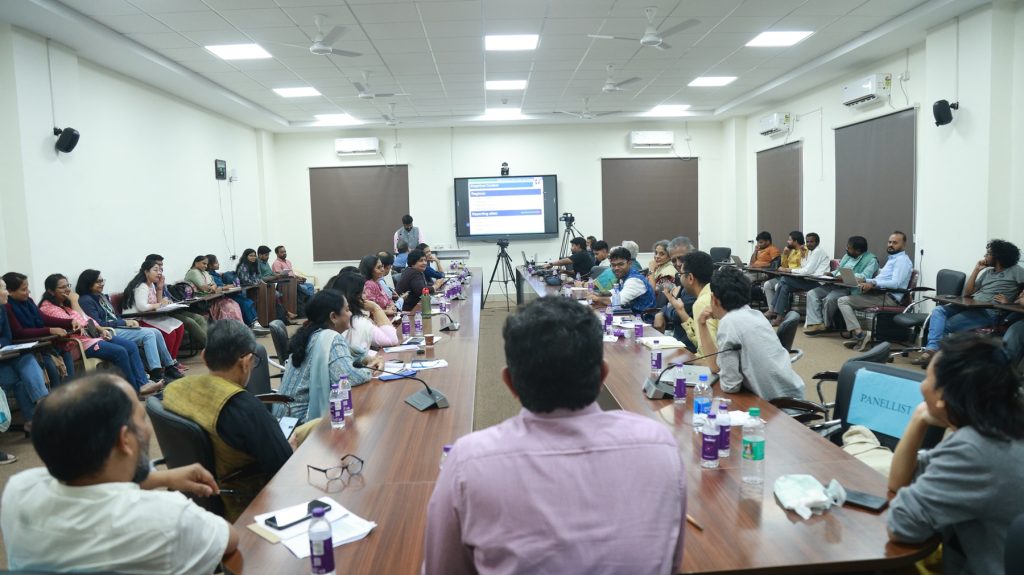
The first plenary session, “Community Media, Participation and the Decolonisation of Knowledge Systems: Revisiting the SPARC Project,” was chaired by Prof. Pavarala. Reflecting on his engagement with SPARC, he spoke about the need to contribute meaningfully to indigenous knowledge systems worldwide through collaborative, community-driven approaches.
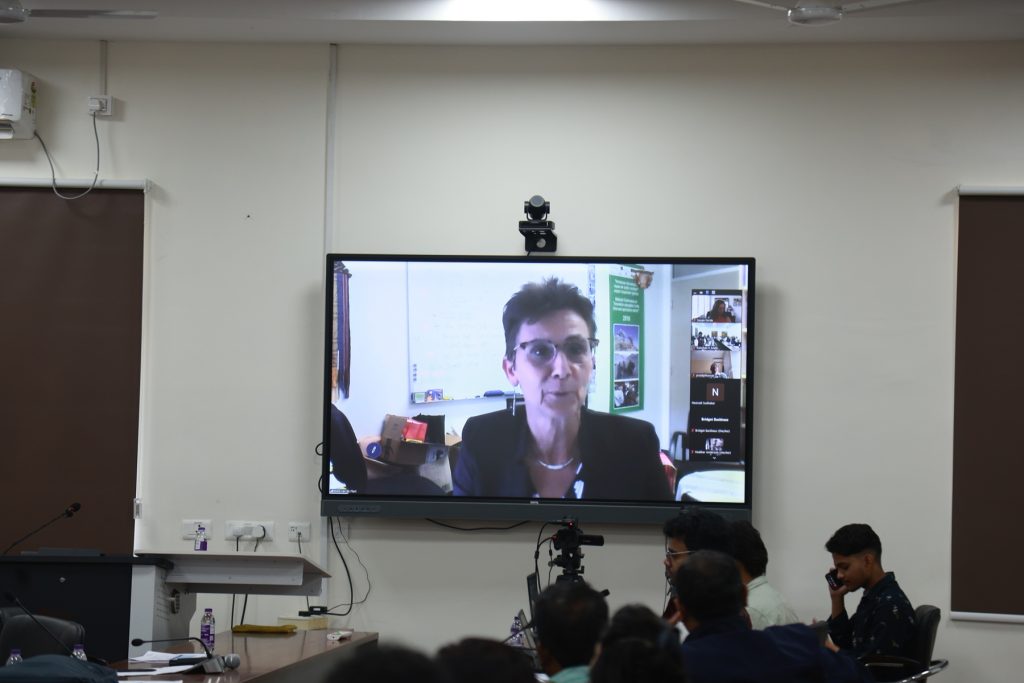
Prof. Elske Van De Fliert_s Presentation
The keynote address was delivered online by Prof. Susan Forde of Griffith University, Australia, who highlighted Prof. Pavarala’s influence within the global community media movement and the urgent need to move beyond narrow development paradigms. Prof. Forde also shared insights into the Australian community media sector, stressing that a decolonised perspective is essential to understanding indigenous spaces and knowledge practices. Prof. Pradip Thomas and Prof. Elske Van De Fliert of the University of Queensland echoed this view, calling for stronger indigenous networks and participatory action.
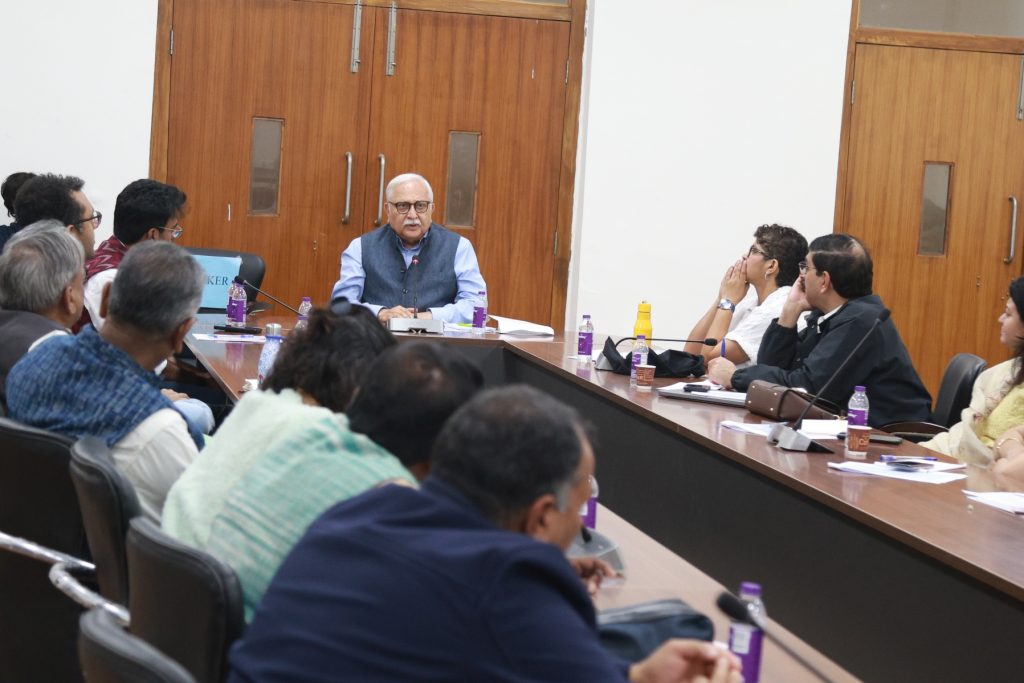
Dr. Rajesh Tandon Chairing a Session
Subsequent sessions were chaired by Dr. Rajesh Tandon, Founder President of PRIA and UNESCO Chair on Community-Based Research and Social Responsibility in Higher Education, and Prof. Surinder S. Jodhka, renowned sociologist from JNU, New Delhi. These sessions examined indigenous languages, orality, and the politics of voice, engaging with questions of indigeneity, migration, and epistemic humility.
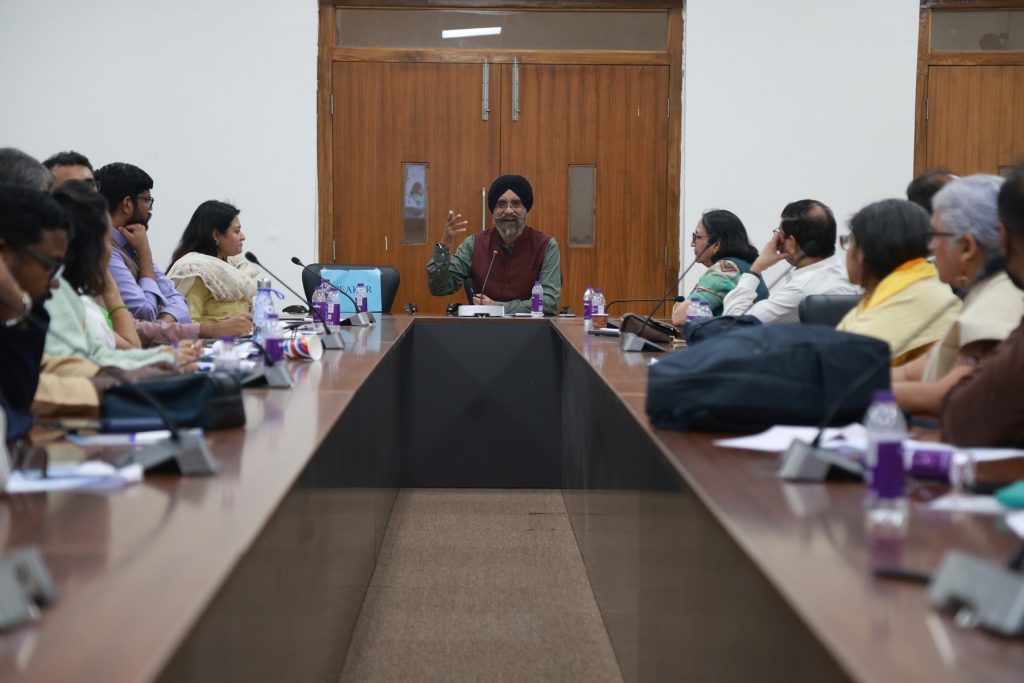
Prof. Surinder S. Jodhka Chairing a Session
Panellists from Griffith University, Dr. Bridget Backhaus and Prof. Heather Anderson, and from Loughborough University, Prof. Thomas Tufte (keynote), Prof. Jo Tacchi, and Prof. Jessica Noske Turner, participated online and discussed processes of unlearning and relearning, and the making and unmaking of communication for social change.
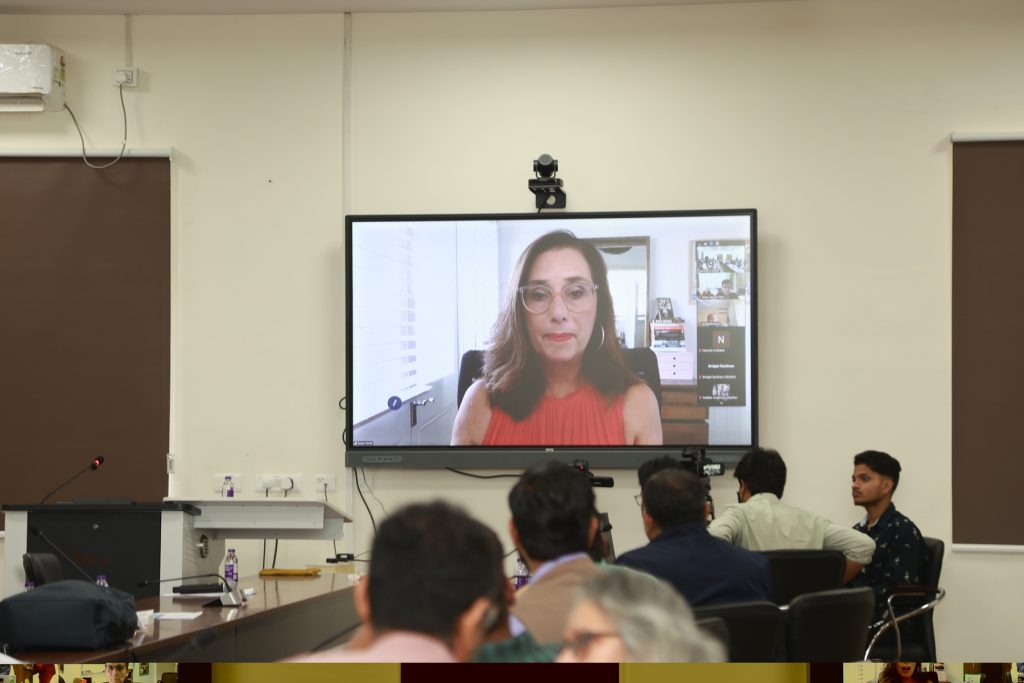
Prof. Susan Forde_s Keynote Address
Prof. Sowmya Dechamma (Department of Comparative Literature, UoH), Dr. Aniruddha Jena (IIM Kashipur), Dr. Kulveen Trehan (GGSIPU, New Delhi), and Prof. Archna Kumar (Lady Irwin College, New Delhi) shared their experiences and addressed the need for curriculum and institutional transformation. The first day concluded with an online and digital felicitation for Prof. Pavarala facilitated by Prof. Usha Raman and Dr. Sumana Kasturi.
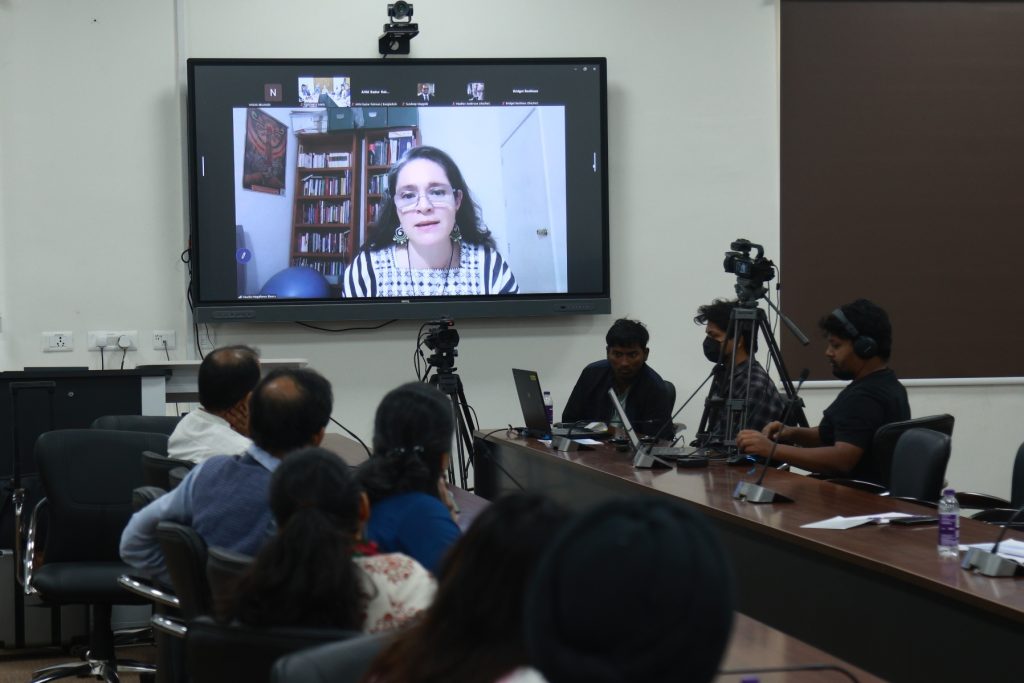
Prof. Claudia Magallanes-Blanco_s Keynote Address
The second day’s first session, “Communication for Social Change and Vulnerable Communities,” was chaired by Profs. Anjali Monteiro and K.P. Jayasankar. Delivering the keynote online, Prof. Claudia Magallanes-Blanco from Universidad Iberoamericana Puebla, Mexico, observed that “vulnerability is inherently connected to discrimination, racism, and oppression.” The panellists – Prof. Sanjay Asthana (Middle Tennessee State University, USA; online), Prof. Sundeep Muppidi (University of Hartford, USA; online), and Prof. K. Padmakumar (Manipal Academy of Higher Education, Karnataka) – reflected on the theme from their academic and research standpoints. Prof. Mohan Dutta of Massey University, who also joined online, posed critical questions: “Who performs the embodied labour? Who challenges the dominant paradigm?”
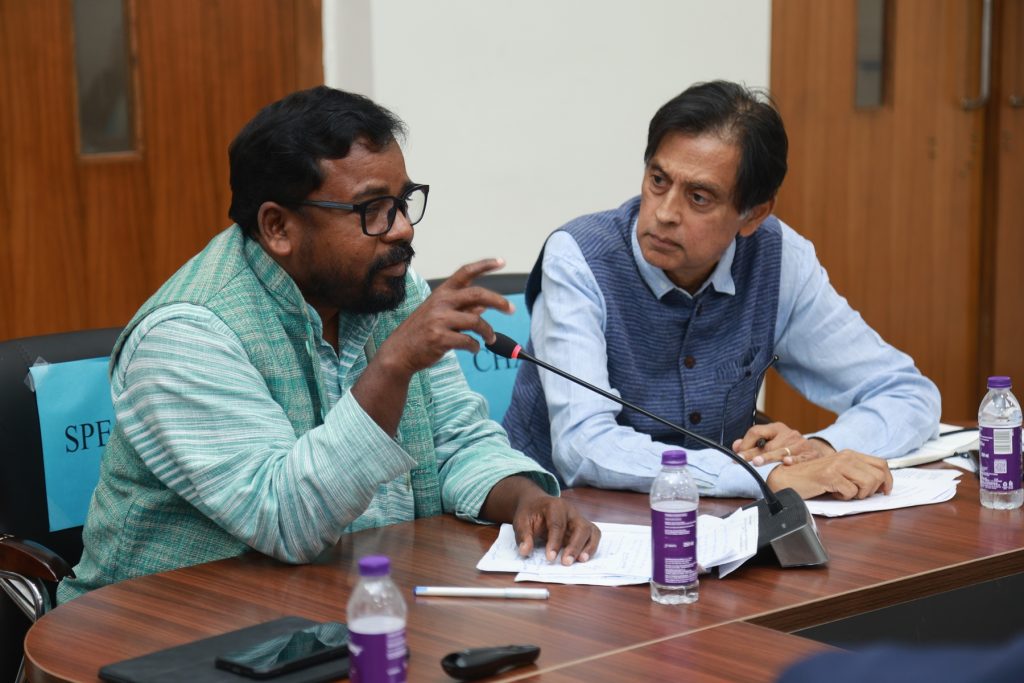
Ashish Sen Chairing a Session
The second session, chaired by Ashish Sen, brought together community radio practitioners from across India and Bangladesh, including Ramakrishnan N. (Associate Professor of Practice, JSJC, O.P. Jindal University, and Founder-Director, Ideosync Media Combine, Haryana), AHM Bazlur Rahman (BNNRC, Bangladesh), N.A. Shah Ansari (Radio Namaskar, Odisha), Father Bijo Karukappally (Radio Mattoli, Kerala), Dr. Nirmalya Mukherjee (MANT, West Bengal), and Arti Jaiman (Gurgaon Ki Awaaz, Haryana). The session engaged with questions of sustainability, opportunities, and challenges faced by the community radio sector.
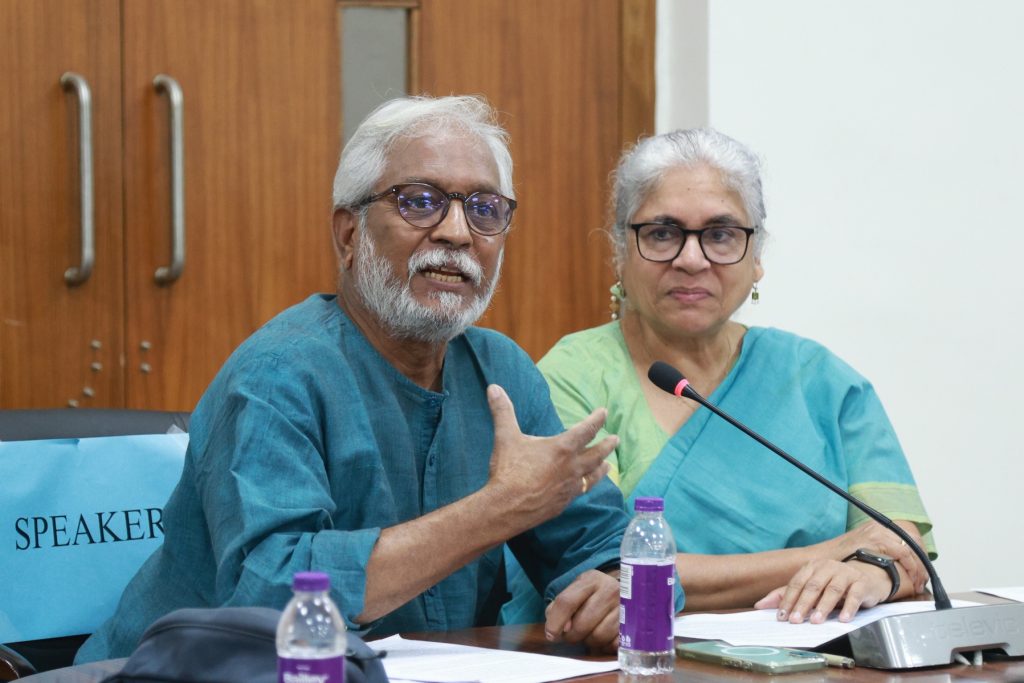
Profs. Anjali Monteiro and K.P. Jayasankar Chairing a Session
The final session was chaired by Dr. Subba Rao M.G. of the ICMR–National Institute of Nutrition, Hyderabad, and featured reflections from young media academics and educators working in areas associated with Prof. Pavarala’s research. Speakers included Bidu Bhushan Dash (KIIT University, Bhubaneswar), Dr. Bhargav Nimmagadda (IIM Indore), Dr. Annapurna Sinha (BINUS International, Indonesia), Dr. Hazeena T (GITAM University), and Jharna Brahma (IIMC, Aizawl). The seminar concluded with a vote of thanks by Vamsi Krishna P. and a felicitation session headed by Prof. Sathya Prakash honouring the academic legacy of Prof. Vinod Pavarala on the occasion of his retirement.
The seminar poster may be accessed at the link below: SPARC Seminar Poster
By: Adrita Roy & Treesa Reena John