
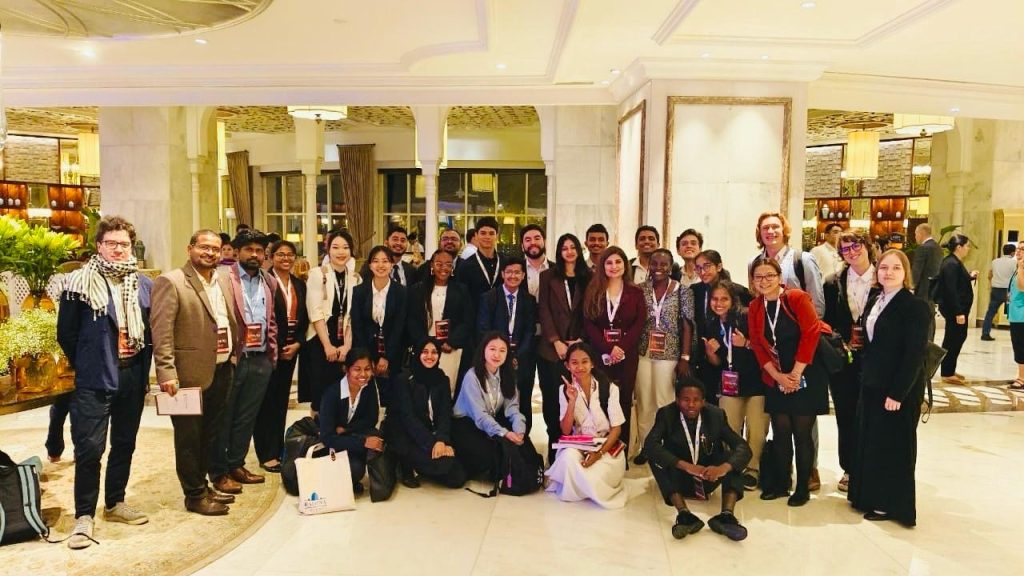
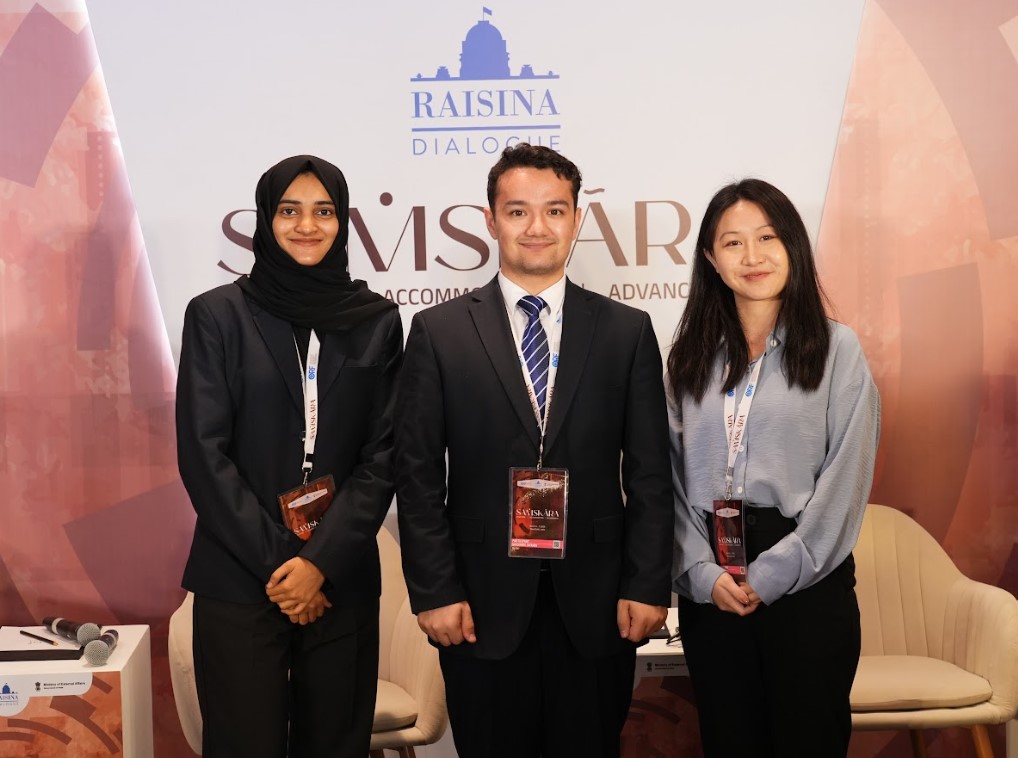
Riza Fathima A. V, a second-year Master’s student in the Department of Political Science, University of Hyderabad (UoH), had the privilege to represent the University at the Raisina-IE Global Students Challenge, organised as part of the Raisina Dialogue 2026, held at the Taj Palace Hotel, New Delhi, from March 5-7,2026. Riza was one of the 84 students selected from across the world to participate in this prestigious global platform that brings together young scholars and policy innovators. The challenge, jointly hosted by the Observer Research Foundation (ORF), India, and IE University, Spain, officially began on 19th January 2026, dividing the selected students into 14 groups of 7 members each along with an academic advisor.
The theme for this year’s challenge was “Bringing Together Perspectives on Renewed Global Governance,” focusing on the role of Artificial Intelligence (AI) in global governance, with specific attention to its applications in civilian and military domains. The challenge required the students, as teams, to design a comprehensive policy proposal that addresses key strategic priorities for improving the global AI governance system. Riza’s team, with participants from India, Taiwan, Uzbekistan, South Africa, Bolivia, and France, was assigned the case of AI for civilian use.
As part of the challenge, her team presented a policy proposal titled “LEAVE NO ONE BEHIND: A Global Equitable AI Model for Education.” The proposal aimed to address the widening Global North–South divide in AI governance in the field of education by tackling key gaps related to accessibility, capability, trust, and harm. They proposed a comprehensive AI education model structured around six mutually reinforcing pillars: foundational access infrastructure; human capability and teacher empowerment; ethical and pedagogical safeguards; public data governance and knowledge sovereignty; equity-focused deployment; and institutional governance with democratic accountability. The approach was grounded in the principle of “Equality of Starting Point,” ensuring that structural barriers are addressed before the large-scale integration of advanced technologies into educational systems.
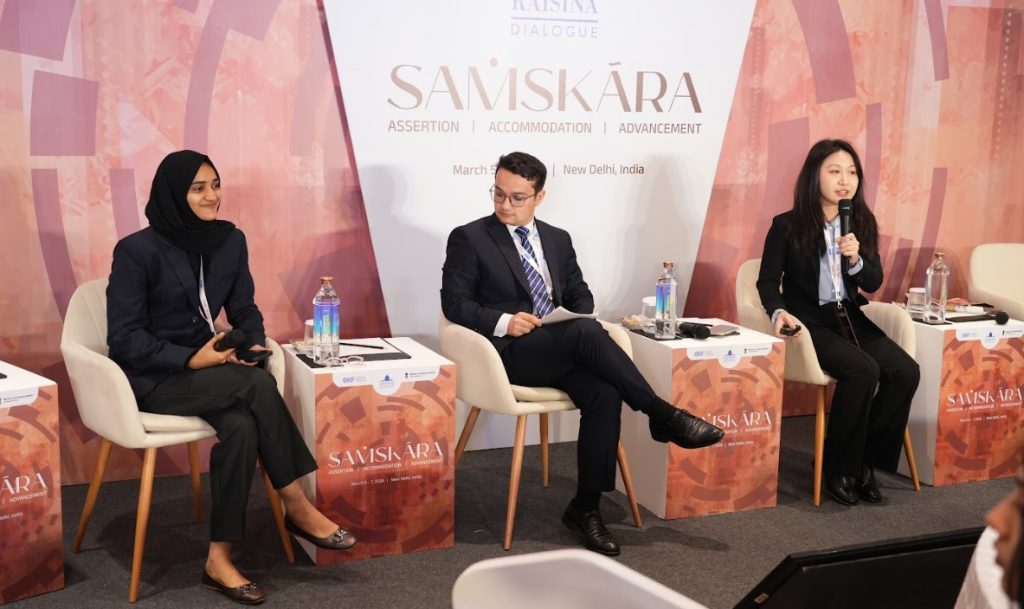
The final presentation was delivered on March 6th, 2026, at the Raisina Dialogue and evaluated by a distinguished jury comprising Stefan Löfven (Former Prime Minister of Sweden), Vina Nadjibulla (Vice-President, Research & Strategy, Asia Pacific Foundation of Canada), Gautam Chikermane (Vice President, Observer Research Foundation), and Suzannah Jessep (Chief Executive, Asia New Zealand Foundation). The challenge officially concluded with the award ceremony for winners and certificates for all the participants at the Taj Palace Hotel on 7th March.
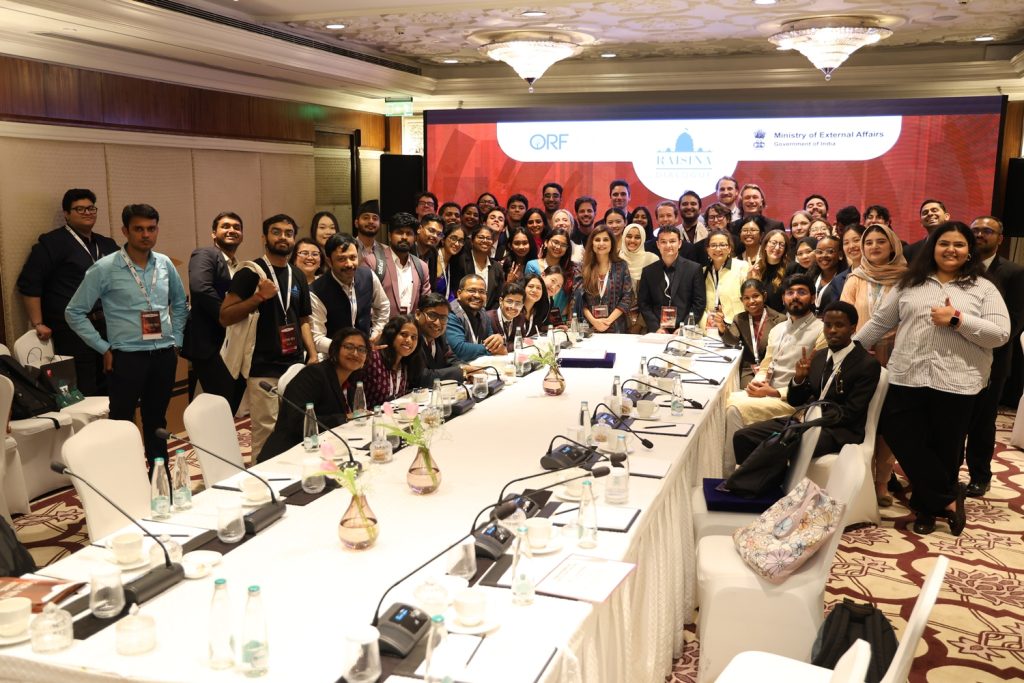
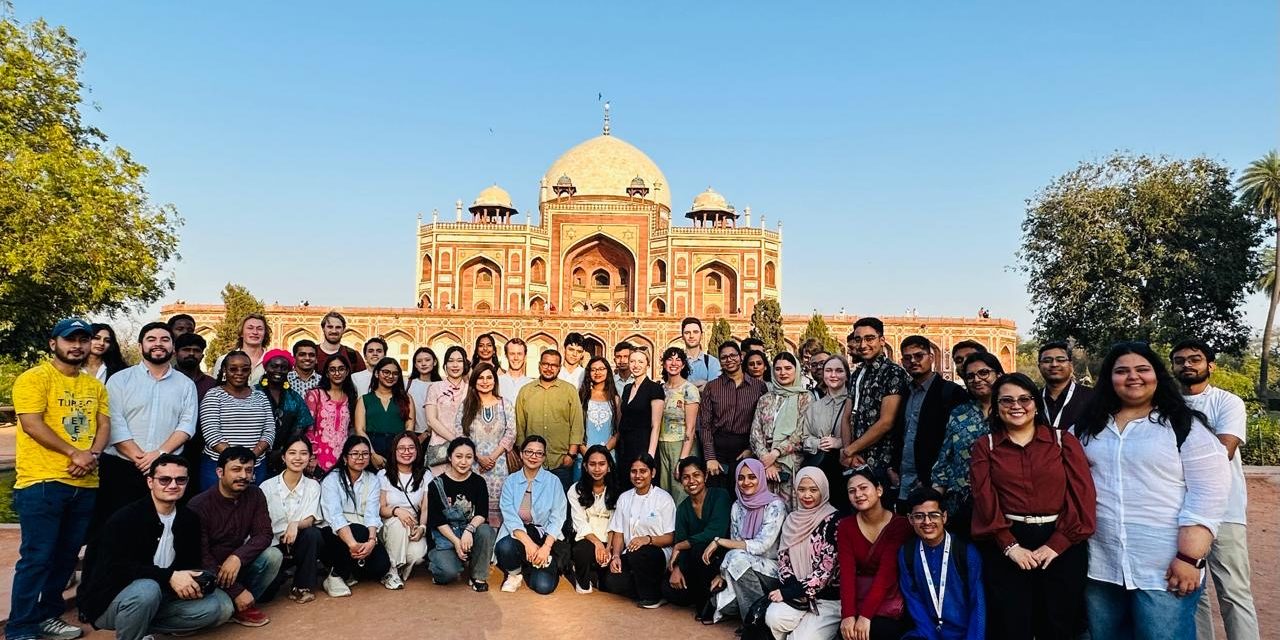
As part of the programme, the participants were also taken on a cultural excursion to Humayun’s Tomb and Dilli Haat, providing an opportunity to experience the historical and cultural heritage of New Delhi and interact informally with fellow participants.
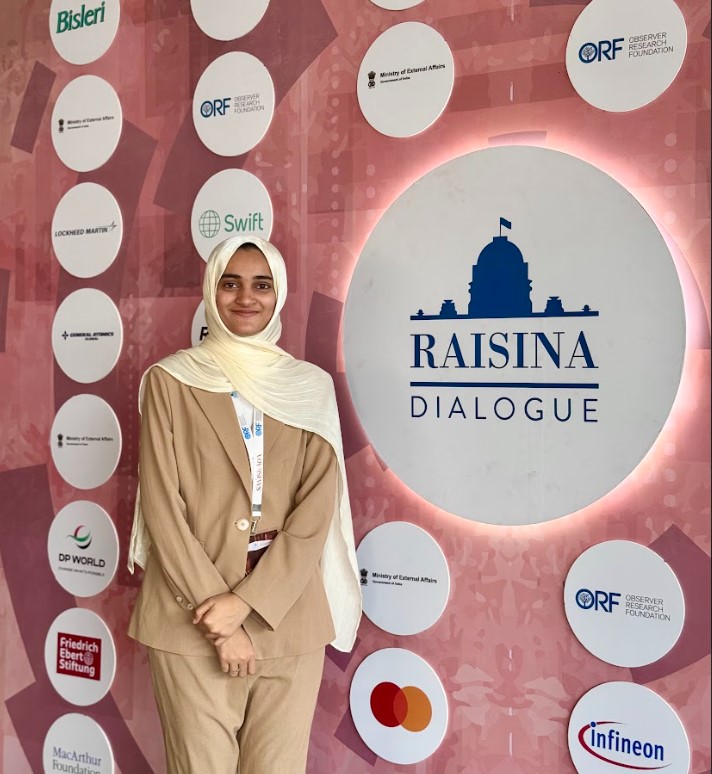
Participating in the Raisina–IE Global Students Challenge was a highly enriching experience for her. It provided a valuable opportunity to engage with peers from diverse academic and national backgrounds, exchange ideas on emerging global policy challenges, and contribute to discussions on building a more inclusive and equitable future for AI in education. The experience has significantly enriched her academic journey and provided new perspectives on global governance and technology policy.
Riza Fathima A V, MA Political Science, University of Hyderabad