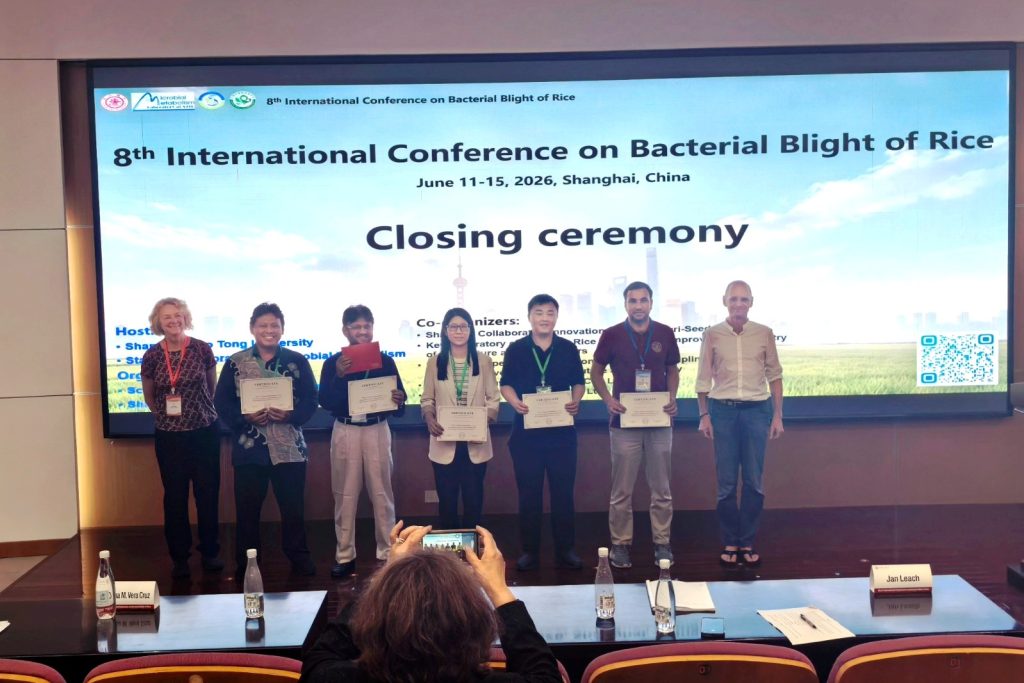
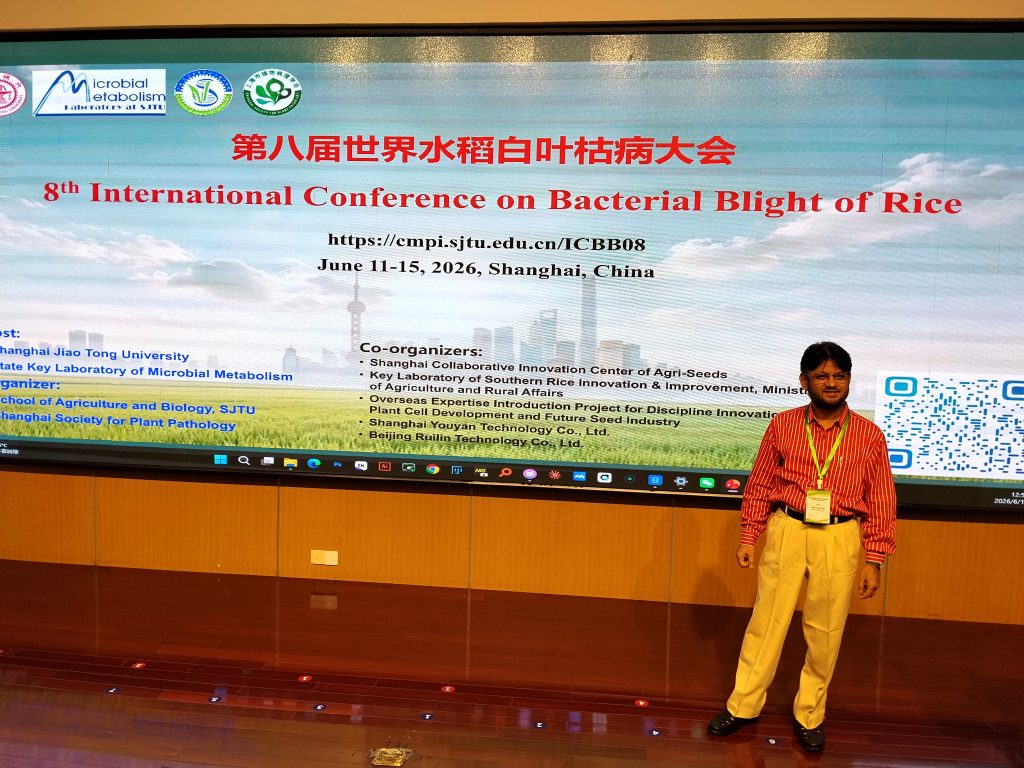
Prof. Irfan Ahmad Ghazi from the Department of Plant Sciences, School of Life Sciences at the University of Hyderabad, India was awarded “The Best Presentation Award” at the 8th International Conference on Bacterial Blight of Rice (ICBB08). The prestigious global event was hosted by the School of Agriculture and Biology at Shanghai Jiao Tong University, Shanghai, China, from June 11–15, 2026.
The triennial conference is the premier global forum for research on rice-Xanthomonas interactions, a major threat to worldwide rice production. This year’s event drew over 200 leading scientists from across the globe, featuring 52 scientific talks—including 10 keynote speeches—and extensive poster sessions. Prominent international figures in attendance included Prof. Jan Leach (Colorado State University, USA), Dr. Van Schepler Luu and Dr. Casiana Vera Cruz (IRRI, Philippines), Prof. Frank White (University of Florida, USA), Prof. Wolf B. Frommer (Heinrich-Heine University, Germany), and Dr. Jian-Min Zhou from the Chinese Academy of Sciences.
The conference bridged basic and applied research to foster international collaboration. Core sessions covered pathogen virulence, disease epidemiology, molecular host-pathogen interactions, and genomics-driven breeding strategies designed to promote plant health and environmental sustainability.
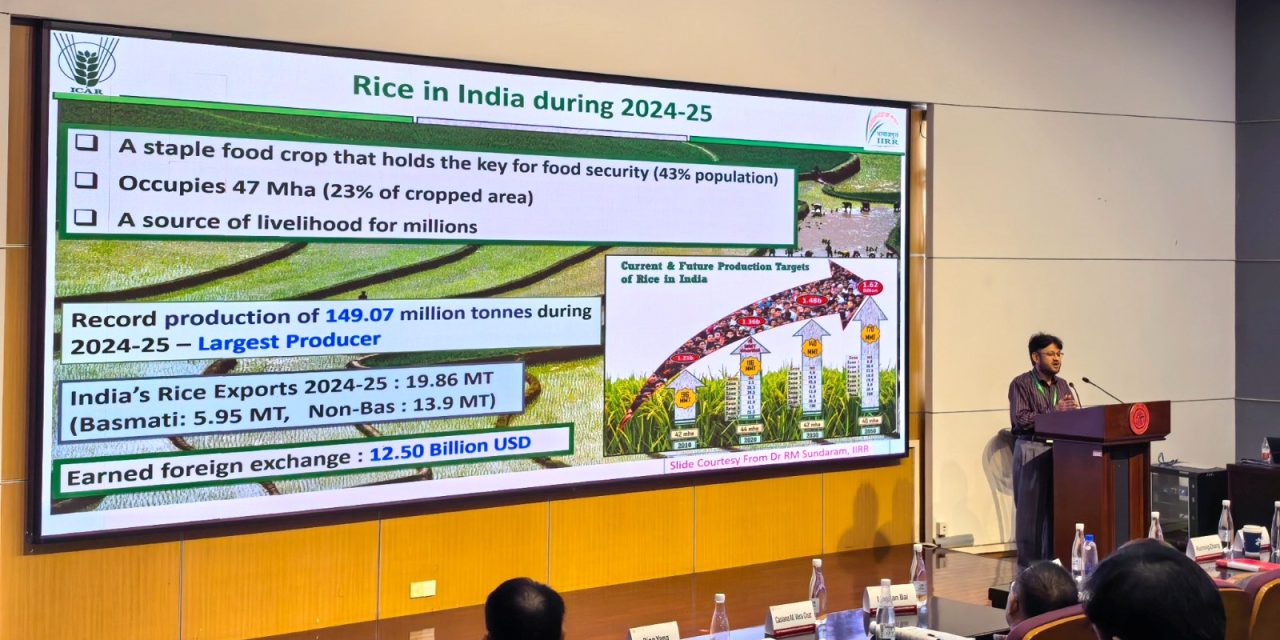
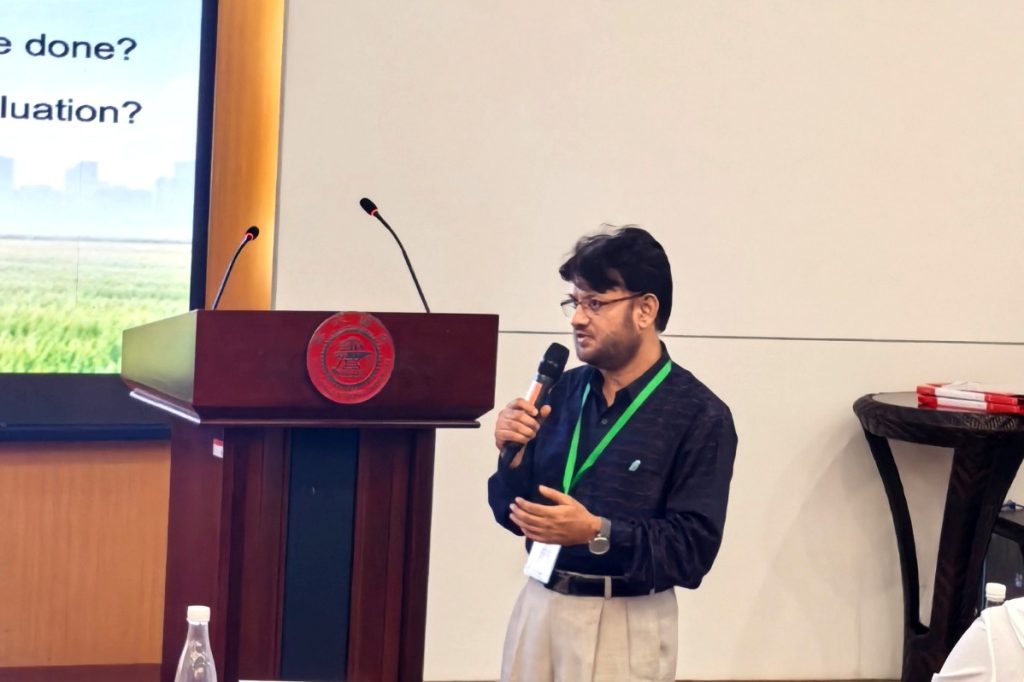
Prof. Ghazi delivered a highly acclaimed presentation titled, “Integrative analysis of allelic diversity and metabolomic signatures of Xa27 and Xa23 reveals novel resistance resources in wild Oryza for bacterial blight management.” The presented research was spearheaded by his PhD student, Dr. Prajna Priyadarshini Das.
Using 114 Indian wild rice relatives, Prof. Ghazi demonstrated how two executor resistance genes, Xa27 and Xa23, confer broad-spectrum immunity against diverse races of Xanthomonas oryzae pv. oryzae (Xoo). His talk highlighted the nucleotide diversity, locus features, and metabolomic profiles of these genes, proving that Indian wild rice relatives hold massive potential as genetic resources for breeding climate-resilient, disease-resistant crops.
This award-winning research was conducted in collaboration with Dr. R.M. Sundaram, Dr. G.S. Laha, and Dr. Girish from the ICAR-Indian Institute of Rice Research (IIRR), who provided vital germplasms, pathogen strains, and field study assistance. The project was funded by the Science and Engineering Research Board (SERB) [Grant No. EMR/2016/006109], with international travel support (ITS) provided by the Anusandhan National Research Foundation (ANRF) [Support No. ITS/2026/001621]. Prof Irfan is highly grateful to UoH, ICAR-IIRR, SERB and ANRF for their regular support.