
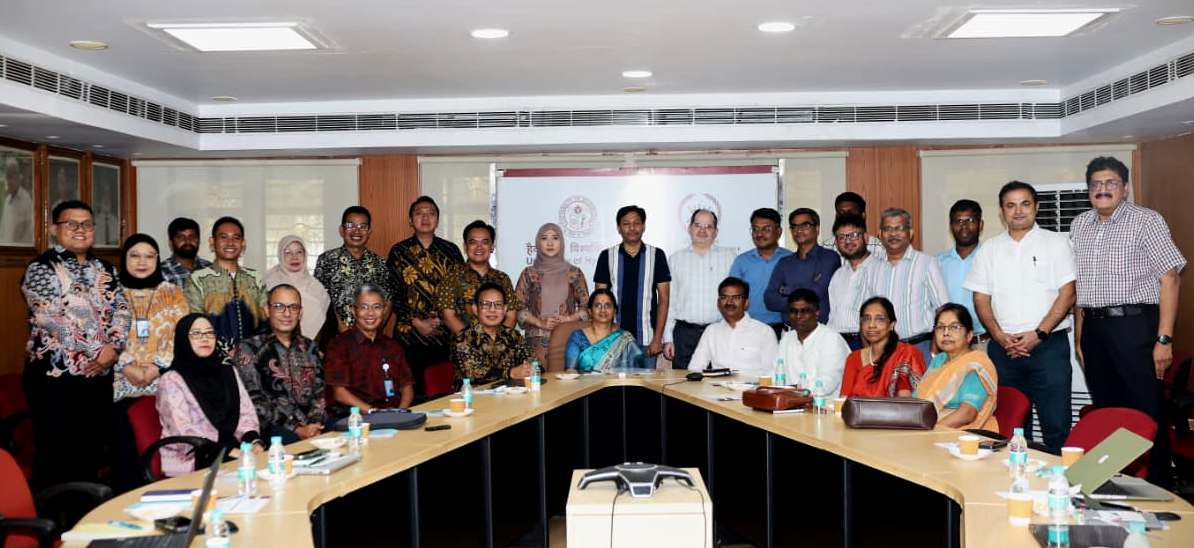
A high-level 12-member delegation from the Republic of Indonesia visited the University of Hyderabad (UoH) today, July 1, 2026, to engage in strategic academic and research dialogue. The visit was organized as part of the “Lesson Learn Agricultural Alternatives” programme, a joint initiative conducted by the Ministry of Higher Education, Science and Technology and the Ministry of State Secretariat of the Republic of Indonesia. This initiative aligns directly with Indonesia’s National Priority Programme on food security and food self-sufficiency. The Office for International Affairs (OIA) at the University of Hyderabad seamlessly coordinated the entire visit.
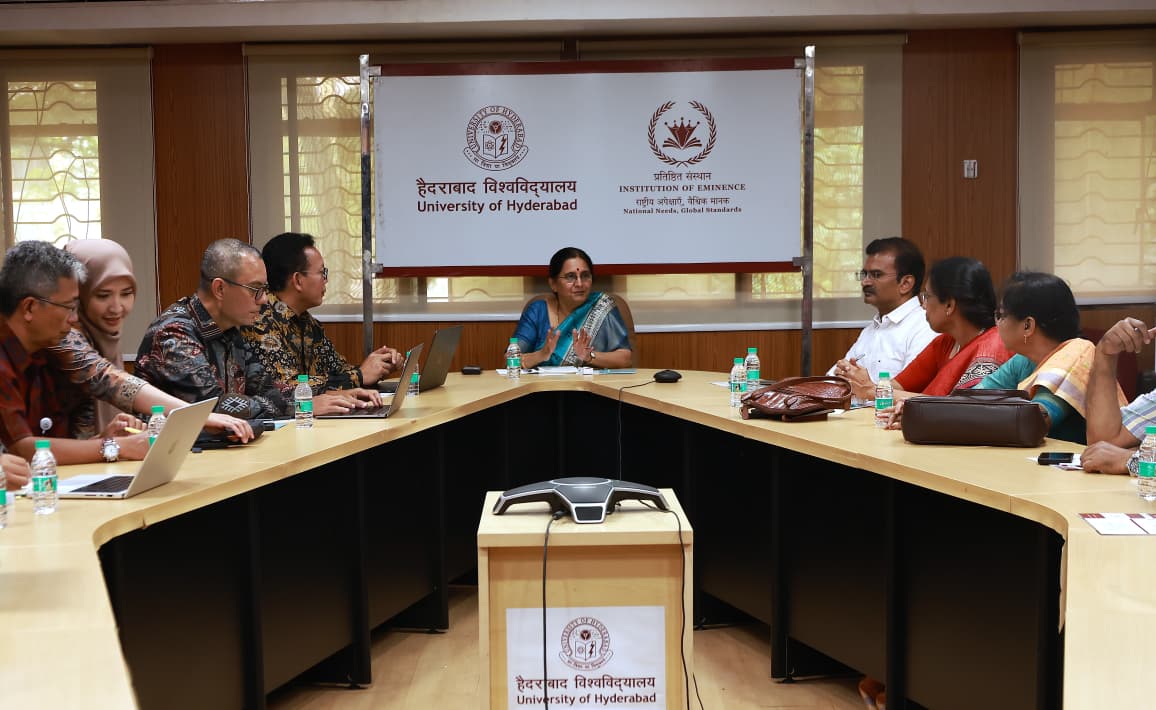
The official proceedings commenced at 10:30 a.m. in the Vice-Chancellor’s Conference Hall, where the Director of the Office for International Affairs (OIA), Prof. Brahmanandam Manavati formally welcomed the prominent Indonesian delegation and the accompanying coordinator from the Indonesian Embassy in New Delhi. The delegation comprised of 12 members including Prof. Junaidi Khotib, S.Si.,Secretary, Directorate General of Research and Development, Ministry of Higher Education, Science and Technology. Following the welcome, the Vice-Chancellor (In-charge), Prof. J Anuradha addressed the gathering, highlighting the significant positives and mutual benefits of fostering robust cross-country institutional collaborations. Prof. Anuradha emphasized how joint research efforts between India and Indonesia could effectively address shared global challenges in sustainability.
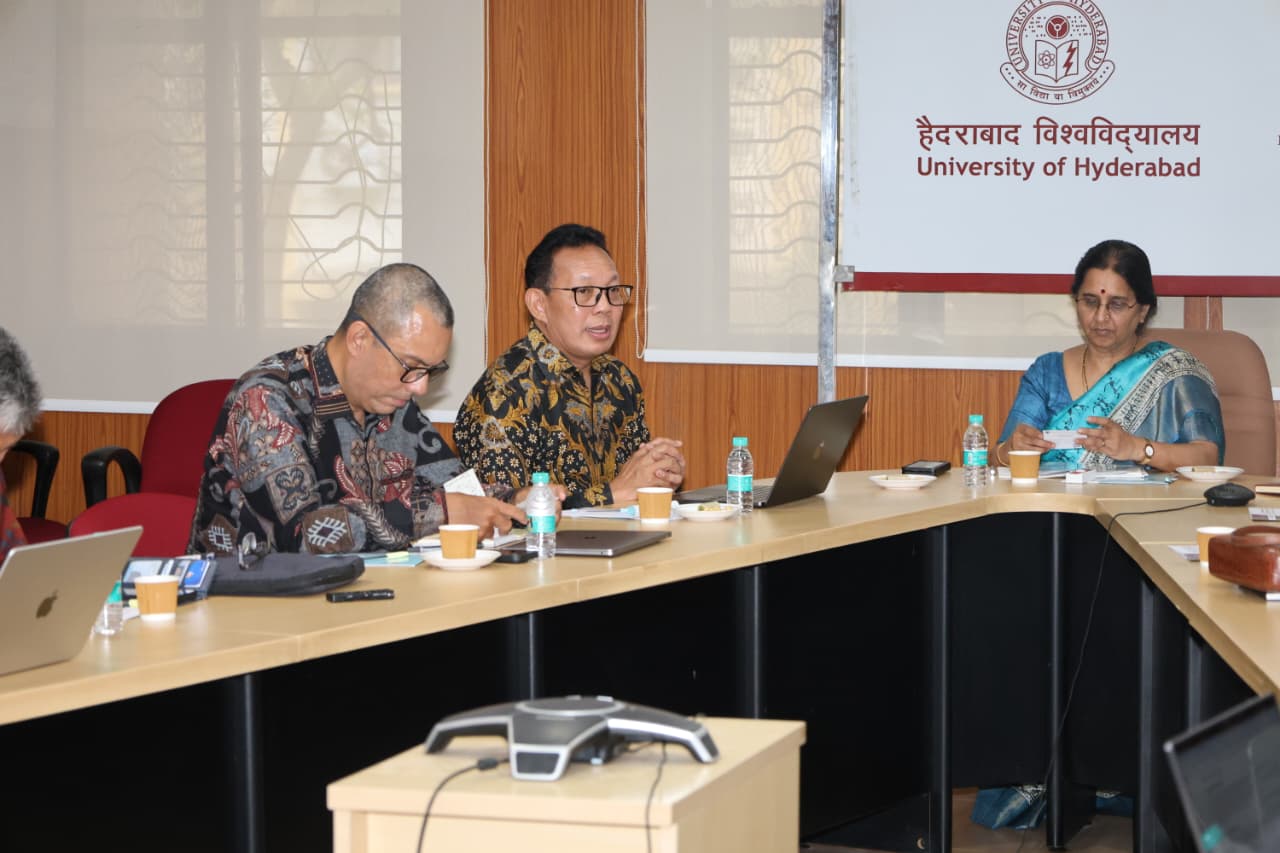
To provide a comprehensive overview of the university’s academic capabilities, the Dean of the School of Life Sciences gave a detailed briefing on the school’s structural setup, world-class infrastructure, and overarching academic accomplishments. This was followed by an address from the Head of the Department of Plant Sciences, who elaborated on the key academic activities, specialized programs, and institutional goals of the department. Furthermore, distinguished faculty members from the Department of Plant Sciences explained the specific, cutting-edge areas where active research is being carried out, focusing particularly on dryland agricultural management, natural farming, permaculture practices, digital agricultural technologies, and climate-resilient food systems.
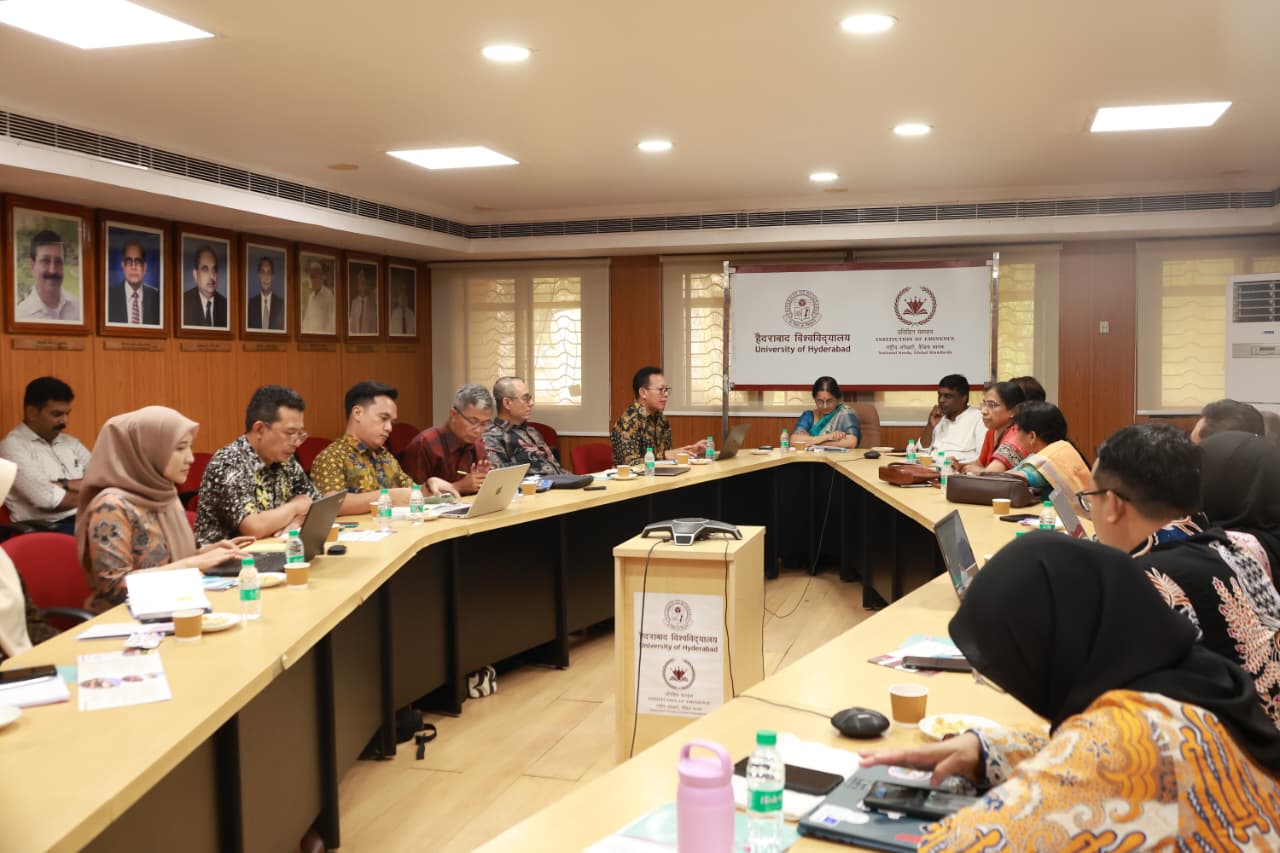
The core agenda of the interactive meeting centered on policies for sustainable agricultural development, artificial intelligence and mechanization in farming, and identifying concrete future opportunities for human resource development and knowledge exchange. Following the high-level discussions, the delegation was guided on an immersive tour where they visited the advanced laboratory and research facilities in the Department of Plant Sciences and the School of Life Sciences. The visiting delegates expressed their profound appreciation for the university’s hospitality and its pioneering contributions to agricultural science and technology, laying a strong foundation for future bilateral partnerships.