
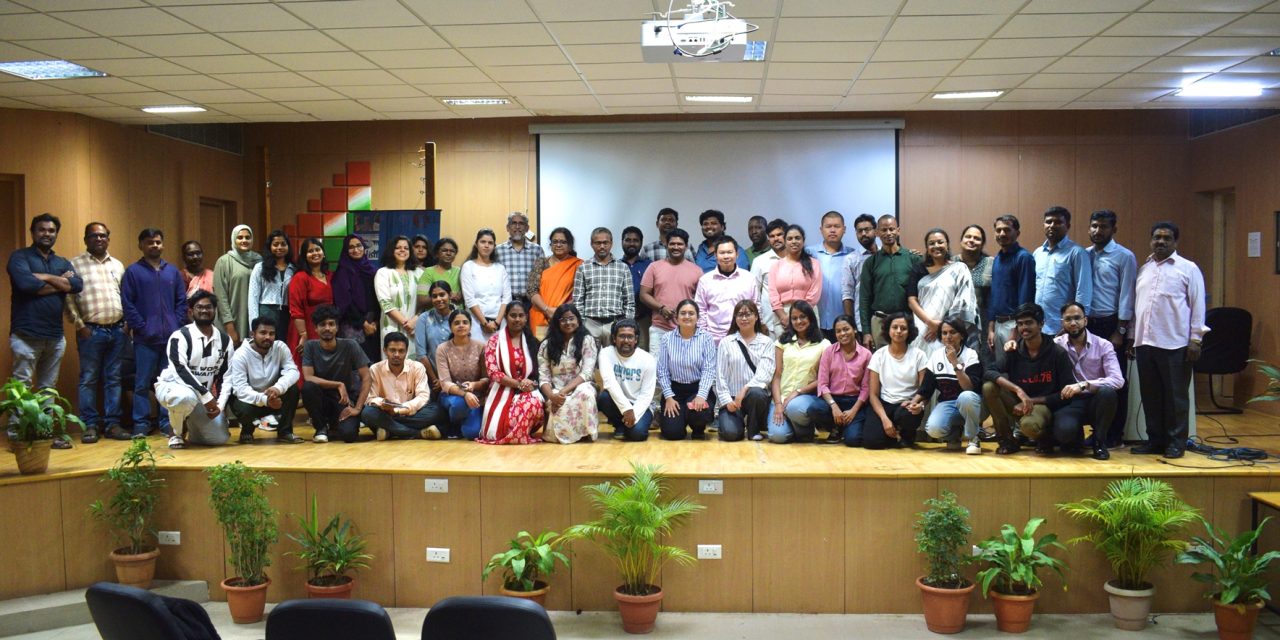
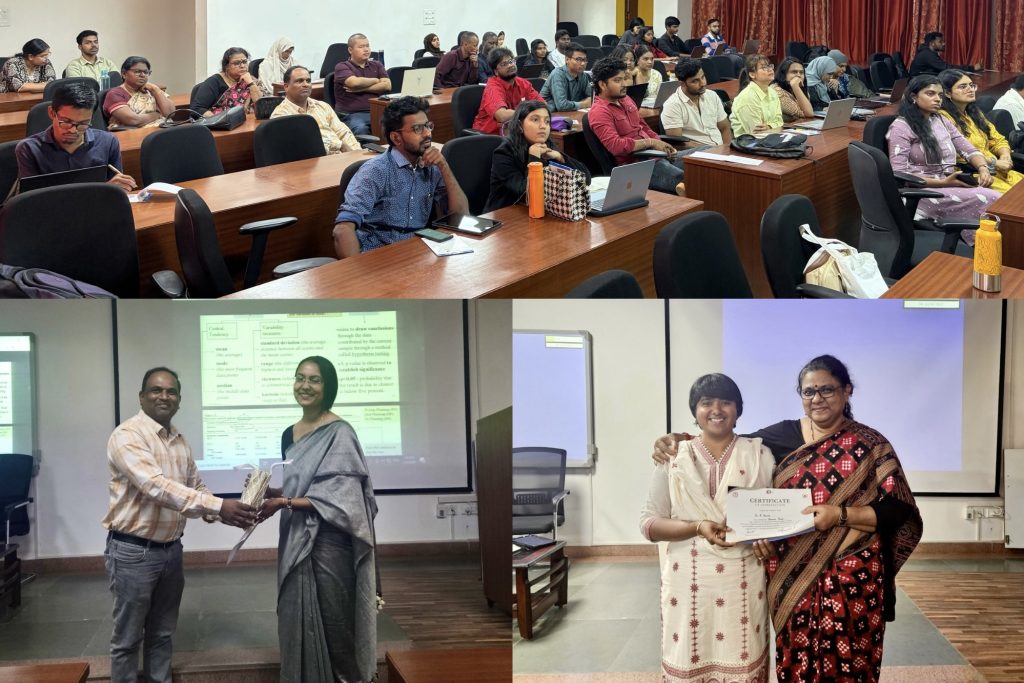
The fifth edition of the Conference for Research Scholars in English Language (COREL), sponsored by the Institute of Eminence, was convened on 21 and 22 January 2026. The two-day conference, thematically centred on ‘English Language Studies in a Changing World: Perspectives, Practices and Possibilities’, was organized by the Research Scholars’ Forum under the purview of the Centre for English Language Studies. The conference was kickstarted with a pre-conference workshop on 20 January 2026. Prof. Lina Mukhopadhyay, Professor, The English and Foreign Languages University, Hyderabad, led a session on ‘Quantitative Data Analysis for Instructed Second Language Acquisition and Learning’ while Dr. Vennela, Assistant Professor, National Institute of Technology, Warangal, conducted a session on ‘Qualitative Research Methods in English Language Studies.’ Both sessions offered hands-on engagement with quantitative and qualitative research methods grounded in theory.
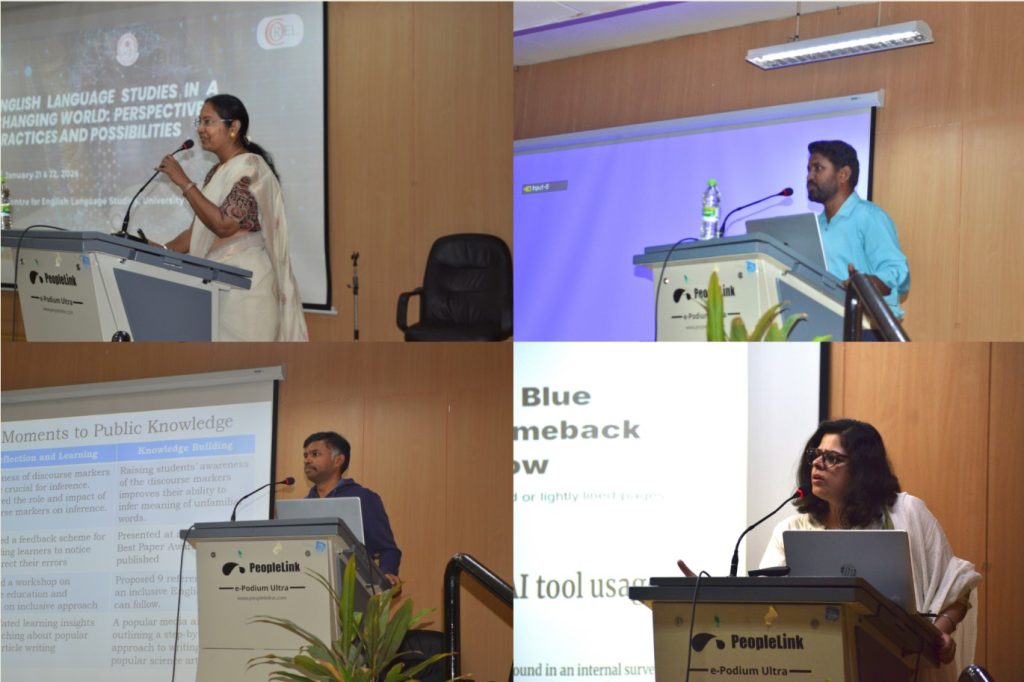
The key note address, ‘PhD Research in ELE – A Critical Revisit,’ delivered by Prof. Amol Padwad, formerly Professor & Director, Centre for English Language Education, Dr. B.R. Ambedkar University, Delhi, discussed gaps between theory and practice in ELE research in India and suggested ways by which practitioners could bridge them. The conference also had four plenary lectures by the alumni of the centre. The first plenary, ‘Small Interventions for a Big Impact: The Role of Mentors in Action Research Practices’ saw Dr. Salomi Snehalatha, a teacher at the Zila Parishad High School, Ranga Reddy District, Telangana, draw on her experience as a mentor to English teacher-researchers, shedding light on the significance of action research and mentoring in professional development in the light of NEP 2020.
Dr. Krishnaswamy, Assistant Professor, IIIT Sri City, delivered the second plenary lecture on ‘Offering Interdisciplinary English Language Courses: A Current Necessity’, which highlighted the need for English language teaching departments to foster interdisciplinary language learning in the face of changing professional landscapes. In the third plenary titled ‘The Classroom as a Research Site: Discovering Researcher Identities in Indian Higher Education’, Dr. Lakshman Rao, Assistant Professor, Indian Institute of Technology Kanpur, contemplated on his journey of forging multiple teacher-researcher identities. The fourth plenary, ‘Re-imagining the Landscape of Critical Thinking Skills,’ by Dr. Parul Bakshi, B.R. Ambedkar University, Delhi, examined the shifting dynamics of critical thinking skills within educational spaces. There was also a panel discussion on ‘Past and Future Concerns of English Language Studies.’ The panel, featuring Dr. Kuchipudi Kumar Raja, CELS, University of Hyderabad, Dr. Orsu Kasibabu, SKBR Government Degree College, Macherla and Dr. S. Ramamoorthy, SR University, Warangal, was moderated by Dr. Santosh Mahapatra, BITS Pilani, Hyderabad Campus. The panel engaged in a lively discussion on existing practices and future challenges in the field of English language studies.
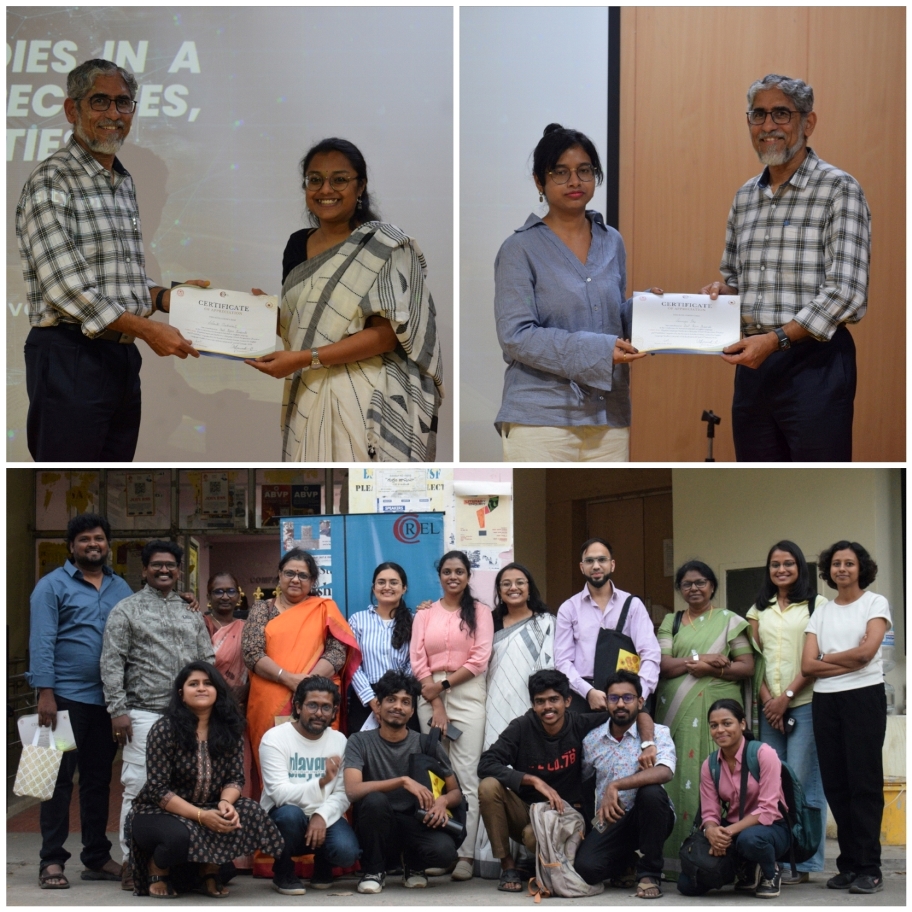
In the paper presentation sessions, delegates presented their work on a wide gamut of topics including History of English Language Education, English Language Teaching, Language and literature, and Translanguaging. The Best paper presentations were awarded to two presentations, (1) ‘Colonial Education Policy-Making with a Focus on English Studies: A Case-Study of the Hindoo College, Bengal Presidency’ presented by Solanki Chakraborty, University of Hyderabad, and (2) ‘Reading the Room: Intuitive Decision-making in Graduate Teaching Assistants in ELT classrooms’ jointly presented Akshay Kumar and Soumya Das, The English and Foreign Languages University, Hyderabad. The conference opened doors to new insights in the theory and practice of English Language Studies.