
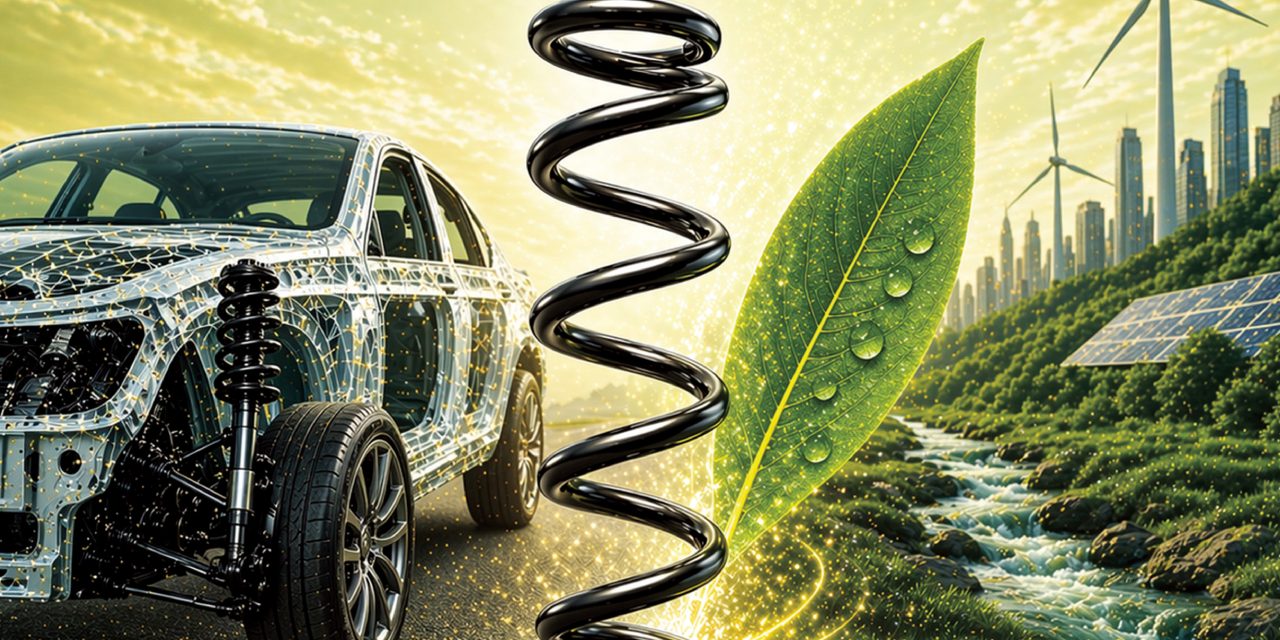
A high-impact international research collaboration under the bilateral Indo-German Science and Technology Centre (IGSTC) project, “Steel4LTC,” has achieved a major milestone in sustainable manufacturing. The breakthrough study has been published as a COVER STORY (https://pubs.acs.org/toc/aaemdr/4/5) in the prestigious journal ACS Applied Engineering Materials (May 22, 2026, Vol. 4, No. 5).
Executed by a multidisciplinary consortium of academic and industrial titans, the research team has comprised of Mr. Mohsin Hasan (as part of his PhD thesis in Materials Engineering), alongside Mr. Nanda Kishore Karnam, Mr. Joshua Daniel Jujjavarapu, and Prof. Koteswararao V. Rajulapati from the School of Engineering Sciences and Technology (SEST), University of Hyderabad (UoH). The global team seamlessly integrated the expertise of industrial and international academic partners, including Dr. Manjini Sambandam from the JSW Steels (Salem, India), Prof. Dr. Robert Brandt from the University of Siegen (Germany), and Mr. Jens Heßland & Mr. Steffen Klapprott from the giant automotive spring manufacturer, MUBEA (Weißensee, Germany).
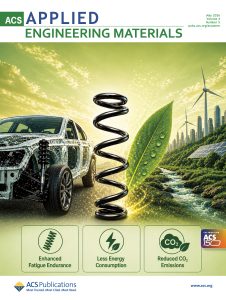
https://pubs.acs.org/toc/aaemdr/4/5
Supported by a ₹1.88 crore grant allocated to UoH out of the total ₹7.2 crore project budget, the consortium successfully engineered a revolutionary thermomechanical process that delivers lightweight, high-strength, fatigue-resistant and climate-resilient automotive suspension springs. To express their gratitude, the consortium dedicated this impactful work to Prof. K. Bhanu Sankara Rao (Former Dean-SEST & Former Pratt & Whitney Chair, UoH) and Dr. G. Balachandran (Former Vice President of R&D, JSW Steels) for inspiring their pursuit of “Directed Basic Research.”

Mohsin Hasan-UoH

Nanda Kishore Karnam-UoH

Joshua Daniel Jujjavarapu-UoH
Koteswararao V. Rajulapati-UoH

Manjini Sambandam-JSW Steels

Robert Brandt-USI, Germany

Steffen Klapprott-MUBEA, Germany

Jens Heßland-MUBEA, Germany
The conclusions of this article (https://pubs.acs.org/doi/10.1021/acsaenm.5c01234) reads as:
“This study comprehensively compares IQT and conventional QT SAE 9254 spring steel, elucidating the role of microstructure refinement and retained austenite stability on tensile performance, fatigue resistance, fracture behavior, and sustainability. IQT processing resulted in significantly finer prior austenite grains (∼9 μm) and higher γR content (∼8%) than QT (∼19 μm, 3%) due to shorter austenitization and rapid cooling, which suppressed austenite transformation and stabilized γR during tempering. Lower dislocation density observed in IQT, resulting from localized heating and higher tempering temperatures, contributes to enhanced phase stability. While both treatments achieved σUTS exceeding 2000 MPa, IQT shows a modest reduction (∼3%) in strength but significantly improved ductility, with 19% higher RoA and 8.2% greater elongation. These improvements were ascribed to finer grains, γR stability, and higher HAGB density, promoting uniform plastic deformation and delayed crack initiation. Under HCF loading, IQT outperformed QT, with fatigue strength improvements of 36% at R = 0.2 and 64% at R = 0.4. This enhancement was linked to finer striation spacing, more transgranular crack propagation, and a tough martensitic matrix. Moreover, crack initiation shifted from nonmetallic inclusions in QT to PAGB in IQT, reducing local stress concentration. Fractography revealed a mixed quasi-cleavage fracture in QT, whereas IQT exhibited uniform ductile fracture with refined equiaxed dimples. Fatigue cracks in IQT followed more complex and deflected paths, indicating improved crack growth resistance and delayed failure. The IQT process demonstrated significant sustainability benefits, with annual energy savings of ∼18.25 GWh and CO2 emission reductions of nearly 15,000 tons. For equivalent production capacity, the IQT route requires approximately 67% less energy than the conventional QT process, highlighting a major improvement in process energy efficiency. These results support UN Sustainable Development Goals through cleaner, energy-efficient, and climate-resilient industrial processing. In conclusion, IQT offers a high-performance, energy-efficient, and environmentally responsible alternative to conventional QT, delivering an enhanced mechanical performance while substantially reducing the carbon footprint. These findings underscore the potential of IQT as a scalable thermomechanical treatment for fatigue-sensitive industrial applications contributing toward green engineering.”