
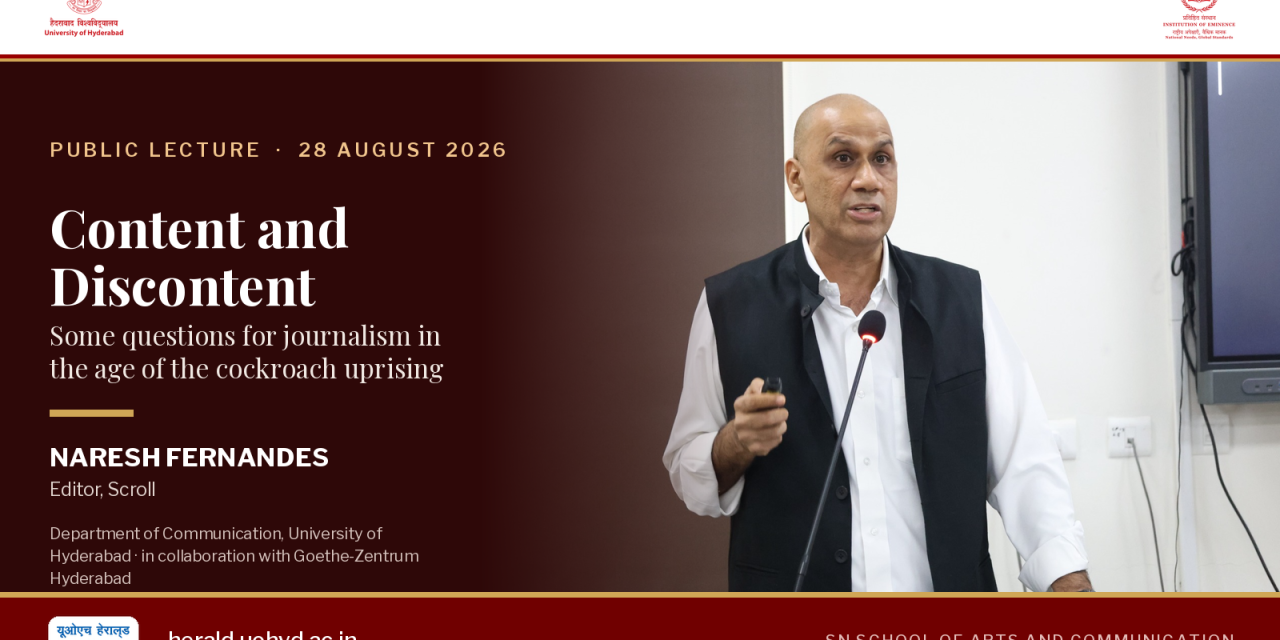
The Department of Communication, University of Hyderabad, in collaboration with Goethe-Zentrum Hyderabad, hosted a public lecture by Naresh Fernandes, Editor of Scroll, on “Content and discontent: Some questions for journalism in the age of the cockroach uprising. The lecture formed part of a two-day series of events titled “Beyond the Screen: Storytelling and Digital Media,” organised by the Department, also in collaboration with Goethe-Zentrum Hyderabad.
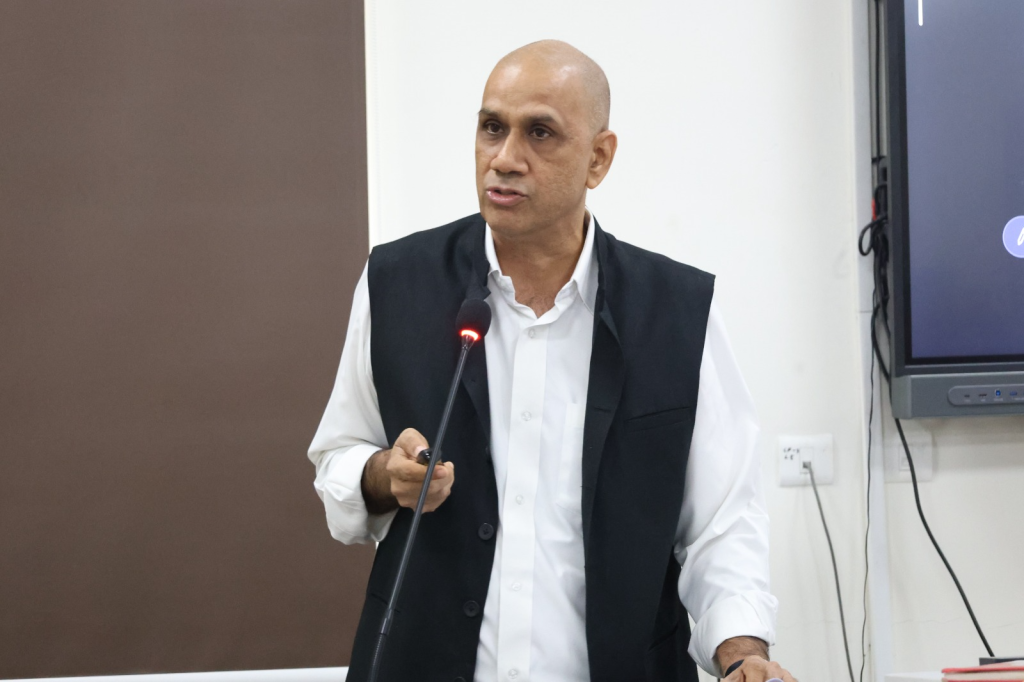
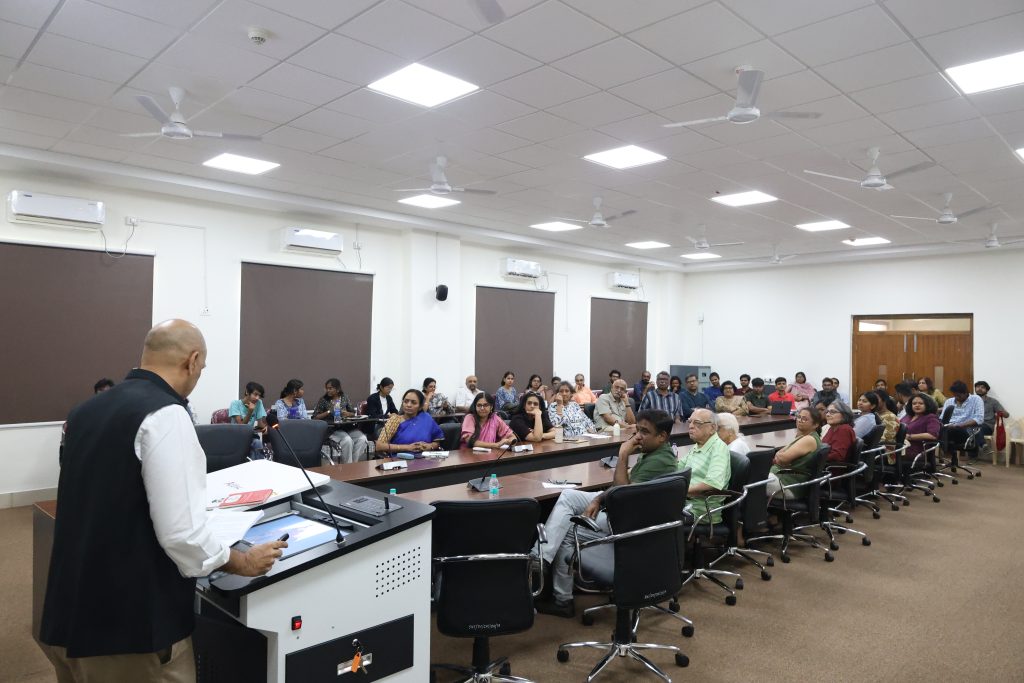
Speaking to a full hall at the SN School Annexe, Fernandes explored how technological change, social media, artificial intelligence and shifting business models are transforming journalism, while raising fundamental questions about the role of journalists in a democracy. His argument moved between the economics of the news business and the ethics of the profession, repeatedly returning to a single concern: whether citizens are still equipped with the information a democracy requires of them.
Fernandes is a founding editor of Scroll.in, the independent digital news and culture publication launched in 2014. He was previously editor-in-chief of Time Out India and has worked with The Times of India, the Associated Press and The Wall Street Journal. He is also the author of Taj Mahal Foxtrot, a history of Bombay’s jazz age, and City Adrift: A Short Biography of Bombay.
From traffic source to primary gateway
Tracing the evolution of media and storytelling, Fernandes described how social media first arrived as an opportunity for news organisations rather than a threat. Platforms such as Facebook and Twitter directed substantial readership to news websites, and newsrooms built their distribution strategies around that flow. Gradually, however, the relationship inverted. Social media became not the route to the news, but the place where audiences encountered it, and publishers found themselves dependent on platforms whose priorities were never editorial.
The industry, he acknowledged, is still struggling to find a sustainable business model for online journalism. He nevertheless pointed to the emergence of independent digital news platforms as a source of optimism, citing their coverage of the recent student protests at Jantar Mantar in New Delhi. Such platforms, he argued, have brought attention back to the core responsibilities of the press — to inform citizens, hold leaders accountable and represent public concerns.
In his reading, the audience has not abandoned that expectation. “Audience still values journalism, honest journalism and journalists,” he said, adding that “young Indians are not only grossed by the news, but they also have high expectations from the media.”
“Journalism as a process”
A major theme of the lecture was the tension between social media storytelling and journalistic depth. Platforms such as Instagram reward visual hooks, virality and the ability to capture attention within seconds. Fernandes granted that the format can be effective for rapid political messaging, particularly where speed and reach matter most.
Its limitations, however, are structural. A form built to hold attention for a few seconds cannot carry the historical context that complex issues require, and the stories told by influencers on these platforms do not meet the standards expected of traditional news reporting. Against the logic of the single viral post, he emphasised the importance of “journalism as a process” — reporting understood as verification, revision and accumulation over time rather than as a finished product delivered in one stroke.
“Social media incentivises ragebaiting”
Fernandes was direct about how platform economics shape editorial behaviour. Systems that reward engagement above all else encourage opinionated reporting, sensationalism and what he termed “rage baiting” — content designed to provoke a reaction rather than to inform.
Turning to the relationship between journalism, power and freedom of expression, he described how the removal or restriction of social media content has itself become an instrument of pressure on journalists and news organisations. He listed censorship, legal action, defamation law, tax investigations and physical violence among the significant challenges confronting journalism today, presenting them not as isolated incidents but as a pattern of constraint that reporters now work within.
Artificial intelligence, both ways
Artificial intelligence, in his account, is at once a challenge and an opportunity. AI-driven web scraping can extract information from news websites to answer user queries directly, potentially reducing traffic to the publishers who produced the reporting in the first place — a threat to an already fragile revenue base.
At the same time, he acknowledged its usefulness in data journalism, particularly for analysing large datasets that would be impractical to examine by hand. The technology, he suggested, is not the variable that determines the outcome.
Orwell, Huxley and Gauhar Jaan
Fernandes connected these technological shifts to a larger philosophical question by invoking the contrasting dystopian visions of George Orwell and Aldous Huxley, as interpreted by Neil Postman. Orwell feared a world in which those in power would suppress information. Huxley feared one in which people would be so overwhelmed by entertainment and distraction that they would no longer seek out meaningful information at all. The second, Fernandes implied, is the more pressing description of the present.
He closed the historical argument on a more hopeful note, turning to Gauhar Jaan and the early recording industry to show how a technology that was initially disruptive also expanded the reach of creative work — serving audiences that older forms could never have reached once artists learned to use it on their own terms.
The lecture concluded that the future of journalism is inseparable from the health of democracy. Citizens need credible information to make informed choices and participate in public life. At the dawn, new technologies may be disruptive, but their impact eventually depends on how journalists and society choose to use them.
The Digital Detective
As part of the same series, the Department hosted a fact-checking workshop for its Master’s students, titled “The Digital Detective.”
The session was conducted by Dheeshma Puzhakkal, Editor of the Fact Check team at NewsMeter and an alumna of the Department. She leads NewsMeter’s fact-check unit, which is certified by the International Fact-Checking Network. She specialises in analysing maps and satellite imagery and gathering open-source intelligence for investigative reporting. Before returning to NewsMeter, she worked with the fact-check team at India Today, where she rose to the position of principal correspondent.
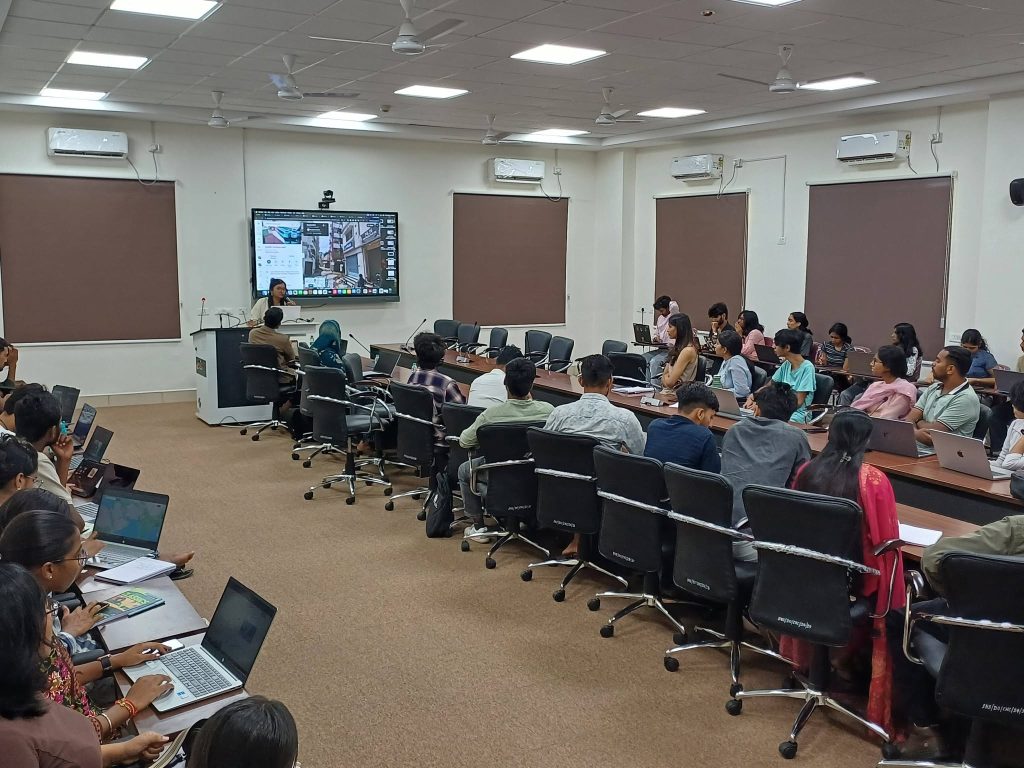
At the workshop, students learnt to approach digital information the way an investigator would — treating a claim as something to be traced to its source rather than accepted or dismissed on sight. They were introduced to the tools that help journalists distinguish facts from falsehoods, and to the habits of verification that make those tools useful in practice.
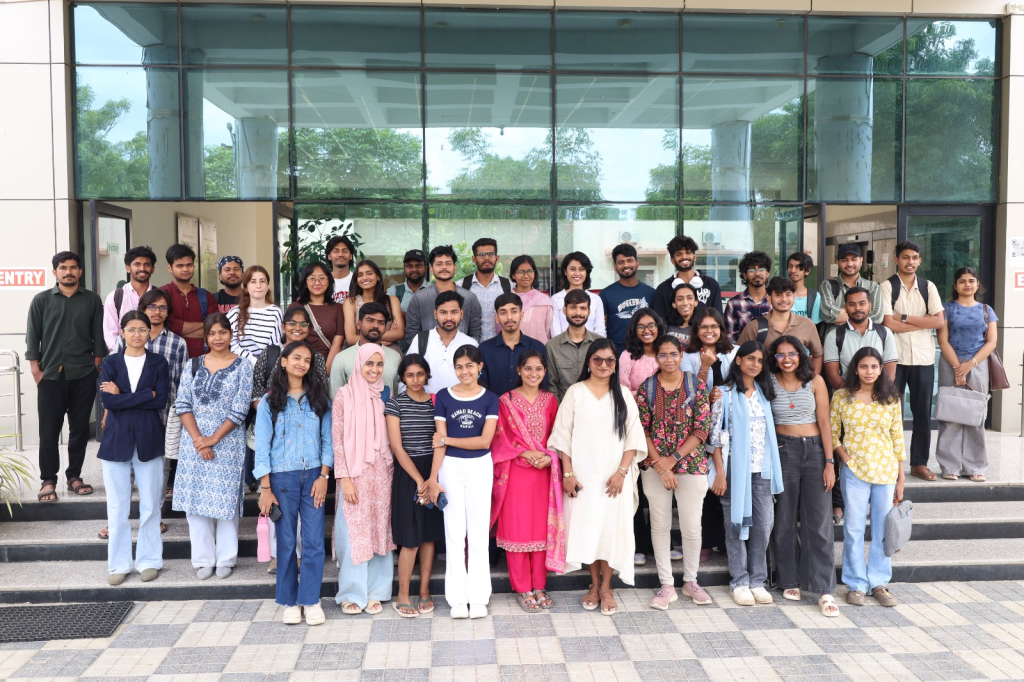
Taken together, the lecture and the workshop framed the two sides of the series’ concern. One asked what had happened to journalism as its audiences moved onto platforms built for other purposes. The other equipped the students entering that profession with the means to work in it.
Contributed by Eishita, MA Communication, Media Studies