
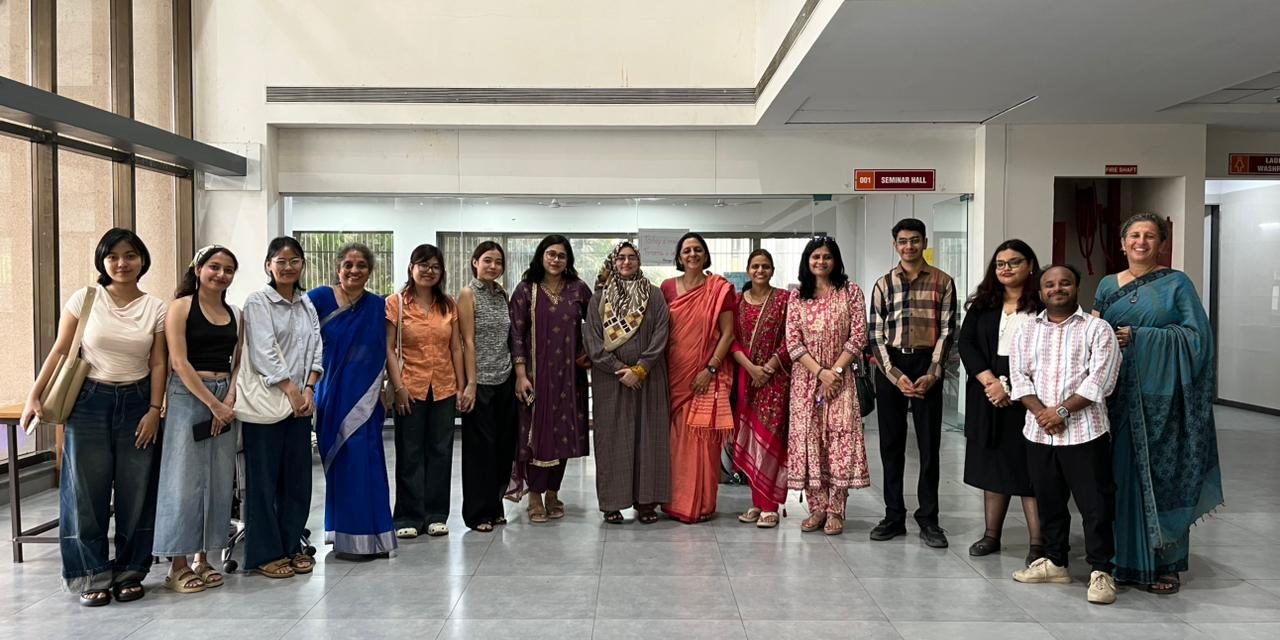
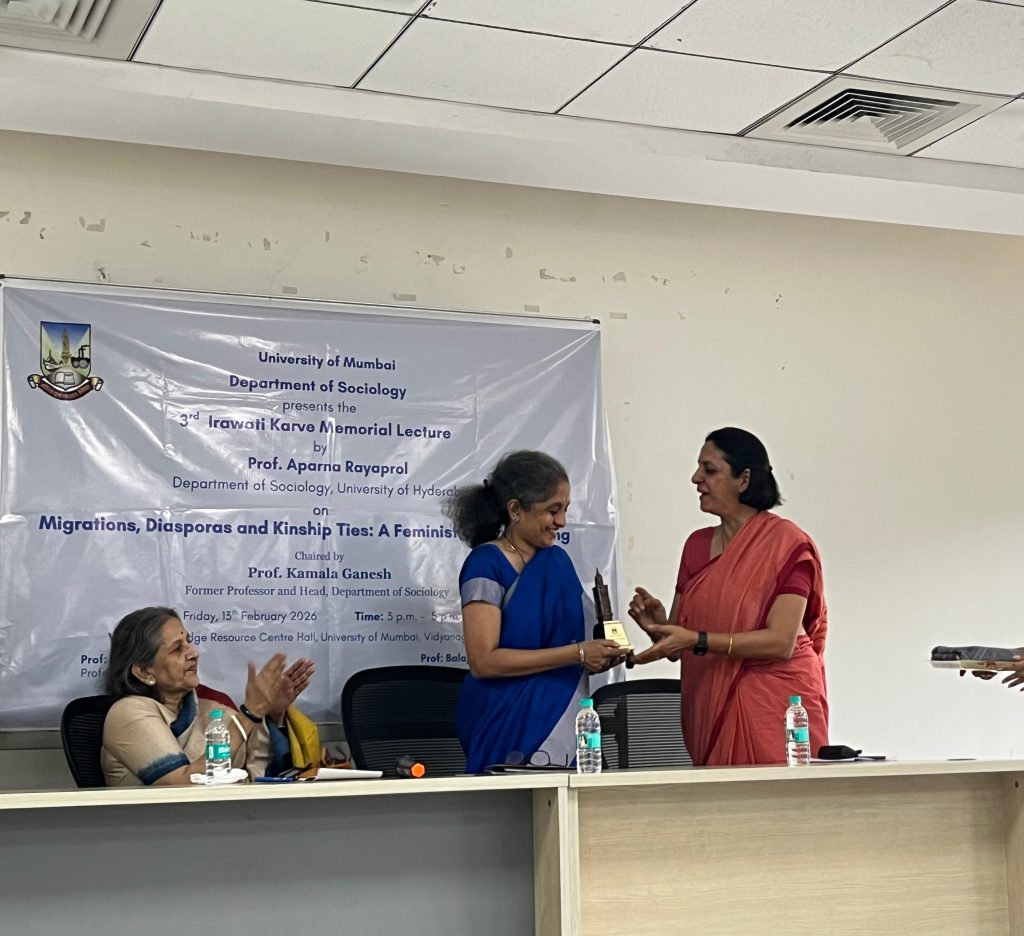
Prof. Aparna Rayaprol from the Department of Sociology was invited to deliver the 3rd Iravati Karve Memorial lecture at the Department of Sociology at the University of Mumbai on February 13th, 2026. It was chaired by Prof. Kamala Ganesh, and introduced by Prof. Manisha Rao, Head, Department of Sociology, Mumbai University.
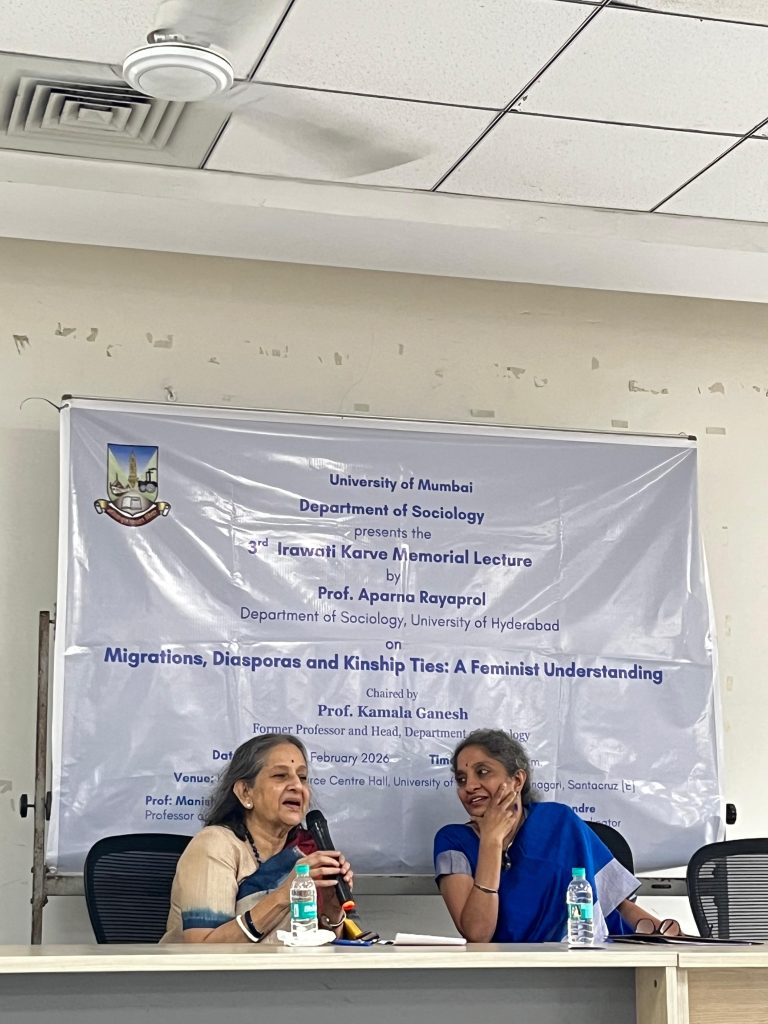
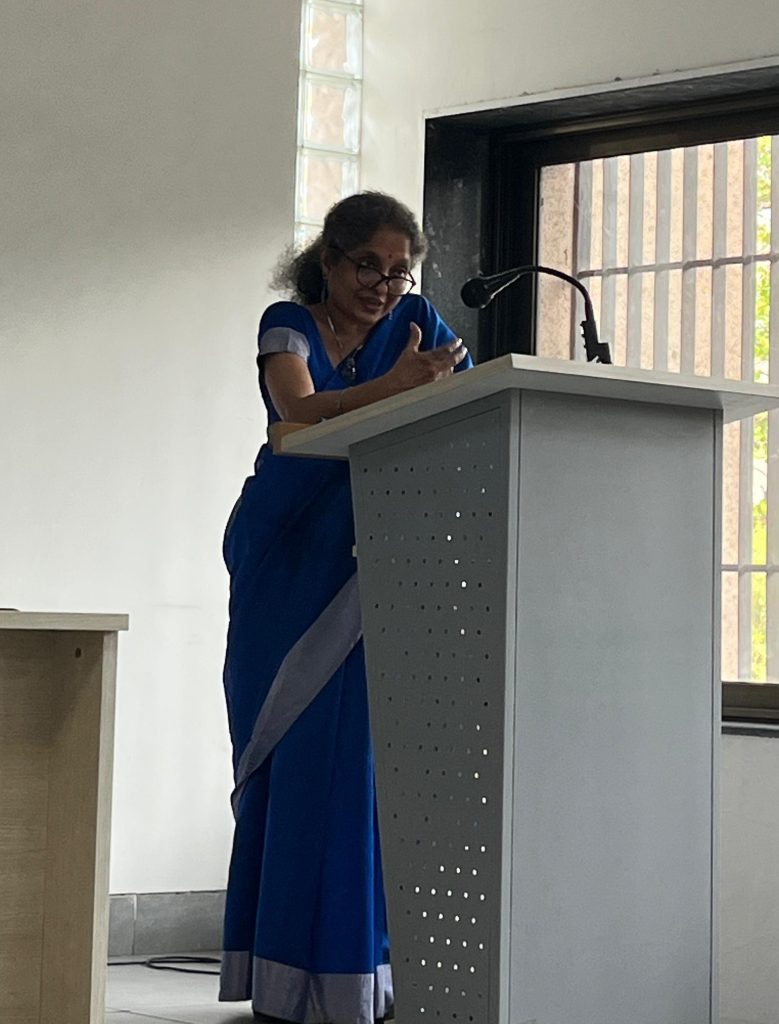
In her lecture Prof. Rayaprol set out to make sense of the way kinship ties operate across borders in the contemporary world. Kinship and marriage were linked to people and places and she said that while some ties are strengthened over a period of time, new forms of kinship and community are created by migrants both within national and diasporic contexts. She drew examples from studies on migration and kinship as well as her own work in the context of diaspora studies. Kinship, once a favorite topic for anthropological studies has become highly relevant for the analysis of present-day issues of migration in transnational contexts. Kinship started like migration as an androcentric enterprise looking mostly at patrilineal and patrilocal forms of kinship.
Feminist scholars posit that there were many invisible forms of kinship that remained underexamined. Kinship as a concept is useful for researchers of migration and transnational processes when it goes beyond the classic anthropological theorizing that often kinship as static and relevant only for stateless societies. A conceptualization that accounts for kinship’s flexible and dynamic character in changing settings is necessary and needs to pay close attention to the intricate ways kinship interrelates with state politics and policies of border crossing. Whatever strategy they might adopt, immigrants are primarily concerned with economic survival and when they are secure, they shift attention to “cultural reproduction” or the process by which they seek to transmit their knowledge, values, belief systems, and behavioral norms to the next generation.
The idea of reproduction cannot be conceptualized merely as a mechanistic replication, but as a generative process involving innovation and creativity. Possibilities of change and new combinations in social and cultural reproduction become particularly significant in the immigrant context. People belonging to different social groups build kin networks that sustain them. Women in abusive marriages may learn new survival strategies and find kindred spirits. Kinship networks vary according to gender, caste, class, region, religion and community. However, women across continents and generations take on the burden of building and sustaining kin networks and surrogate extended families. The lecture focused on migration within and across borders of different kinds to illustrate the argument. Prof. Rayaprol’s talk used the diasporic context as well as the story of migrants within India to explain the intergenerational and intersectional forms of kinship.