
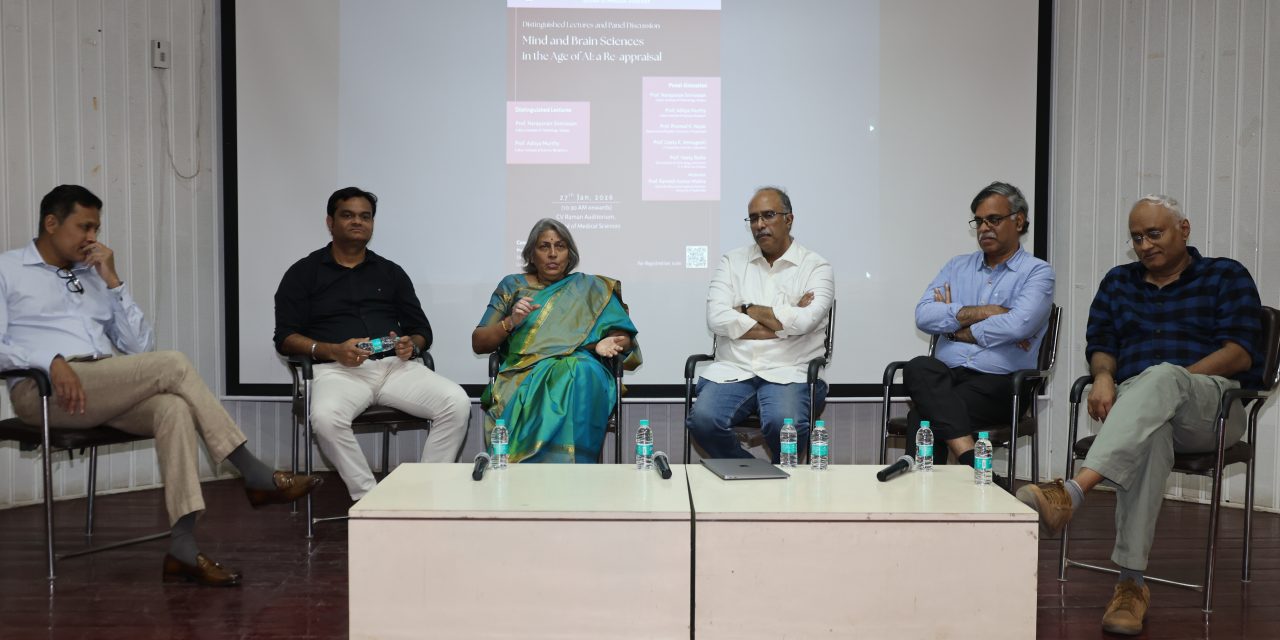
A one-day event with Distinguished Lectures and a Panel Discussion titled “Mind and Brain Sciences in the Age of AI: a Re-appraisal” was organised by the Centre of Neural and Cognitive Sciences at the University of Hyderabad on the 27th of January, 2026. The event was sponsored by the IoE Grant. The event witnessed distinguished cognitive scientists and neuroscientists, students, and young researchers from across the country, and served as a platform for fresh conversations and ideas in mind-brain sciences.
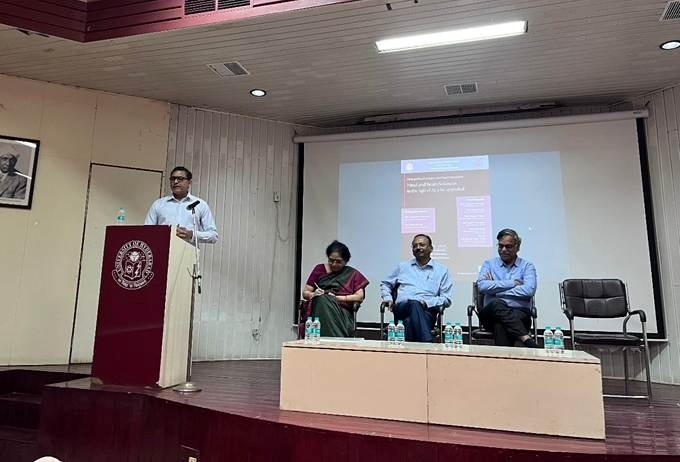
Prof. Ramesh Mishra addressed the gathering at the inaugural, highlighting the importance and novelty of the distinguished lectures and the panel discussion, and emphasizing the need to address emerging questions at the intersection of the mind and brain sciences and artificial intelligence. The Guest of Honour, Prof. Narayanan Srinivasan, from the Indian Institute of Technology, Kanpur, reminisced about his long-standing relationship with the University of Hyderabad and shared that the Centre of Neural and Cognitive Sciences is one of the oldest proponents of cognitive science in the country. Prof. G. Padmaja, Head, Centre for Psychology and Dean, Student Welfare, spoke of the integration of psychology, cognitive science, and allied fields in the spirit of interdisciplinarity and progress. The Chief Guest, Dr. Devesh Nigam, Registrar, University of Hyderabad, commended the panel of experienced guests and highlighted the importance of multidisciplinarity and conversations surrounding AI in today’s world.
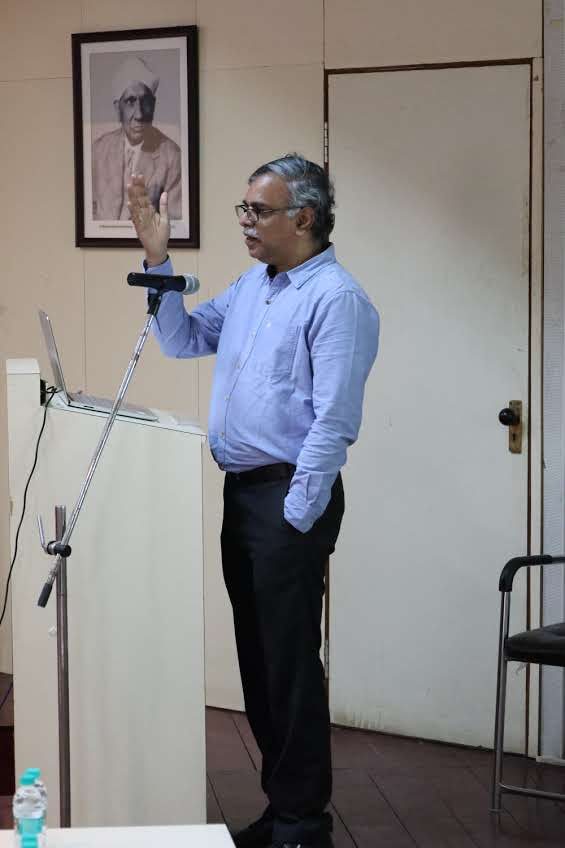
As part of the proceedings, Prof. Narayanan Srinivasan delivered a lecture titled Attention and Consciousness. He spoke of his research that sought to answer questions about the gradedness of consciousness. An introduction to entrepreneurial opportunities at the intersection of cognitive sciences, education, and artificial intelligence, along with a presentation of an Indian ed-tech startup, Cogmentor, followed. Prof. Aditya Murthy from the Indian Institute of Science, Bengaluru, delivered a lecture on Neural Correlates of Intention in Muscles. He emphasized oculomotor preparation as an indicator of intention as studied in non-human primate muscles. He also threw light upon the need for integration between the neurosciences and artificial intelligence.
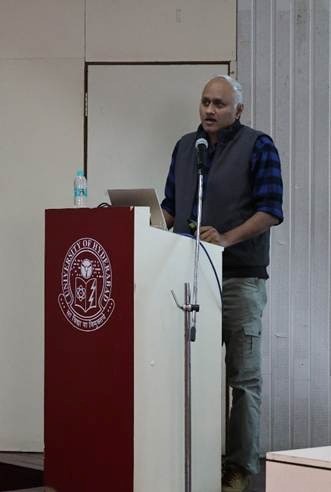
The afternoon saw a panel discussion where Prof. Narayanan Srinivasan, Indian Institute of Technology, Kanpur; Prof. Aditya Murthy, Indian Institute of Science, Bengaluru; Prof. Pramod K. Nayar, Department of English, University of Hyderabad; Prof. Geeta K. Vemuganti, LV Prasad Eye Institute, Hyderabad; Prof. Veeky Baths, Birla Institute of Technology and Science, K. K. Birla Goa Campus participated. The discussion was moderated by Prof. Ramesh Mishra.
The panel and audience was truly interdisciplinary in nature, where the topics of discussion ranged from increased human efficiency with AI tools to ethical use of AI in industrial and academic contexts. Prof. Murthy and Prof. Srinivasan commented on the increasing use of AI in research and the need for students to stay abreast with theoretical skills and AI agents, which would open new doors for research in the mind and brain sciences. The discussion further touched upon laws and debates on personhood in AI and surveillance, where Prof. Nayar remarked on the emergent need to review policy regulations across the world. The moderator, Prof. Mishra brought in pertinent questions about the effect of AI on mental health and social interactions, inviting anecdotal remarks from Prof. Baths. Prof. Vemuganti enlightened the panel and audience about improved diagnostic efficiency in the healthcare industry using AI agents. In sum, the discussion highlighted the transformative potential of artificial intelligence across various domains and the urgent need for critical, interdisciplinary and ethical engagement with its societal implications.