
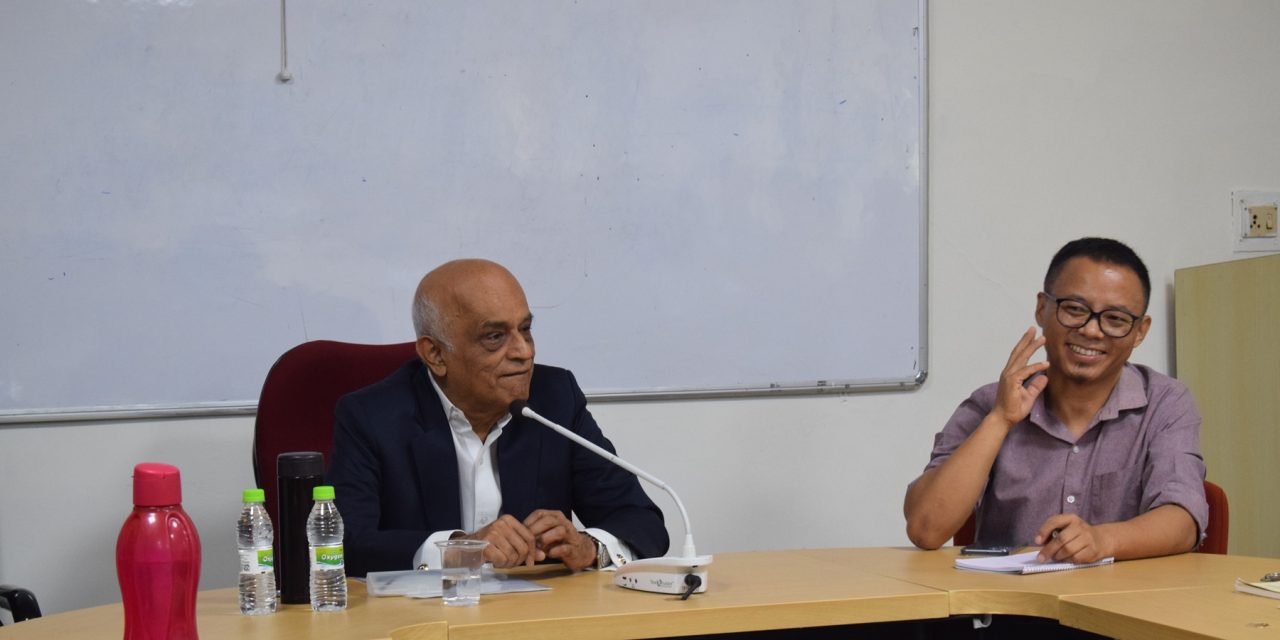
Amb. Sudhir T. Devare, IFS (retd.), who served as India’s Ambassador to South Korea, Ukraine, Armenia, Georgia and Indonesia, delivered a special talk on “Ukraine-Russia Conflict and the Changing World Order” in the Seminar Hall, Department of Political Science, on 25 August 2025 at 2:00 pm. Department faculty members: Dr. Bhim Subba chaired the session, and Dr. Shaji S. gave introductory remarks.
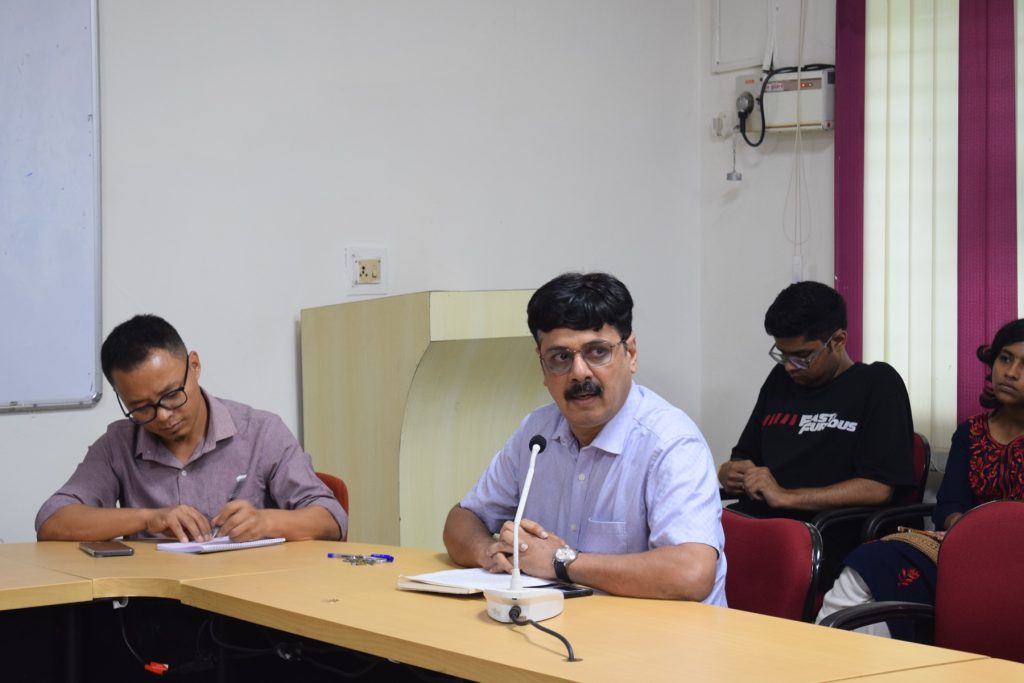
Amb. Devare, the first Indian ambassador to Ukraine after its independence in 1991, began the talk by establishing the Ukraine-Russia conflict as the most significant in Europe since World War II, marking a definitive shift in the global order. He outlined the core security concerns driving the conflict, tracing them back to Russia’s opposition to NATO’s eastward expansion post-German unification, and unfulfilled security guarantees of the 1994 Budapest Agreement, leading to Ukraine’s focus on national sovereignty.
The speaker also stressed the resurgence of geopolitics over the geoeconomics that had defined the post-Cold War era. Likewise, he argued that the war has fast-tracked a move away from neo-liberal internationalistic ideas of globalisation and multilateralism towards a renewed focus on nationalism and regionalism. He examined varied international responses, contrasting the unified sanctions from Western nations with the more neutral, non-condemnatory stance adopted by many countries in the Global South.
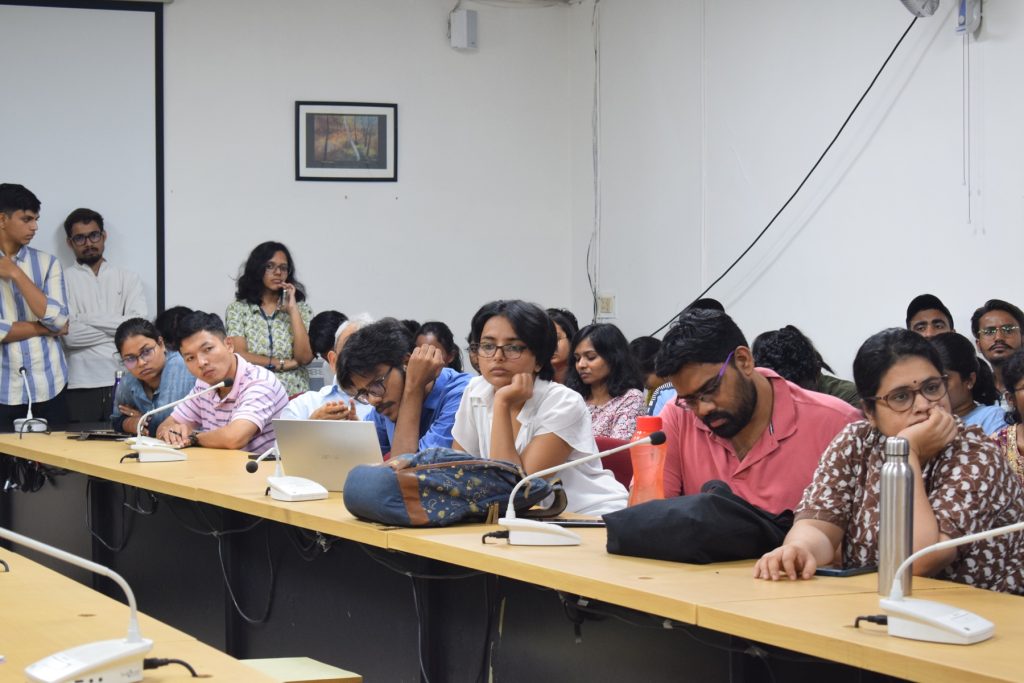
India, however, positions itself as a strategic balancing. While consistent in supporting dialogue and diplomacy, India has directly abstained from most UN resolutions against Russia, a key defence partner. He concluded the talk by emphasising that ending the war is a global priority, necessary not only for regional stability but for the security and prosperity of the entire international community.
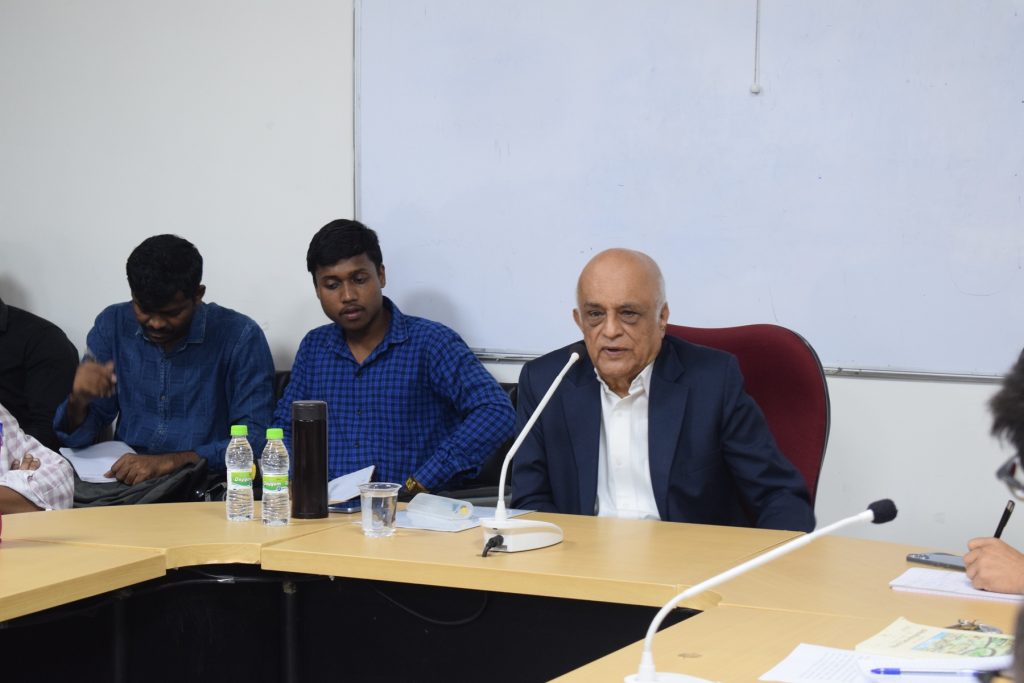
Following the main talk, the session chair, Dr. Bhim Subba, noted that the dynamic between geoeconomics and geopolitics has significantly affected international relations. He also highlighted the limited impact of groups such as BRICS in resolving conflicts, suggesting a turn towards mini-lateralism. He concluded that ideological dimensions remain, with special reference to the rise of an aggressive right-wing nationalism in Europe in the post-Maidan period in Ukraine. Amb. Devare also engaged all the faculty members, research scholars, and Master’s students in the Q&A session. Abhishek Kulkarni, a 2nd-year MA student, delivered the vote of thanks.
Report by: V. Lasya Priya, MA Second Year, Department of Political Science