
Professor Raja Shekhar Bellamkonda’s career shows that learning can cross different fields and stay connected. With three doctorates and four advanced degrees in engineering, management, psychology, and education technology, his path has moved in many directions. But as he says, there has always been a link. “For me, knowledge is one. We are only calling it different, but the problem-solving and analytical methods are common in every subject,” he explained.
Growing up in a rural area with little career guidance, he made choices based on circumstances and interest. After finishing his B.Tech. in Civil Engineering, he chose an MBA because he felt it would give him better job opportunities. His decision paved the way for new opportunities in psychology, education technology, and later data science. “I have been a continuous learner, and whatever I have been studying, they are all interrelated and interdependent to strengthen my teaching and research capacities and capabilities. Ultimately, he stated that these activities can enhance the students’ comprehension and satisfaction levels.

Over time, he became deeply involved in higher education research, especially the issue of student engagement. He noticed how attention spans in classrooms were reducing, how mobiles and social media distracted students, and how traditional teaching struggled to keep them interested. “Somewhere, I felt that we are unable to engage students. I researched transformational teaching, teacher self-efficacy, student self-efficacy, and teacher trust.” He explained that these factors primarily influence student engagement, subsequently leading to student satisfaction.
In higher education today, he is clear about the influence of rankings and accreditation. Both national and international ranking agencies, as well as accreditation agencies, are placing greater emphasis on research. As a result, every institution is rushing to secure a higher ranking, he stated. He says the trend has created a “mad rush” for publications, often affecting research and teaching quality. “If you are a good researcher, your teaching quality can improve. If you are not a good researcher, you transfer the information from whatever is in the textbook. So ideally, both teaching and research should coexist in higher education institutions.”
On the National Education Policy 2020, he also sees some challenges while appreciating various reforms like holistic development, student-centric teaching, value-added courses, and inter- and multidisciplinary education. He believes horizontal mobility, allowing students to move across institutions or disciplines, is beneficial, but it is only possible if there are enough teachers and resources. “Most higher education institutions, barring central universities, lack resources. For the last decade, many state universities have had no recruitment. People are superannuating, but there is no substitute. Consequently, in the absence of many teachers, we may be unable to offer enough electives or skill-oriented courses, such as vocational ones. The only option is to adopt blended teaching to enhance learning quality,” he said.
He is also concerned about the plan to teach local languages in higher educational institutions. “It may be applicable in state universities, where most students come from the same language background. However, it is challenging to implement it in central universities, where students are admitted from many regions and languages. It may be difficult because one professor is inexperienced in teaching many Indian languages. Additionally, transitioning to teaching in the regional language requires extensive resources. Currently, very few standard textbooks and reference books are available in regional languages for many higher education subjects,” he said.
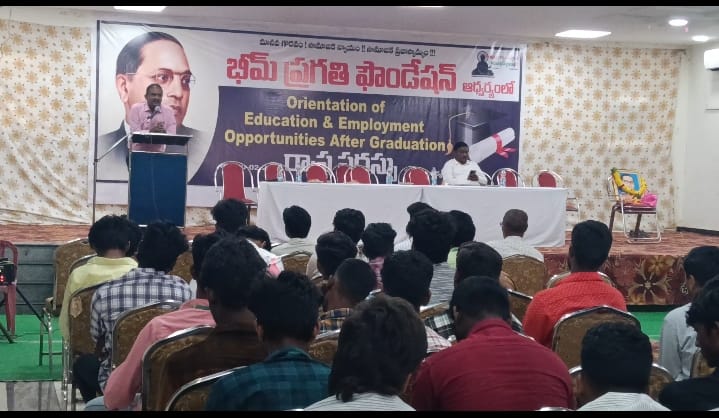
He warns that achieving a 50 per cent gross enrolment ratio by 2035 is a useful target, but it will be insufficient if the focus is solely on numbers. “However, while we focus on increasing the number of students who join higher education, we must also ensure that the quality of education is preserved. Without improving the students’ employability skills, most students will not be willing to join the higher education institutions,” he said. He pointed out how many graduates still go to private coaching institutes to learn skills that should have been part of their graduation or post-graduation curriculum. “It is the responsibility of every higher education institution to focus on skill-based education. Since the skills should be integral to the education system, students should acquire them simultaneously and concurrently throughout their academic programme.”
Beyond academics, his longest commitment has been career counselling. He has guided students for over three decades and clearly understands its importance. “In the Indian context, career counselling often receives little attention, leading to students pursuing unplanned careers. “Very few students are planning their careers effectively, but the majority are unable to plan well,” he said.
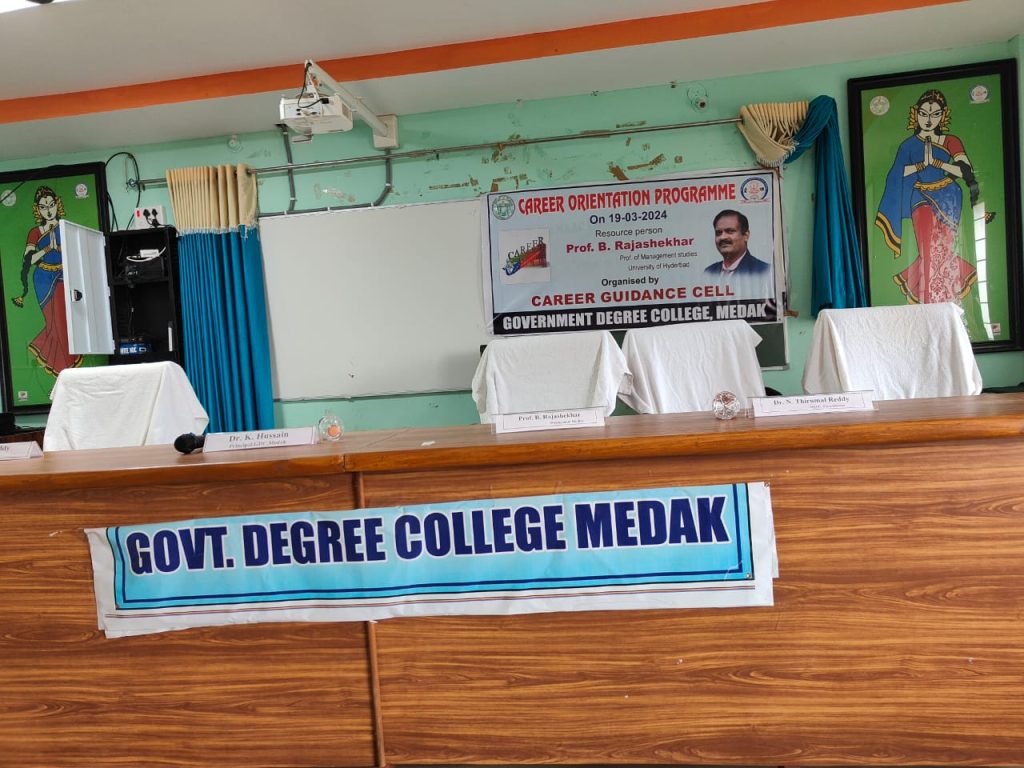
He feels every school, college, and university should have proper career counsellors, and the placement cells or psychological counsellors cannot replace the career counsellors. “Many academic institutions do not understand the difference between psychologists and career counsellors. “They appoint a psychological counsellor and expect the counsellor to handle both responsibilities. However, psychological counselling and career counselling are two distinct fields,” he explained.
He also worries about how parents and society push children into fields they may not want. “Some students are highly creative and interested in art, but their parents put them into science or mathematics. At the same time, some students have high mathematical abilities but are admitted into the arts. Some parents in higher middle-class and higher-income groups started respecting their children’s choice, but most of the parents from the lower middle class and middle class are trapped,” he said.
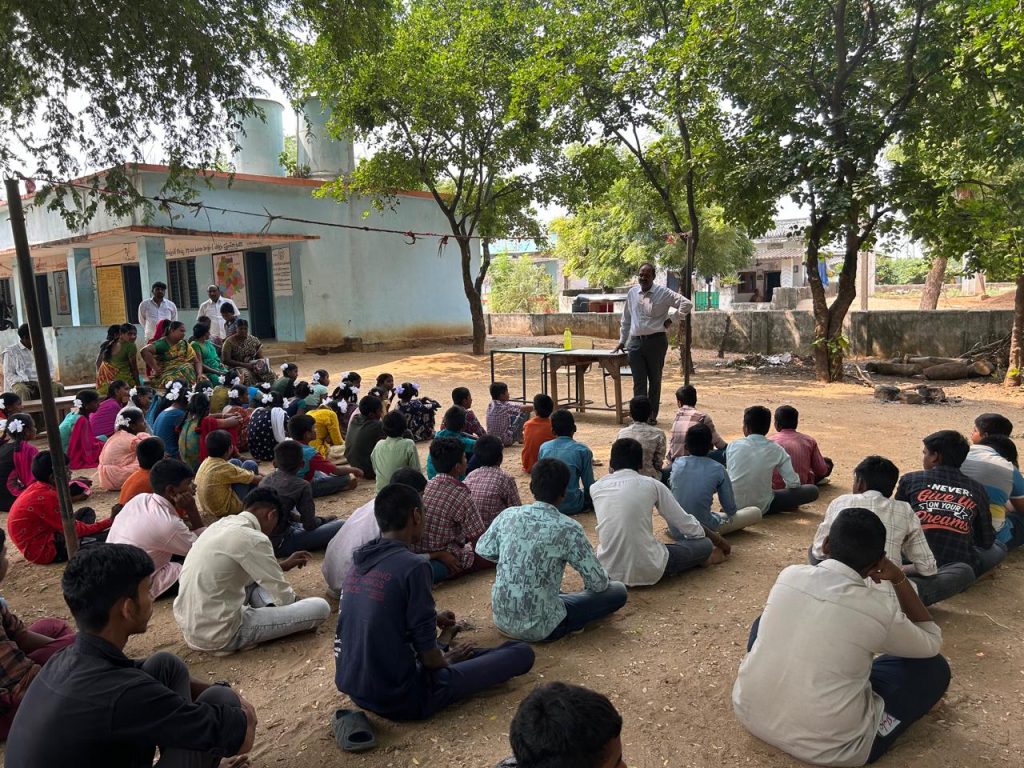
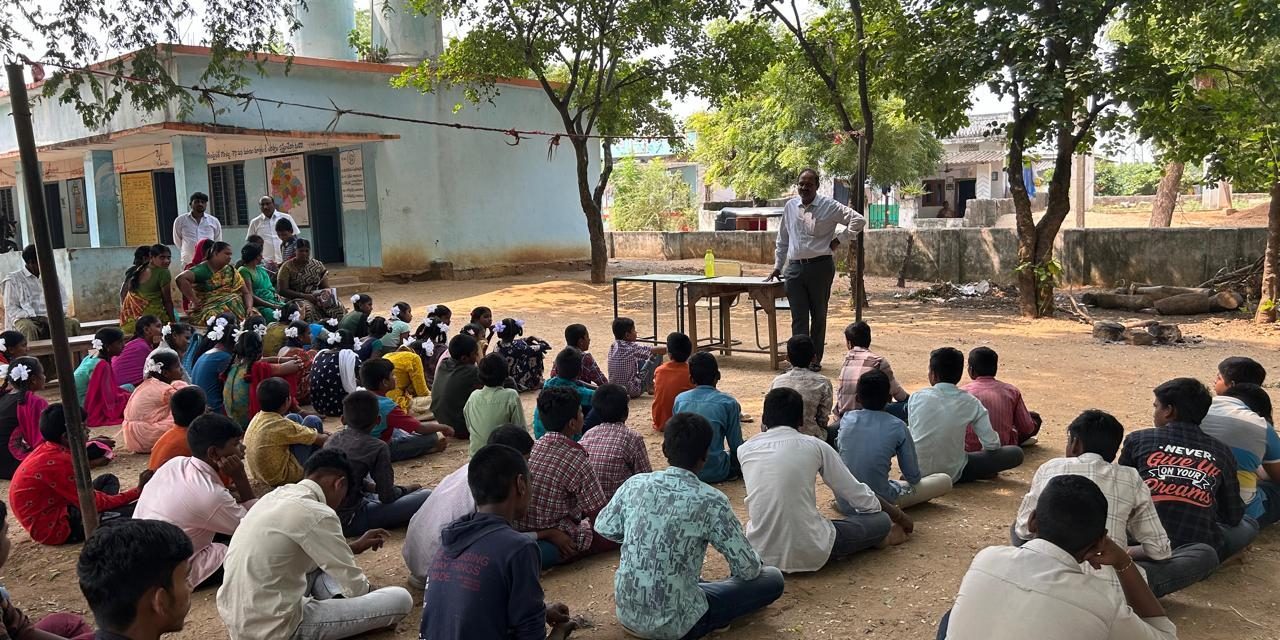
At ZPHS Lingagiri, Suryapet District, where Professor Raja Shekhar studied from 1st class to 10th class
His advice to parents is very direct: “Children are not your property. They do have their dreams and lives. You only facilitate them in making a better decision, but you don’t make the decisions on their behalf. And don’t force them to implement your choices or dreams and decisions on them.” According to him, the role of a counsellor is not to make decisions but to guide them. “I never decide for the student and will empower the student to make the right decision. I only discuss various options and the pros and cons of each. And finally, I will help them to make their own decisions,” he explained.
He is careful about the use of AI tools for career advice. “Whatever information we get through ChatGPT, Gemini, Perplexity, Grok, DeepSeek, or Quora needs validation. Do not jump into the decision without validating the information provided,” he said.
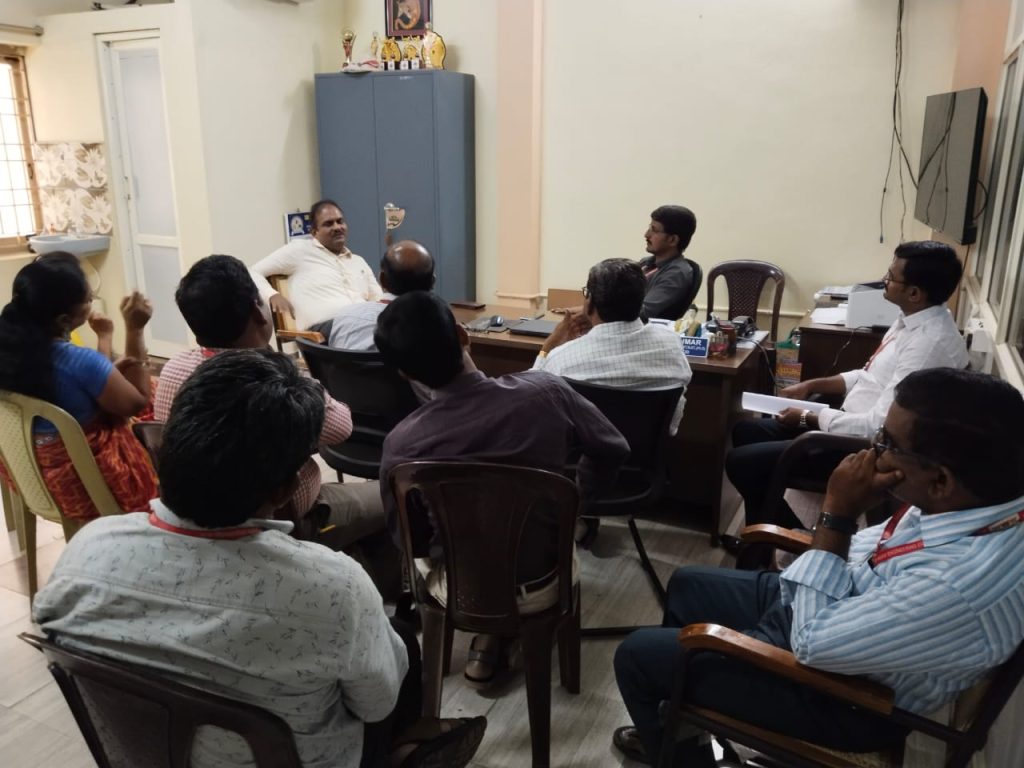
Even with his critical views on a few issues in the education system and society, Professor Raja Shekhar remains hopeful. He believes higher education in India can improve if it becomes more flexible, practical, and student-focused. One principle has guided his long career across disciplines and roles: education must serve students as individuals, not just as numbers. According to him, understanding the students’ aspirations is the first step.
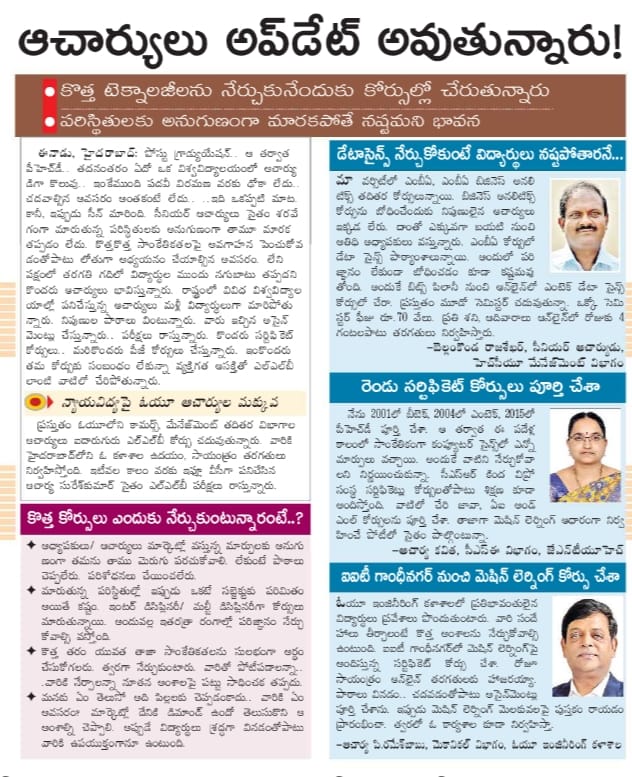
Here’s the link of some of articles published on Professor Raja Shekhar in Eenadu.
https://www.eenadu.net/education/expert-opinion
https://www.eenadu.net/telugu-news/telangana/professors-learning-new-courses/1802/125058245
- By Mahi Sharma, MA Communication (Media Studies)