
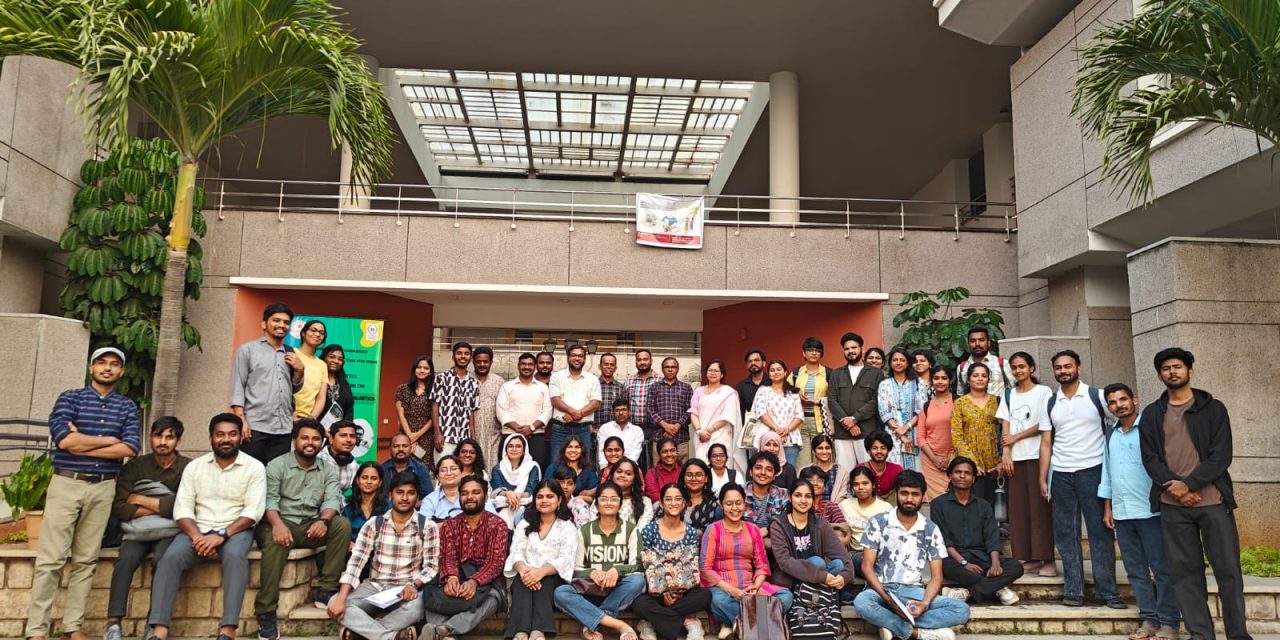
The Centre for Applied Linguistics and Translation Studies (CALTS), School of Humanities, University of Hyderabad, successfully organised an IoE-funded Two-Day Symposium on Phonology and Sociolinguistics from 27–28 January 2026.
During the inaugural session, the coordinators of the Symposium, Dr Morey Dipak Tryambak and Prof. S. Arulmozi, Head, CALTS, highlighted the objectives and academic significance of the event. The symposium was designed to provide postgraduate students and research scholars with deeper insights into contemporary issues and emerging research trends in Phonology and Sociolinguistics. The coordinators formally welcomed and felicitated the distinguished resource persons, Prof. Syed Imtiaz Hasnain, Aligarh Muslim University and Dr Somdev Kar, IIT Ropar.
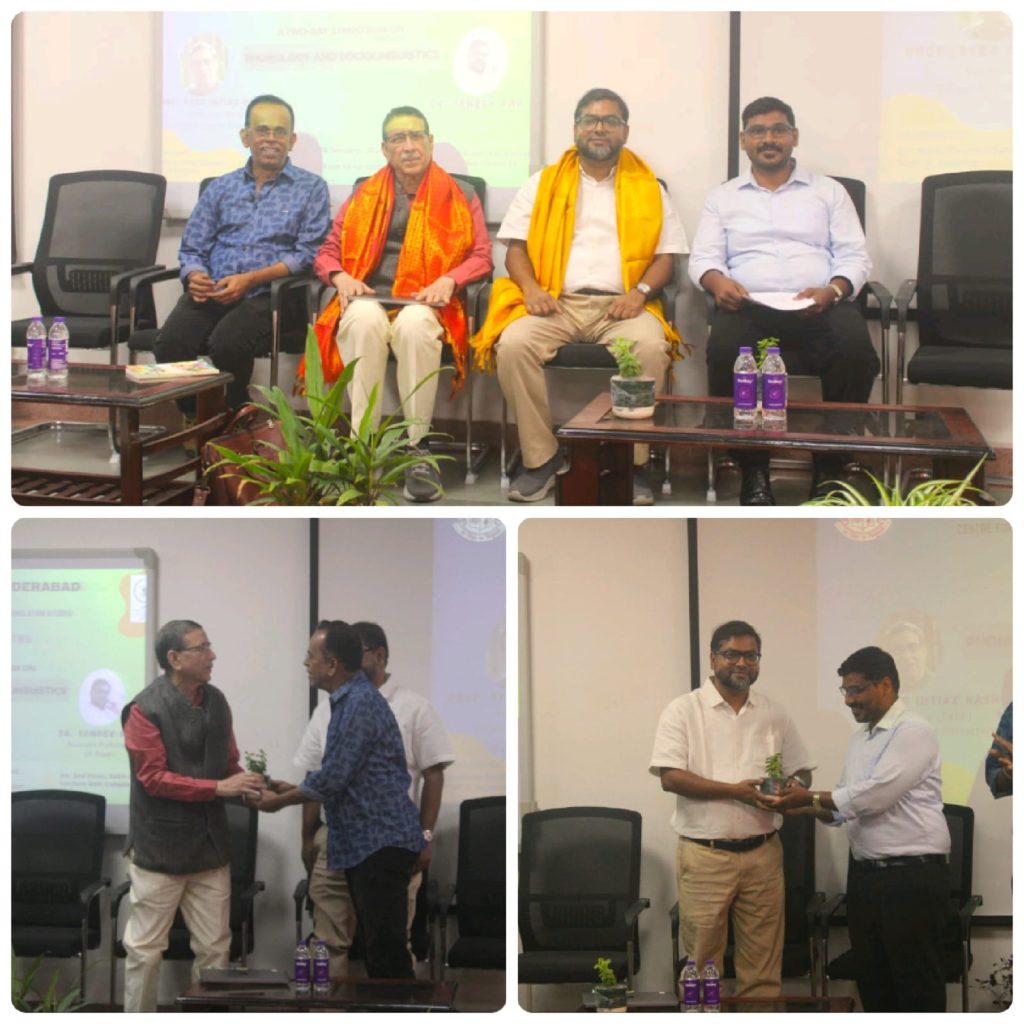
Sessions by Prof. Syed Imtiaz Hasnain:
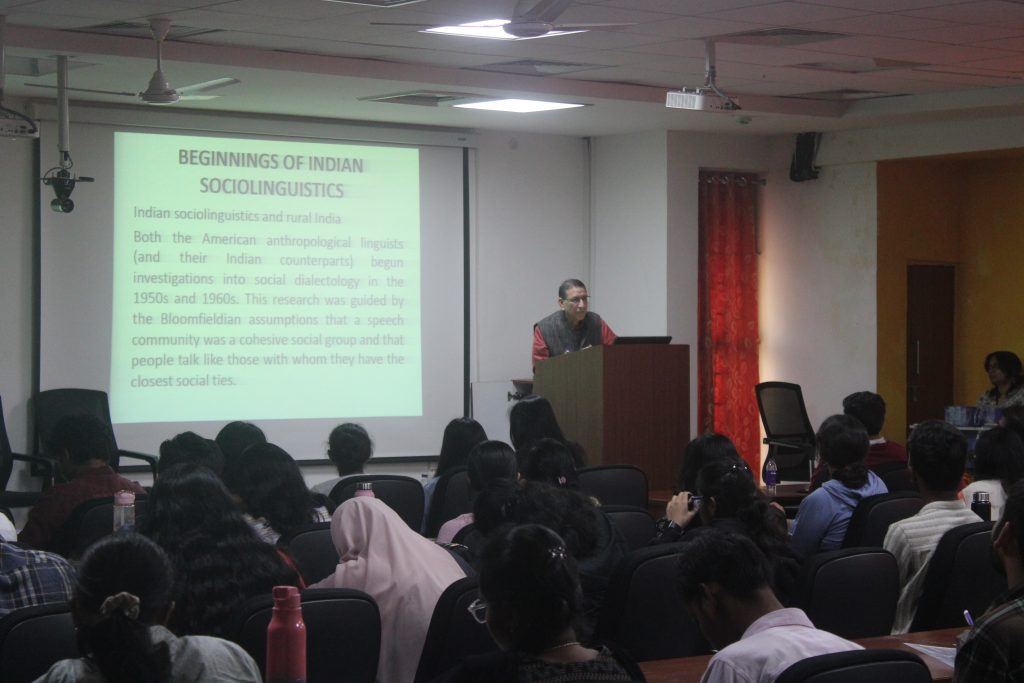
Prof. Syed Imtiaz Hasnain delivered a series of thought-provoking lectures on key sociolinguistic themes. His first session on the History of Indian Sociolinguistics provided a comprehensive overview of the evolution of sociolinguistic research in the Indian context. This was followed by a lecture on Bilingualism, in which he discussed major theoretical perspectives and empirical issues associated with multilingual societies. On the second day, Prof. Hasnain delivered a session titled Mother Tongue and Other Tongue, highlighting the relationship between language, identity, education, and social context. These sessions stimulated meaningful discussion on language policy and multilingual practices in contemporary India.
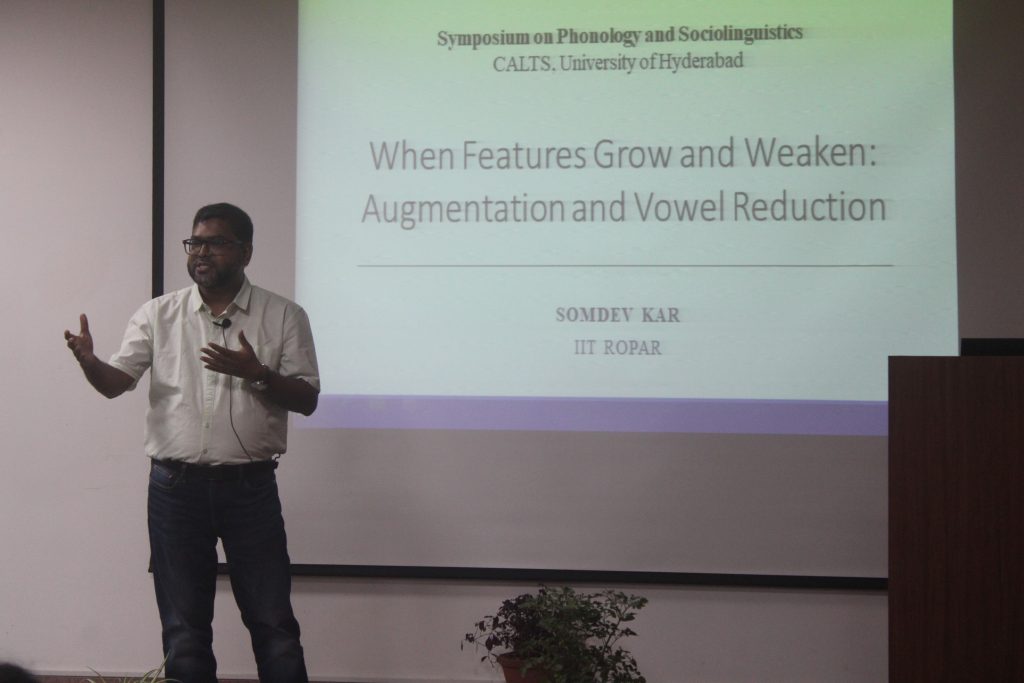
Sessions by Dr Somdev Kar:
Dr Somdev Kar conducted in-depth sessions on core issues in Phonology. His lecture titled Hidden Length: Why Do Sounds Double? examined phonological length and gemination, explaining the role of hidden length in sound systems with illustrative linguistic data. On the second day, he delivered a lecture on When Features Grow and Weaken: Augmentation and Vowel Reduction. This session incorporated participants’ data-driven in-hand analyses based on Optimality Theory (OT), enabling learners to apply theoretical concepts to real linguistic data. The continuation of this session in the afternoon further strengthened participants’ analytical skills through guided discussion and structured question–answer segments.
The symposium also featured an interactive session on current research trends in Phonology and Sociolinguistics, moderated by Dr. G. Renuka Devi, EFL University, Lucknow, during which the research scholars actively engaged with the resource persons and received valuable suggestions and guidance on their research topics. Overall, the symposium proved to be highly beneficial for postgraduate students and research scholars by integrating sociolinguistic perspectives with phonological theory and practice. The interactive nature of the sessions and the academic expertise of the resource persons enriched the learning experience and encouraged participants to pursue further research in these domains.
During the valedictory session, the symposium coordinators expressed their sincere thanks to the resource persons for accepting the invitation, enriching participants with their expertise, and motivating them to contribute to Indian linguistics. They also expressed their gratitude to the Vice Chancellor, the IoE Director, and the Dean, School of Humanities, for their constant and timely support, and appreciated the organising team’s volunteers for their dedicated efforts in ensuring the smooth conduct of the symposium. The symposium concluded with the distribution of certificates to 120 registered participants.