
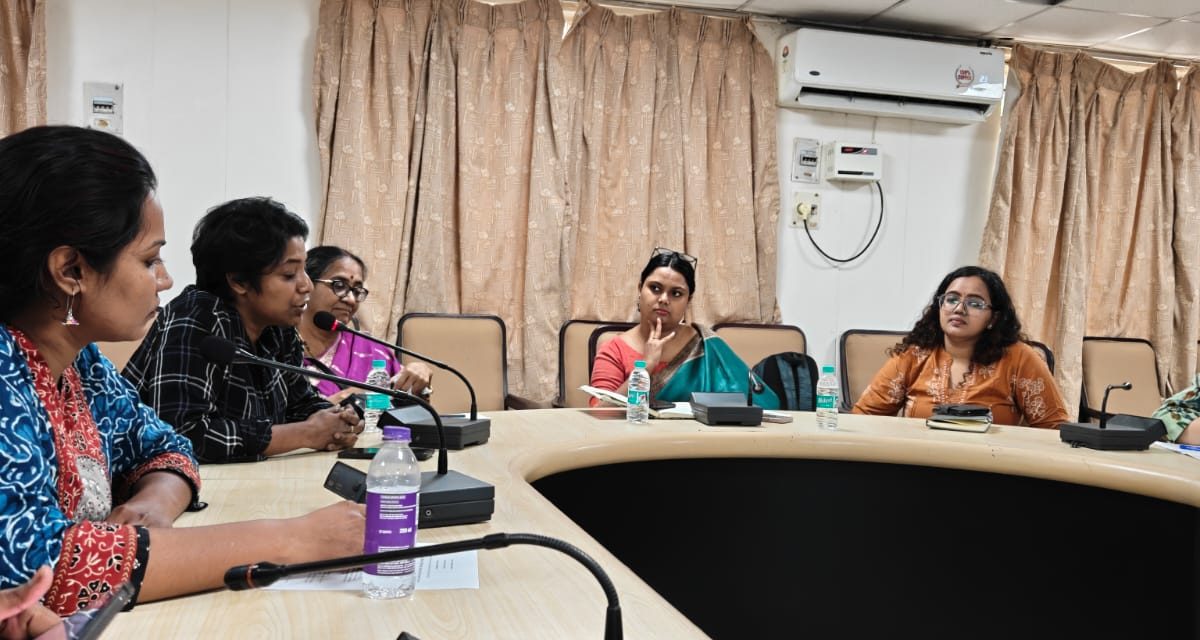
The Centre for Women’s Studies, University of Hyderabad (UoH), organized a panel discussion commemorating International Working Women’s Day on the topic “Working Women/Women Working: Labouring Pasts and Present.” The panel discussion, held on March 11, 2026, at the Conference Hall, School of Social Sciences, consisted of three panelists – Dr. Kamala Lata, DST Woman Scientist, School of Physics, University of Hyderabad (UoH); Ms. Asika V. M., Research Scholar, Department of Sociology, University of Hyderabad; and Dr. Sneha Banerjee, Assistant Professor, Department of Political Science, UoH. The event was anchored by Ms. Lekshmi Heeran, a PhD scholar at the Centre for Women’s Studies.
The programme began with a welcome address by Prof. Deepa Sreenivas, Head of the Centre for Women’s Studies. She spoke about the evolution of the women’s movement and how the expanded meaning of the term ‘work’, including care work, still remains largely unrecognized. She emphasized precarity, security, and the conditions under which women work today, while also highlighting the importance of solidarity among women in these changing circumstances.
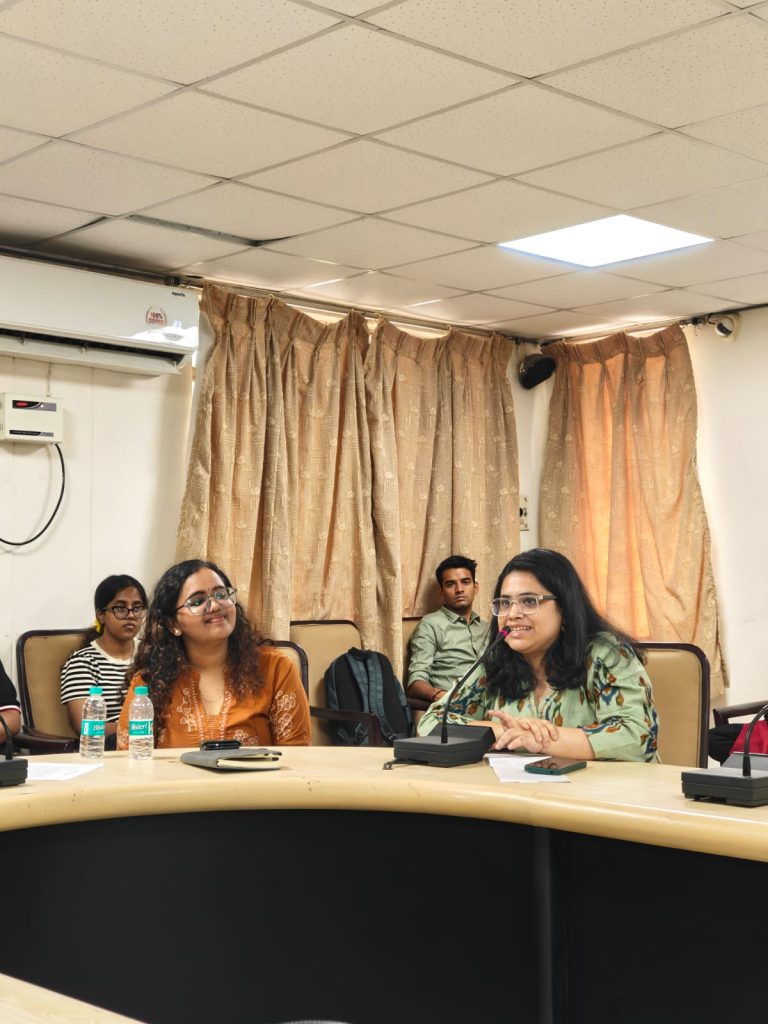
The welcome address was followed by an introduction to International Women’s Day by Ms. Debomita Mukherjee, a PhD scholar from the Centre for Women’s Studies. She spoke about how International Women’s Day emerged from working women’s attempts to unite women workers globally. She also emphasized the need to reclaim the history of Women’s Day from the capitalist tokenism prevalent in current times.
The panel discussion began with a moderator’s note by Abhiruchi Chatterjee, who explained how the topic “Working Women/Women Working: Labouring Pasts and Present” connects with this year’s global priority theme at the 70th session of the Commission on the Status of Women – “Access to justice for women and girls.” She noted that this theme speaks to a life lived with dignity and free from violence and exploitation, and to the removal of barriers to recognizing the value of women’s work and women’s right to rest.
The first speaker of the event was Ms. Asika V. M., a PhD scholar from the Department of Sociology, University of Hyderabad. She spoke on the topic “Women Workers in Dindigul: Intersections of Labour, Gender, Caste and Political Economy.” Drawing from her field study of women workers, she offered valuable insights into the precarity of their work and lives. She also discussed the cooperation and camaraderie among workers as a modest source of support within exploitative workplaces. Ms. Asika further pointed out how global supply and demand chains shape and affect the conditions of industrial workers.
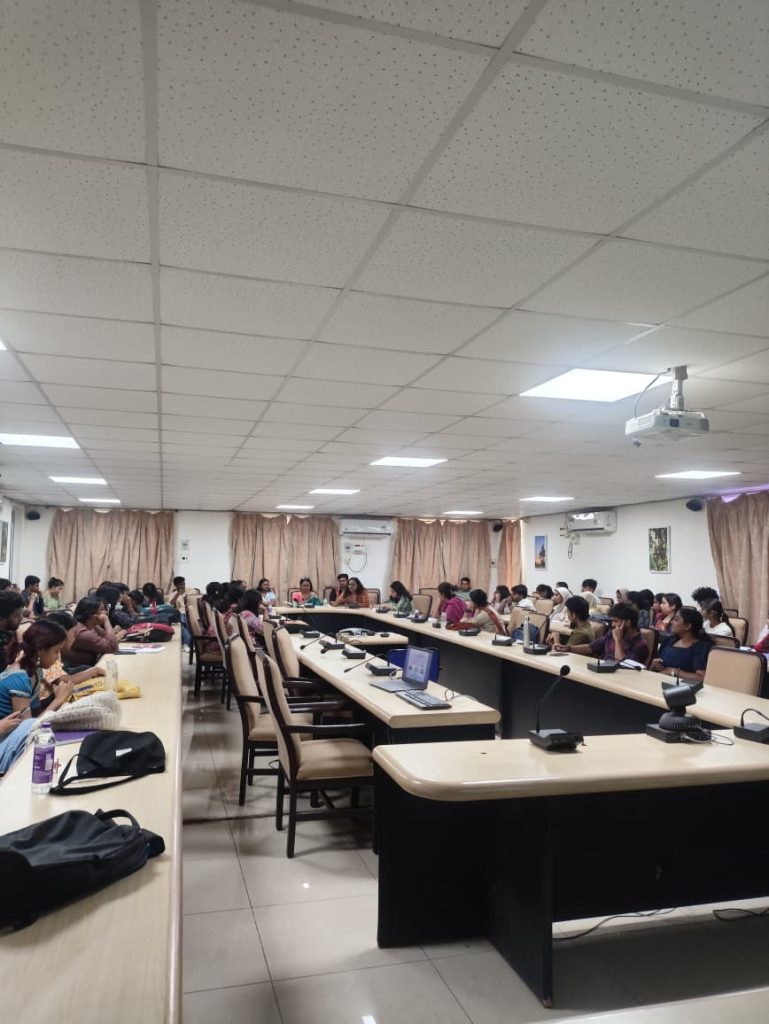
The second speaker of the panel discussion, Dr. Kamala Lata, reflected on her experiences as a woman scientist, emphasizing the importance of family support as a significant source of strength. She also pointed to the high enrolment of women in STEM research programmes and the later shift of many women towards industrial jobs.
The third panelist, Dr. Sneha Banerjee, Assistant Professor in the Department of Political Science, spoke on the topic “Thinking Labour, Thinking Gender.” She discussed feminist scholarship on labour and offered important insights into labour identity for women. Her talk examined the enduring dichotomies that shape labour discourse, including public versus private, production versus reproduction, and noble work versus dirty work.
After the speakers’ addresses, the moderator posed a round of questions to the panelists, followed by an open house discussion. The panel saw enthusiastic participation from attendees and led to an engaging and invigorating conversation.
The event concluded with a vote of thanks by Pushpa Madhgiripalli, a research scholar at the Centre for Women’s Studies.
Report contributed by Anjalee Kumari, Ph.D. Scholar, Centre for Women’s Studies, School of Social Sciences