
Academic Leadership and Institutional Stewardship
Professor Appa Rao Podile, an eminent Indian scientist and educator, served as the 9th Vice-Chancellor of the University of Hyderabad from 2015 to 2021. His tenure represented a significant phase in the university’s institutional development, combining strong administrative leadership with an enduring commitment to scientific research and academic excellence. With more than three decades of teaching and research experience, Professor Podile brought to the office of Vice-Chancellor a great understanding of both academic scholarship and institutional governance.
Before assuming the position of Vice-Chancellor, Professor Podile had already established himself as a distinguished scientist in the field of molecular plant–microbe interactions. As a Senior Professor in the Department of Plant Sciences at the University of Hyderabad, he had spent many years contributing to teaching, research, and the advancement of plant microbiology. His extensive experience in scientific research and higher education administration in various capacities enabled him to guide the University during an important period of academic growth and institutional strengthening.
During his tenure, Professor Podile led the University of Hyderabad with a focus on strengthening its research profile, enhancing its academic environment, and promoting a culture of scientific inquiry so that the university continued to build upon its already formidable reputation as a leading centre of higher learning.
Scientific Career and Research Contributions
Professor Podile’s scientific career has centered on the field of molecular plant–microbe interactions. His research has focused on understanding the complex interactions between plants and microorganisms at the molecular level. The specific primary focus of his reputed laboratory has been the study of the root microbiome of legumes, an area that has significant implications for plant health and agricultural productivity for the nation.
His research group examines the chemical signals involved in plant–microbe interactions, with particular emphasis on chitooligosaccharides. Through these investigations, his laboratory has contributed to understanding the mechanisms that govern plant disease resistance and microbial interactions. His research has also addressed plant disease control and plant biotechnology, contributing to scientific knowledge in plant protection and microbial technology.
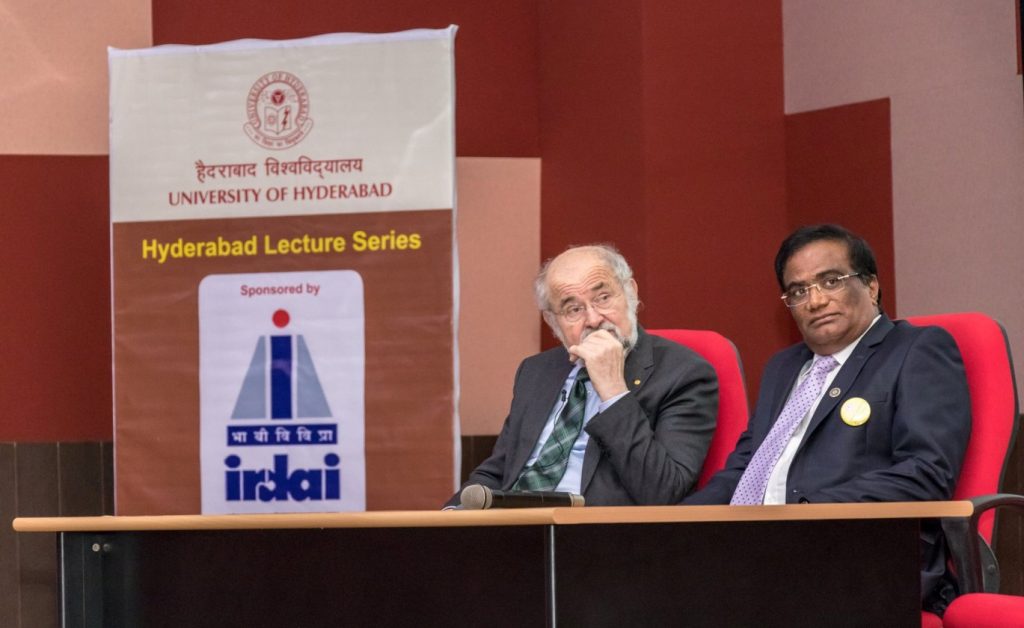
In the ‘Hyderabad Lecture Series’ organized by the University of Hyderabad in association with the Insurance Regulatory Authority of India (IRDAI), Prof. Erwin Neher, Director of the Max Planck Institute for
Over the years, he has published more than 125 research papers in peer-reviewed journals, and his work has received more than 7200 citations, aggregating an H-index of 48. This demonstrates how, throughout his academic career, Professor Podile has continued to maintain an active and high-impact research programme even when entrusted with administrative responsibilities.
Professor Podile has also been deeply engaged in teaching and mentoring. He has taught microbiology, molecular plant pathology, and microbial technology to Master’s students, contributing to the academic development of several generations of young scientists. His mentorship has extended to doctoral research as well, and he has guided twenty-four Ph.D. students during the course of his career.
Institutional Leadership and Academic Governance
Never one to rest on his laurels and duties within the institution, Professor Podile has played an important role in science administration and academic governance at the national level. His leadership contributions include serving as Chairman of the DST-PURSE Committee and Co-Chair of the FIST programme in Life Sciences, both of which are key Government of India initiatives aimed at strengthening research infrastructure and scientific capacity in universities and research institutions.
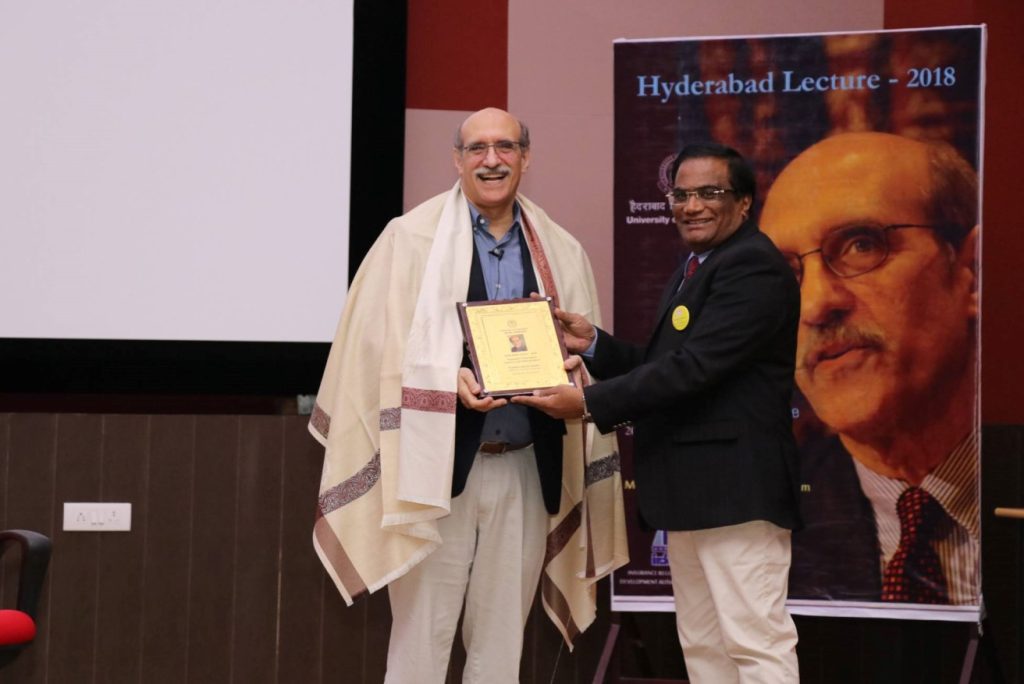
2008 Nobel Laureate in Chemistry, Professor Martin Chalfie delivered a lecture on the topic ‘Guarantor Transcription Factors in Cell Differentiation’ on 29th January, 2018 at the School of Life Sciences audit
He has also chaired or co-chaired several national-level task force committees, programme advisory committees, and search committees. In addition, he has served as a member of the research advisory councils of scientific institutes under the Indian Council of Agricultural Research and the Department of Science and Technology. His academic leadership has extended further through his membership on the Board of Governors of the Indian Institute of Management, Tiruchirappalli, and the Inter-University Centre for Astronomy and Astrophysics in Pune.
Vice Chancellorship at the University of Hyderabad
As Vice-Chancellor from 2015 to 2021, Professor Podile guided the University of Hyderabad through an important period of institutional development. His leadership focused on strengthening the university’s academic and research stature. Recognizing world-wide trends, he worked toward enhancing the university’s global standing, rankings and awards (both institutional and for individual faculty), and emphasized the importance of maintaining strong research ecosystems across disciplines.
His tenure was also marked by a commitment to strengthening the university’s infrastructure significantly and aligning academic policies with evolving national priorities in higher education. In particular, he emphasized the implementation of the National Education Policy 2020, ensuring that the University of Hyderabad remained responsive to national educational reforms and academic developments.
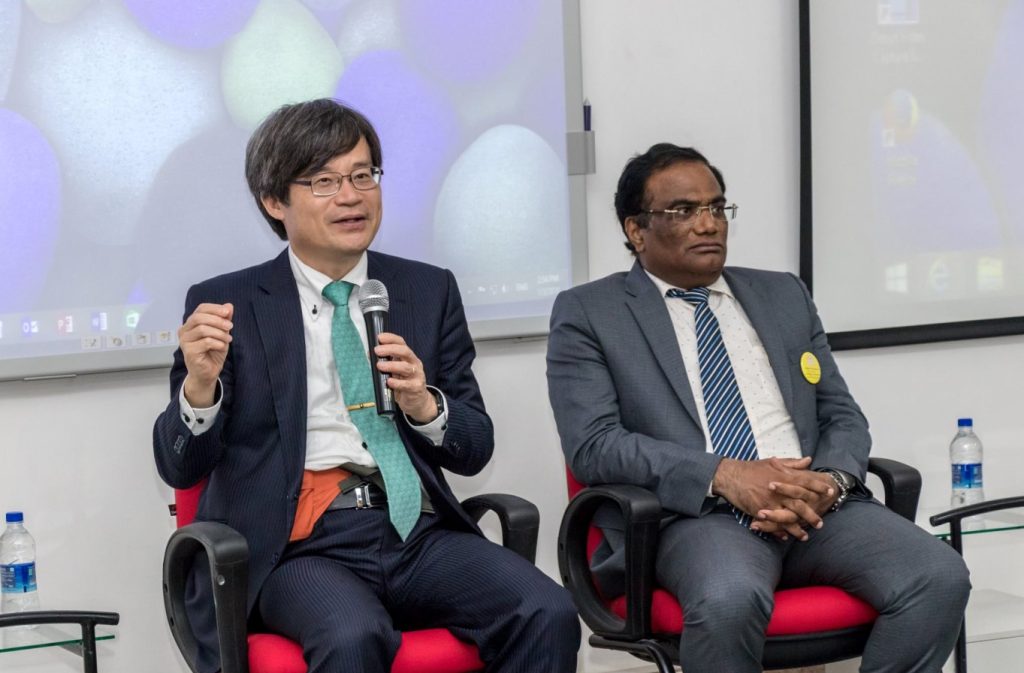
Prof. Hiroshi Amano, 2014 Nobel Laureate in Physics and Director of Akasaki Research Center, Nagoya University, Japan delivered a lecture on the topic ‘Blue LEDs and Transformative Electronics for Developing
During his Vice-Chancellorship, Professor Podile continued to balance administrative leadership with scientific engagement, maintaining an active research laboratory and continuing to contribute to plant science research even while guiding the university’s institutional development. His tenure coincided with the challenging circumstances of the COVID-19 pandemic, but despite the latter’s severe disruptions, the university continued its teaching and research activities without serious changes to the academic calendar. Steering the university towards greater resilience in this difficult period, Professor Podile ensured that the institution retained its core values and mission: to teach and to research.
Institution of Eminence and Institutional Advancement
A major milestone during Professor Podile’s tenure was the University of Hyderabad being accorded the prestigious Institution of Eminence (IoE) status by the Government of India in September 2019. This well-deserved recognition marked an important moment in the university’s institutional trajectory and was aimed at enabling select universities to compete with leading global institutions.
The IoE status was designed to provide financial assistance and increased autonomy so that universities could strengthen their academic and research capabilities and move toward ranking among the top 100–500 institutions in the world.
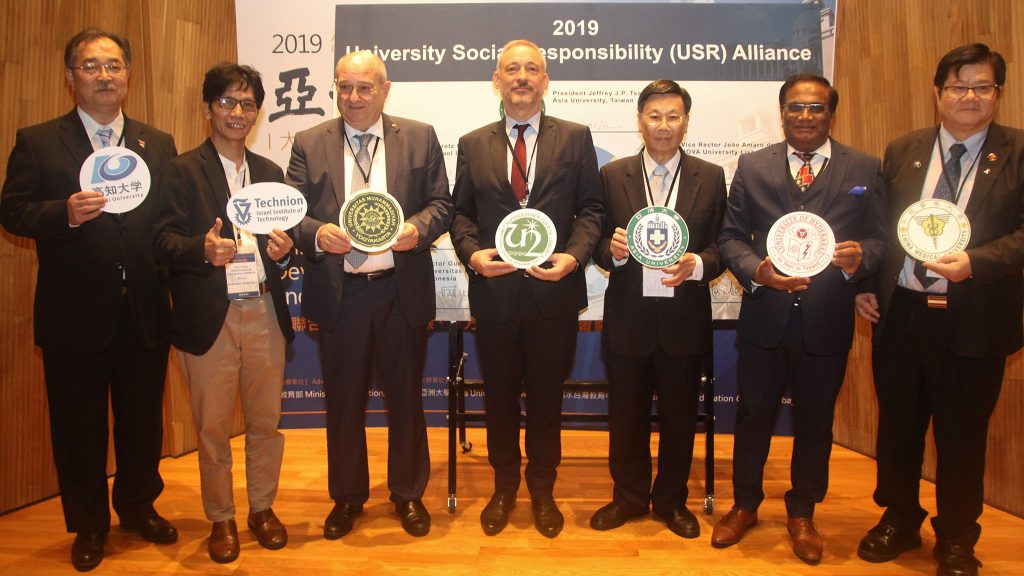
Under Professor Podile’s able leadership, the University of Hyderabad played a key role in securing this designation. Competing with some of the best institutions in the country, University of Hyderabad’s success in its application was made possible by Professor Podile’s astute leadership, strategizing and implementable plans in the IoE application, spread over nearly a year and involving multiple committees and sub-committees – which won the designation finally. These plans included enhancing research infrastructure, student-centric schemes, incentivization for quality output, better academic facilities, and expand internationalization.
The overall plan was designed by Professor Podile and his team for greater financial stability and resource generation, but also to expand the teaching component of the University. His vision for the IoE included recruiting outstanding faculty, strengthening research programmes, international faculty and collaborations, and improving infrastructural facilities for students and scholars. Through these initiatives, the university aimed to leverage the IoE designation to expand its research impact and global academic presence, while serving our students better.
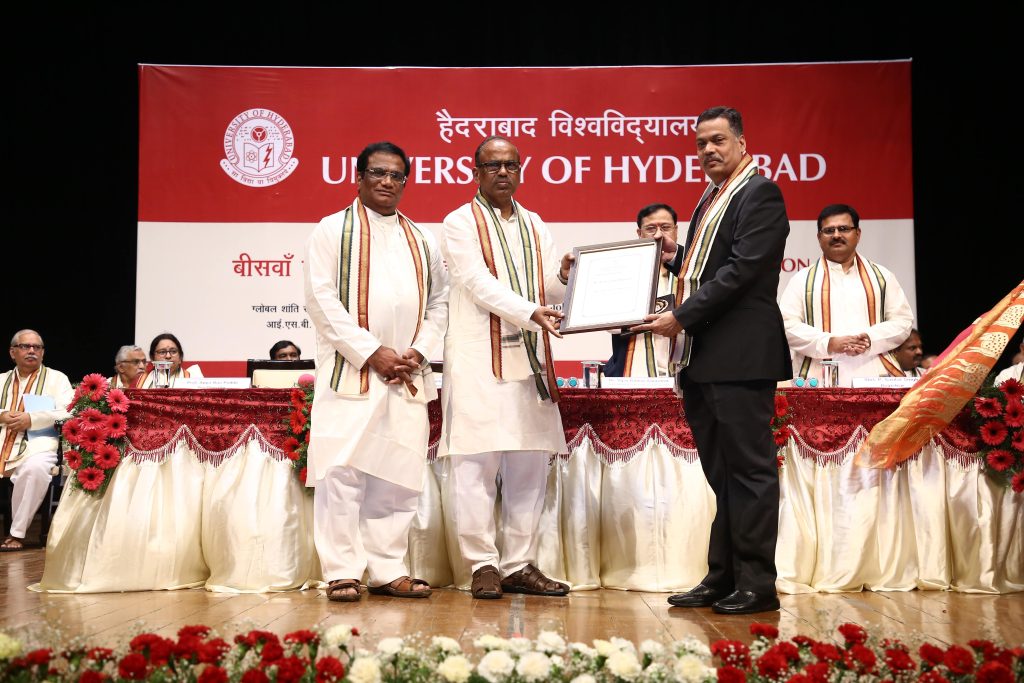
He emphasized that the IoE initiative should be used to align the university’s academic ambitions with the broader goal of addressing “national needs” while maintaining “global standards”. This slogan, designed for the IoE application in 2018 has now become the University’s motto.
Awards, Fellowships and Recognition
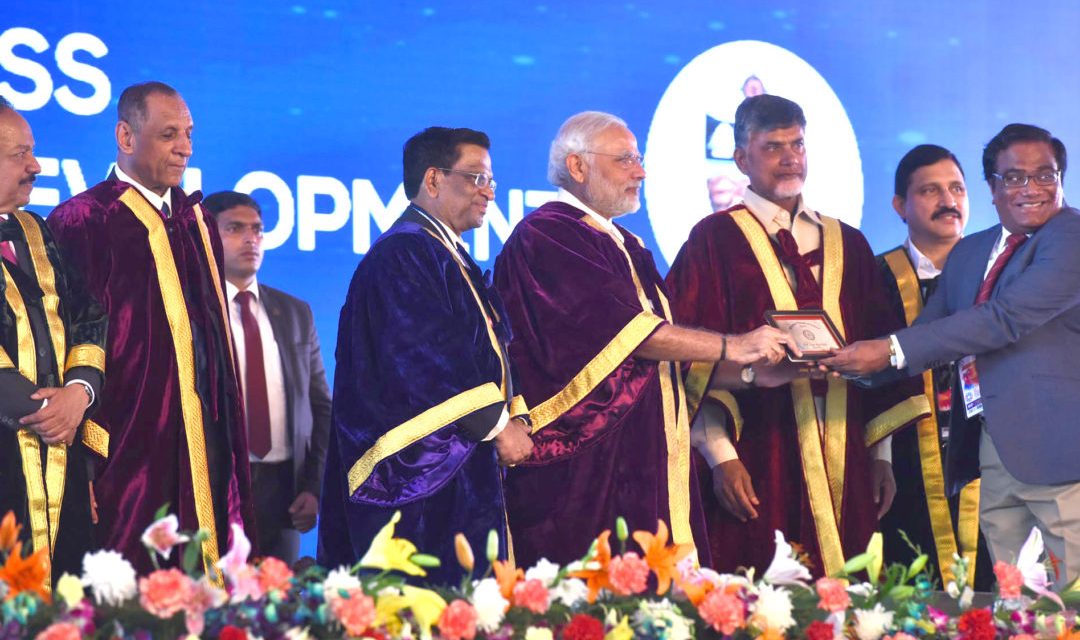
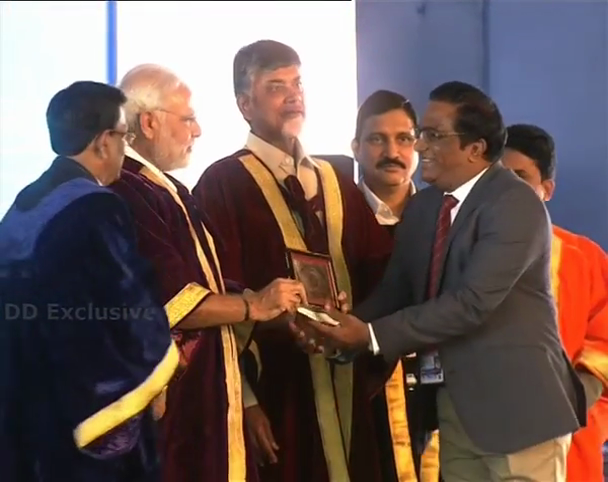
Professor Podile’s contributions to science have been recognized through numerous prestigious awards and fellowships. In 2017, he was honoured with the Millennium Plaques of Honour for achievements in Life Sciences, presented by the Prime Minister of India, Sri Narendra Modi, during the Indian Science Congress Association. He has also received the J.C. Bose Fellowship from the Department of Science and Technology and the Tata Innovation Fellowship from the Department of Biotechnology.
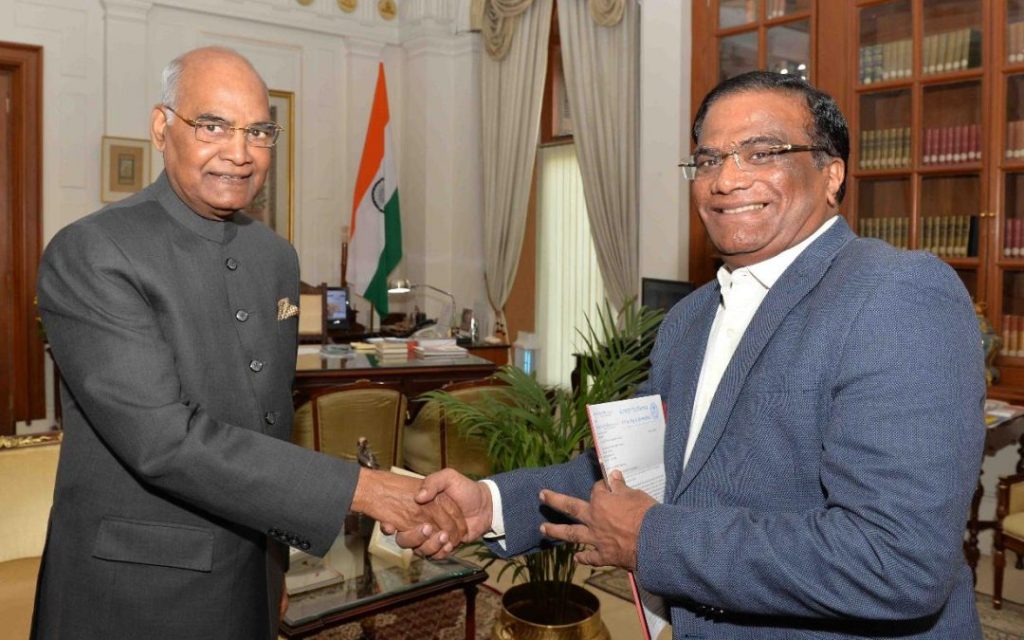
Among his numerous prestigious recognitions are the K.C. Mehta Memorial Award in Crop Protection from the National Academy of Agricultural Sciences, the Rangaswami Award in Agricultural Microbiology from the Association of Microbiologists of India, the Outstanding Young Scientist Award from the Indian Society of Mycology and Plant Pathology, and the Rajib Goyal Young Scientist Award in Agriculture from the Goyal Science Foundation.
Professor Podile also received a Fulbright Fellowship was selected for the Fulbright–Nehru International Education Administrators Seminar during 2019–2020 at Cornell University, USA, which aimed to promote international collaborations and exchange programmes for universities.
Fellowship of National Science Academies
Professor Podile’s scientific contributions have been recognized through his election as a Fellow of all the major science academies in India. These include the Indian National Science Academy, the Indian Academy of Sciences, Bangalore, the National Academy of Agricultural Sciences, New Delhi, and the National Academy of Sciences, Allahabad. He is also a Fellow of the Association of Microbiologists of India, New Delhi, the Andhra Pradesh Academy of Sciences, and a Founding Fellow of the Telangana Academy of Sciences, Hyderabad.
As his rightful due for sustained research and teaching, he has served as President of the Association of Microbiologists of India, contributing to the advancement of microbiology research and scientific collaboration across the country.
Continuing Academic Engagement
Following the completion of his term as Vice-Chancellor, Professor Podile continued his association with the Department of Plant Sciences, University of Hyderabad as Senior Professor until May 2025 and then on as an Emeritus Professor. In this role, he remains actively engaged with teaching, research and academic mentorship, continuing to contribute to the intellectual and scientific life of the university.
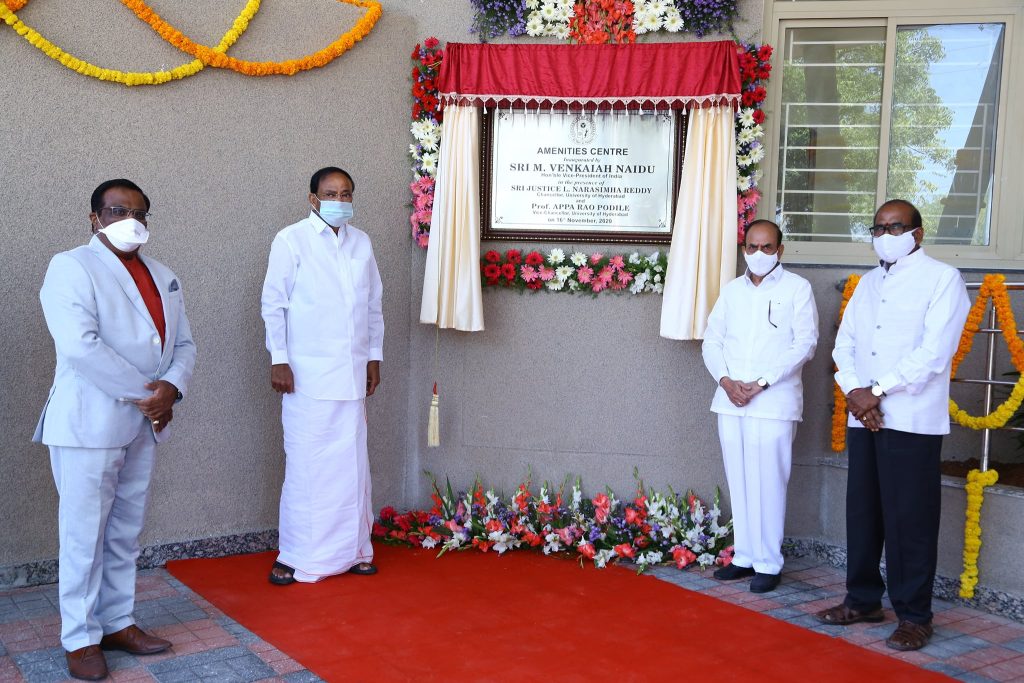
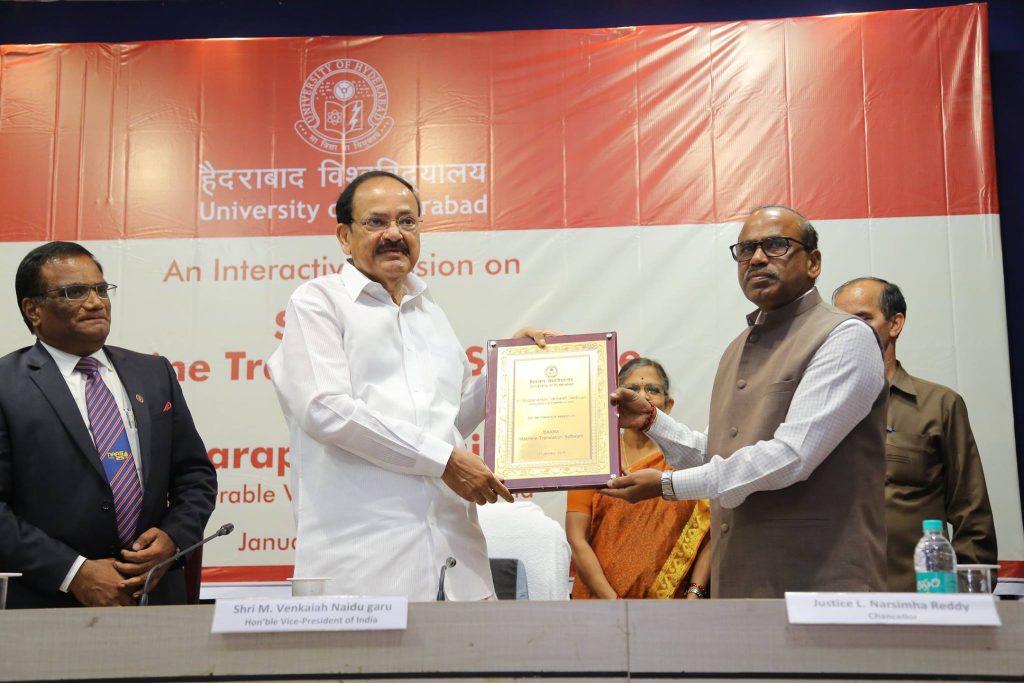
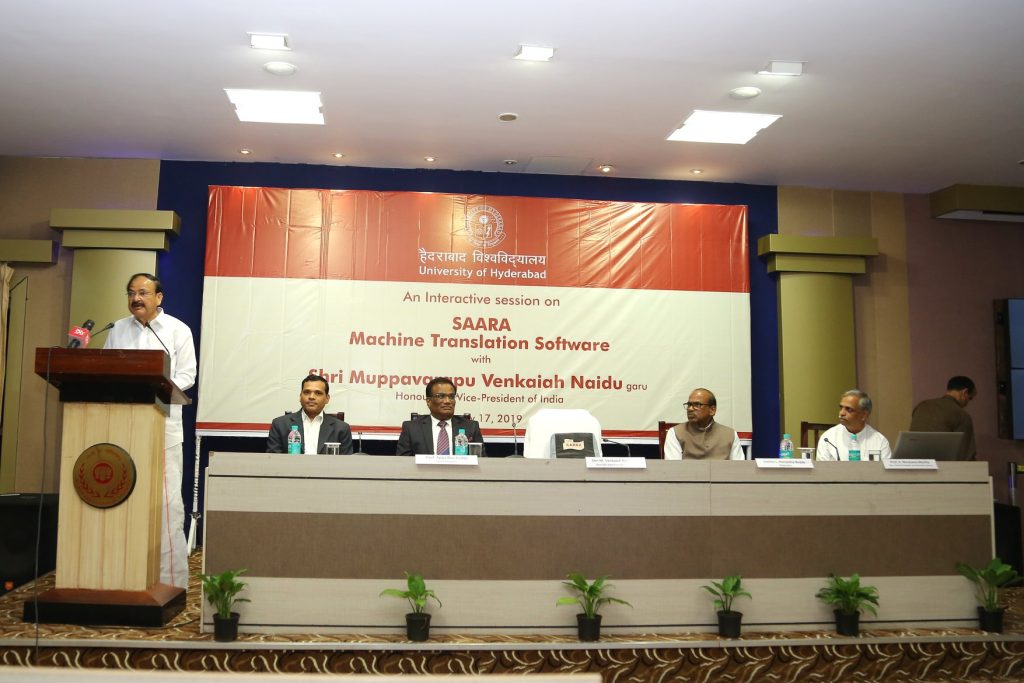
Former Hon’ble Vice President of India, Shri M Venkaiah Naidu inaugurated the Amenities Centre at the University of Hyderabad (UoH) on November 16, 2020
Legacy
Professor Appa Rao Podile’s tenure as Vice-Chancellor reflects a model of leadership rooted in scientific excellence and institutional commitment. By maintaining an active research career while guiding the university’s administrative and academic development, he demonstrated the importance of integrating scholarship with institutional leadership.
His contributions strengthened the research environment at the University of Hyderabad, enhanced its national and international academic engagement, and positioned the institution for continued growth through initiatives, most notably the Institution of Eminence programme, which has greatly benefitted the entire University community in multiple ways. Through his leadership, teaching, and scientific contributions, Professor Podile has played an important role in shaping the University of Hyderabad’s academic journey and research culture, and set it firmly on the road leading from “University with Potential for Excellence” to “Institution of Eminence”.
– By Mahi Sharma, MA Communication (Media Studies) with inputs from Prof. Pramod K Nayar, Head, Department of English