
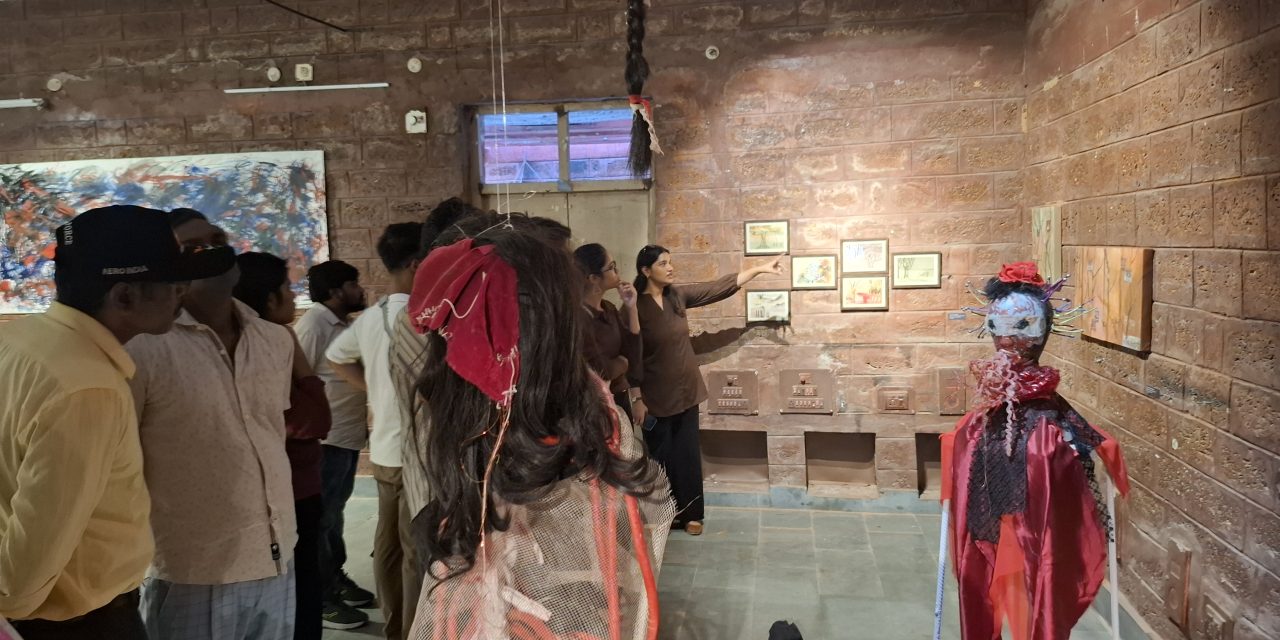
The recently concluded Final Display 2026, Hosted on May 22,23,24 by the Department of Fine Arts, S N School of Arts and Communication, is a grand culmination of two years of artistic practice and critical enquiry of 38 artists coming from Painting, Printmaking and Sculpture disciplines. Coming from diverse backgrounds and lived experiences, their artworks become a testament to the artists and their critical engagement with the world around them. Working across diverse materials and media, with themes that deal with materiality, personal memory and everyday objects that challenge the social inequalities, the artists aim to question the changing spaces we inhabit. As a viewer, and through personal engagement with art, one finds deeper ways to connect with the world around us, transforming the personal into the universal.
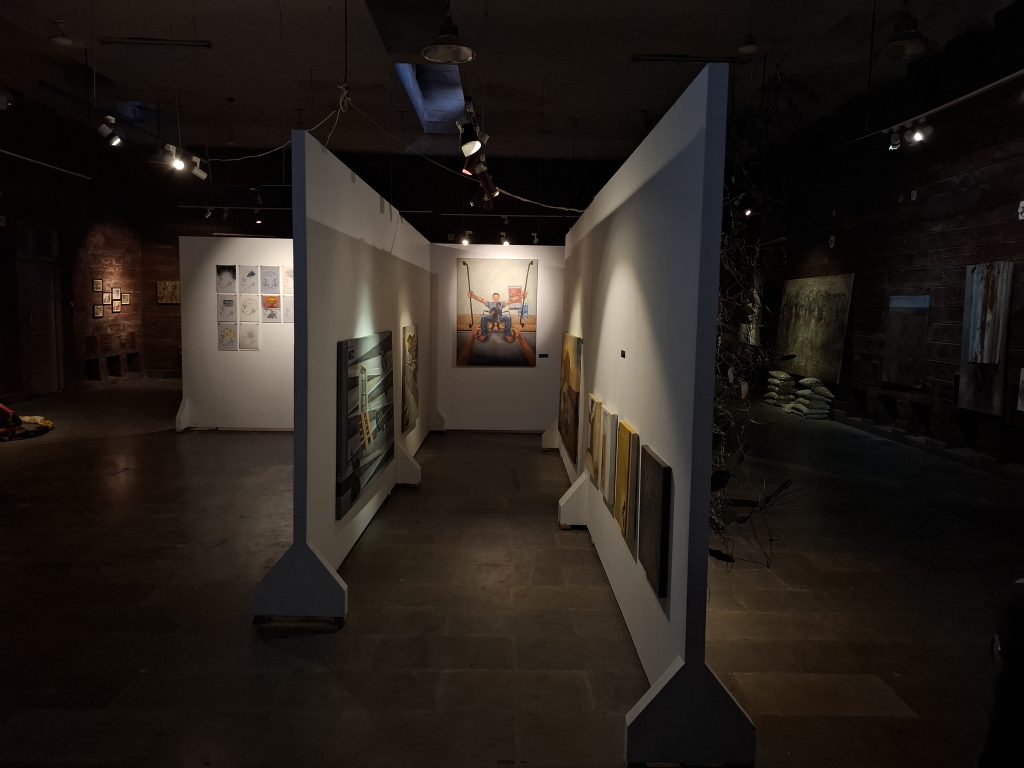
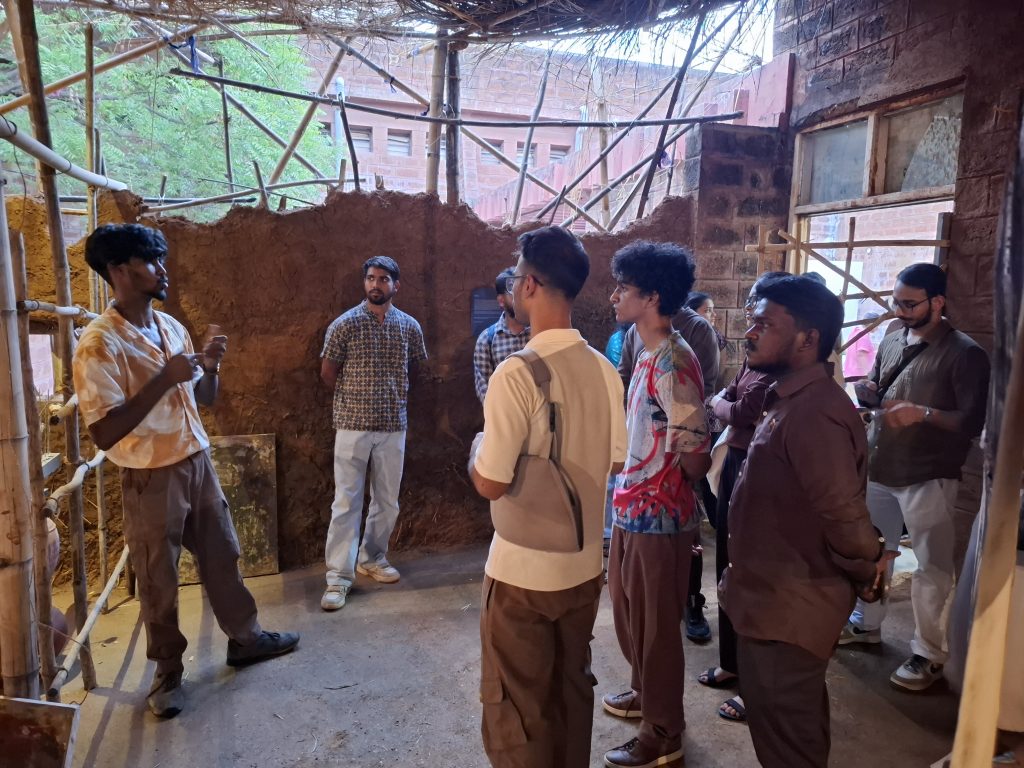
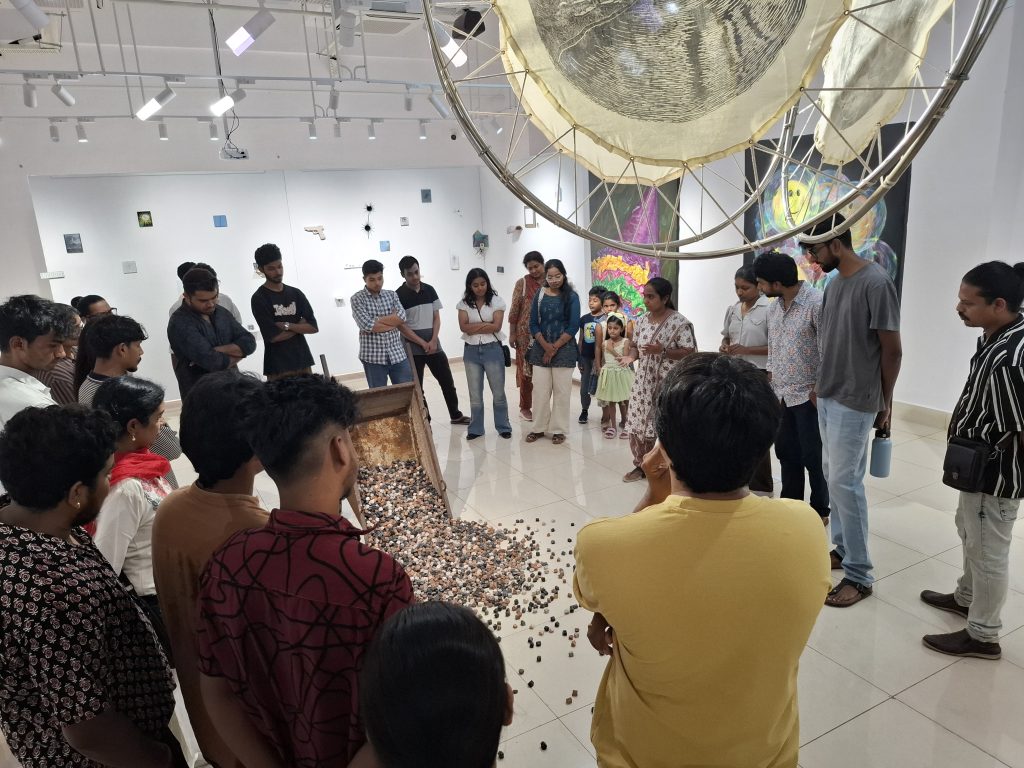
The display which was held in the department premises was open to the university community and the larger public coming from the city. The students through their labour of love, has transformed the spaces around them, i.e., the studios, corridors and the open courtyards into exhibition spaces. with the coming together of art enthusiasts, academics and students the atmosphere around turned carnivalesque. Every evening there were scheduled walk-through’s given by the students of MVA first year, familiarizing the visitors with the artworks and their context, building a dialogue between the artworks and the public. Most of the artworks had a certain interactive element to them, which facilitated the engagement between the artist and the viewer, turning the galleries into an active centre for dialogue on art.
In the era of mediated experience, direct engagement with art and the dedicated slowness of the experience provides a freeness for the thoughts to flow. Most artworks in the exhibition engage critically with the social realities of the world around us, making the ‘Invisible’ come to the forefront. Through Installations, Performance, Video and various media, the artists invite you into this shared intellectual domain, where one could be free of fixed notions and could reflect. The artworks bring the viewer closer to silence, reflection and most importantly, make them ‘think’.
Each artist through their practice is making a statement and offering us their view point on the way things are around us. Though coming from diverse backgrounds and points of view, their ideas intersect in their thematic concerns regarding isolation, exclusion, social structures and hierarchy, the impact they carry on the lives of individuals or communities. Amidst all this chaos, a few of the artists find their respite in nature. Addressing the ecological concern and the increasing ‘plasticity’ in our lives, artists attempt through their works to bring you closer to nature and comment on the widening gap between mankind and nature.
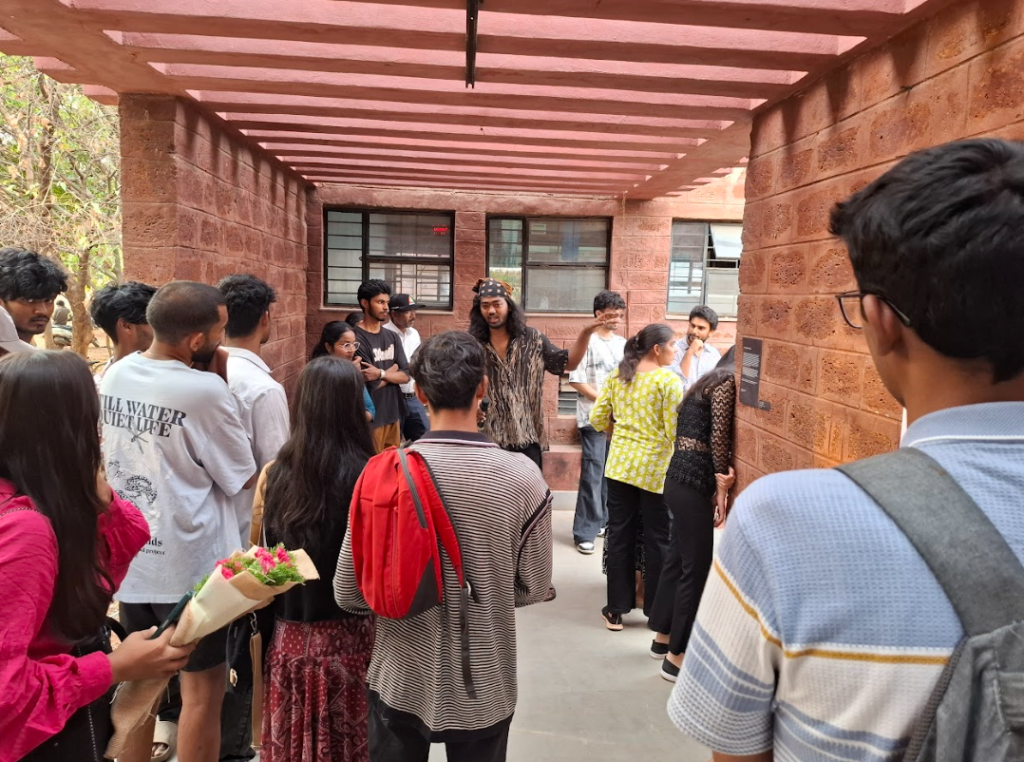
Most significant theme of all being personal lived experience, through which the artists make the viewers experience the way they have lived and seen the world – addressing the ideas of mobility, disability and how their experience of the world is different from the able bodied. How the artworks were exhibited to the viewers was also breaking the mould in many ways. Turning away from the traditional ‘See, do not touch’ aspect of exhibition viewing, the exhibition transformed the viewers into deeply engaged participants. By building a very sensory and tactile atmosphere to experience the artworks, the distant gaze is shifted to an intimate and shared experience.
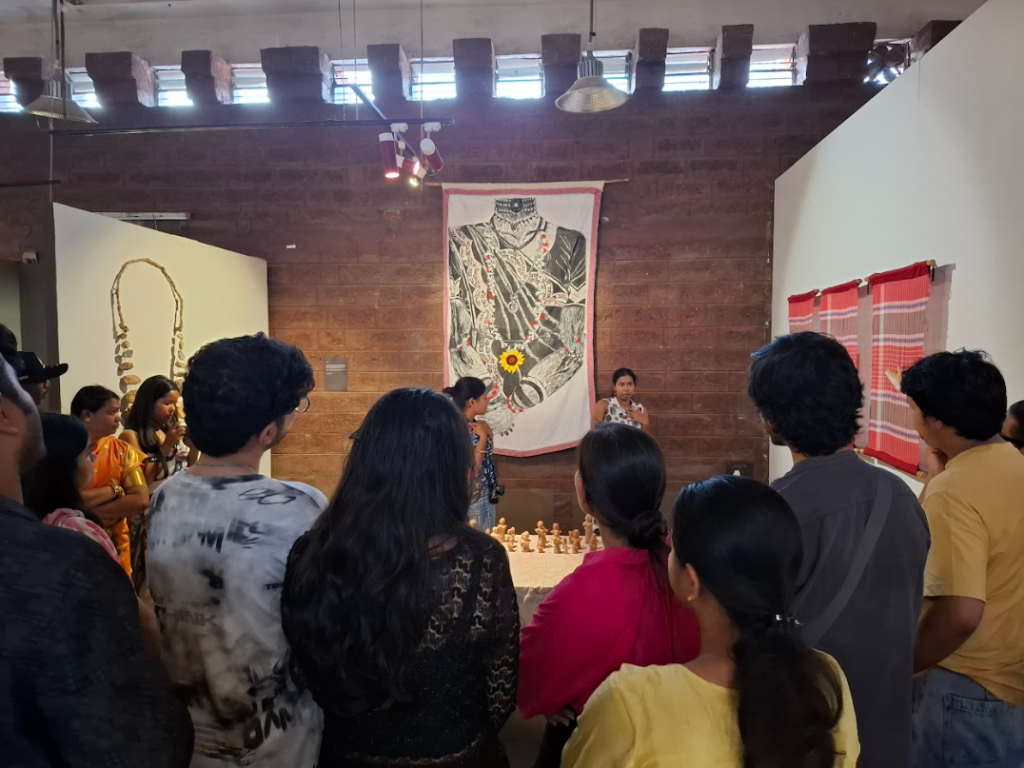
Starting an enquiry into the idea of ‘Space’, the first year MVA students from Art History and Visual Studies, curated an exhibition as a part of their curatorial component. The artworks in the section and their innovative way of display challenge the traditional and normative ideas of a gallery space. The use of the outdoor space and the spaces in-between the buildings make the experience of visiting these spaces more like an exploration and discovery of the idea of space in itself. Viewers were seen to be slowing down, and looking closely at the works of art displayed in each nook and corner.
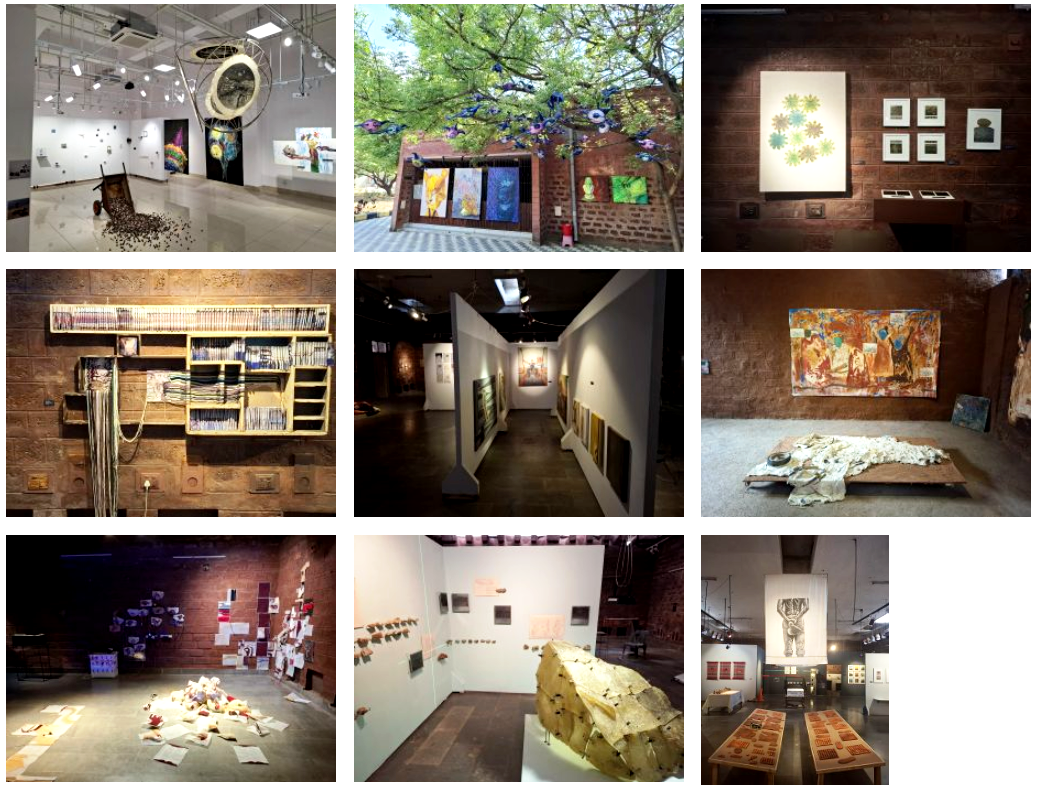
The strength of this display lies in its refusal to offer easy and polished answers, by turning down the aesthetic for the truthful. It is the coming together of all the artists into a collective personality and demanding something more than a passive glance. Stripping away the traditional white-cube aesthetics, they enable us to look and acknowledge the uncomfortable social realities that are part of our everyday lives. As we walk out of the space, they leave these ideas lingering in our minds leaving an impact – that the spaces we inhabit, the labour we rely on and the memories we carry are all part of a larger whole that is constantly being shaped, carved and contested in the times we live in.
- By Sai Sagar is a Guest Faculty at the Department of Fine Arts, S N School of Arts and Communication.