
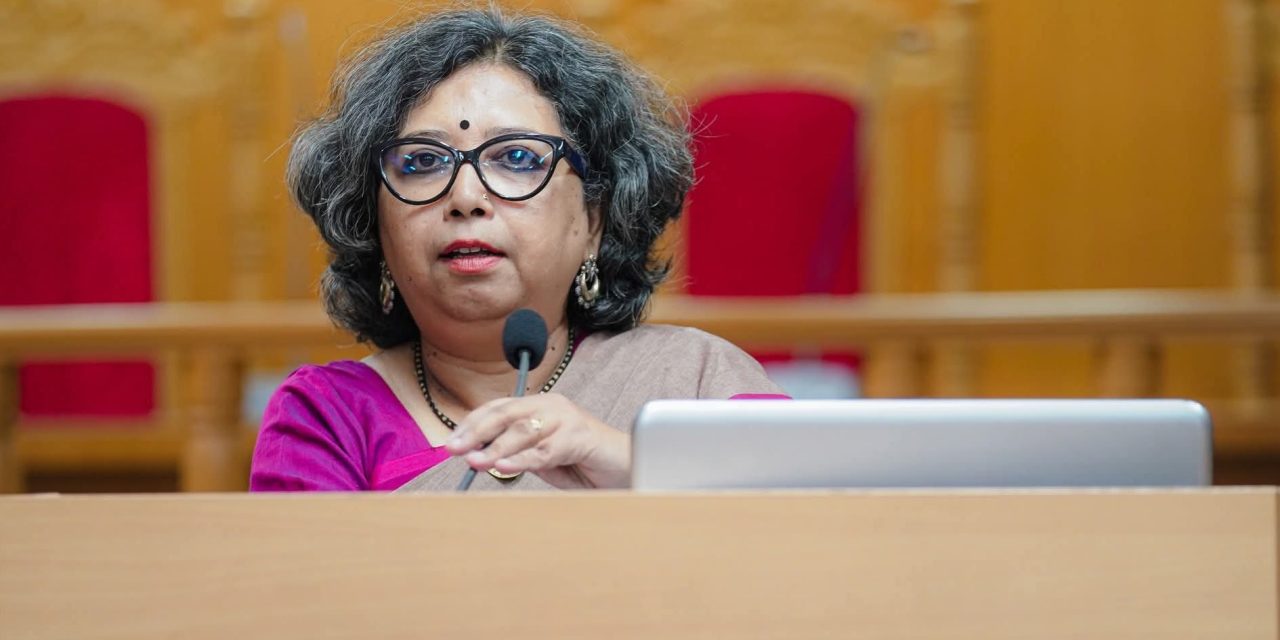
Prof. Suchandra Ghosh, Head of the Department of History at the University of Hyderabad, was invited to deliver the prestigious Valedictory Address at the Faculty Development Programme (FDP) on Indian Knowledge Systems, hosted by Sister Nivedita University, Kolkata, on July 11, 2026.
Organized by the Department of History at Sister Nivedita University and conducted in a hybrid mode, the FDP brought together scholars and academicians from across the country to explore traditional frameworks of learning and intellectual heritage.
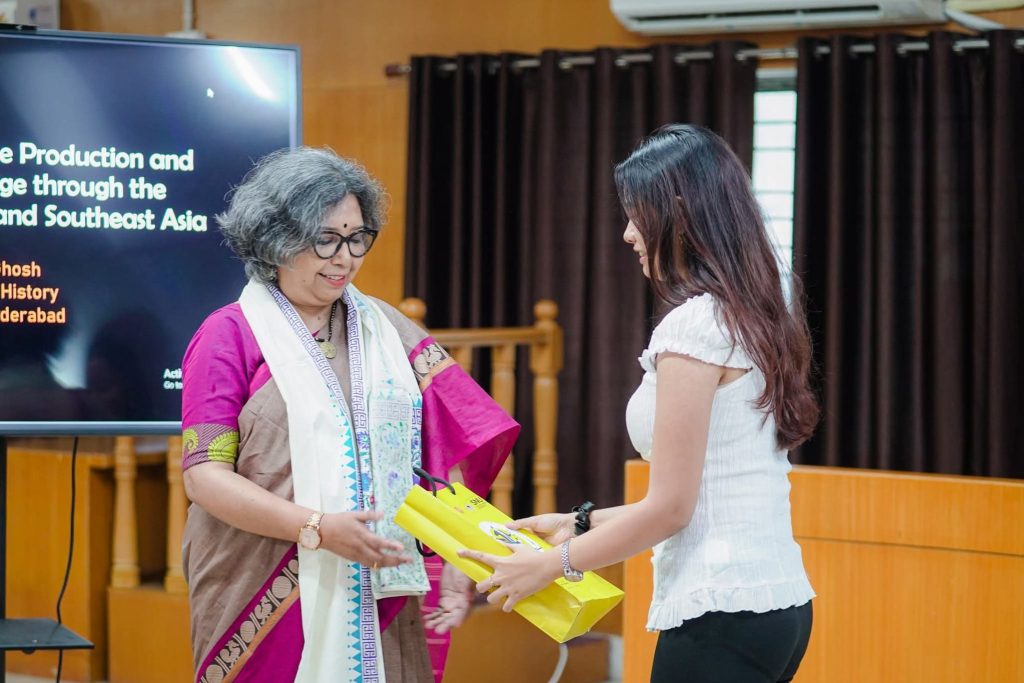
Delivering her address on the topic “Inscribing Thoughts: The Production and Transfer of Knowledge through the Brahmi Script in South and Southeast Asia,” Prof. Ghosh illuminated how early epigraphic traditions served as vital vehicles for intellectual, cultural, and scientific exchange. Her lecture highlighted the transformative role of the Brahmi script in shaping historical knowledge networks and bridging geographical boundaries across South and Southeast Asia.
The Indian Knowledge System (IKS) refers to India’s vast, millennia-old heritage of traditional wisdom, encompassing science, philosophy, arts, medicine (Ayurveda), mathematics (zero, decimal system), and sustainable practices, rooted in ancient texts like the Vedas and oral traditions, now actively promoted by India’s Ministry of Education to integrate this knowledge into modern education for holistic development and solving contemporary issues. preserving, promoting, and integrating India’s ancient and traditional wisdom into modern education and research. In the context of humanities and literature it largely revolves around textual sources which are normative and deeply rooted in Brahmanical tradition. The production of knowledge in the context of epigraphic writing and their content is totally ignored in the proposed knowledge system by the Government of India. If we are talking of knowledge systems, it is important to know how writing evolved, what were the scripts that were used. Which is the mother script for the scripts that we are using today? And by whom this huge corpus of inscriptions was engraved in copper plates, stones or temple surfaces? Keeping these questions in mind, the lecture focussed on the Brahmi script, its evolution from a historical perspective and its adaptation in regions of Southeast Asia. Moreover it also introduced a group of engravers who were compared with Lord Viśvakarmā in the epigraphs largely on their accumulated knowledge which they gained through hereditary training and later on this turned into texts. The lecture urged that when we include courses in our syllabus in the context of IKS, it is imperative to go beyond texts and see other forms of traditional knowledge which scholars are doing in the context of science and medicine. In doing so we are not undermining the importance of text but recognizing that there is more to the traditional knowledge system beyond the dharmasastric paradigm.
Reflecting on the engagement, Prof. Ghosh shared that visiting Sister Nivedita University and interacting with the academic community was a deeply enriching experience.
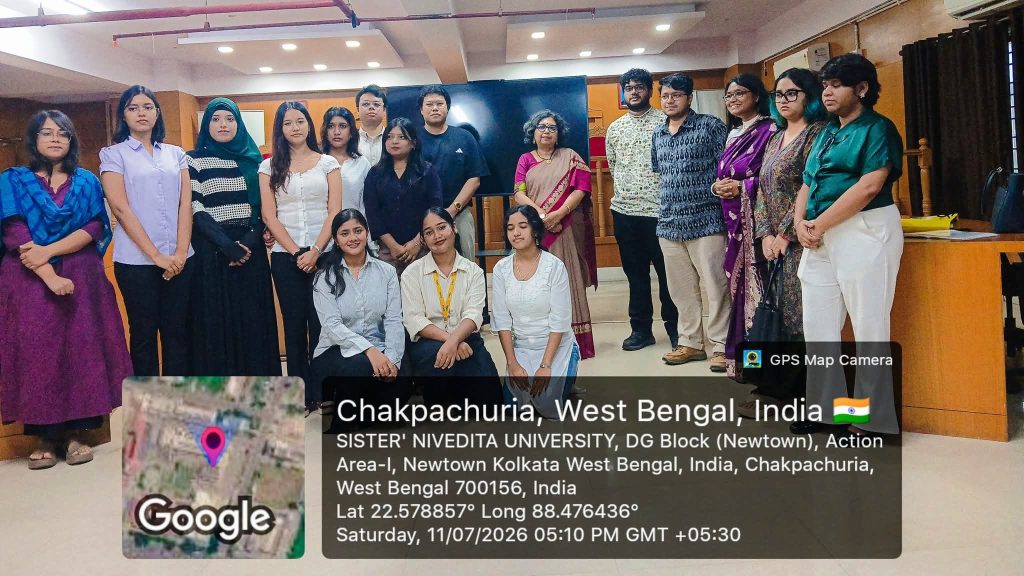
This key invitation underscores the Department of History’s active participation in national academic discourses on Indian Knowledge Systems and highlights UoH’s continuing leadership in historical and epigraphic research.