
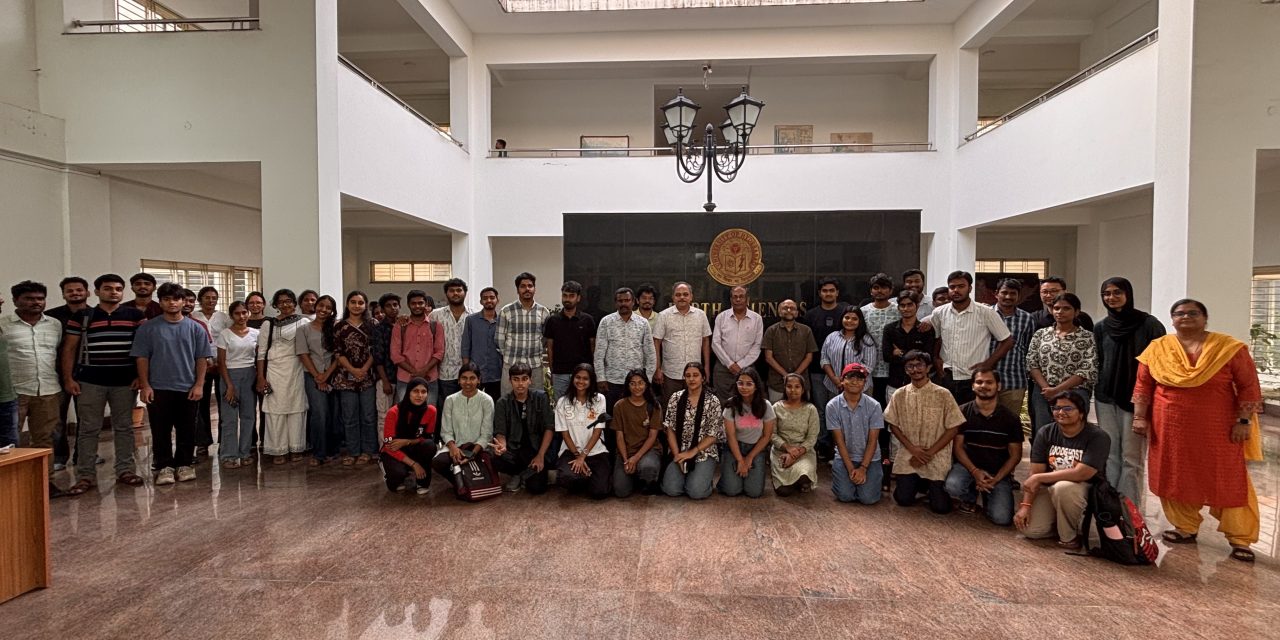
Prof. Debashish Sengupta, Former Emeritus Professor & Head, Department of Geology & Geophysics, IIT Kharagpur and Visiting Professor, Department of Earth & Environmental Sciences, IISER Berhampur, delivered an invited talk – Critical Metal Extraction from Indigenous Resources: Initial Success towards Atma-Nirbhar Bharat in Rare Earth Strategic Independence – at the Centre for Earth, Ocean and Atmospheric Sciences on 23rd September 2026. Prof. Sengupta presented an integrated extraction route from naturally enriched beach placer deposits to magnet-grade Neodymium, while also recovering Thorium as a separate stream with potential relevance to India’s long-term nuclear energy program.
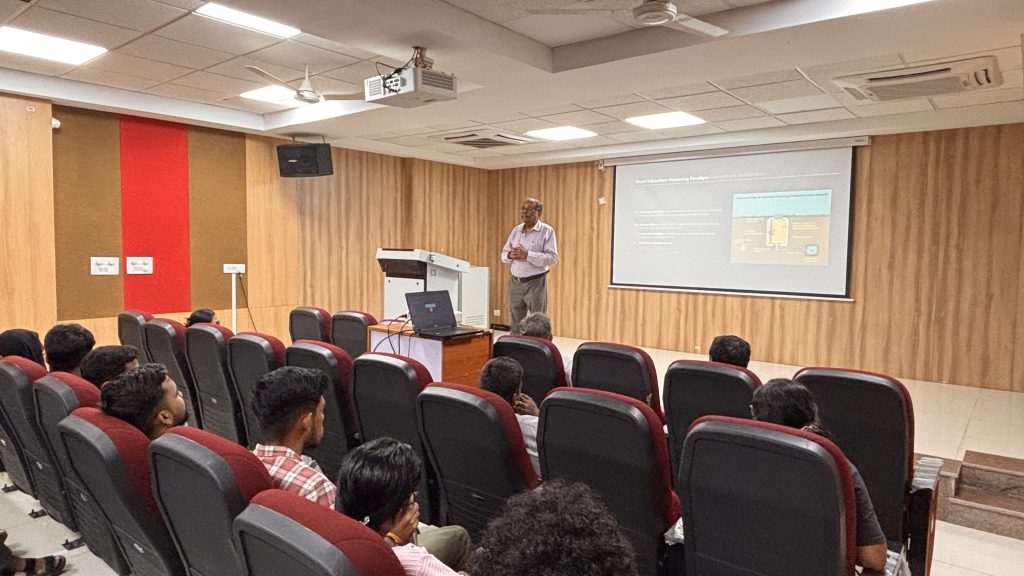
He demonstrated a laboratory-scale process for producing 99.9 percent pure Neodymium (Nd) from India’s rare-earth-bearing coastal sands, a development that could support future domestic production of a key material used in permanent magnets. He demonstrated non-invasive exploration methods, including radiometric and electrical resistivity surveys, to identify mineralized zones. Field studies along the Odisha coast found higher radiation levels in active berms and river-mouth areas, attributed primarily to Thorium-bearing monazite concentrations. A key outcome of the work is a process combining physical beneficiation, chemical treatment, selective Thorium removal, and solvent extraction to achieve 99.9 percent Neodymium purity.
Prof. Sengupta said the results indicate that the scientific basis for an indigenous rare-earth processing chain is in place and that future efforts should focus on scaling the technology and developing downstream magnet-manufacturing capabilities.