
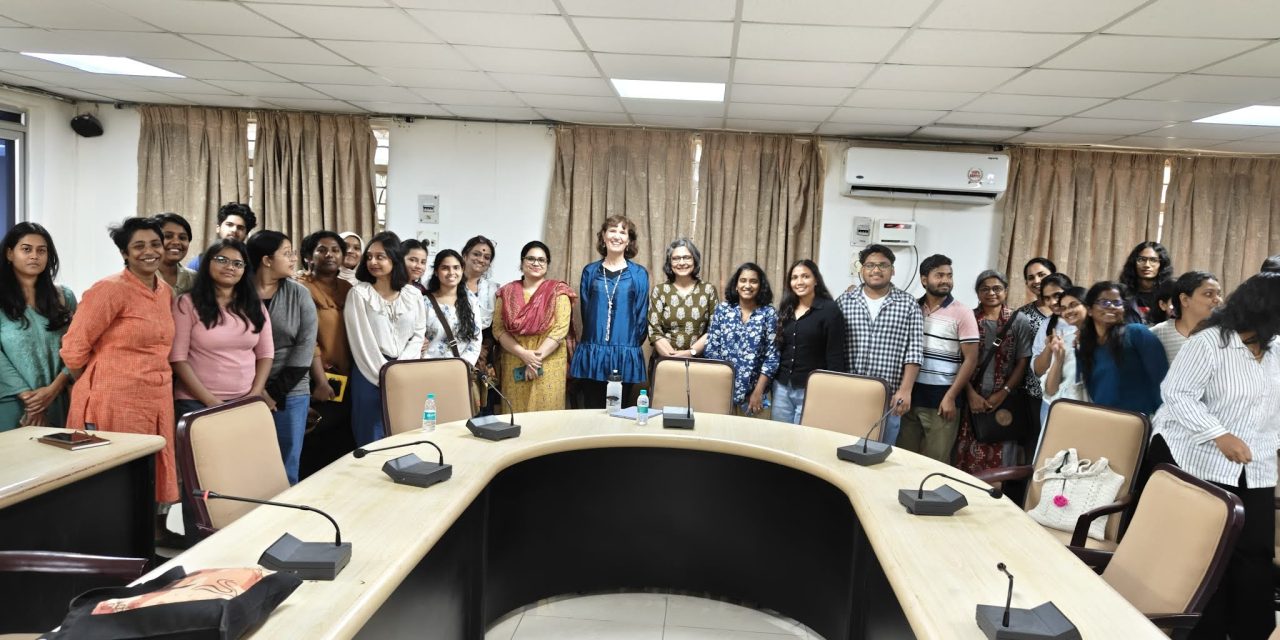
The Centre for Women’s Studies, University of Hyderabad, organized a guest lecture titled “US Women’s Movement: Three Milestones and Three Threats” by Prof. Bonnie Zare, Director of Women’s, Gender and Sexuality Studies and Professor in the Department of Sociology at Virginia Tech, Blacksburg, United States. The session was held on 4th February 2026 at the Conference Hall, School of Social Sciences. The lecture introduced the audience to a critical lens for understanding how the women’s movement in the United States has evolved over time, the achievements it has secured, and the contemporary challenges it faces in a changing global scenario.
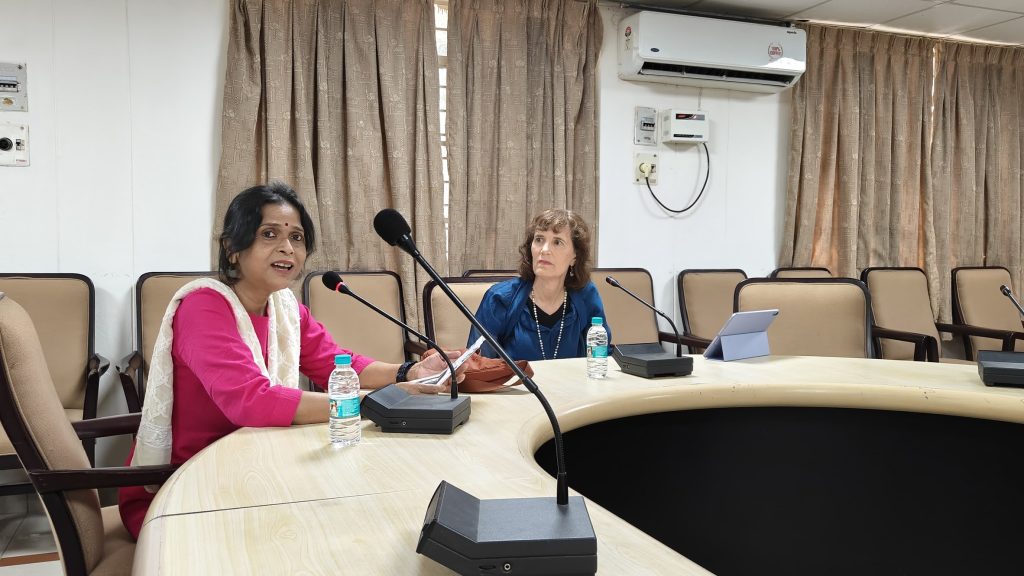
The programme began with a welcome address by Prof. Deepa Sreenivas, Head of the Centre for Women’s Studies, who spoke about the significance of the US women’s movement and its strong influences and connections with women’s movements in the Global South. Ms. Debomita Mukherjee, a research scholar at CWS, introduced the speaker.
Prof. Bonnie Zare began her lecture by highlighting three key milestones that marked significant shifts in the US women’s movement in terms of inclusivity, visibility, and intersectional politics. The three milestones discussed were:
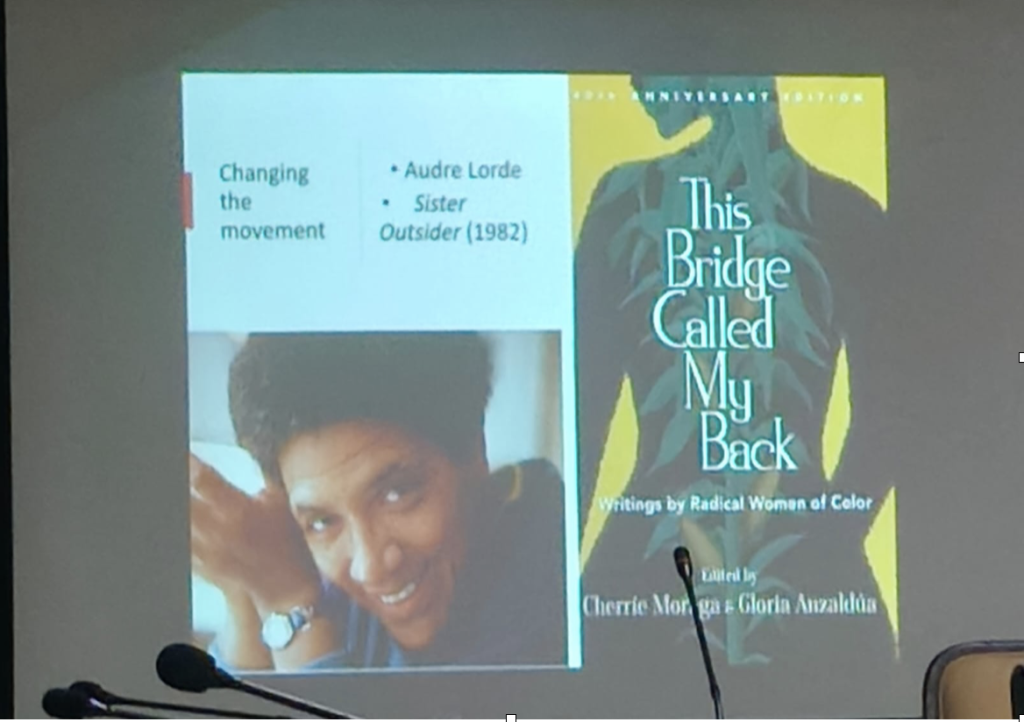
- This Bridge Called My Back: Writings of Radical Women of Color (1981), a collection of writings by women of colour, including Audre Lorde and bell hooks, which challenged the dominance of white, middle-class mainstream feminism.
- Anita Hill’s testimony (1991), which brought issues of sexual harassment and workplace abuse into national public discourse, despite the intense public scrutiny and backlash she faced.
- The increased media visibility of transgender people around 2014, often referred to as the “Transgender Tipping Point,” which helped bring transgender rights and lived experiences into mainstream feminist movements in the US.
The lecture then shifted to examining three major threats confronting the US women’s movement today:
- The erosion of women’s reproductive autonomy through restrictions on abortion laws.
- The MAGA movement and hyper-masculine politics, which reinforce patriarchal values.
- Sexual misconduct and the limits of accountability. Prof. Zare explained this by referring to the #MeToo movement, noting that although it exposed widespread sexual harassment and abuse, it has not always resulted in meaningful accountability.
The lecture enabled a comparative understanding of women’s movements in the United States and India. By examining key milestones and contemporary threats in the US women’s movement, the session encouraged the audience to reflect on similar patterns and divergences within the Indian feminist movement. Issues such as intersectionality, reproductive rights, hyper-masculine political cultures, and the limitations of accountability for sexual misconduct revealed both shared challenges and context-specific differences.
The event drew an enthusiastic audience of faculty, students, and members of the university community. The presentation was followed by an interactive session in which faculty and students posed questions, offering both appreciation and critical reflections. The event concluded with a vote of thanks by Ms. Akansha, a research scholar from the Centre for Women’s Studies.
(Report by Madhigiripalli Pushpa, Research Scholar, Centre for Women’s Studies)