
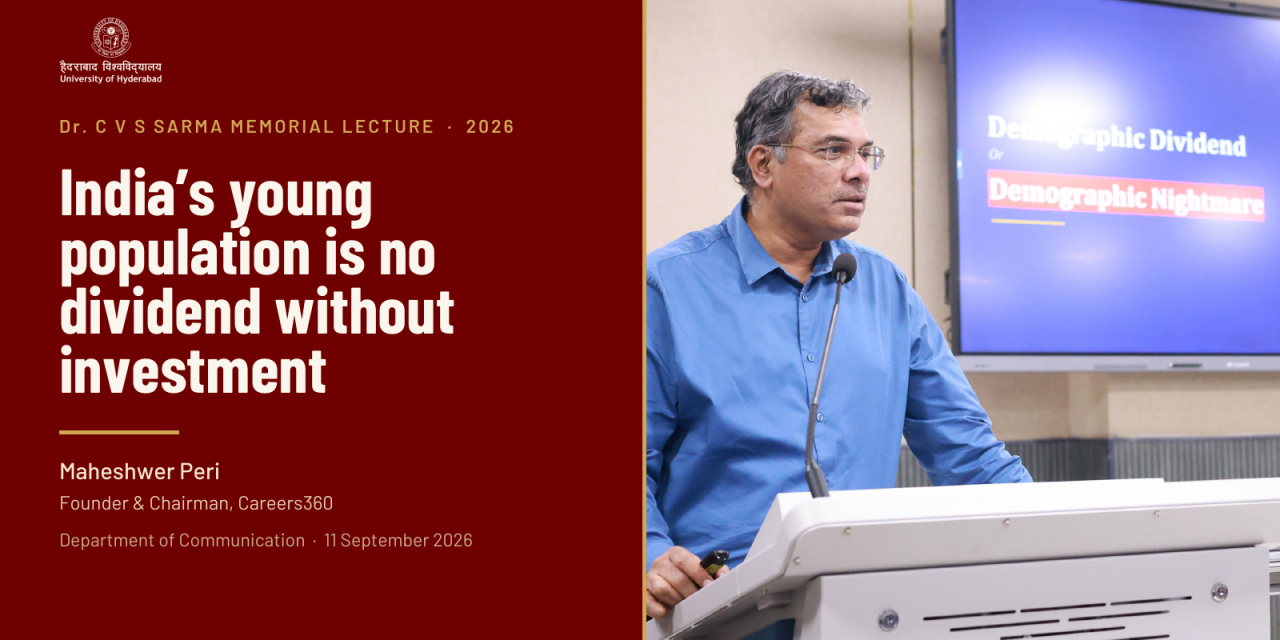
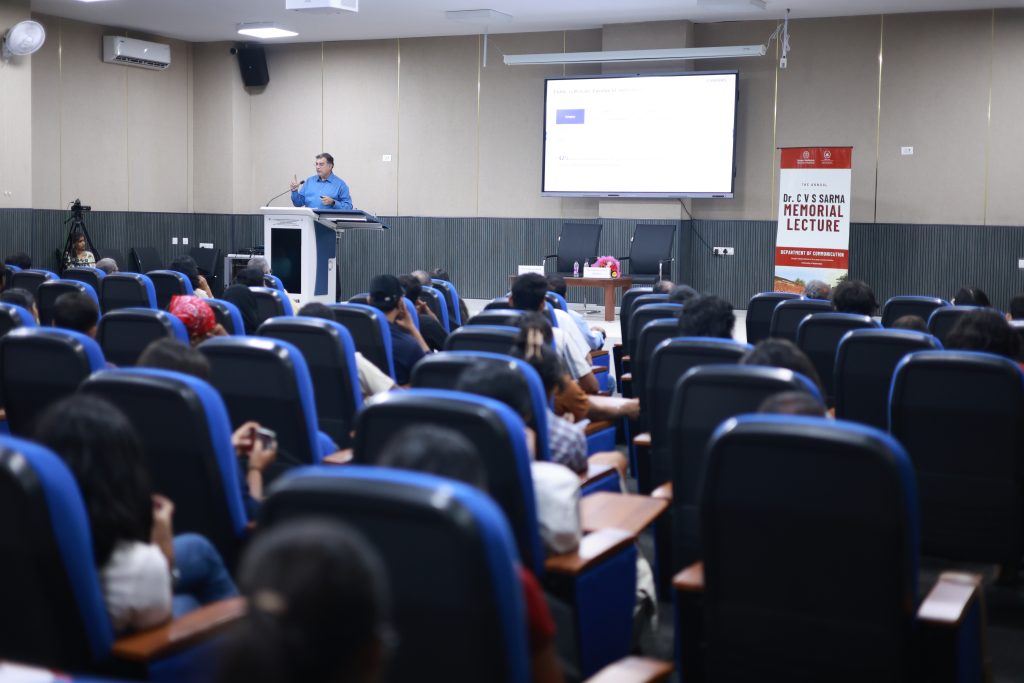
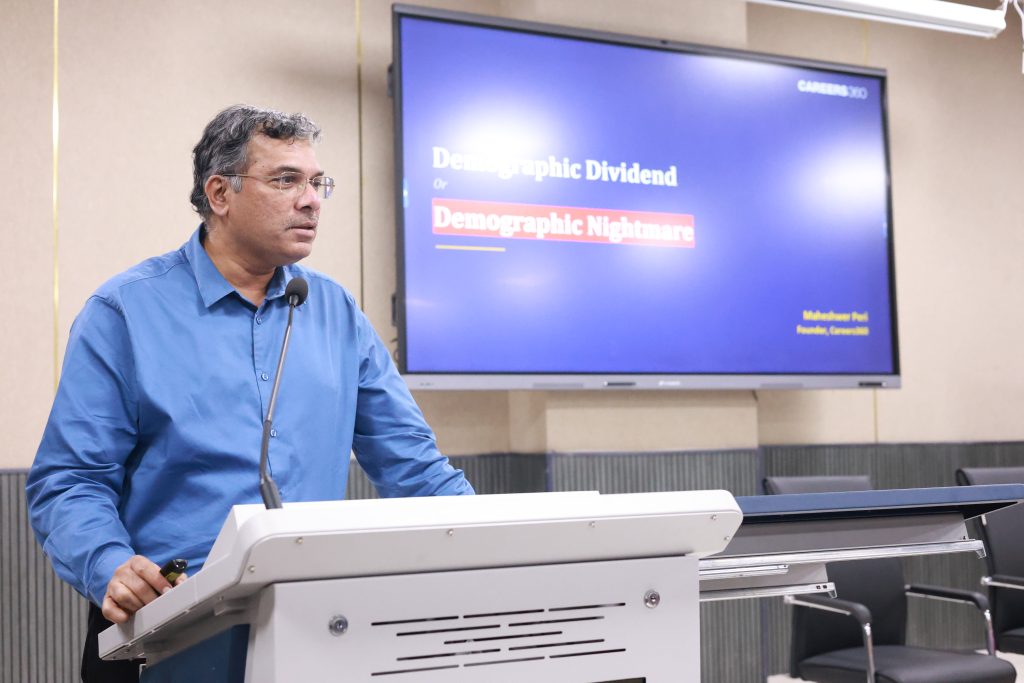
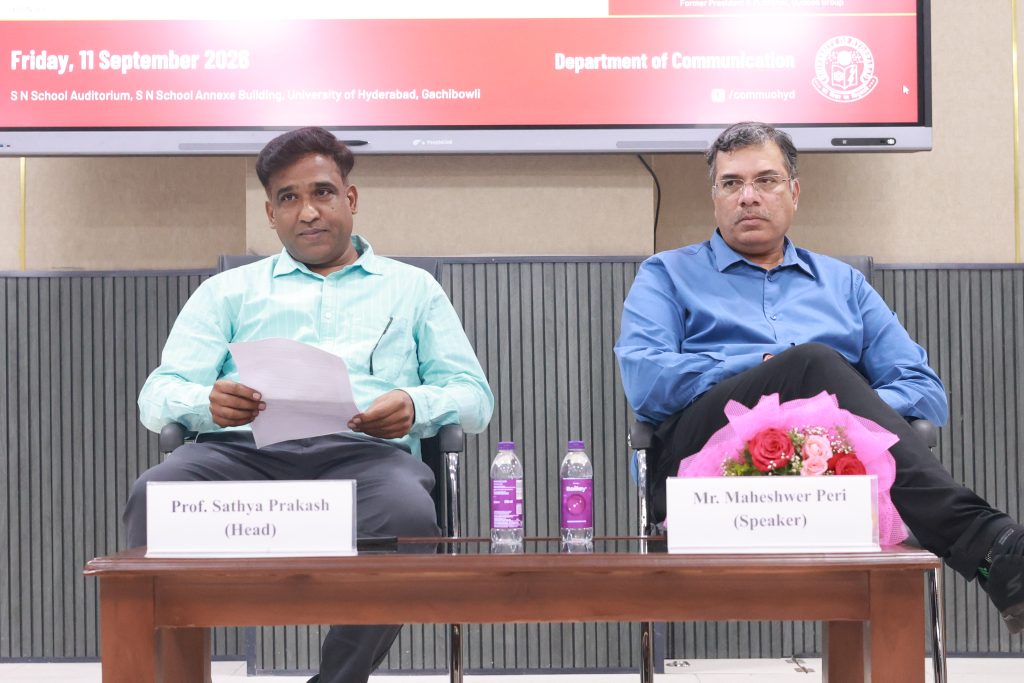
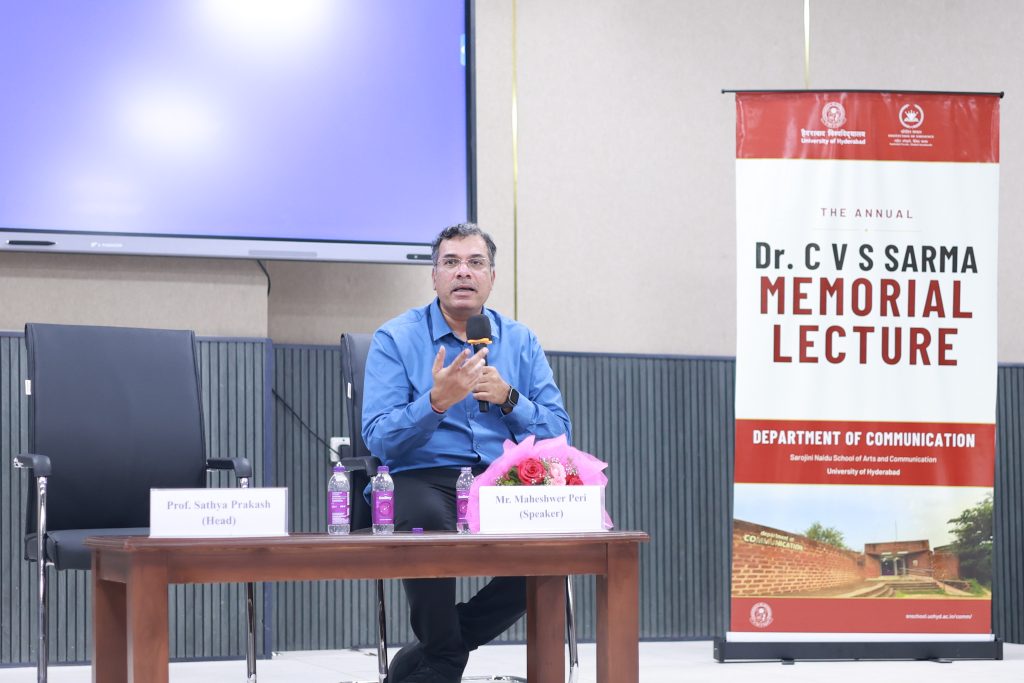
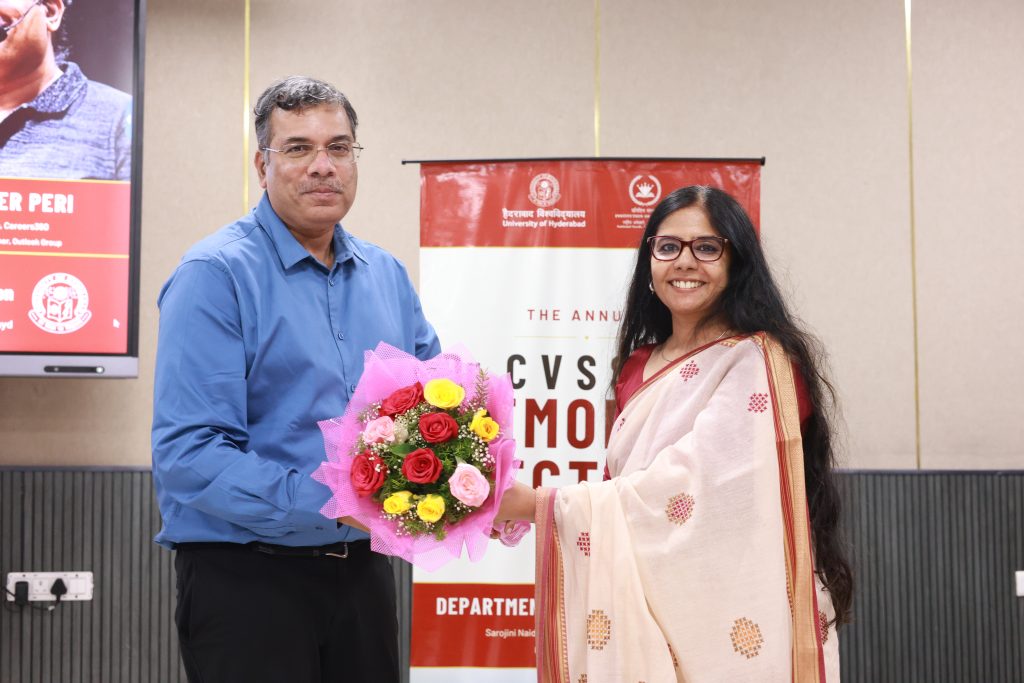
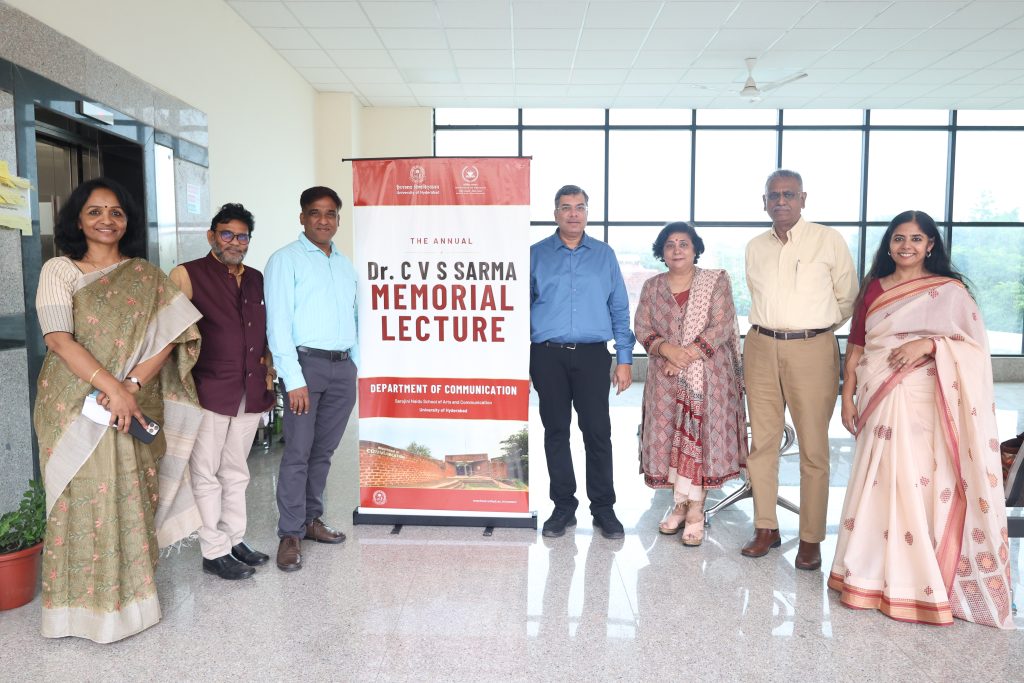
The Department of Communication, Sarojini Naidu School of Arts and Communication, University of Hyderabad, hosted Maheshwer Peri, Founder & Chairman, Careers360, for the 17th edition of the annual Dr. CVS Sarma Memorial Lecture under the theme “Demographic Dividend or Demographic Nightmare; India’s Ticking Time Bomb”
“We have failed the demographics, because we are not funding them”
Starting his speech, Mr. Peri talked about how the current scenario of education among the students of the country has changed over the years. “I think that this generation is going through a crisis, and the crisis is simple. In my generation, you look at anyone in the front row (of the Auditorium) and ask them whether they have taken a loan to study. The answer would be no.” He emphasised how the current generation cannot study unless they make an FD or take a loan.
Currently, most of the country’s education leaders believe that India’s youth is the sole basis for getting a demographic dividend. But, he explained that a dividend comes in when we start investing — and investing in education, not merely in upskilling the young for employment, because education equips them with a vital thinking ability and a broad vision for both life and work. If we don’t invest, we don’t get a dividend. However, the numbers over time seem to suggest that we are going down an extremely opposite path, where we are more likely to have a younger, unemployed, unskilled population, burdening the nation rather than being a productive workforce for the nation.
What is the demographic dividend?
Demographic dividend essentially means that the population of the country, which is between the ages of 15 and 64, also called the productive age or productive workforce, is more than the dependent population, which does not add value to the GDP. Dependants include those below 15 as well as people aged 65 and above.
- Working-age population: The UN defines the productive age group as 15–64 years.
- India in 2025: About 4% of the population falls in the 15–64 age group. This refers only to the age profile, not whether people are actually productive.
- Other age groups in 2025: Around 2% are below 15 years, while approximately 7.4% are in the remaining older age group.
- Declining fertility: By around 2036, India’s demographic structure reflects a significant decline in fertility. India’s fertility rate is now below 2, which is below the replacement level.
- Ageing population: The elderly population is expected to rise significantly. By 2070, around 24% of the population could be elderly.
- Scale of dependency: If India’s population reaches 180 crore by 2070, that share works out to approximately 45 crore elderly people dependent on the working population for support, before counting anyone below 15.
- Future challenge: The working-age population will eventually decline relative to the ageing population, creating a major demographic and economic challenge.
- Global example: Countries such as Japan are already experiencing this combination of an ageing population and a shrinking younger workforce, which can stunt GDP growth.
How do we become dependants?
As he discussed, in the non-agriculture sector, only 7 crore people have social security. The other 27 crore people in that workforce will also retire or become unable to work at some point, and they will again become dependents because they don’t have any social security.
The bigger problem that we are dealing with is that the degrees are piling up. When people don’t have enough jobs in the private sector, they start “applying for anything and everything”. According to the Directorate General of Employment data that measured a certain period (November 2024 to July 2025), about 55,000 advertised government jobs gathered 1.86 crore applicants. Statistically, 338 applicants for one job role.
Between 2023–24 and 2025–26, while the population continued to grow, the number of jobs decreased from 63.4 crore to 61.6 crore.
Are we making the youth productive?
He mentioned that even though the government claims great faith in the significance and strength of the youth in many international forums, its efforts to make the youth productive remain questionable. The answer is the kind of investment we make in our youth, whether in education or skills, but most importantly, in investment.
However, education’s share of net revenue receipts has declined significantly over time. The share peaked at 7.01% but has now fallen to 3.8%. In 2026–27, total net revenue receipts stood at ₹68.75 lakh crore, while the education budget was ₹2.61 lakh crore, amounting to 3.8%. This indicates a dramatic decline in investment in the country’s youth and human resources.
Public vs Private; Decline & Growth Across Institutions
As he explained, from 2015–16 to 2023–24, the number of government schools declined from 12 lakh to 10.8 lakh, meaning around 1.2 lakh schools were closed. On the other hand, private schools increased by around 0.27 lakh. In the case of higher education, government colleges increased by just 1%, whereas private ones rose by 42%.
Teaching vacancies remain high in IITs, with 38.4% vacancies across IITs overall.
Public institutions are increasingly relying on loans for expansion. The Higher Education Financing Agency (HEFA) has a loan portfolio of ₹25,000 crore. As a result, IIM fees increased from around ₹2 lakh (2001–02) to nearly ₹30 lakh today. IIM Ahmedabad fees rose from ₹3.16 lakh (2012) to ₹27.5 lakh, while IIT Delhi fees increased from ₹2 lakh to ₹9.3 lakh. NLSIU Bengaluru also saw a 400% increase.
Another important concern is the secondary Gross Enrolment Ratio, and the dropout rates between classes that sit behind it, which are massive. At this point in time, the dropout rate between Classes 9 and 12 is 31.5%, despite the NEP 2020 target of 100% secondary GER by 2030. In 2026, the secondary GER stands at 68.5%, which means a large share of students never reach Class 12 at all. These factors are limiting access to quality education and undermining India’s potential demographic dividend. The state’s reduced funding has contributed to greater financial pressure on students.
The system of entrance exams and coaching centres
The growing use of entrance examinations for undergraduate admissions, as he said, is pushing students towards coaching institutions, creating an advantage for those who can afford them. When the NEET examination was reconducted in 2024, the National Testing Agency, as directed by the Supreme Court, released data on 23.5 lakh NEET students studying in various cities and coaching centres. After categorisation, 566 cities and 4,500 centres were divided into those with and without access to coaching. The 231 cities with access to top coaching institutes had an 87% success rate, while the 335 cities without such access had a 13% success rate.
In NEET 2026, participation fell from 22 lakh (in the month of May) to 19.95 lakh when it was reconducted. Eighty per cent of those who did not appear were girls, highlighting how travel requirements and social restrictions can disproportionately affect female students.
High fees and lack of diversity
He explained how high-fee courses exclude students from disadvantaged backgrounds, creating a homogeneous student population at elite institutions that may struggle to understand and address the problems faced in India’s hinterland.
High fees often lead to large EMIs, pushing graduates towards high-paying corporate jobs rather than NGOs, social enterprises, or entrepreneurship.
The central concern is that expensive national institutions can make students feel that certain careers and institutions are beyond their reach, limiting diversity and equal opportunity.
Demographic dividend at risk
Emphasising the issue, he explained that Capital Group warns that India’s demographic dividend could become a “nightmare” if the country cannot provide employment and meet young people’s aspirations. It identifies de-globalisation, automation and weak education as compounding pressures. The Hudson Institute describes India’s young population as potentially facing a demographic disaster without urgent skills development and human capital investment.
His central recommendation is greater public investment in education and youth, ensuring that those seeking careers and upward mobility receive adequate state support.
The ticking time bomb
He concluded that India has underinvested in education, with spending currently at 3.64% of GDP, despite the long-standing promise of 6% of GDP, dating back to the Kothari Commission (1964–66) and reaffirmed by NEP 2020.
A Parliamentary Standing Committee identified the core issue as a funding shortfall, while NITI Aayog has focused more on an “outcome shortfall.”
Continued underfunding could turn India’s demographic dividend into a demographic disaster over the next 20–30 years.
He describes this as a “ticking time bomb” for India unless investment in education and human capital increases.
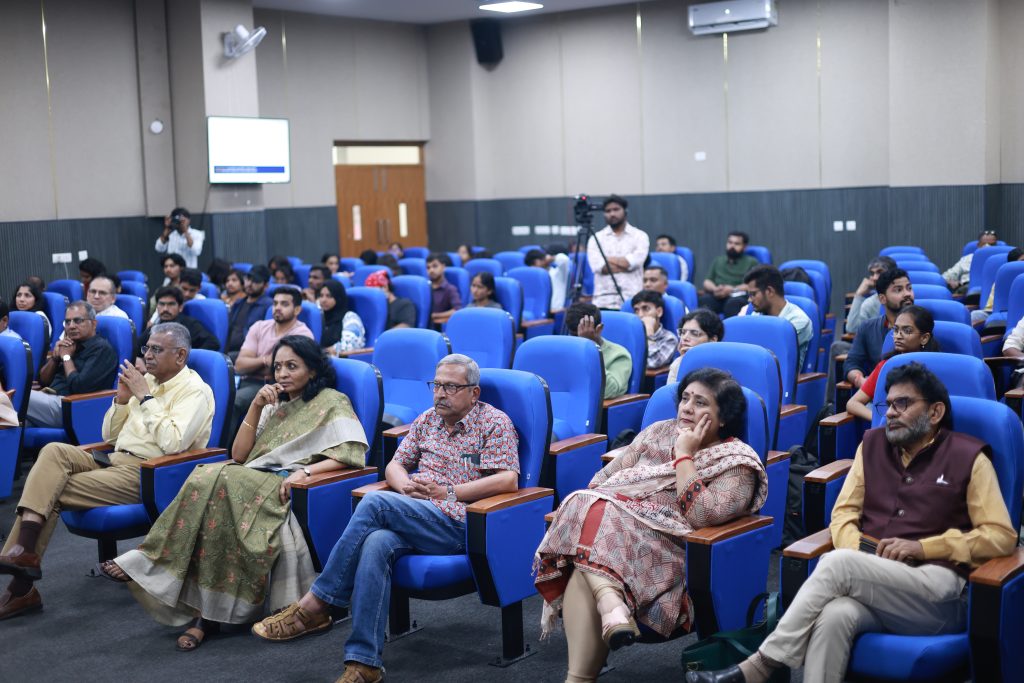
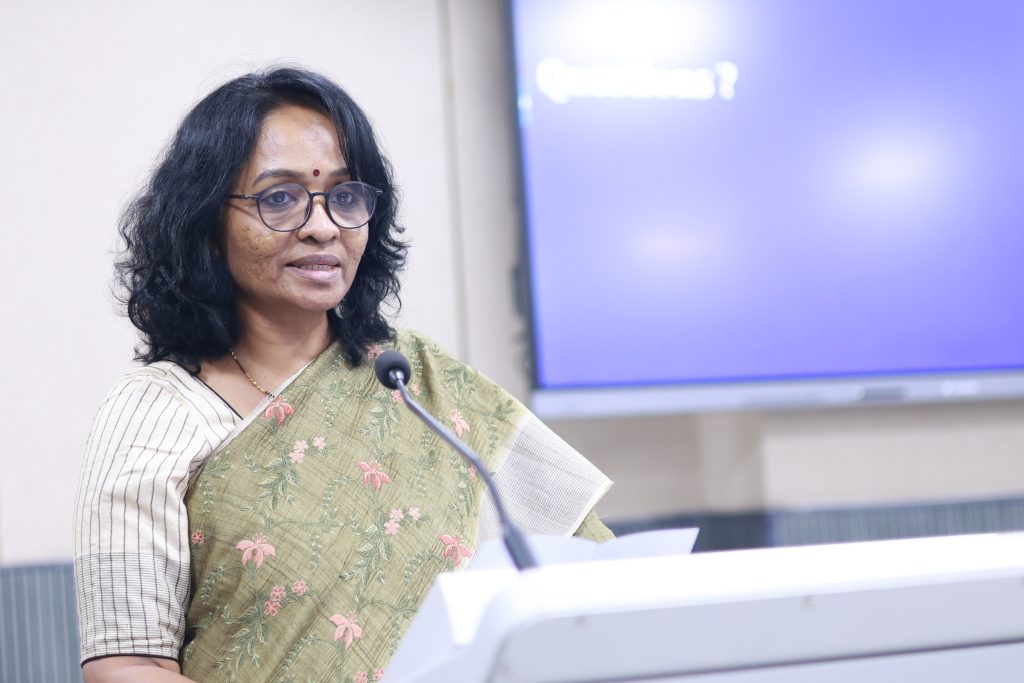
The lecture was well attended by students, faculty and members of Hyderabad’s civil society, and ended with a stimulating question-and-answer session. When asked why education is not being given enough priority, Peri said he is more hopeful now than he was eight months ago because, following the CJP (Cockroach Janta Party) protests, education has become a major topic of public discussion. Regardless of who wins or loses politically, people are now talking about schools, colleges and education. He considers this one of the most positive developments in the country in recent years.
Another question was whether education should be centralised across India, to which Peri answered that greater centralisation could help create common standards, especially in STEM education. However, states are reluctant to give up control because education is closely connected to culture, language and political interests. As a result, even STEM education, which is relatively universal in nature, has been affected by this state-level competition.
About Maheshwer Peri
Maheshwer Peri is the Founder and Chairman of Careers360 (Pathfinder Publishing Pvt. Ltd), India’s largest higher education discovery platform, carrying data on more than 40,000 institutions and over 400 examinations. He strongly believes that education is a tool of empowerment and reliable information is its precondition. His stand against malpractices in educational advertising is now evident.
He successfully fought a gruelling six-year legal war against IIPM, with battles spread across several courts from Assam to Uttarakhand. Despite facing immense financial and personal costs, he maintained his unwavering commitment to the cause till all the cases were dropped in 2016.
About Dr. CVS Sarma Memorial Lecture
The Dr. CVS Sarma Memorial Lecture is an annual academic initiative held in memory of Dr. CVS Sarma, a distinguished senior professor, whose life and work remain a part of the legacy of the Department of Communication. Established in 1988–89, the Department of Communication at the University of Hyderabad has grown from a single master’s programme into a premier centre for journalism, communication and media studies, offering two postgraduate programmes and a much sought-after doctoral programme in the country.
Contributed by: Eishita, MA Communication