
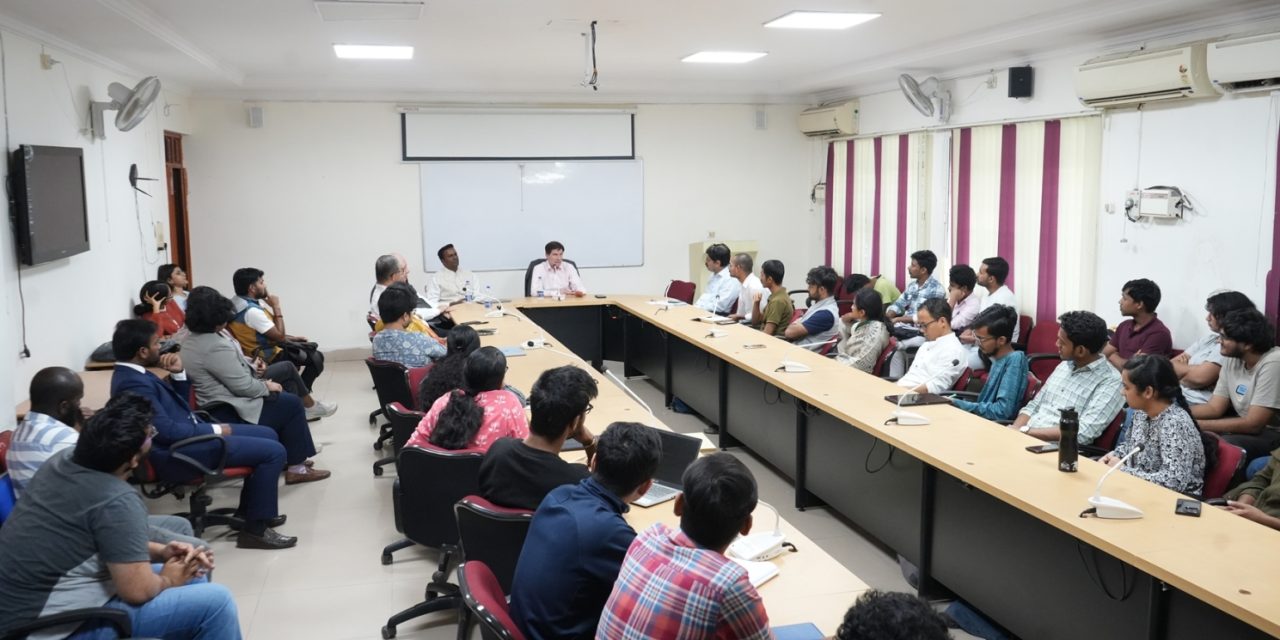
The Department of Political Science, University of Hyderabad (UoH), in collaboration with Woxsen University, hosted a special session on “Diplomacy and Public Affairs: India & Uruguay Relations” with His Excellency (HE) Alberto Guani, Ambassador of Uruguay to India, and Prof. Ignacio Bartesaghi, Catholic University of Uruguay as distinguished speakers on 28 November at the Seminar Hall, in the Department of Political Science, UoH.
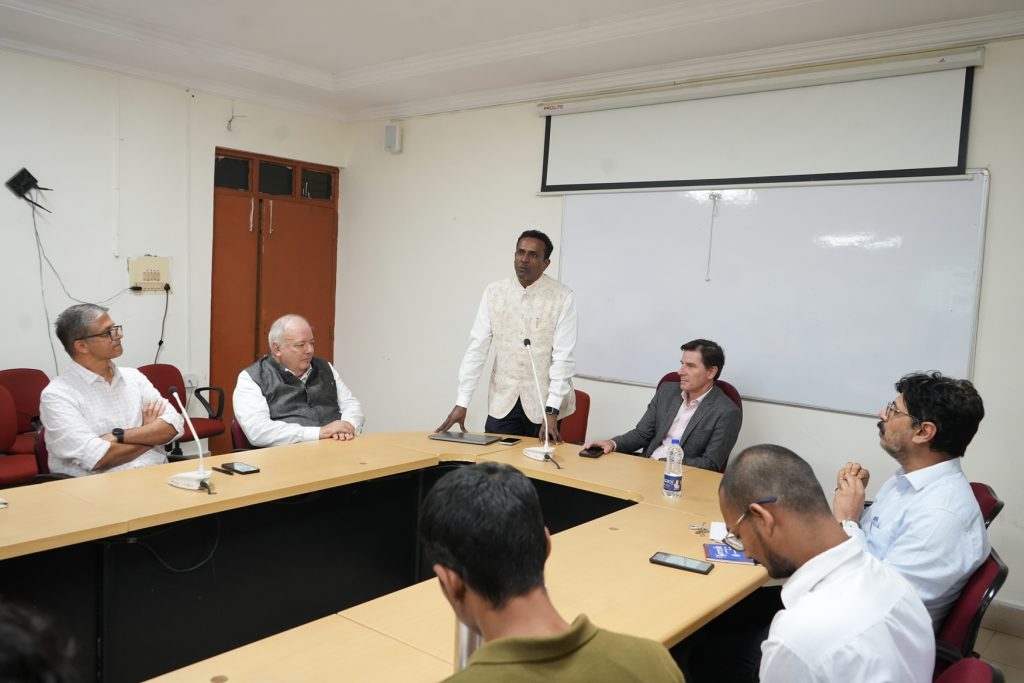
The session opened with remarks by Prof K. K. Kailash. HoD, Dept of Political Science, UoH who welcomed the speakers and participants. Dr S.Shaji. faculty member at the Department of Political Science, University of Hyderabad, gave a brief introduction about both speakers, Ambassador Guani and Prof. Ignacio Bartesaghi, respectively.
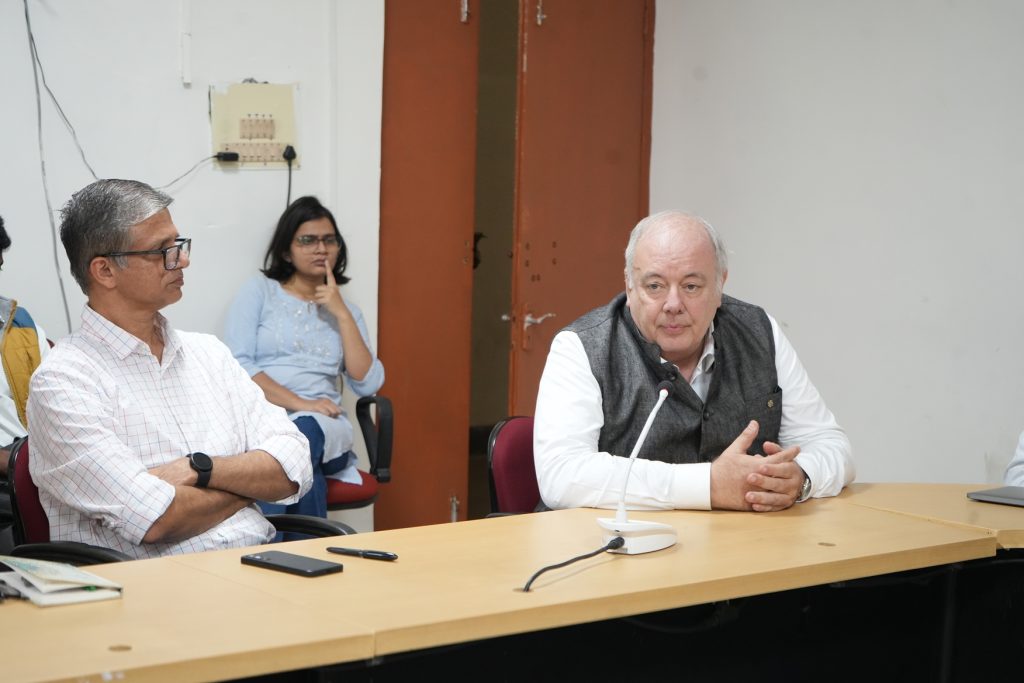
After the opening remarks, Prof. Parivelan K M from Woxsen University, outlined the background of collaboration with University of Hyderabad and emphasised the importance of situating Latin American diplomatic conversations within Indian academic spaces. Ambassador Guani, in his remarks, highlighted Uruguay’s centrality as the democratic state in the region, though it is the smallest country in Latin America. He emphasised the historic depth of India–Uruguay relations, recalling Indira Gandhi’s 1968 visit and reaffirming Uruguay’s strong democratic ethos. HE Amb. Guani concluded by affirming Uruguay’s enthusiasm to renew and deepen its partnership with India, signalling a fresh momentum for bilateral engagement.
Following this, Prof. Igancio enumerated Uruguay’s geographic and economic features, its peaceful standing in Latin America, and noted the limited South Asia– Latin America engagement, while situating China’s growing role as a major trade partner shaping regional dynamics. He underscored, however, that geographical distance continues to pose a challenge to sustained communication and engagement—making strong political will the decisive driver for meaningful bilateral ties. Critically, he emphasized that Uruguay must be approached on its own terms: India must engage Uruguay as Uruguay, not as an extension of any other big power in the region. His concluding observation was particularly compelling: “The only way to be near is to be with us, to see us.” Prof. Ignacio then presented a brief video clip that offered a vivid virtual journey into Uruguay—its distinct cultural landscape, its democratic spirit, and its rich reservoir of natural resources.
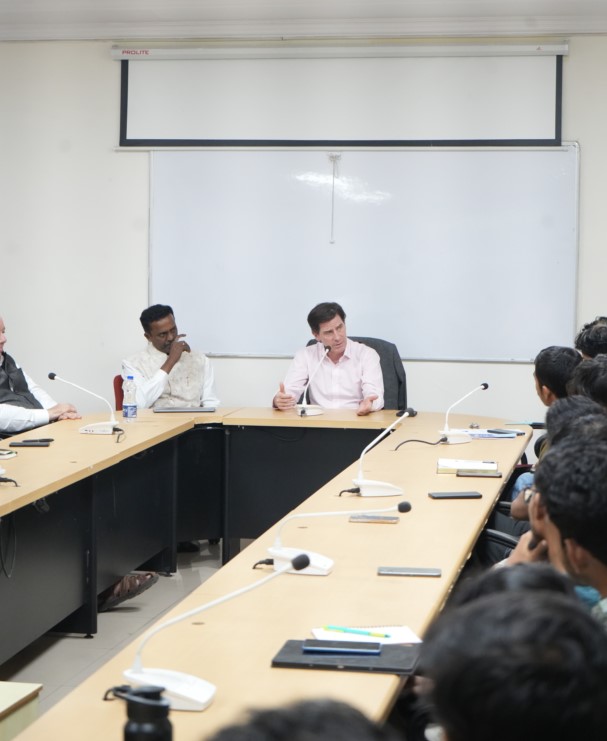
The visual narrative, though short, immersed the audience in the everyday rhythms and geographic character of the country, giving students a compellingfirst glimpse into a nation often distant yet deeply fascinating. The session then opened to questions, inviting an engaging exchange between the speakers, faculty members, and students. Participants raised a wide spectrum of queries— ranging from the Uruguay’s recent policy adjustments indicating a neoliberal tilt, marked by pro-investment reforms, and the delay in establishing a Uruguayan embassy in India to Uruguay’s post-COVID cultural recovery and the emerging opportunities for international students to pursue research in the country.
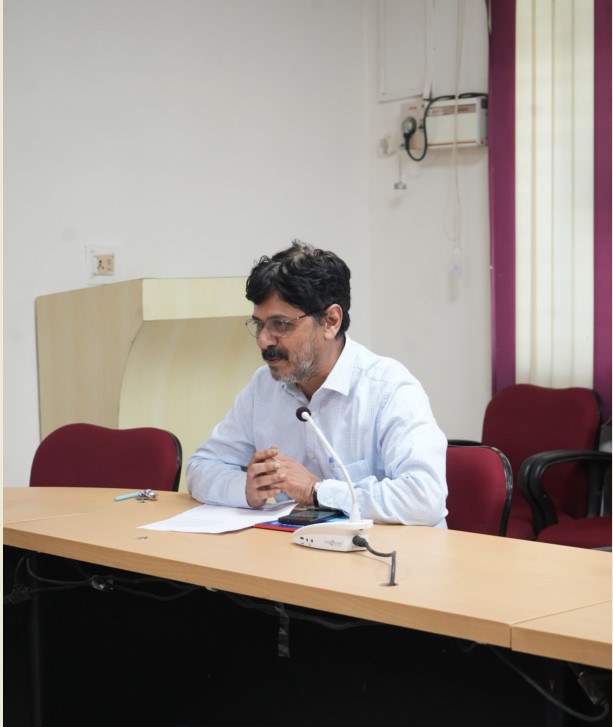
These discussions added depth to the session, revealing both the curiosity of the audience and the multifaceted potential of the bilateral relationship. The event concluded with a formal vote of thanks delivered by Dr S.Shaji, marking a thoughtful close to a rich and insightful academic engagement.
Report prepared by: Rajib K Panda, RK Vanlalruata