
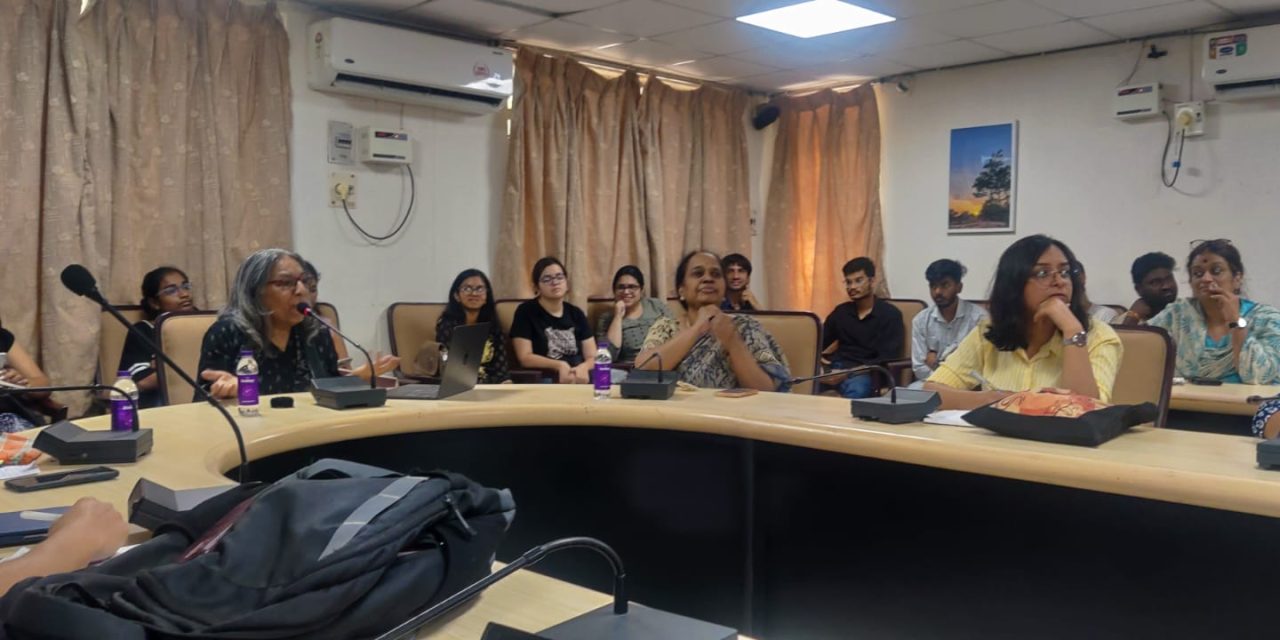
The School of Social Sciences of the University of Hyderabad organized a talk on “Documenting Our Pasts” by author, noted feminist historian, Urvashi Butalia on 26 March 2026 in the Conference room, School of Social Sciences.
Urvashi Butalia is the Founder and CEO of Zubaan Books, and was the co-founder of Kali for Women, India’s first feminist publishing house. She is also an acclaimed feminist historian renowned for her path-breaking partition narratives through oral histories, The Other Side of Silence: Voices from the Partition of India, (winner of the Oral History Book Association Award 2001 and the Nikkei Asia Award for Culture 2003), as well as Speaking Peace: Women’s Voices from Kashmir (edited), Partition: The Long Shadow (edited).
The Talk was Chaired by Prof. K. Suneetha Rani, Dean, School of Social Sciences at the University. She welcomed the invited speaker and also acknowledged the presence of Telugu author, Dr Gitanjali in the gathering.
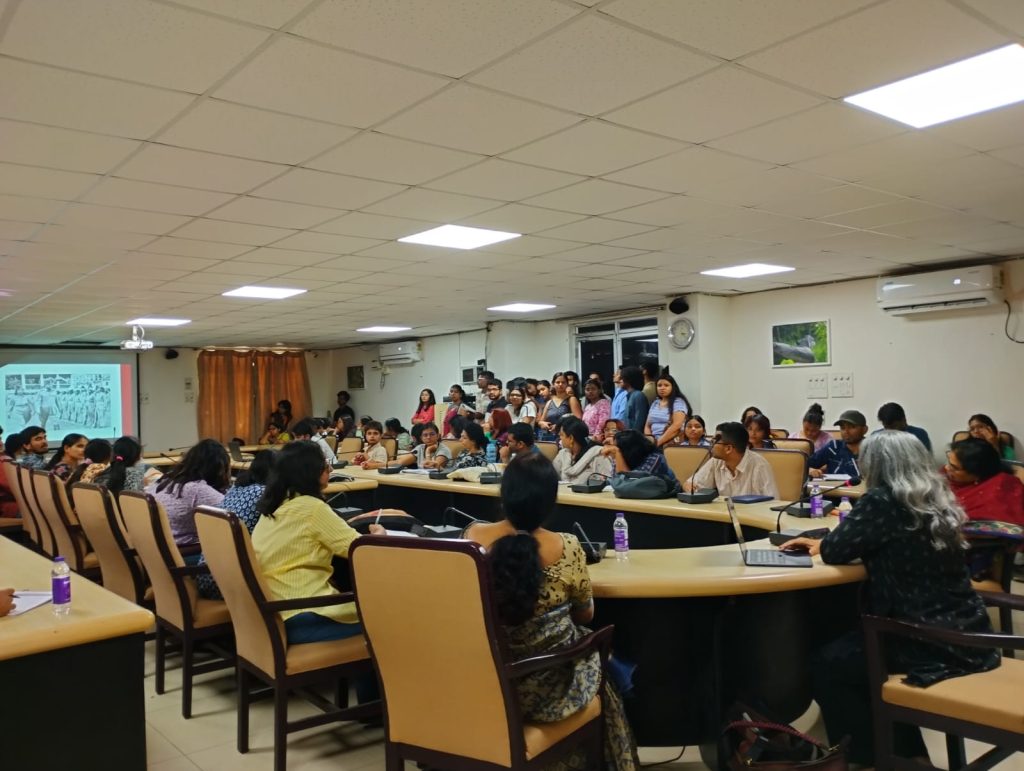
In her interactive lecture, Urvashi Butalia discussed the question of absence of women. Through a visual presentation, she looked at the absence of women throughout histories, and the methodological pathways for tracing the history of something which is an absence, and turning absence into presence.
In her presentation, accompanied by interactive and compelling storytelling, she strung together seemingly disconnected and scattered references to visibilise the lives and experiences of women. She looked at a myriad of sources – from poems from Therigatha composed by Buddhist women in 6th century BCE, to Sangam Literature giving clues that women at the time had the authority and the audience to speak about governance, statecraft, war as well as love, to Mukta Salve’s poignant observations on caste discrimination in 19th century India in “About the Grief of the Mangs and Mahars”, to something as “unserious” and ephemeral as a Google Doodle of Dr. Rukhmabai as an entry point to dive into a more serious theme like women in medicine and child marriage.
She also brought out sources such as films (uncovering experiences of the Government rehabilitating refugee women from partition to stitch the Government uniforms of class IV employees of the administration in independent India), to pamplets (Kashmiri women’s role in militia), to clothes (such as a Kashan design, worn by Naga women in Manipur, with a criss-cross motif, symbolic for the search for justice, or Perakh, the Ladakhi headdress that has stitched onto it the identity, location and wealth of the woman wearing it) to modern posters from the women’s movement in India. She problematized dominant perceptions of what is seen as “legitimate evidence” going beyond conventional frameworks to approach absences in histories.
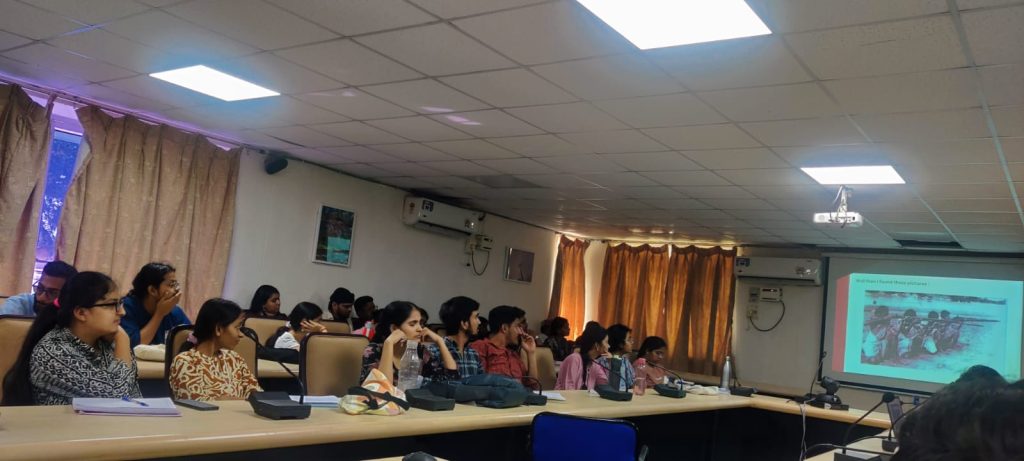
She concluded her presentation by underscoring the importance of listening to stories with care, respect and deep attention, and the responsibility of the storyteller or the researcher in in sensitively carrying it to the public.
The presentation was listened to in rapt attention by a packed hall comprising students, scholars, faculty across disciplines and schools. It was followed by a lively discussion where the Guest answered curious questions on the presentation and on the approach to the diverse research areas of the students and scholars present, from recovering histories, to sexual violence, to memories of childhood.
The session concluded with a vote of thanks proposed by the Chair, Prof. K. Suneetha Rani, Dean, School of Social Sciences.
Report prepared by Abhiruchi Chatterjee, Research Scholar, Centre for Women’s Studies