
Traditional metal implants like hip joints and bone plates rely on standard metals that can wear down, corrode, or release harmful ions into the body over time. To solve this, our study introduces a new class of materials called TiCoCr-based multi-principal element alloys (MPEAs) designed specifically for biomedical applications. This comprehensive investigation has been published in a prestigious journal, “Advanced Healthcare Materials”. More details can be found at: https://advanced.onlinelibrary.wiley.com/doi/10.1002/adhm.71918
By strategically combining titanium (Ti), cobalt (Co), and chromium (Cr) as equal/near-equal partners (in concentrated proportions) rather than using one base metal, we unlocked exceptional material synergy. These advanced alloys deliver a unique combination of high mechanical strength, excellent wear resistance, and a flexible structure that matches natural bone better than conventional materials—significantly reducing the risk of implant loosening.
Furthermore, laboratory tests confirmed that these alloys exhibit excellent corrosion resistance in simulated body fluids and are highly biocompatible, supporting healthy cell growth without toxic side effects. This research demonstrates that TiCoCr-based MPEAs are highly promising candidates for the next generation of longer-lasting, safer medical implants.
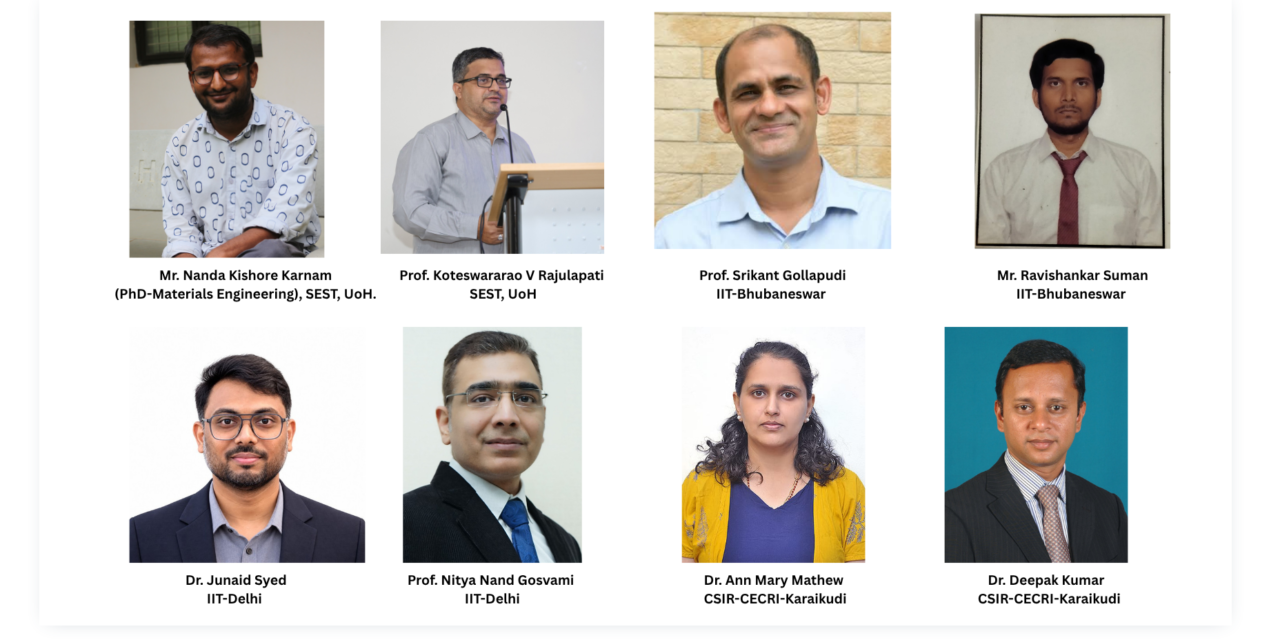
This research work is a part of the doctoral thesis of Mr. Nanda Kishore Karnam Mr. Nanda Kishore Karnam is a doctoral student working under the supervision of Prof. Koteswararao V. Rajulapati, School of Engineering Sciences and Technology (SEST), University of Hyderabad (UoH). Other partners of this consortium include Dr. Junaid Syed & Prof. Nitya Nand Gosvami from IIT-Delhi, Mr. Ravishankar Suman & Prof. Srikant Gollapudi of IIT-Bhubaneswar and Dr. Ann Mary Mathew & Dr. Deepak Kumar Pattanayak of CSIR-CECRI-Karaikudi.