
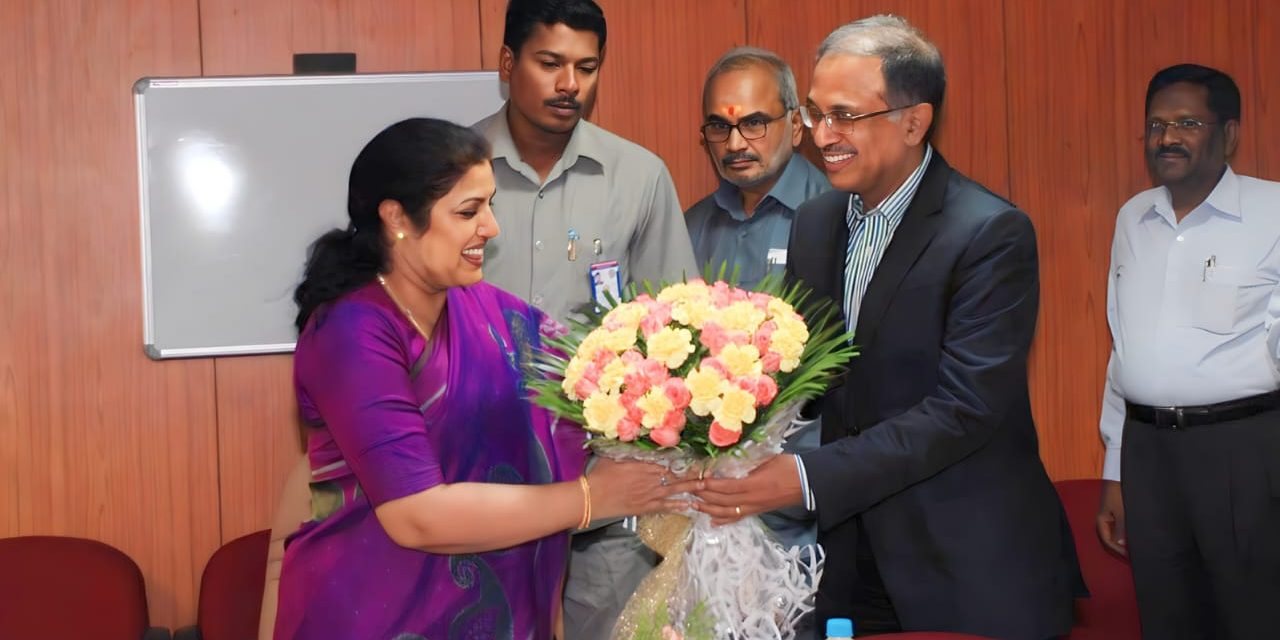
Prof. Ramakrishna Ramaswamy, a renowned scientist, and academic administrator, served as the 8th Vice Chancellor of the University of Hyderabad from June 2011 to January 2015. His tenure marked a significant phase in the University’s evolution, particularly in strengthening its academic and research landscape through interdisciplinary expansion and institutional foresight.
Ramaswamy’s personal academic journey began with a Bachelor of Science in Chemistry from Loyola College, Madras in May 1972. He went on to pursue his Master of Science in Chemistry from the Indian Institute of Technology, Kanpur, graduating in May 1974. He then moved to the United States for doctoral research, earning his Ph.D. in Chemistry from Princeton University in September 1978.
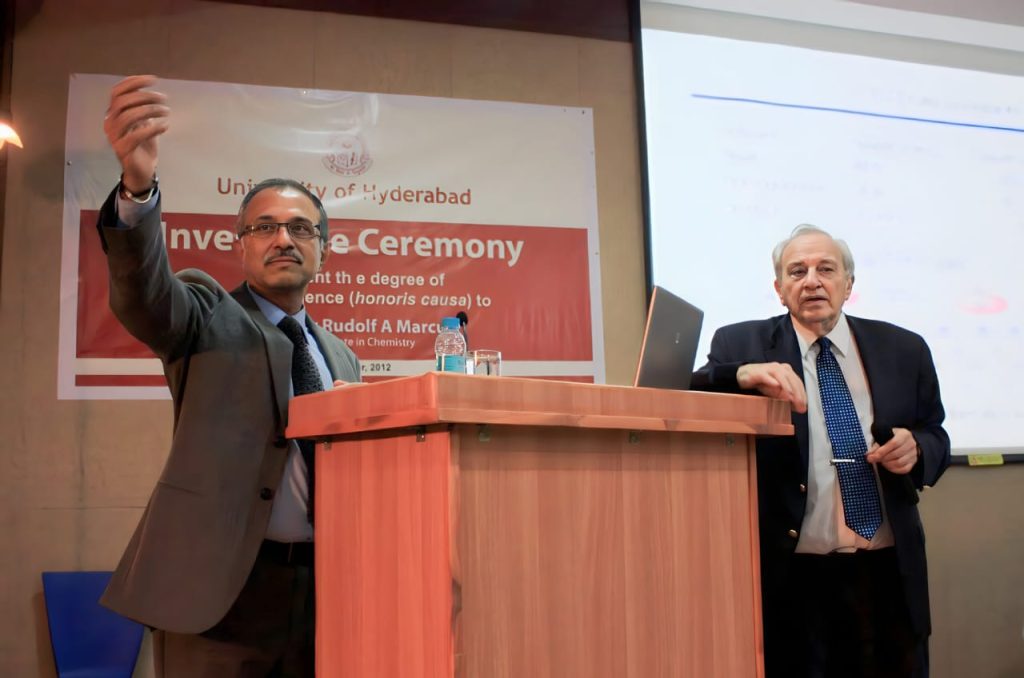
Research Contributions and Scholarly Work
Over the decades he built a distinguished research profile mainly centered on nonlinear dynamics and complex systems. His work reflects deep engagement with theoretical and computational approaches to understanding physical and biological phenomena. His research interests span chemical dynamics, classical and quantum chaos, semiclassical quantization, disordered systems, statistical physics, molecular dynamics, and cluster physics. In later years, his scholarship expanded into computational biology and genomics, reflecting an evolving interdisciplinary orientation.
His contributions to scientific literature comprising over 200 publications and book articles. These works have addressed fundamental questions in chaos theory, statistical mechanics, and molecular systems, contributing to the global body of knowledge in complexity science.
Teaching Career and Academic Leadership
From 1986 until his retirement in October 2018, Prof. Ramaswamy taught at Jawaharlal Nehru University, New Delhi where he served as Associate Professor in the School of Physical Sciences (1986 – 1990) and Professor (1990-2018). He was also Professor at the Centre for Computational Biology and Bioinformatics in JNU from 2002 to 2018.
Even after formal retirement, his commitment to teaching and mentorship continued. Until October 2023, he was Visiting Professor in the Department of Chemistry at the Indian Institute of Technology, Delhi. Presently he is Honorary Professor at the Indian Institute of Science Education and Research, Berhampur.
National Academic and Administrative Roles
Before assuming leadership at the University of Hyderabad, Prof. Ramaswamy held administrative positions in JNU, serving as Dean of the School of Physical Sciences (1992-94, 1999-2001) and Dean of the School of Information Technology (2002-2004).
During his Vice-chancellorship he held the national responsibility of Chairman of the National Council of Rural Institutes, Hyderabad, serving from April 2012 to January 2015.
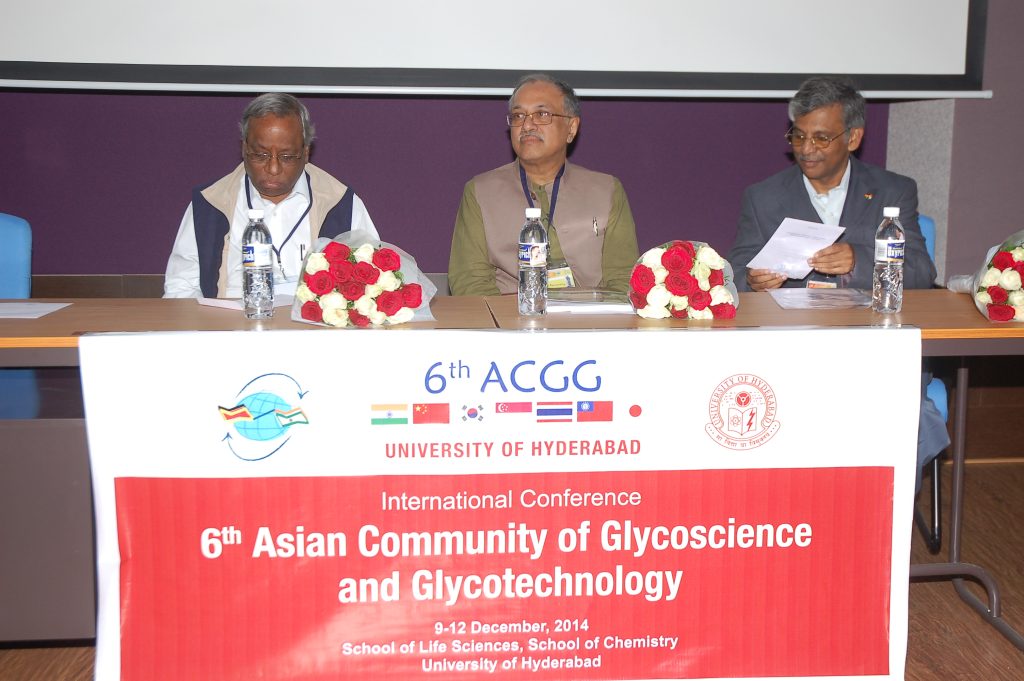
Vice Chancellorship at the University of Hyderabad
As Vice Chancellor, Prof. Ramaswamy articulated and implemented a vision focused on strengthening research ecosystems, promoting interdisciplinarity, and aligning academic programmes with emerging global knowledge trends.
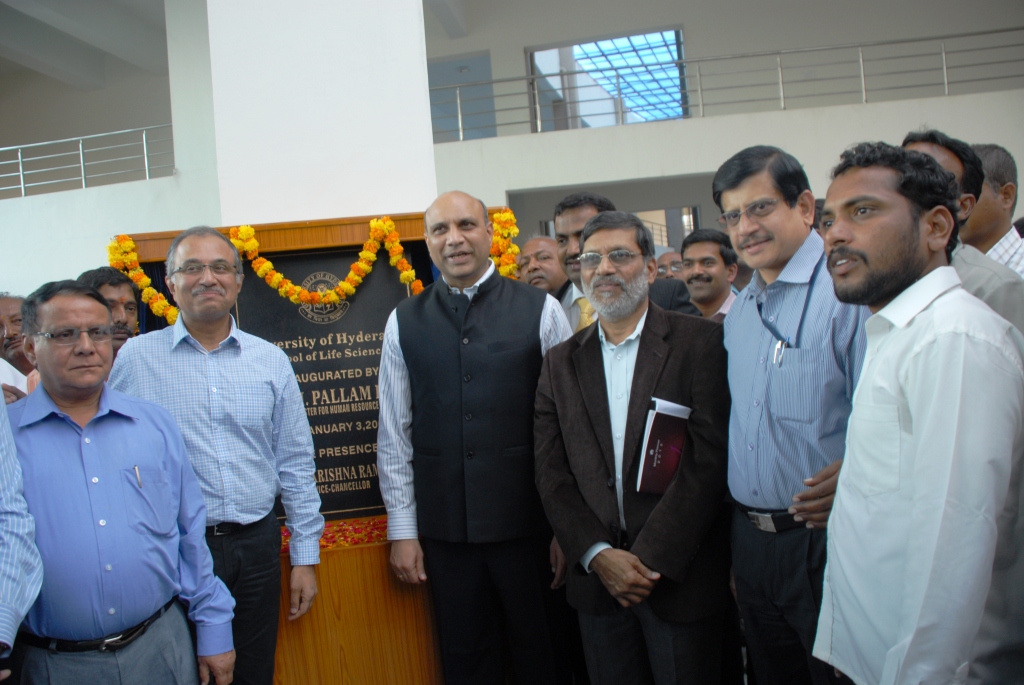
His tenure as Vice-Chancellor of the University of Hyderabad saw significant infrastructure and academic developments. Many of the existing academic structures were reorganized during his tenure: the College for Integrated Studies, the School of Economics, the School of Mathematics and Statistics and the School of Computer and Information Sciences were created as separate entities. The two-year Masters in Public Health (MPH) programme was introduced, as were the Annual Chancellors Awards for excellence in teaching and research. With regard to infrastructure, new constructions on campus include the VC Lodge and Zakir Husain Complex, and the Life Sciences building, the BSL-3 facility, as well as the Networking Resource Centre of the School of Chemistry were completed.
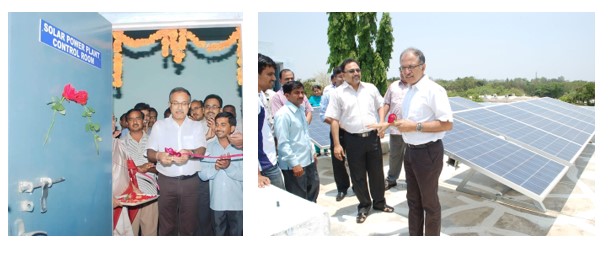
Prof. Ramaswamy also oversaw the implementation of a 100KW roof-top Solar Power Plant at the Indira Gandhi Memorial Library, showcasing the university’s commitment to sustainability.
Research infrastructure across the University was strengthened through investments in laboratories, computational resources, and collaborative research facilities. He actively encouraged interdisciplinary engagement across departments and promoted international collaborations and academic partnerships. Faculty development remained a core priority, with emphasis on recruitment, mentoring, and professional growth.
The online newsletter of the university – UoH Herald was initiated during his tenure and as on date it has crossed 5500 uploads.
Professional Appointments
Prof. Ramaswamy’s academic leadership extended across numerous national scientific bodies and universities. He served as President of the Indian Academy of Sciences, Bangalore, from 2016 to 2018, after earlier serving the Academy as Vice President and Editor of Publications between 2013 and 2015. In 2015, he was Vice President of the Indian National Science Academy, New Delhi.
His research journey also included fellowships at premier research institutes. He was a Fellow at the Tata Institute of Fundamental Research, Bombay, from 1983 to 1986, and a Visiting Fellow there from 1981 to 1983. Immediately following his Ph.D., he was Postdoctoral Fellow at the California Institute of Technology, Pasadena, from 1978 to 1980.
Visiting Positions and International Engagements
Prof. Ramaswamy’s international academic engagements reflect sustained global collaboration. He was affiliated with the University of Tokyo during January–February 2010. Earlier, he was a Member at the Institute for Advanced Study, Princeton, during 2004–2005. He also held residency at the Isaac Newton Institute for Mathematical Sciences, Cambridge, from January to March 1994, and at the Institute for Molecular Science, Okazaki, during 1989–1990.
Awards and Honours
His scientific and academic contributions have been recognized through numerous prestigious honors. He delivered the DAE Raja Ramanna Lecture in Physics in 2010 and received the TIFR Alumni Association Excellence Award in 2009. In 2008 he was awarded the J. C. Bose Fellowship by the Department of Science and Technology, India. He had earlier been elected Fellow of the Indian National Science Academy in 2007 and Fellow of the Indian Academy of Sciences in 1993. His early promise as a scientist was recognized through the INSA Medal for Young Scientists in 1985 and the National Science Talent Scholarship, which he held from 1969 to 1974.
International recognitions include his association as Santa Fe Institute International Fellow from 2000 to 2001 and as Senior Associate at the International Centre for Theoretical Physics, Trieste, from 1996 to 2001, after earlier being Associate of ICTP from 1988 to 1993. In 2008 he was elected Fellow of TWAS — The World Academy of Sciences.
Editorial and Publication Contributions
Prof. Ramaswamy has also played a significant role in shaping scientific publishing. He has served on the Editorial Board of the Journal of Physics: Complexity since 2019 and on the Editorial Board of the Journal of Nonlinear Science since 2015. From 2000 to 2024 he was Managing Editor of the Hindustan Book Agency’s Texts and Readings in the Physical Sciences (TRiPS) series.
He served as Editor of Publications for the Indian Academy of Sciences from 2013 to 2015 and as Associate Editor of Pramana – Journal of Physics from 2008 to 2012, after earlier being on its Editorial Board from 1992 to 2007. His editorial service also includes roles on the boards of Resonance journal of science education from 1997 to 2005 and the International Journal of Chemical Kinetics from 1991 to 1992.
Legacy
Prof. Ramakrishna Ramaswamy’s tenure as Vice Chancellor left a lasting institutional legacy. His leadership strengthened the University’s research infrastructure, expanded its academic programmes into emerging domains, and embedded interdisciplinary collaboration into its intellectual culture. The initiatives undertaken during his years in office continue to shape the University of Hyderabad’s academic trajectory.
As a scholar who brought clarity to institutional governance, Prof. Ramaswamy’s vice-chancellorship remains an important chapter in the University’s journey toward research excellence and global academic engagement.
– By Mahi Sharma, MA Communication (Media Studies)