
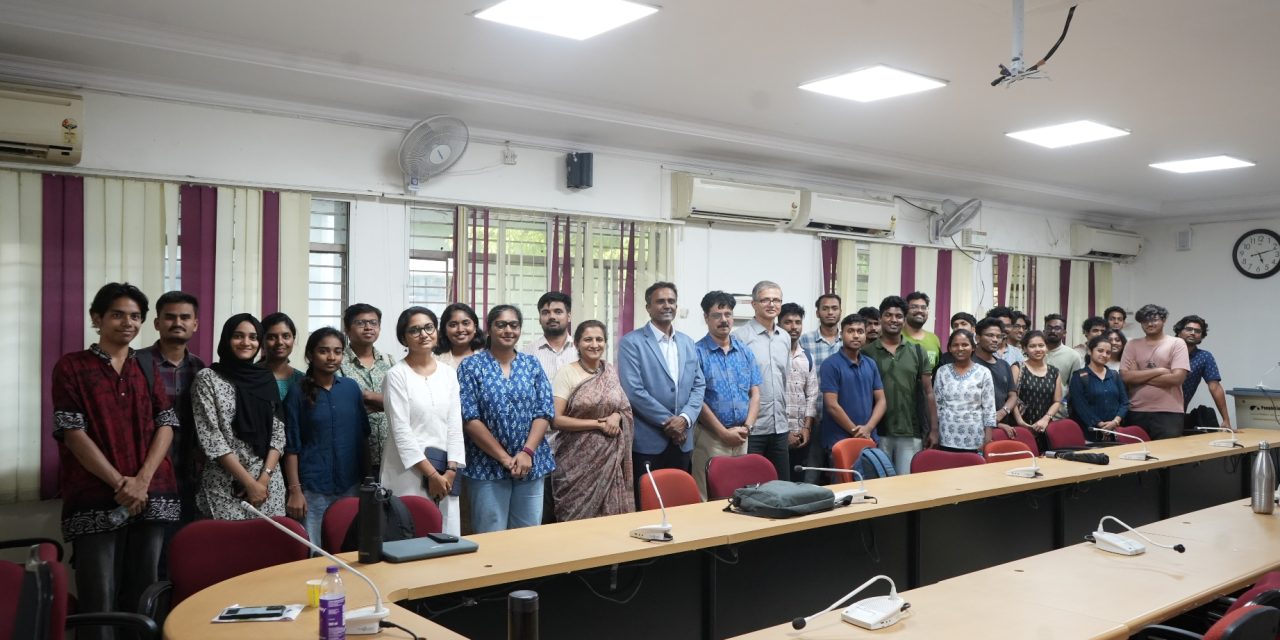
The Department of Political Science, University of Hyderabad, hosted a talk titled “Contemporary Conflict Escalations & Growing Forced Migration Challenges” by Dr. Parivelan K. M., Professor and Associate Dean, School of Liberal Arts, Woxsen University on April 15, 2026, at the Department Seminar Hall.
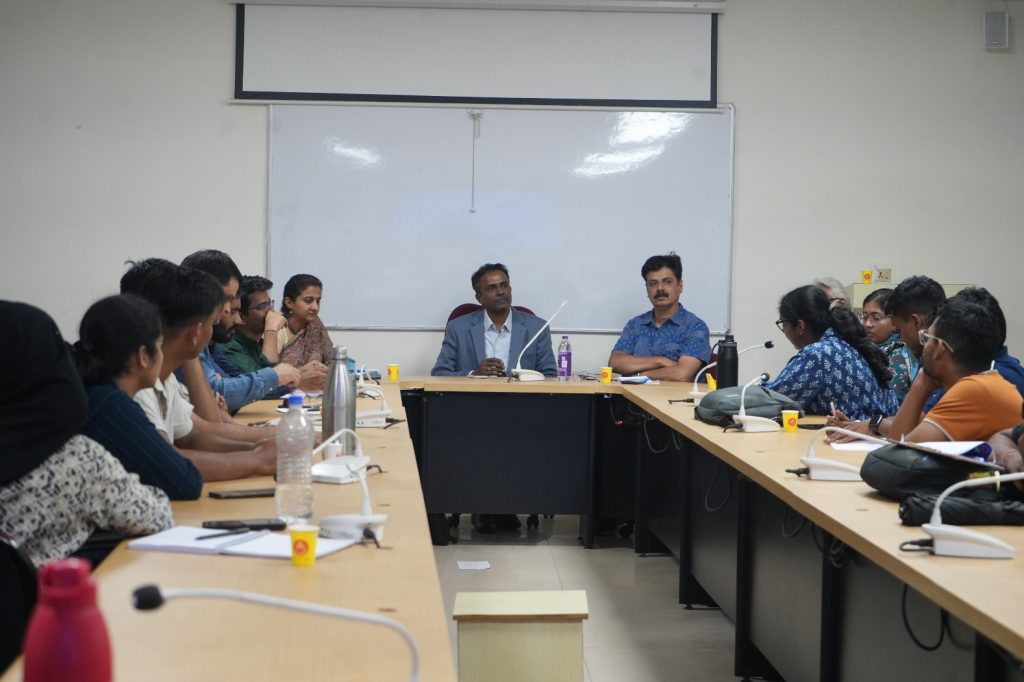
The session was chaired by Dr. S. Shaji, Associate Professor. Dr. Aparna Devare, faculty member, formally introduced the speaker. Dr Parivelan began by reflecting on how his engagement with the humanitarian sector motivated his sustained research on forced migration. Using a data-rich presentation, he mapped countries affected by refugee crises and highlighted the scale of human loss. He emphasised how local and regional conflicts increasingly shape global economic and political dynamics. Analytically, he noted that while conflicts and the erosion of the rule of law have become familiar global phenomena, insufficient academic and policy attention is paid to the lived realities of ordinary people affected by displacement.
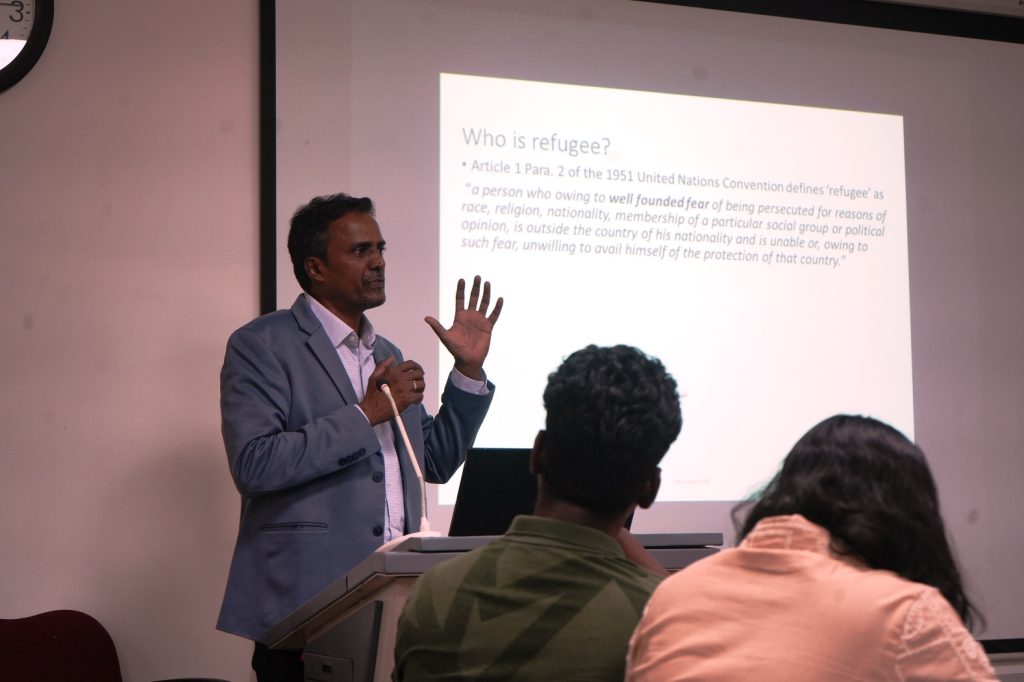
Blending theoretical insight with practical observations, the speaker explained how escalating conflicts, shrinking resources, and weakening legal protections intensify forced migration. He further examined the politics of forced migration, critiquing the gap between Western rhetoric on refugee protection and limited concrete action. In contrast, he pointed to examples from India, citing the humanitarian responses toward the Rohingya people in Telangana and Sri Lankan Tamils in Tamil Nadu as efforts that restore dignity and rebuild lives.
In his concluding remarks, Dr. Parivelan briefly discussed the significance of the Global Compact on Refugees in addressing contemporary displacement challenges. He recalled a reflection by Ranabir Samaddar, “In the migrant’s eyes is the refugee’s plight; in the refugee’s eyes, the migrant’s precarity,” underscoring the intertwined experiences of migrants and refugees.
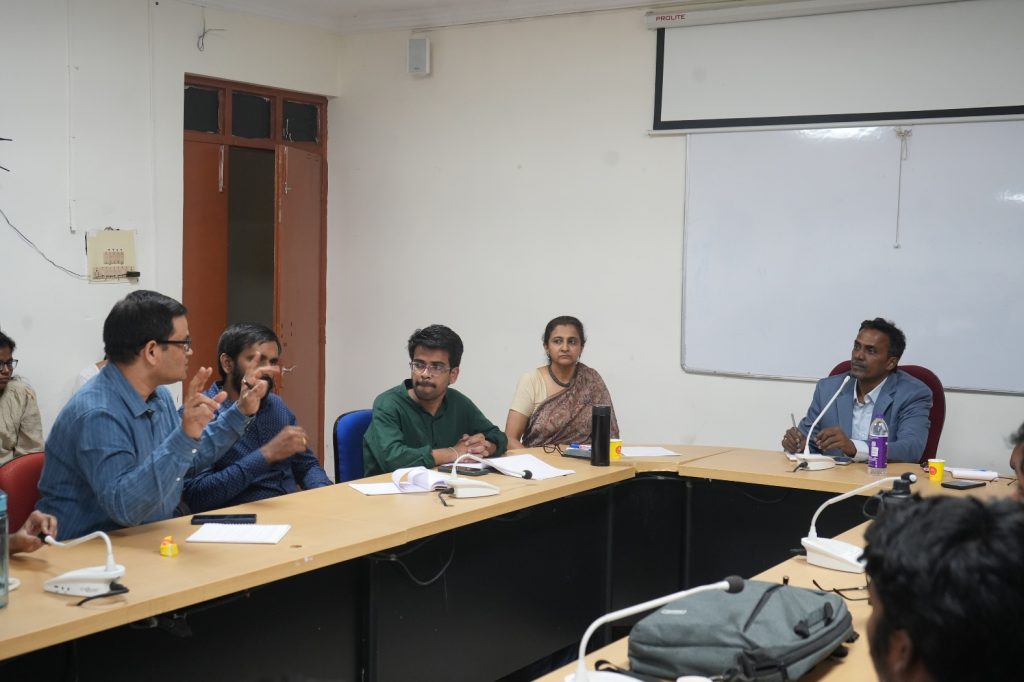
Ms Blessy Mathew, a PhD scholar from the department, the discussant in the session, succinctly summarised the key arguments presented. Subsequently, the session opened with an engaging question-and-answer segment, with active participation from students and faculty. The event concluded with a vote of thanks proposed by Ms. Mathew.
Report by: Rajib Kumar Panda, MA student, Department of Political Science