
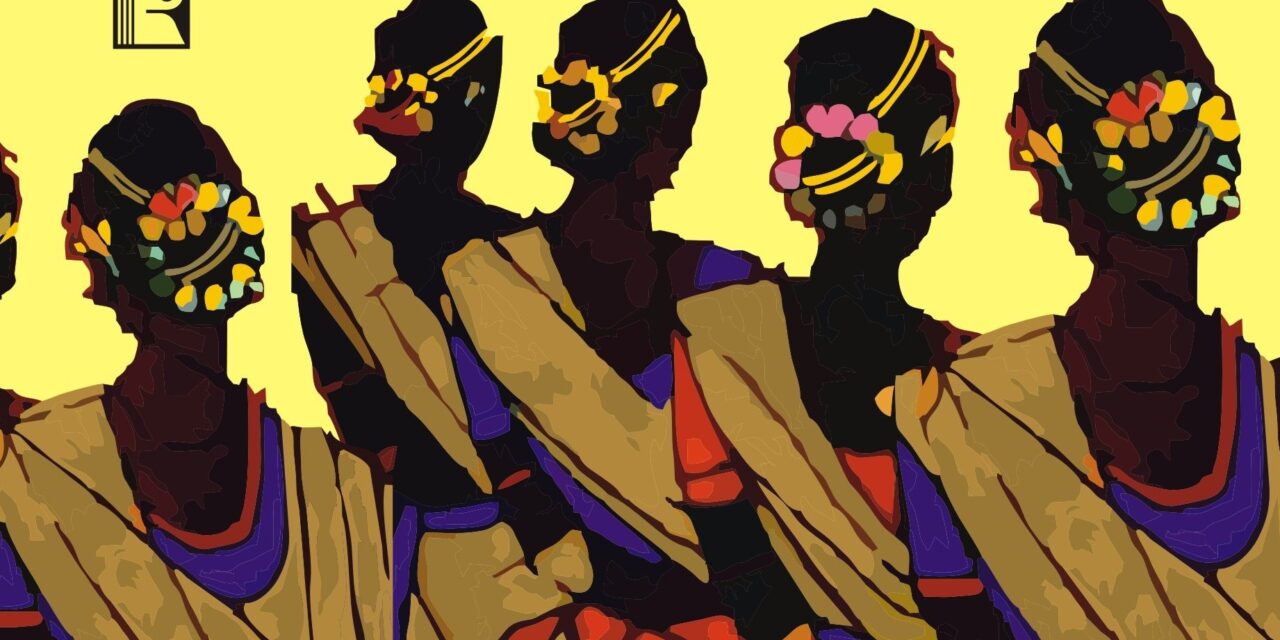
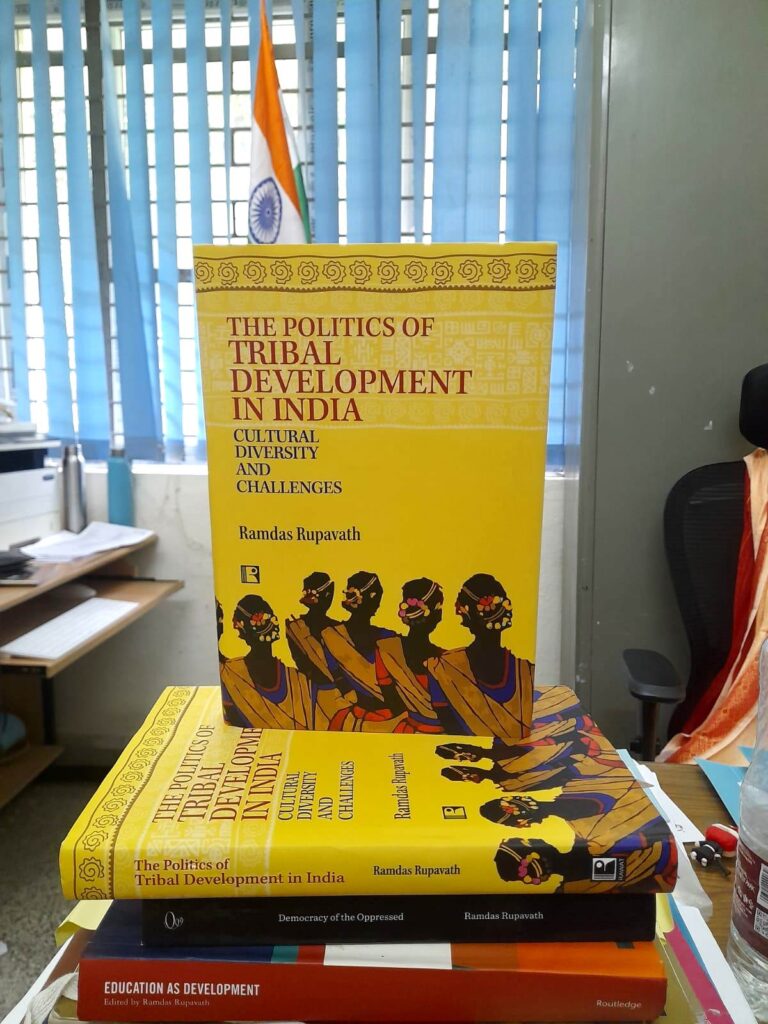
A new book titled “The Politics of Tribal Development in India: Cultural Diversity and Challenges” by Prof. Ramdas Rupavath, faculty in the Department of Political Science & University of Hyderabad has been published by Rawat Publication. The book has foreword written by Professor Debi Chatterjee Former Professor of Jadavpur University Kolkata. Financial Support of towards the editing charges of the book by Institutions of Eminence (IoE) University of Hyderabad.
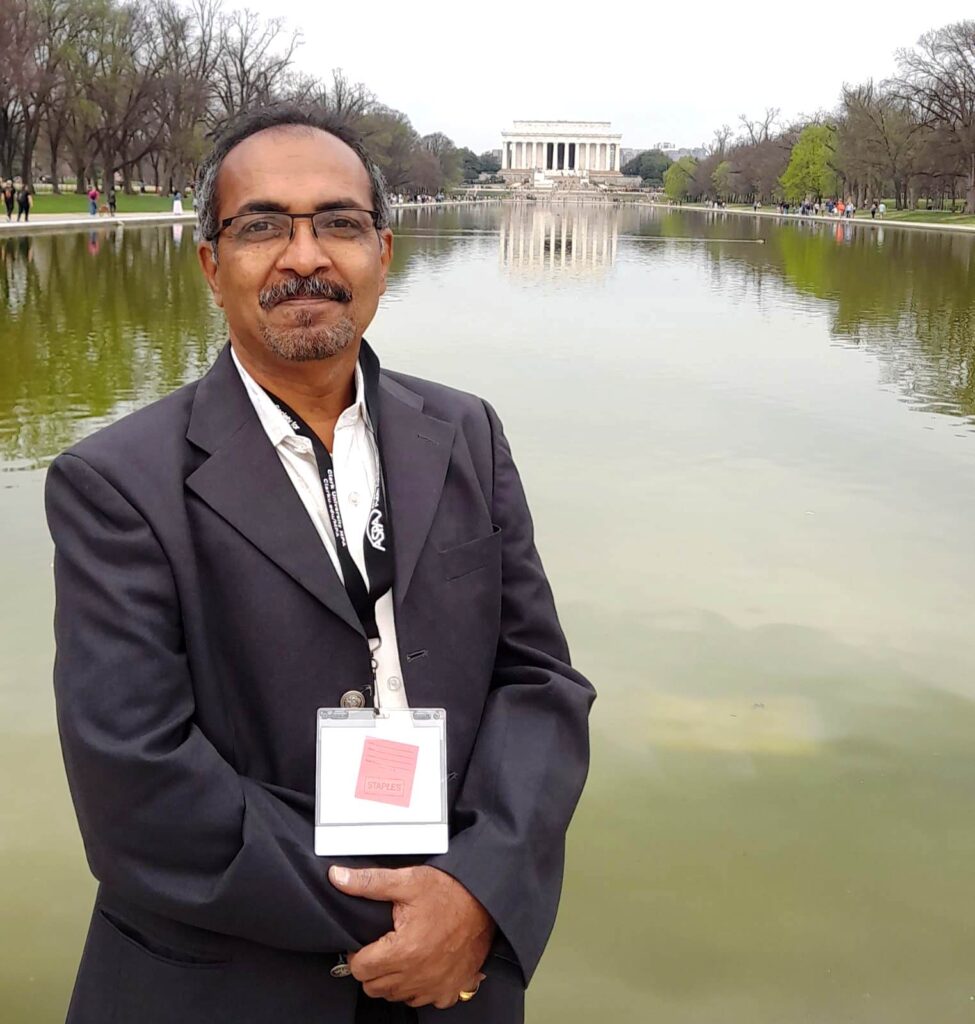
Prof. Ramdas Rupavath
About The Book
. “It is not development that gets politized, it is tribe that gets politicised”
The development of Adivasis in India has often been viewed through the abstract lens of economic growth or per capita income, thereby denying and failing to explain the specific dimensions of Adivasi development in relation to democratic rights. The present book, however, attempts to understand the socio-economic and political structures that have compelled tribal communities in India to organize themselves and struggle, since the 1940s, for the redressal of their grievances. Among the major questions this study seeks to address the following: How did tribal communities respond to alienation from land, natural resources, and society, as well as to indebtedness and structural and cultural oppression? What role did leadership play in organizing discontented tribal communities? The study primarily aims to understand the nexus between politics and development in the specific context of Adivasi movements in India. Is this struggle a battle for social justice, Adivasi identity, equality, or democratic rights?
Traditionally, development has been equated with economic advancement, often measured through industrial output or GDP growth. This narrow definition led to the unchecked exploitation of natural resources during the industrial era. However, development is a contested and evolving concept, often shaped by the priorities of economically dominant countries. Nobel laureate Amartya Sen proposed a more inclusive perspective through his capabilities approach, which defines development as the expansion of people’s freedoms and their ability to lead the lives they value. Within this framework, developmentinvolves not only economic growth but also improvements in health, education, environmental sustainability, and social inclusion. True progress implies advancement toward peaceful coexistence and an enriched life marked by happiness, dignity, and collective well-being, rather than merely the accumulation of material wealth.
Cultural diversity refers to the coexistence of different ways of life, including varied languages, beliefs, rituals, traditions, identities, and expressions passed down through generations. It encompasses differences related to gender, race, ethnicity, nationality, ability, and other aspects of identity. Studies such as Goren’s Cultural Diversity Index indicate that countries like Australia, India, and Canada rank highly in terms of diversity. However, relying solely on language as an indicator of diversity can be limiting. For instance, India is home to more than twenty official languages and a multitude of religious, regional, and ethnic communities, each with distinct cultural practices that may differ even within the same religious or linguistic group.
Cultural diversity enriches societies by contributing a vast body of knowledge, particularly regarding harmonious coexistence with nature. Indigenous and traditional communities across the world have developed sustainable practices rooted in their cultural ethos. Unfortunately, such knowledge is often excluded from mainstream education and policymaking. As a result, modern solutions to climate change and environmental degradation frequently over look these time-tested traditional practices.
The Threat of Cultural Erosion: Urbanization and the pressure to adopt economically prestigious lifestyles have compelled many people to abandon traditional livelihoods. This shift has led to the erosion of indigenous knowledge systems and traditional crafts. In countries such as India, rural migrants moving to cities often face severe hardships: men typically work in construction or other labour-intensive occupations, women engage in domestic work, and their children are frequently left unsupervised, resulting in high school-dropout rates. Moreover, the burden of educational loans, rising living costs, and limited access to housing further intensify social inequalities. Preserving diverse livelihoods is therefore not merely a matter of cultural pride but also of economic necessity. Respecting traditional professions can prevent individuals from falling into urban poverty traps and help sustain artistic and environmentally sustainable practices.
Ensuring cultural diversity within governance systems leads to more equitable and inclusive decision-making. When ethnically and culturally diverse groups are represented in policymaking institutions, they bring their unique perspectives and needs into national and international discussions. This diversity contributes to more balanced policies and a fairer distribution of resources. Initiatives such as the Council of Europe’s “Intercultural Cities” programme demonstrate how urban spaces can harness the economic and social benefits of diversity. Similarly, the United Nations has contributed significantly through initiatives such as the UNESCO Convention on the Protection and Promotion of the Diversity of Cultural Expressions and the Universal Declaration on Cultural Diversity, both of which aim to safeguard cultural heritage and ensure equal cultural rights for all.
A peaceful and developed world depends on the preservation and celebration of cultural diversity. Development cannot be sustainable if it privileges only one culture, race, or worldview. Strengthening local cultural governance systems, preserving languages, promoting folk arts and music, and incorporating diverse voices into decision-making processes are essential steps toward inclusive development. Every culture has the right to exist and evolve. While culture is dynamic and continuously changing, it must also be protected from erasure. By embracing cultural diversity, societies become richer and more vibrant while paving the way for economic, social, and spiritual well-being for all.
All these critical issues require sustained academic discourse, through which reasonable and viable solutions may emerge. The present central government has introduced several schemes and provisions aimed at safeguarding tribal populations from various forms of insecurity and marginalization. Academic engagement can play a crucial role in disseminating knowledge about these initiatives and ensuring that they effectively reach tribal communities. In this context, the proposed book seeks to explore the contribution of tribal culture to development discourse, the challenges faced by tribal communities in the post-independence era, and the measures adopted by the government to address these challenges.