
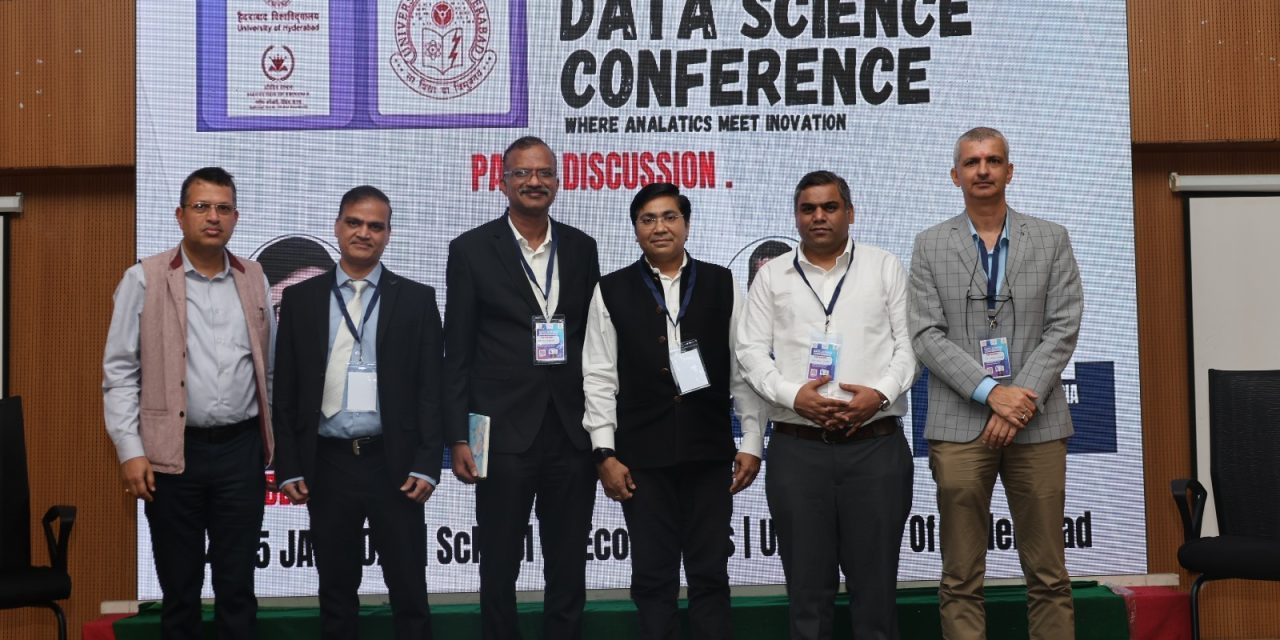
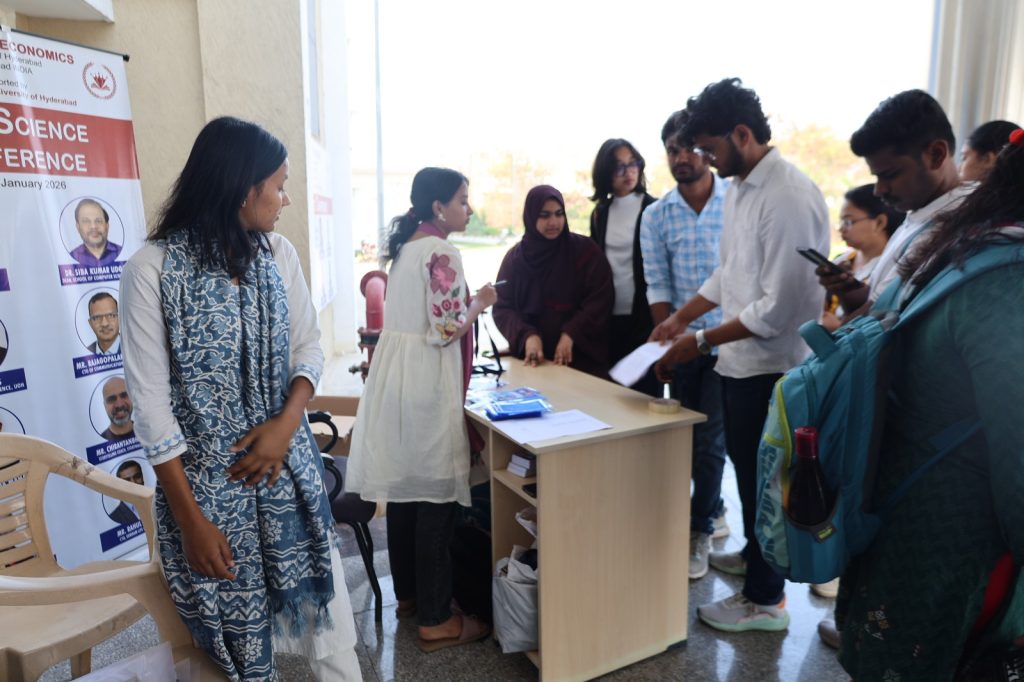
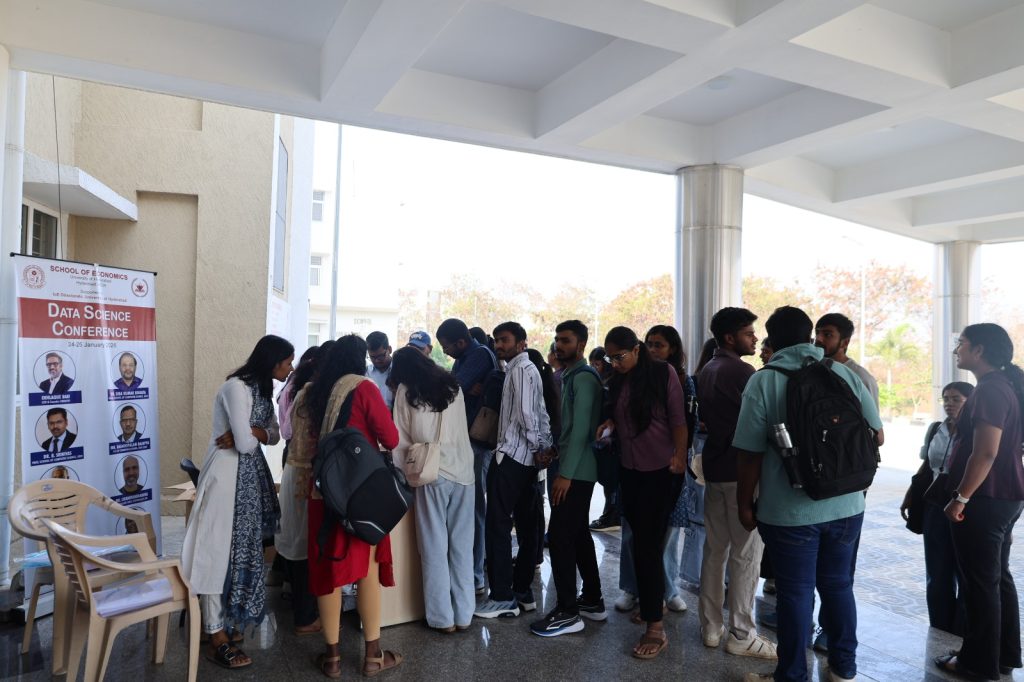
The School of Economics with the support of the Institution of Eminence (IoE) Directorate successfully conducted the 1st day of the Data Science Conference 2026: Where Analytics Meets Innovation. Prof. Debashis Acharya, Dean, School of Economics, welcomed the Chief Guest, speakers, and delegates. The delegates included faculty members, UoH students, students of MA Economics and Financial Economics, IMA Economics, and PhD scholars, students from ICFAI School of Social Sciences, ICFAI Foundation for Higher Education, BITS Hyderabad, a few other neighbouring institutions and also delegates from the industry.
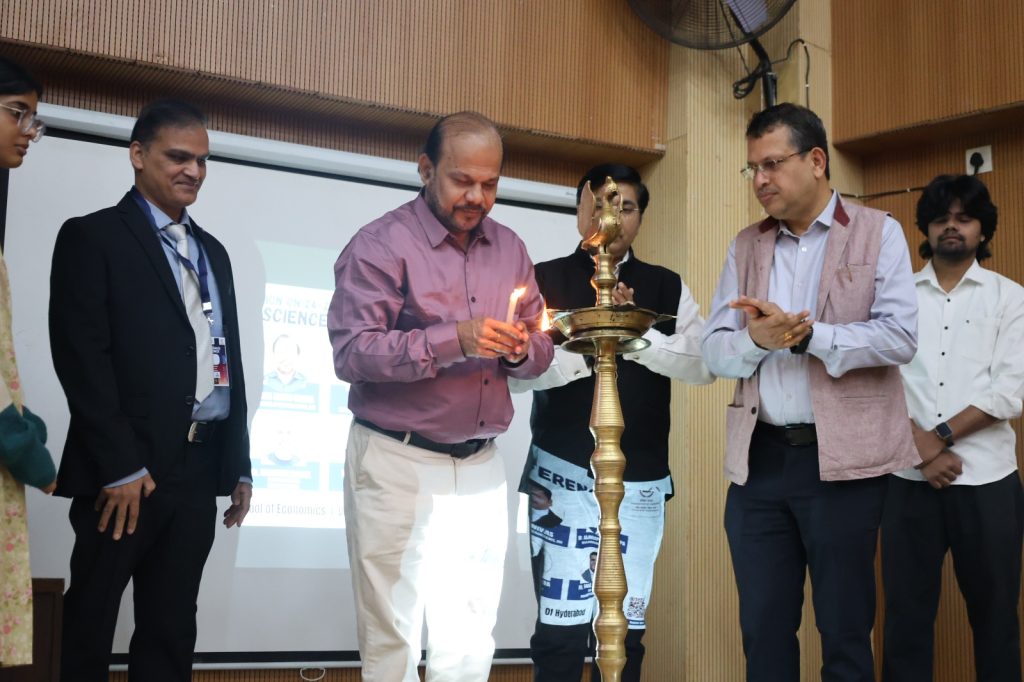
The conference chair Prof. Alok Kumar Mishra emphasized the revolutionary significance of data science as a common language connecting academia, business, and public policy. He emphasized that data science now facilitates responsible innovation, adaptive governance, and anticipatory decision-making, going beyond simple analysis. He emphasized the need to transform data availability into useful insights for inclusive and sustainable development while highlighting India’s expanding data ecosystem. In order to guarantee social trust and long-term effects, he also urged the deployment of data-driven technologies in an ethical, transparent, and human-centered manner.
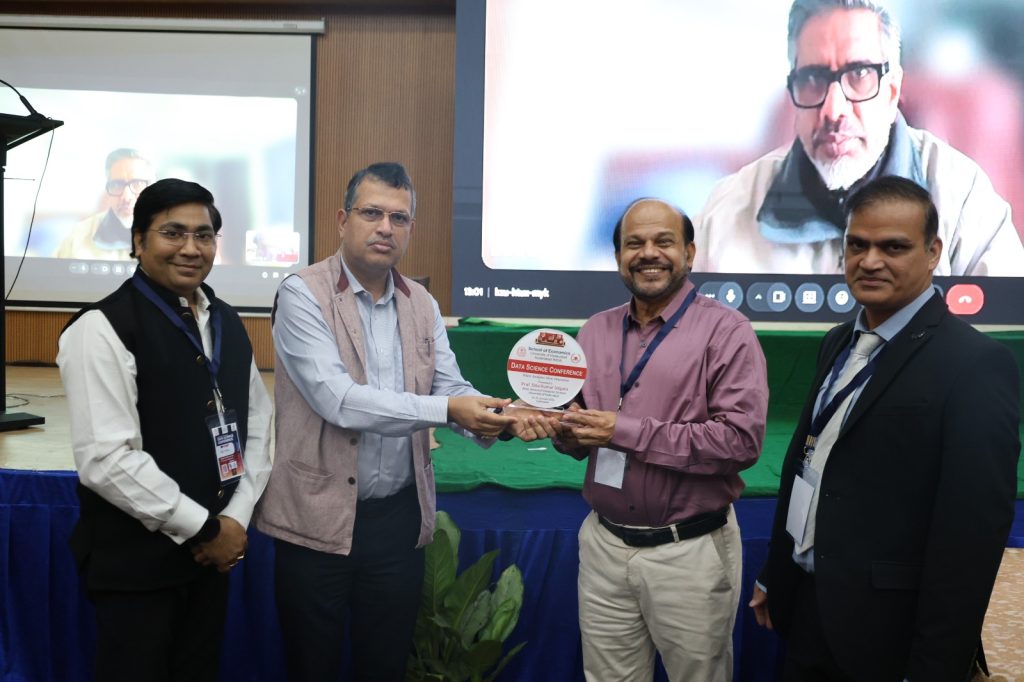
The inaugural address was delivered by the Chief Guest, Prof. Siba Kumar Udgata, Dean, School of Computer and Information Science, University of Hyderabad. Prof Udgata spoke on Explainable AI Techniques for Model Interpretability providing a comprehensive overview of the evolution and challenges of artificial intelligence (AI) and machine learning (ML), particularly focusing on explainable AI (XAI). Beginning with historical examples from early AI projects in the 1980s and 1990s, Prof. Udgata illustrated how initial systems, despite technological constraints, aimed to automate complex tasks such as object recognition. Prof. Udgata explained how the large datasets and stronger computing power made AI systems more accurate but harder to understand creating concerns about trust, reliability, and accountability in areas like finance, healthcare, and recruitment. He concluded by saying that future AI development must focus not only on accuracy but also on reliability, ethics, and humaninterpretability.
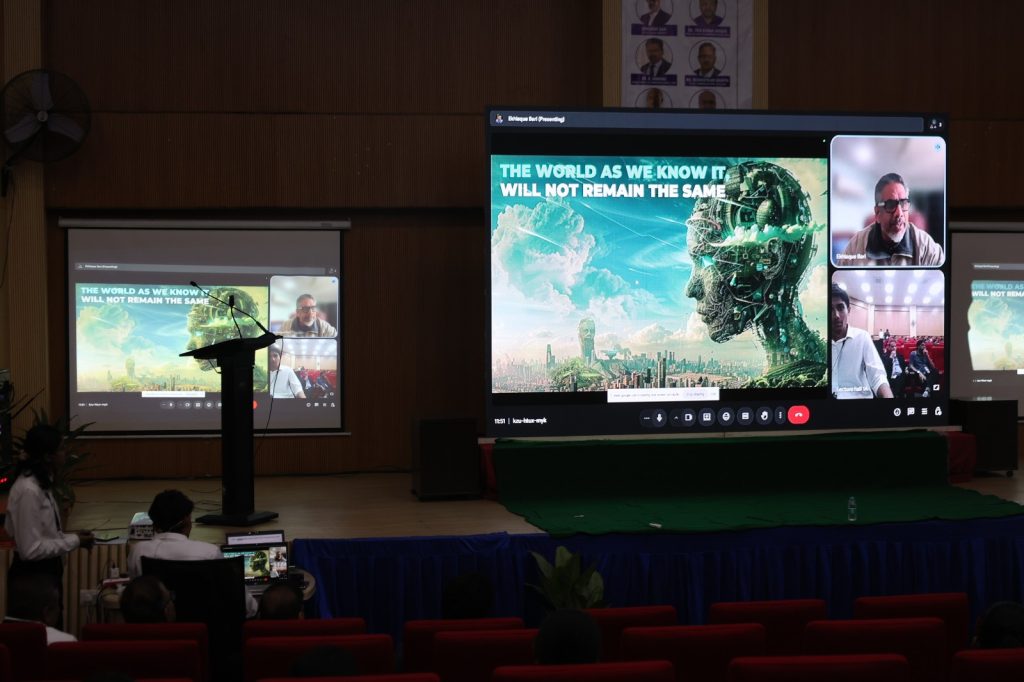
The opening Keynote titled AI in Business Transformation – Real- World Application and Future Trends was delivered by Mr. Ekhlaque Bari, CEO & Founder of EBXDOTO and an AI Coach/Advisor helping enterprises and individuals adopt AI. The session by Mr. Ekhlaque Bari explored the capabilities of Artificial Intelligence (AI) and its transformative effects on industries, employment, and work from both business and societal perspectives. He compared AI, especially generative AI, to foundational technologies like electricity and the internet, predicting its integration into everyday life. Using real-world examples and interactive discussion, he highlighted the rapid pace of AI adoption and its visible impact across sectors.
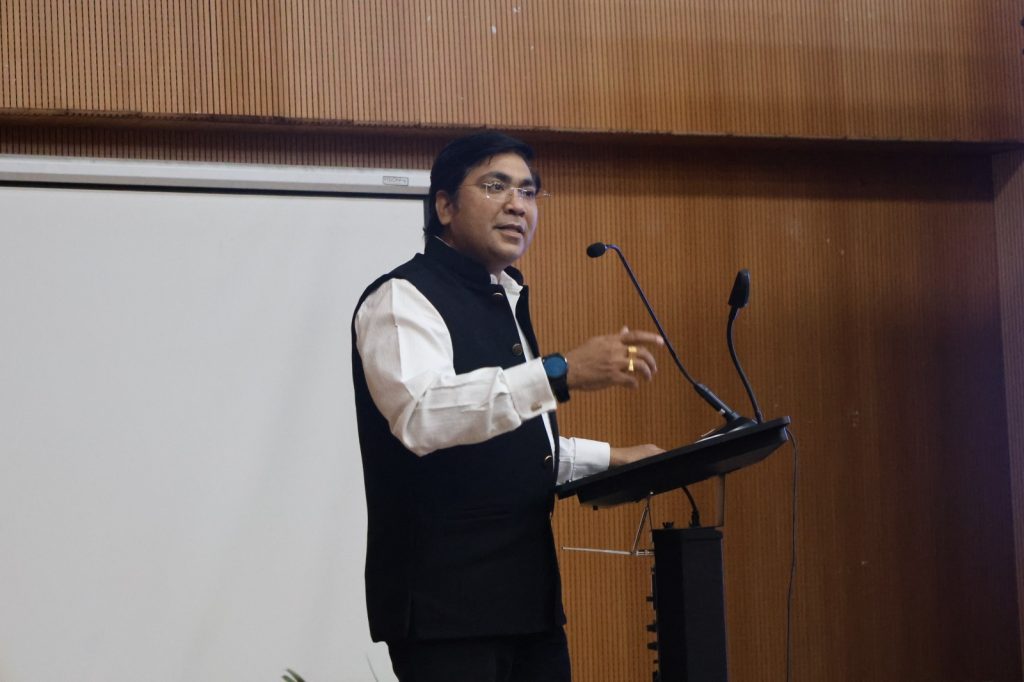
Mr. Bari addressed concerns about AI, including whether it is overhyped, its effects on employment, ethical challenges, and its influence on business, healthcare, and education. He noted that focusing only on job losses is limiting, as displacement is a lagging indicator, emphasizing the importance of proactive adaptation. The session also clarified differences between classical AI, generative AI, and artificial general intelligence (AGI), while stressing the need to prepare humans for rapid technological change. In conclusion, Mr. Bari emphasized viewing AI as a tool to enhance productivity and creativity rather than replace humans.
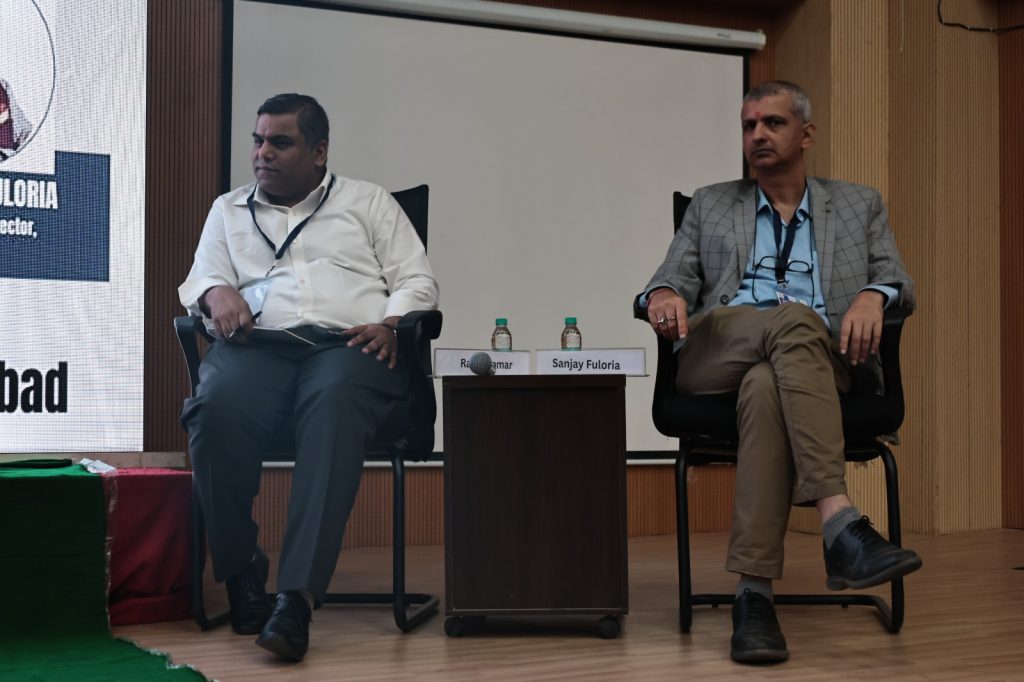
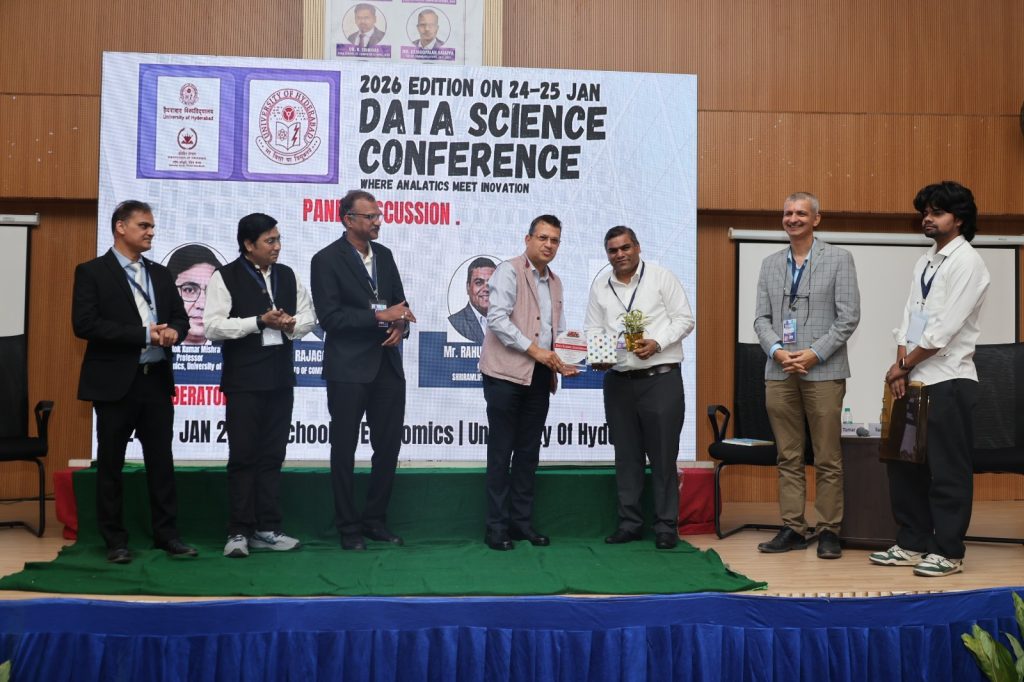
A panel discussion followed on the topic, “Navigating the Evolution of Data Science: From Innovation to Impact in the AI Era, which was moderated by Dr. Alok Kumar Mishra (Professor, School of Economics, UoH) and the panellists were Mr. Rahul Tomar, CTO , Shriram Life Insurance, Mr. Rajagopalan Rajappa, CTO @ Tata Elxsi, and Dr. Sanjay Fuloria, Professor and Director, Center for Distance and Online Education, ICFAI Foundation for Higher Education, Hyderabad.
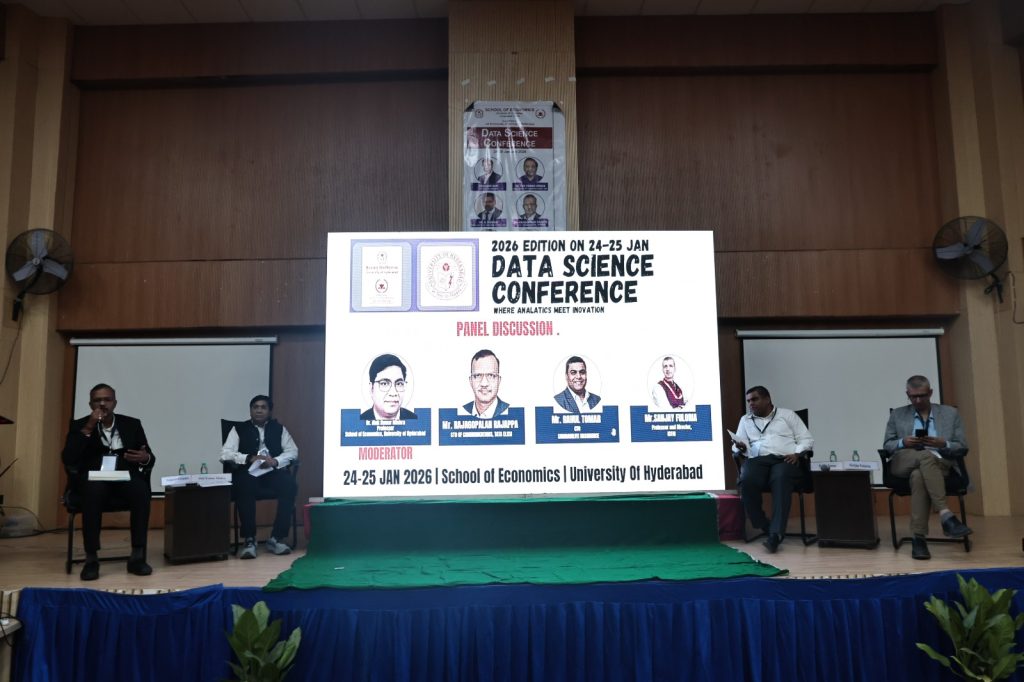
The focused on recent developments such as large language models, computing infrastructure, and agent-based AI systems. Speakers highlighted the rapid expansion of AI across industries driven by advanced processors, foundational models like ChatGPT, and experimentation through proofs of concept. They emphasized that AI and data science have become general-purpose technologies affecting nearly all domains.
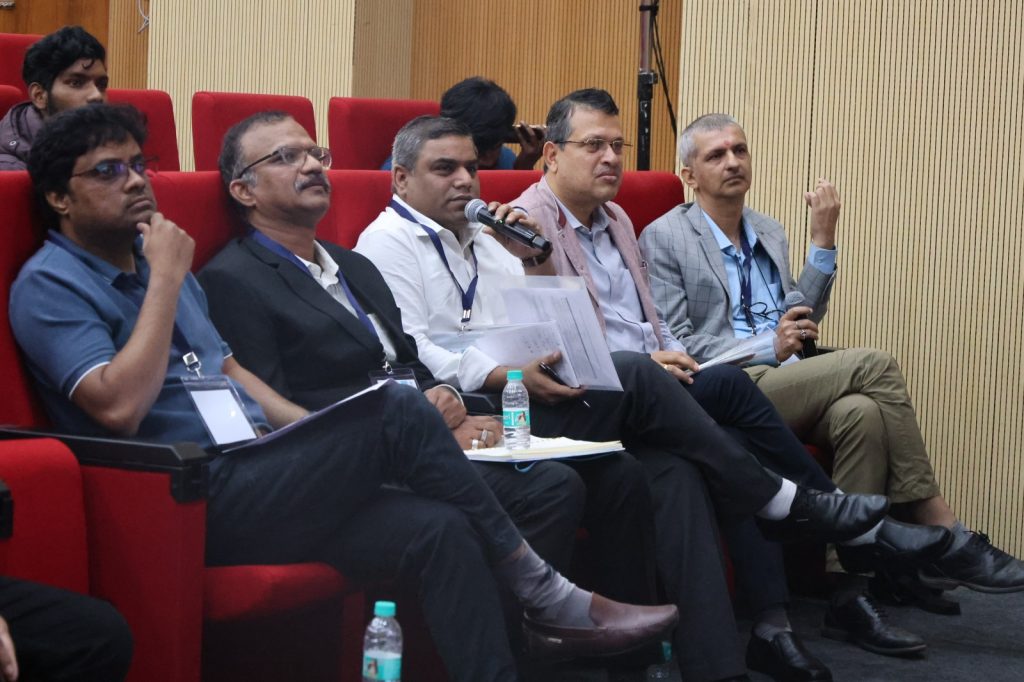
The panel identified key challenges in moving from AI experimentation to real-world deployment, including data privacy, cybersecurity, and governance frameworks. Concerns were raised about protecting user and enterprise data, ensuring ethical AI usage, and addressing issues like data centre sustainability, transformer limitations, bias, and overreliance on models without strong statistical or domain foundations. These factors underscore the importance of implementing robust guardrails and comprehensive oversight for AI adoption.
The workshop on “Data Story Telling” by Mr. Chirantan Bhabhra, Storytelling coach, from storywallahs enthralled the audience which was quite interactive. Mr. Chirantan, a corporate trainer with over a decade of experience in transforming data and insights into persuasive narratives engaged participants with an interactive activity to demonstrate that storytelling is a natural human skill applicable in presentations, interviews, and professional communication. The speaker emphasized that storytelling is not separate from data but enhances its impact in professional contexts.
Chirantan highlighted that facts and technical concepts are often hard to remember in isolation, whereas stories are memorable and repeatable. He demonstrated that abstract information becomes clearer through narrative structure and explained how curiosity, questioning, and relatable examples can sustain audience attention. The speaker also noted that conventional communication methods, like listing achievements, fail to engage because they lack emotional connection and narrative flow.
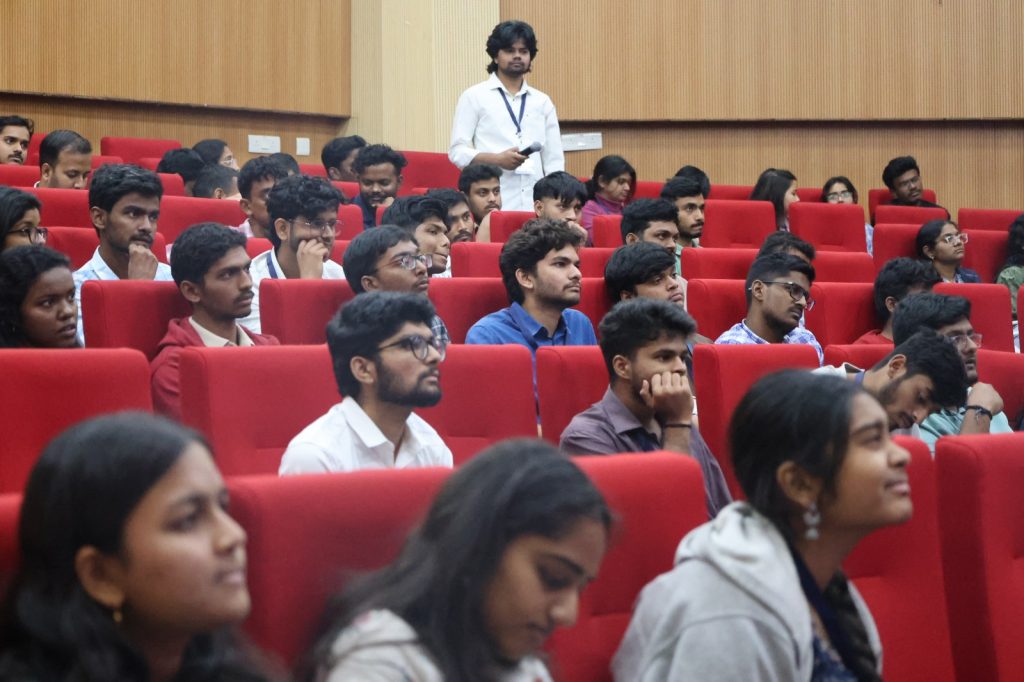
The speaker concluded that storytelling builds empathy, common ground, and inspires action. He advised shifting from “I stories” to “you stories,” making data more impactful through relatable formats, proportions, and contrasts, and prioritizing why an idea matters before explaining the “what” or “how”. He encouraged participants to practice storytelling regularly, refine narratives for interviews and presentations, and recognize that the stories they tell themselves shape personal and professional growth.
There was a Special Talk on The Science of Security in Data Driven Organizations by Cyber Eye Team, Security Experts, Cyber Eye- US Council, sponsor of the Hackathon prizes. The session focused on Cyber Security, highlighting that its core purpose in protecting critical data from serious consequences. Ransomware and other cyber incidents were explained, including encryption of data and threats of public leaks on the dark web. The speaker emphasized that data protection is essential for both individuals and organizations.
The 1st day ended with a workshop on ‘Cognitive Networks- Rethinking the network architecture through Digital Twins in AI Age’ by Mr. Rajagopalan Rajappa, CTO @ Tata Elxsi. The session emphasized the role of communication networks as critical national infrastructure supporting education, communication, entertainment, and digital services. With the rise of AI and generative AI, networks have become essential for data transmission, computation, and real-time services. Mr. Rajagopalan Rajappa highlighted how evolving computing paradigms and increased data generation are transforming the way information is processed and managed across networks. Mr. Rajagopalan Rajappa presented digital twins as a major solution for modelling, simulation, and prediction using large volumes of data. Supported by AI and machine learning, digital twins enable testing of complex systems through “what-if” scenarios.
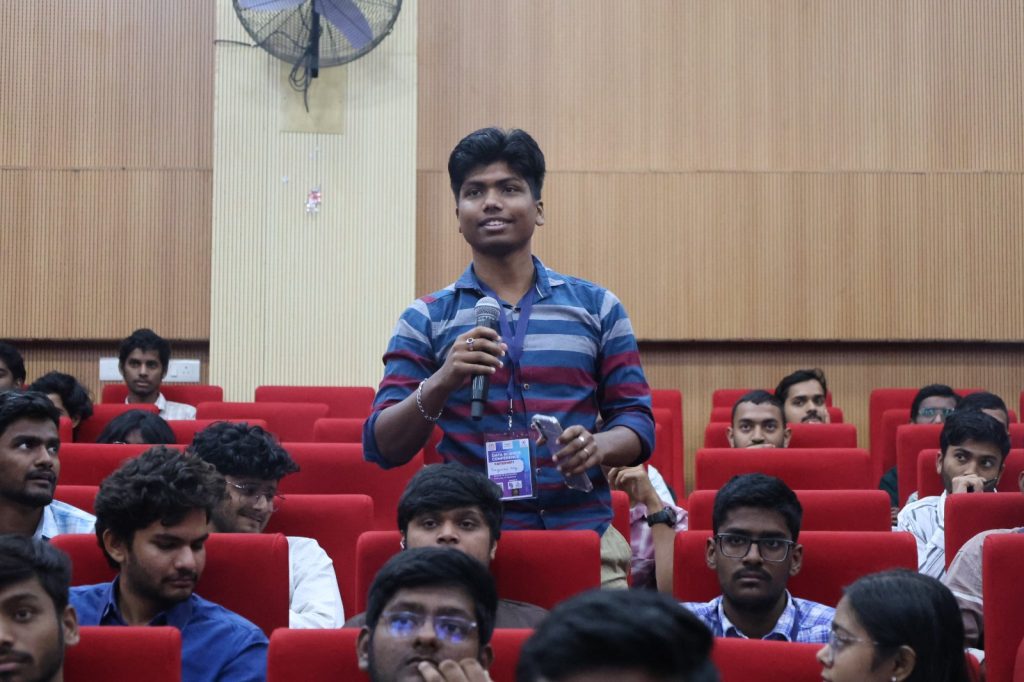
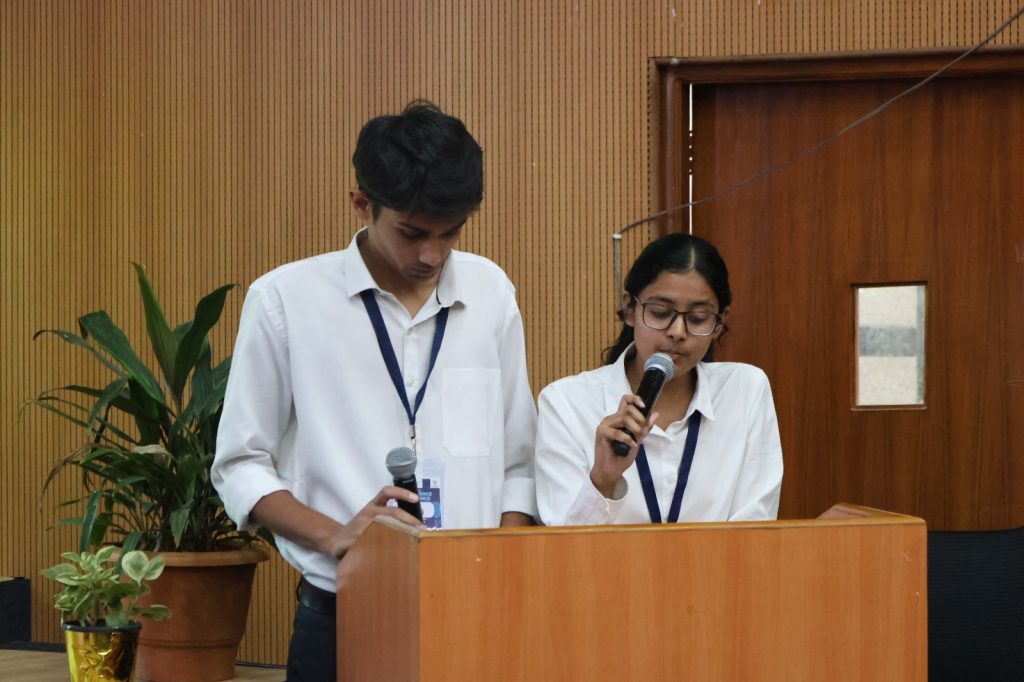
The conference was primarily aimed at benefiting students and had a strong capacity-building focus. The sessions were thoughtfully designed and curated by the conference chairs, Prof. Alok Kumar Mishra and Dr. Muneer Ahmed Mohammed. Participants actively engaged with the speakers and resource persons throughout the day, contributing to lively and meaningful discussions. The programme was efficiently anchored by Meet and Pranjali, students of the MA Economics programme.