
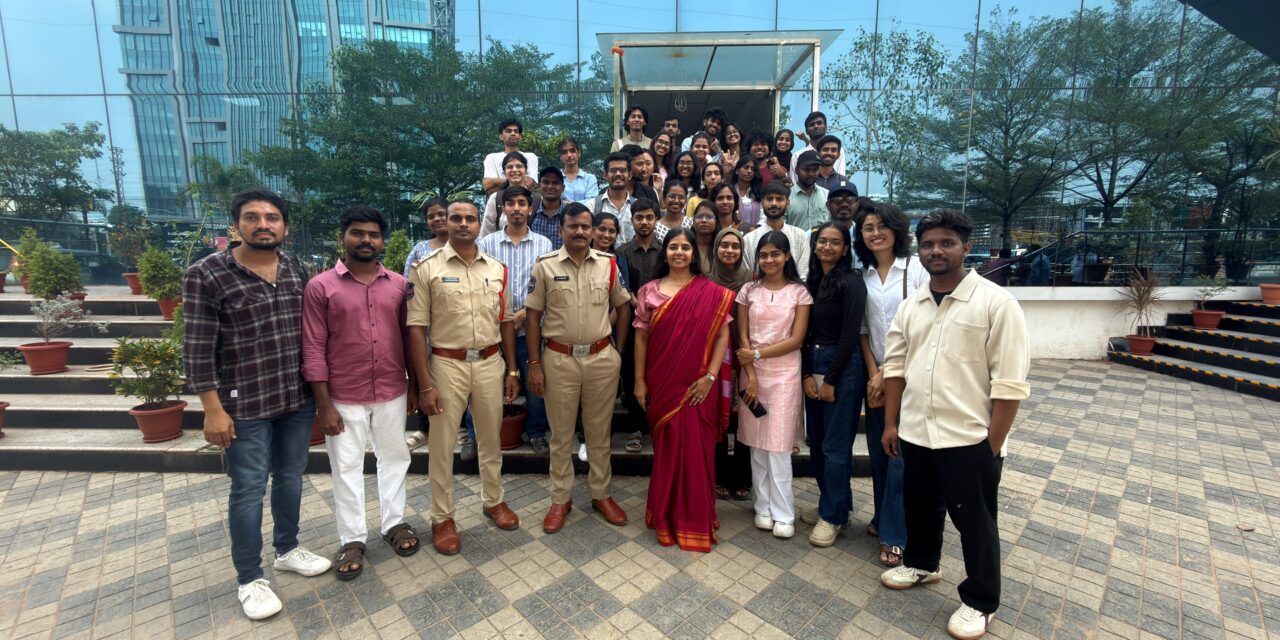
First-semester Master’s students of the Department of Communication, University of Hyderabad, along with Assistant Professor Anjali Lal Gupta, visited the Gachibowli Police Station on Saturday, October 31, 2026, as part of an academic requirement of the ‘Introduction to Journalism Practice’ course. The 40 students interacted with police officials and gained insights into crime reporting, investigative procedures, drug-related offences, patrolling, and the day-to-day functioning of a police station.
Inspector-in-Charge K. Saidulu interacted with the students about crimes commonly reported at the station, with particular focus on drug-related cases. He explained how peer influence and financial difficulties can sometimes lead young people towards drug peddling. “Students come for study, but due to bad influence of friends or poor economic background, they get involved in drug cases. Most of them are educated people,” he said.
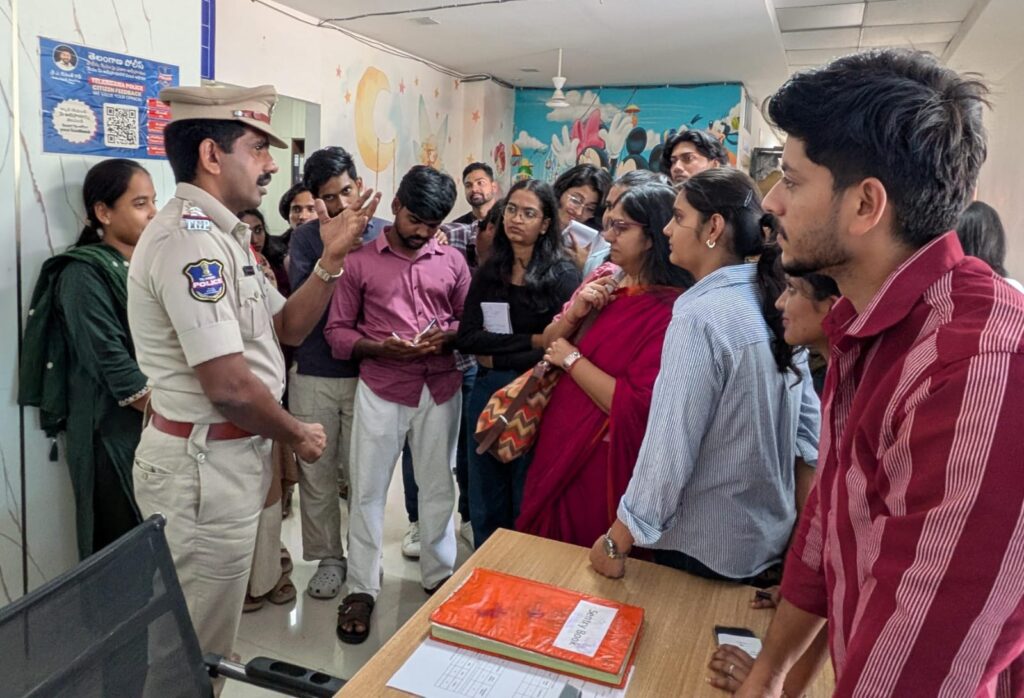
The session was interactive, with students asking questions about drug offences and the circumstances that can lead young people into such activities. Inspector Saidulu also gave the students an opportunity, under his supervision, to interact with some suspects in police custody and ask them questions about the circumstances that led to their alleged involvement in such cases.
Sub-Inspector P. Jayaprakash Kumar Goud later took the students on a tour of the station and explained how complaints are processed and how offences are classified as cognizable or non-cognizable. Students were shown the documentation of a case registered under Section 69 of BNS, which punishes deceitful behaviour of men who start romantic relations obtained through a false promise of marriage. SI Jayaprakash Kumar Goud showed the FIR, statements, evidence papers and digital evidence stored on a pen drive to students.
Responding to a student’s question on whether high-profile cases receive different treatment, he said, “Every case is important for us, and we treat all in the same manner.” He also explained the station’s patrol system, which includes four-wheeler patrol vehicles and Blue two-wheeler patrol bikes used for patrols and incident response.
During the tour, students were introduced to the station writer’s desk, temporary lock-ups, the CCTV room, and the Crime and Criminal Tracking Network & Systems (CCTNS), which is used to maintain and track crime and criminal records. They were also briefed about the section in-charge, P. Ashok, who helps manage personnel and constables, and were informed that eight sub-inspectors were posted at the station.
When students asked about firearms, officials explained that police personnel do not always visibly carry guns as they want to remain approachable and maintain a citizen-friendly environment.
The interaction allowed students to ask officers questions directly and understand practical aspects of policing beyond what they learn from the media and textbooks.
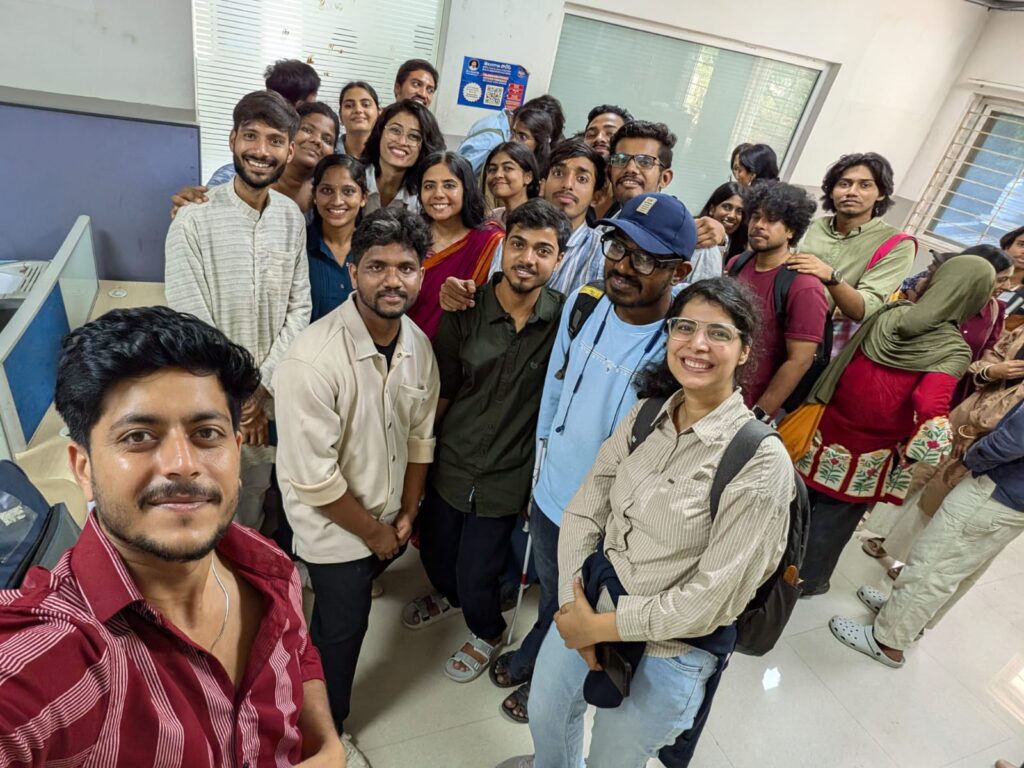
The students later visited the adjoining Women Police Station, where Sub-Inspector K. Swetha explained measures for women’s safety and support services, including Bharosa and Sakhi centres.
They also interacted with Station House Officer Mogulicharla Ravi and questioned him about the absence of a female SHO. He explained that women had begun joining the force in greater numbers only in recent years. He expressed hope for more female SHOs in the future and encouraged the students to come forward and consider joining the police service. The visit concluded with officials addressing students’ questions on policing, investigation, women’s safety and public service.
By Supriya and Uppu Deekshitha, MA Communication