
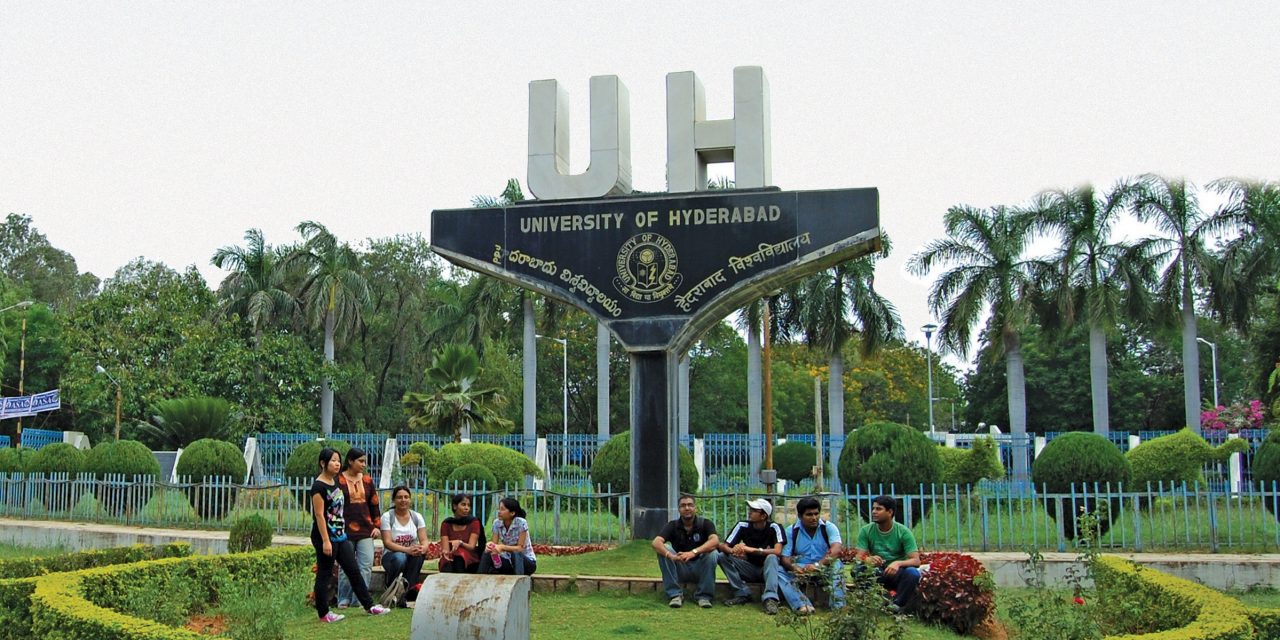
The School of Economics at the University of Hyderabad (UoH) proudly celebrates the publication of a groundbreaking new book titled “India Out of Work: Rethinking India’s Growth Story.” Published by Bloomsbury Publishing India Pvt Ltd, the book is co-authored by Prof. Jajati Keshari Parida (Faculty, School of Economics, UoH) alongside renowned economist Prof. Santosh Mehrotra.
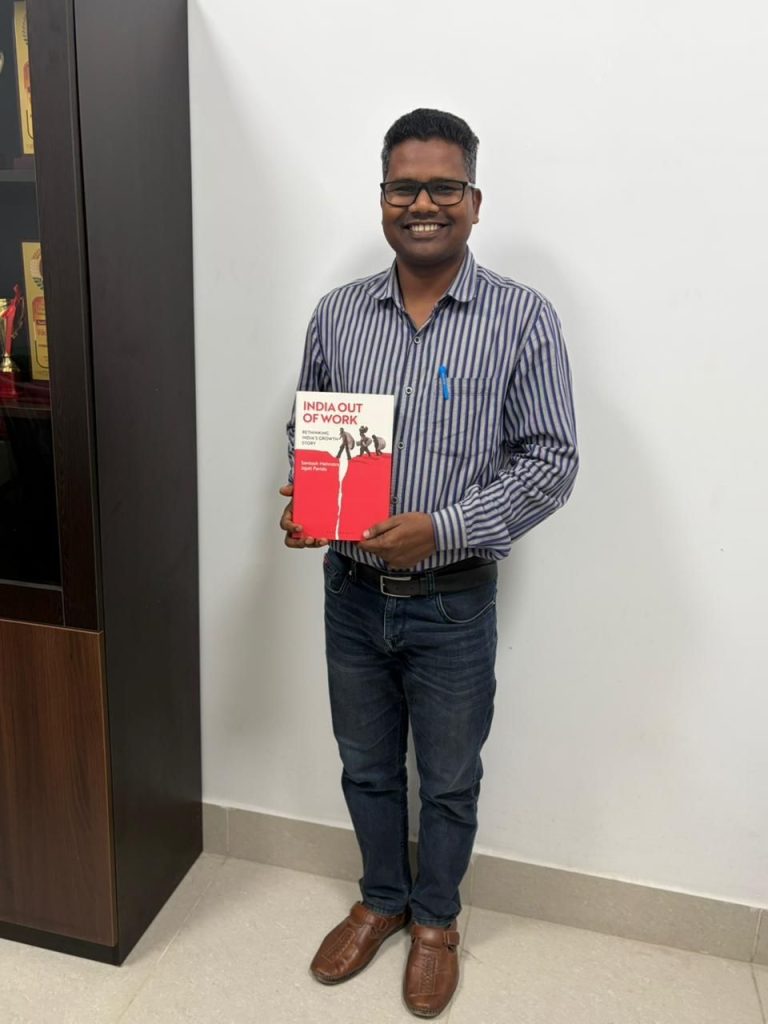
Prof. Jajati Keshari Parida
The university extends its warmest congratulations to both authors for this timely and highly significant academic contribution.
“India Out of Work” delivers a powerful, data-driven, and urgent examination of India’s contemporary economic landscape. The authors argue that India’s race against time has officially begun, and the nation is dangerously falling behind. With barely fifteen years left to leverage its historic demographic dividend, India faces the stark and unsettling possibility of growing old before it grows rich.
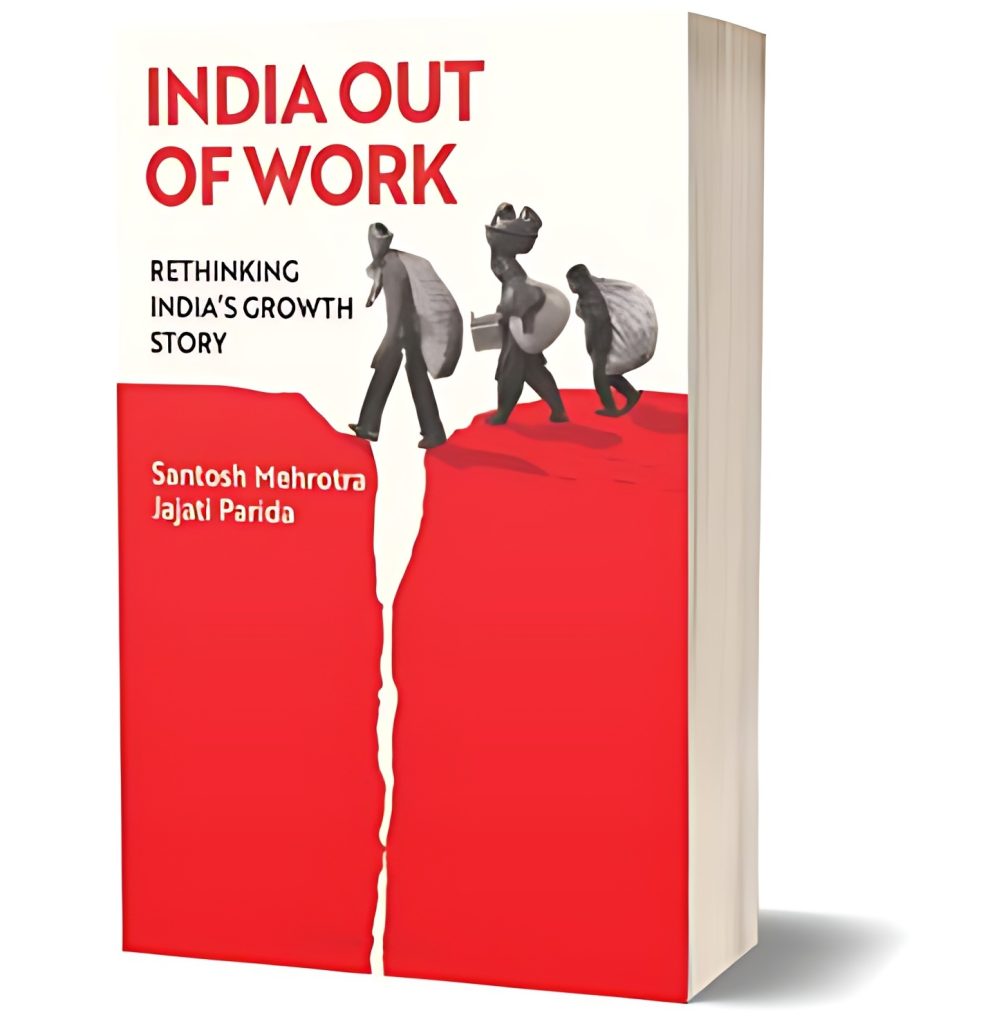
With millions of citizens currently remaining unemployed, underemployed, or trapped in precarious, low-quality employment, the book signals a structural crisis that cannot be ignored. Drawing on rigorous research and real-world data, Prof. Parida and Prof. Mehrotra unpack the deep-seated challenges holding the nation back—ranging from severe rural distress and weak formal job creation to the highly fragile realities of the ‘new economy’. They present a bold thesis: India must sustain a 9% annual growth rate and create 350 million non-farm jobs by 2055 to secure its future economic stability.
The book pulls back the curtain on the structural flaws of India’s current macroeconomic trajectory, revealing:
- The Truth Behind “Jobless Growth”: Why rapid economic expansion has failed to generate an adequate volume of quality jobs.
- The Inequality Gap: The widening chasm of wealth inequality and stagnant wages across sectors.
- Gender Disparity: The alarming and persistent underrepresentation of women in the formal workforce.
- The Poverty Myth: A critical look at the structural vulnerabilities underlying claims of large-scale poverty reduction.
Without immediate, bold policy reforms, India risks a future defined by deepening inequality, missed structural opportunities, and unrealized human potential.
Serving as both an urgent call to action and a clear, pragmatic roadmap for economic reform, “India Out of Work” is essential reading for policymakers, economists, corporate leaders, and anyone deeply invested in India’s developmental future. Ultimately, the authors shift the national discourse away from traditional metrics: the defining question for modern India is no longer merely whether the economy can grow, but whether it can grow fast enough to sustain its people.