
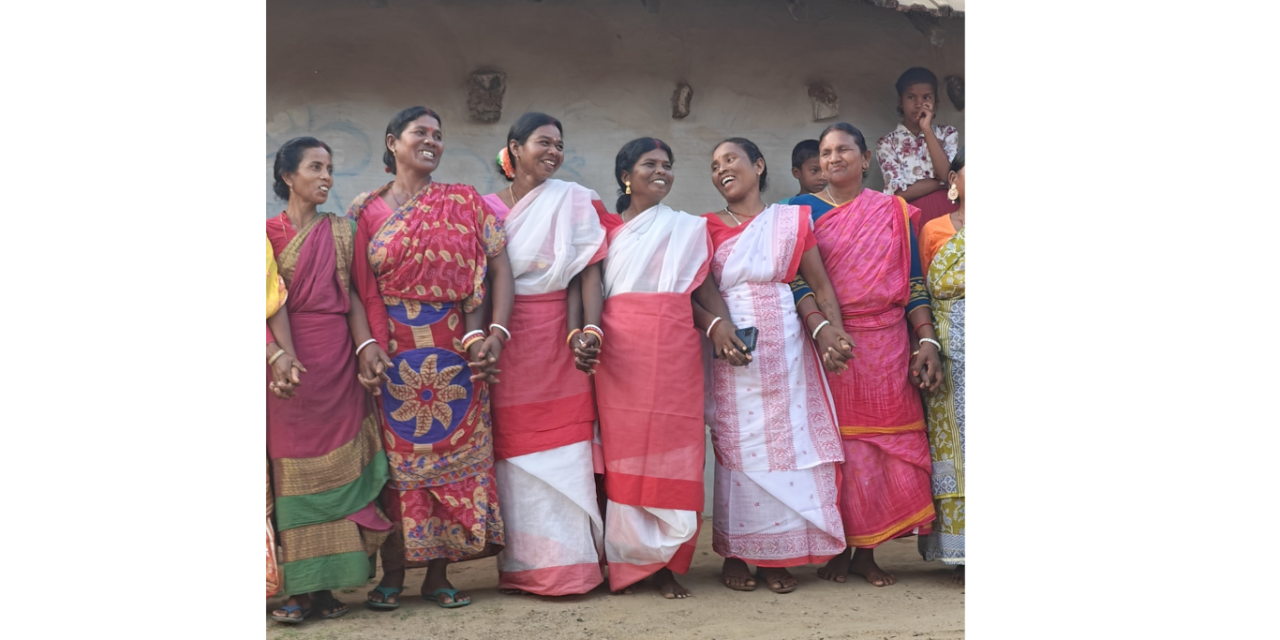
In a fitting tribute to the United Nations’ International Day of the World’s Indigenous Peoples, the UNESCO Chair on Community Media at the Department of Communication, University of Hyderabad, has launched a new handbook exploring how community radio across India is helping preserve, promote, and revitalise Indigenous languages
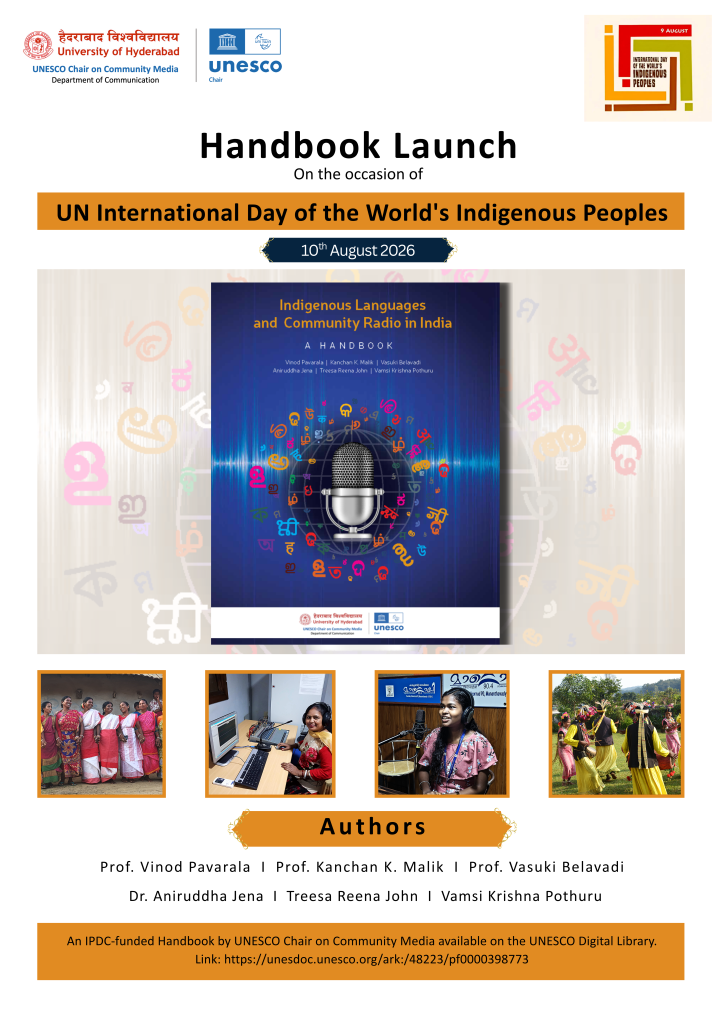
Poster for the handbook launch, 10 August 2026.
Titled Indigenous Languages and Community Radio in India: A Handbook, the publication was launched on 10 August 2026 – the date chosen to align with this year’s official virtual UN commemoration, since 9 August fell on a Sunday.
The Handbook is the outcome of a project supported by a grant from UNESCO’s International Programme for the Development of Communication (IPDC), which examined the role community radio stations play in strengthening efforts to keep Indigenous languages alive and thriving.
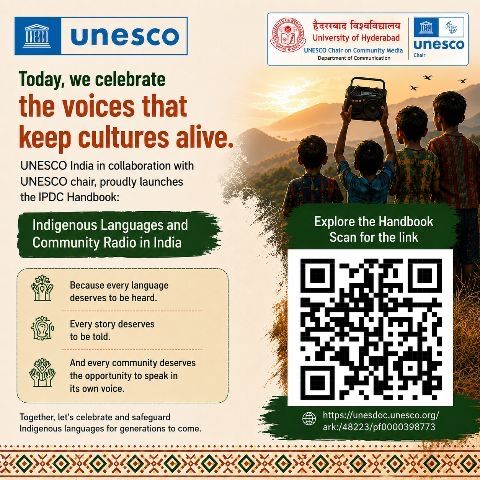
Graphic shared by UNESCO to mark the handbook’s launch.
As UNESCO noted in marking the occasion, “Every Language Tells a Story. Every Voice Matters.” This sentiment captures the spirit of the initiative, which draws on real experiences from community radio stations to document oral traditions, promote intergenerational knowledge transfer, and expand access to information in languages communities know and trust. The launch was also shared by Mariya Gabriel, UNESCO’s Assistant Director-General for Communication and Information, on her own platforms.
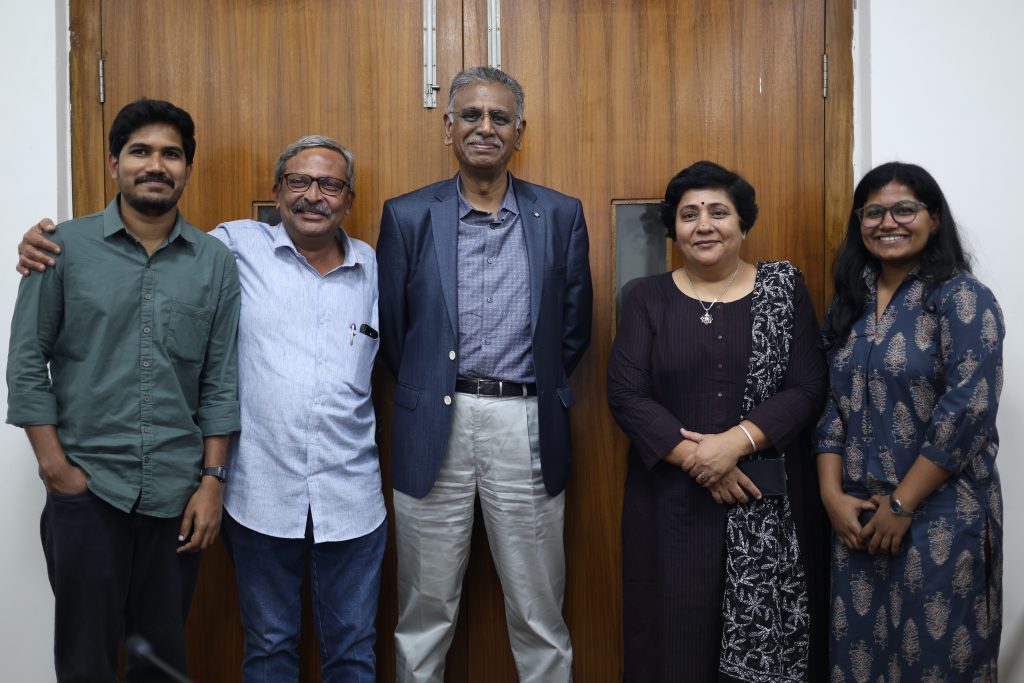
L to R: Vamsi Krishna Pothuru, Vasuki Belavadi, Vinod Pavarala, Kanchan K. Malik, and Treesa Reena John. (Co-author Aniruddha Jena was not present for the photo)
The publication is authored by Prof. Vinod Pavarala, Prof. Kanchan K. Malik, Prof. Vasuki Belavadi, Dr. Aniruddha Jena, Treesa Reena John, and Vamsi Krishna Pothuru. It is designed as a practical resource to help community radio stations strengthen their capacity to broadcast in Indigenous and other marginalised languages, while encouraging greater participation from Indigenous communities themselves in shaping this media. The Handbook is available as an open-access resource on the UNESCO Digital Library.
The project drew on the participation and contributions of five community radio stations from across the country: Nityananda Janavani (West Bengal), Radio Brahmaputra (Assam), Radio Mattoli (Kerala), Radio Dhimsa (Odisha), and Radio Vanya (Madhya Pradesh).
Beyond these five stations, the project also drew strength from a wider circle of collaborators. Several other community radio stations joined a workshop in Hyderabad, contributing their own experiences and insights to the effort. More importantly, the Indigenous communities and listeners around these stations remain, in many ways, what the handbook is truly about – their willingness to share their knowledge made this a genuinely collective undertaking.
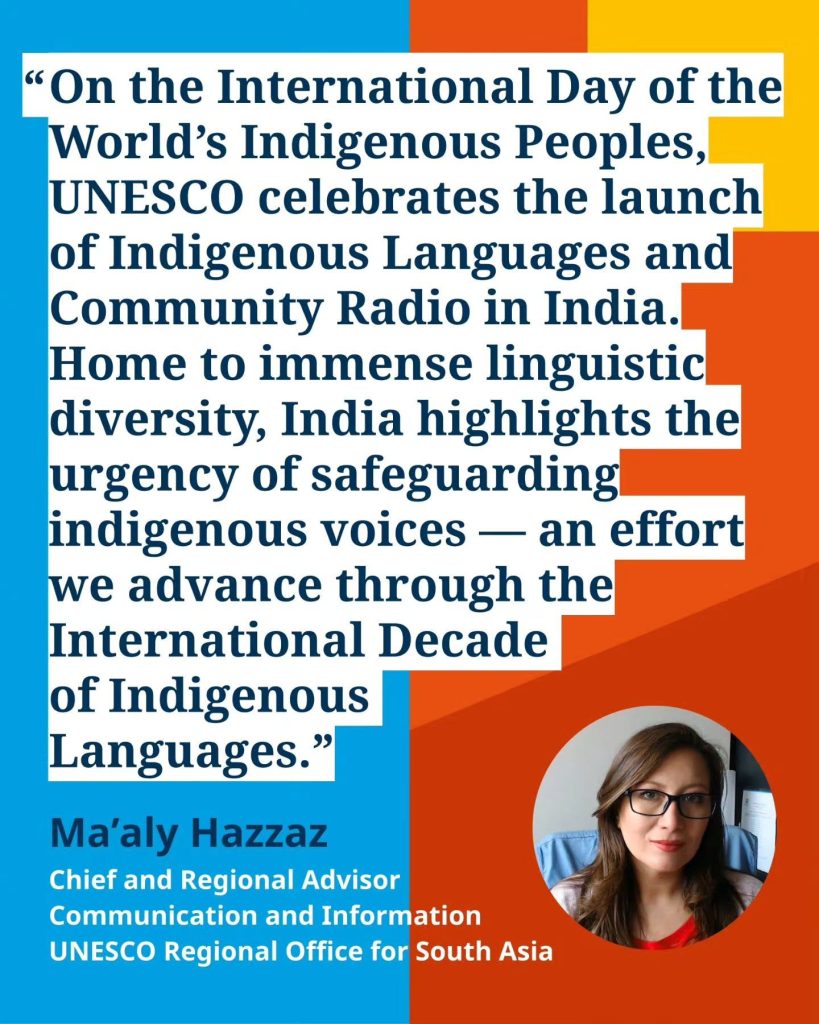
Ma’aly Hazzaz, UNESCO’s Regional Advisor for Communication and Information, South Asia
The UNESCO Chair also extended its gratitude to Ma’aly Hazzaz, UNESCO’s Regional Advisor for Communication and Information in South Asia; Ashita Singh, Associate Project Officer at the UNESCO Office in New Delhi; and Hezekiel Dlamini, former Advisor for Communication and Information, South Asia, for their continued support in bringing the Handbook to fruition.
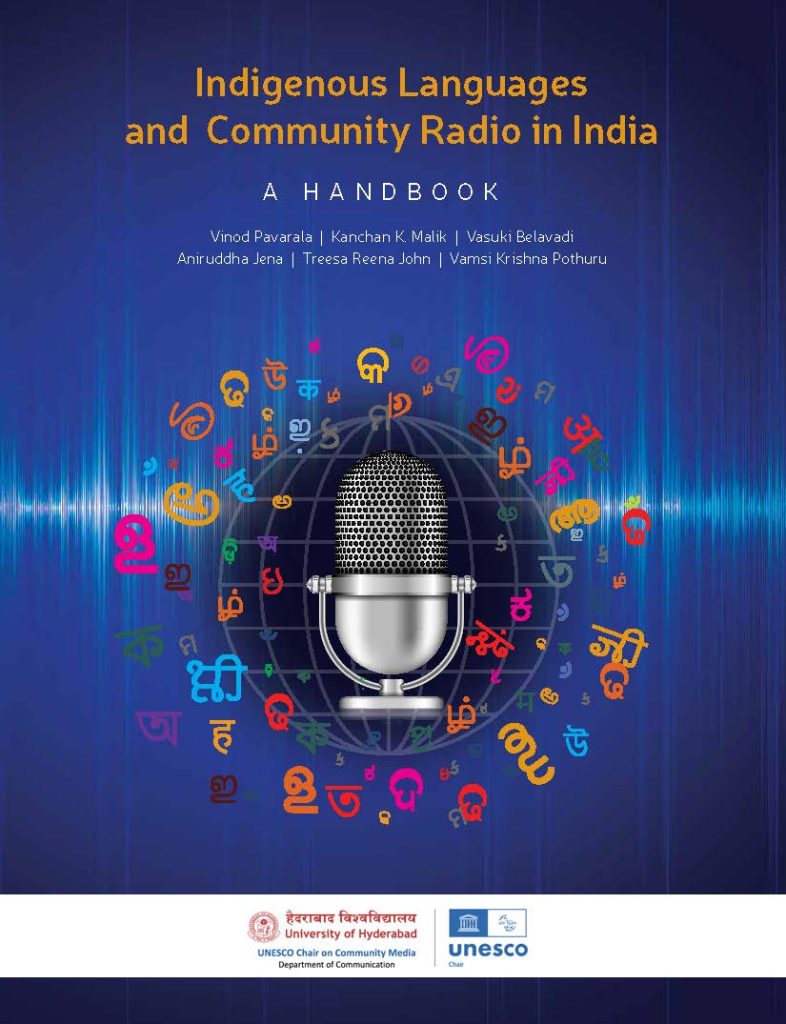
Cover of the Handbook.
The launch also coincides with UNESCO’s International Decade of Indigenous Languages (2022–2032), reaffirming a shared commitment to linguistic diversity, freedom of expression, and inclusive communication that leaves no one behind.
📖 Read the Handbook: Indigenous Languages and Community Radio in India: A Handbook