
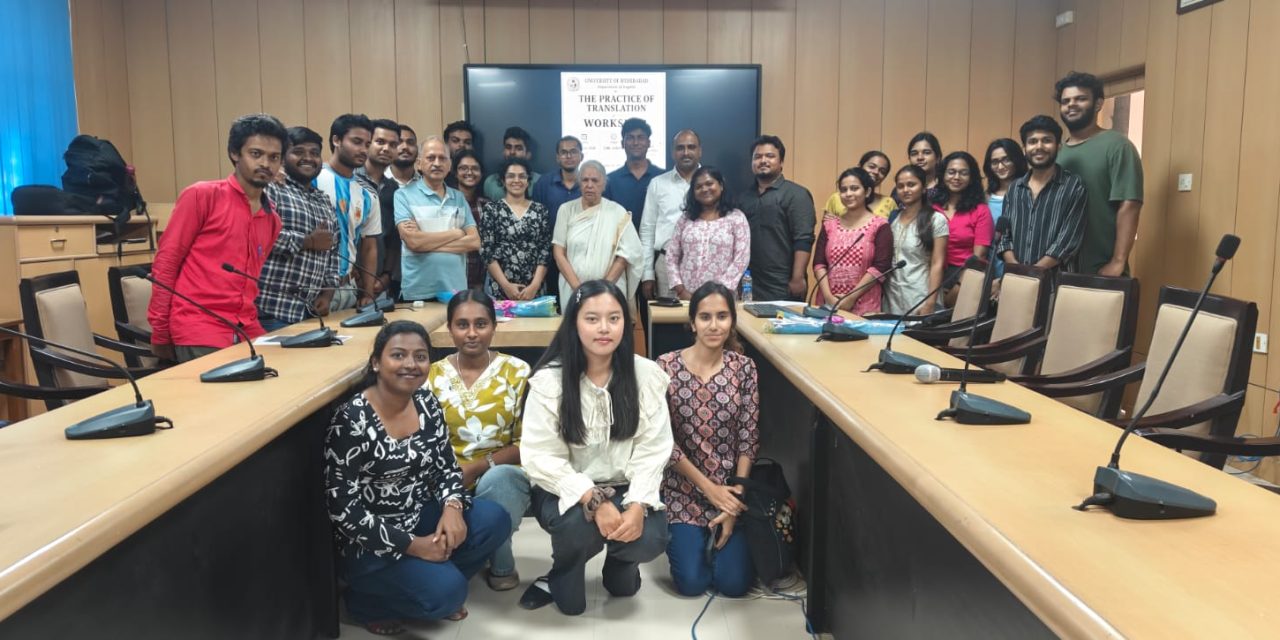
The Department of English, University of Hyderabad, organized a workshop titled “The Practice of Translation” as part of the elective course “Introduction to Translation Studies” on 21 August 2026. The event, held in the Conference Hall of the School of Humanities, was designed to provide students with hands-on experience in translation.
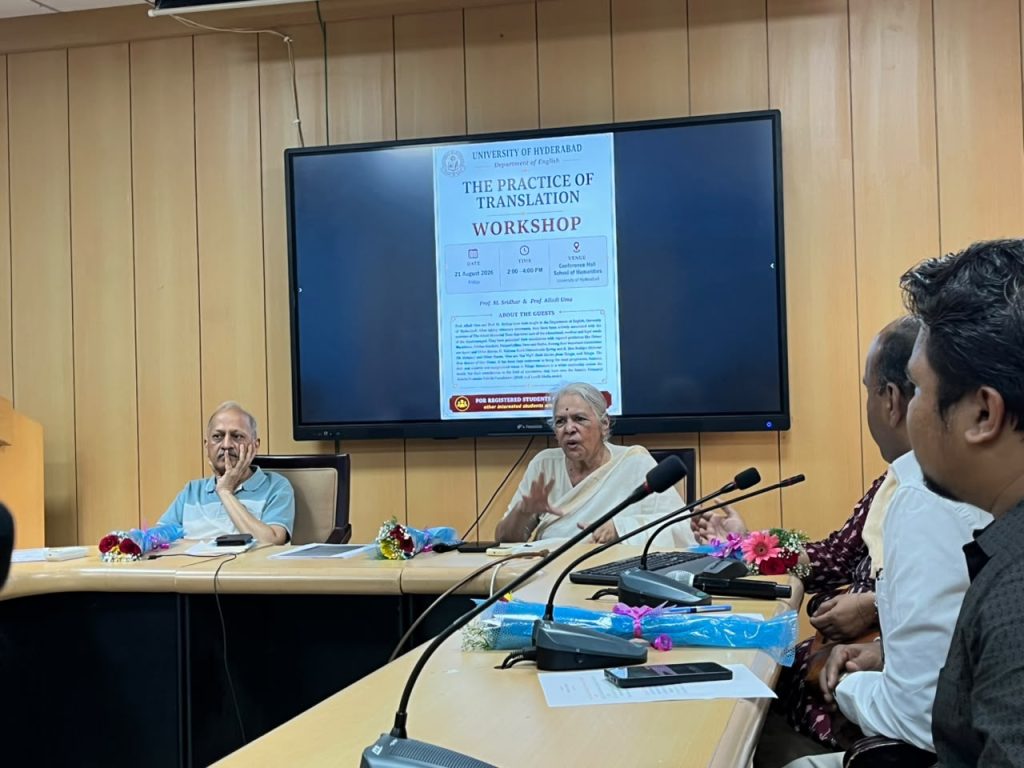
The programme began with a welcome address by Rinhlupuii Pachuau, a student of the department and Dr. Siddhrath Satapathy introduced the speakers. The workshop was conducted by eminent scholars Professor Alladi Uma (Retd) and Professor M. Sridhar (Retd). Both professors previously served the Department of English and contributed significantly to strengthening the Department in both academics and administration. Prof. Sunitha Mishra, Dean of the School of Humanities, was the guest of honour. She graced the occasion, recalling her association with the speakers during their tenure in the Department of English. Dr. B. Krishnaiah, Associate Professor of English and the convenor of the workshop, presided over the Inaugural session. Faculty members Dr. Girish D. Pawar and Dr. Sirisha were also present.
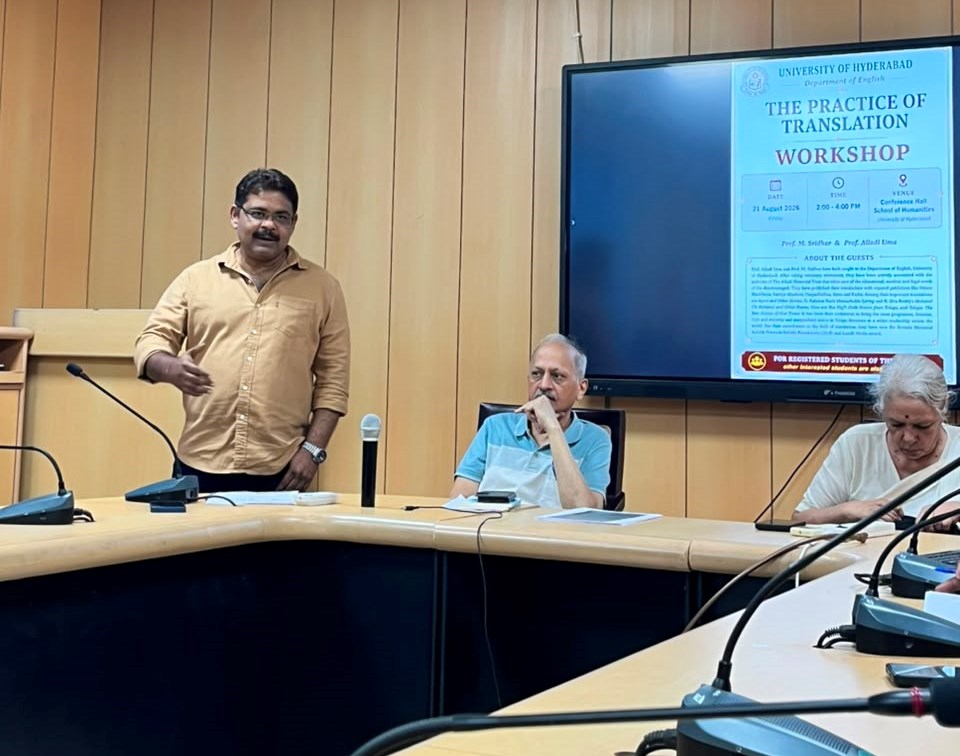
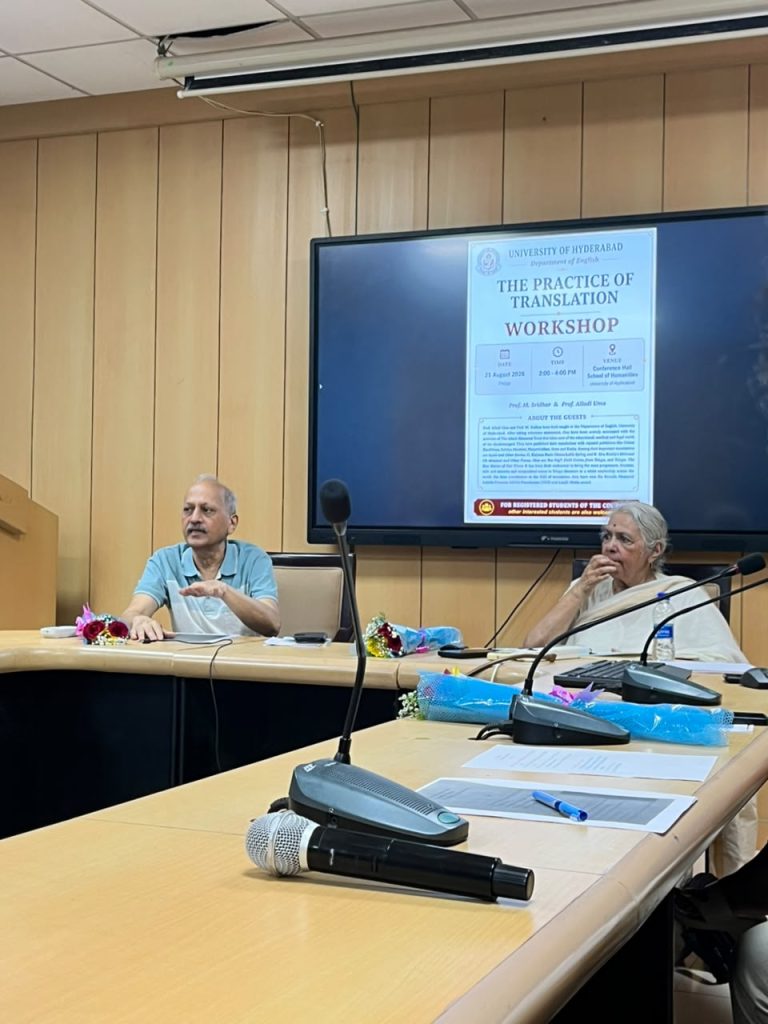
The speakers elaborated on the scope, methods, and significance of translation, emphasizing its role in bridging linguistic, cultural, and cognitive divides. Professor Uma highlighted translation as a process of knowledge formation and creative recreation, while Professor Sridhar underscored its integral role in world literature, stressing that accuracy and precision are essential to literary translation. Both scholars engaged students in an interactive discussion, addressing the challenges translators face and the dynamic relationship between readers and texts.
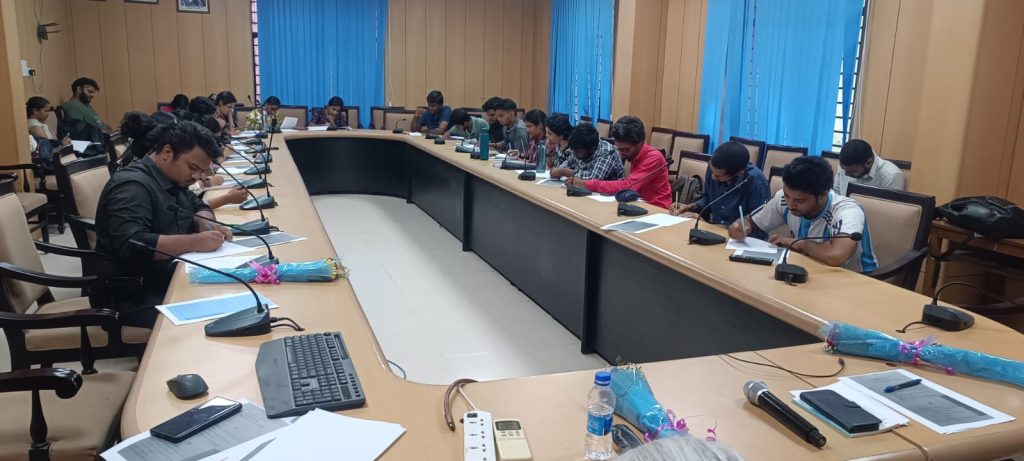
A practical exercise formed the core of the workshop, with students translating three poems from “Fasting Hymns” by Afsar into their respective mother tongues. The exercise revealed diverse interpretations shaped by the students’ cultural and linguistic backgrounds. Dr. Krishnaiah noted that effective translation requires not only linguistic skills but also familiarity with the cultural histories and sociological contexts of both the source and target languages.
The workshop concluded on a celebratory note, leaving students and faculty enriched by the insights and experiences shared. The event reinforced the importance of translation studies as a discipline that fosters intellectual growth, cultural exchange, and literary innovation.