
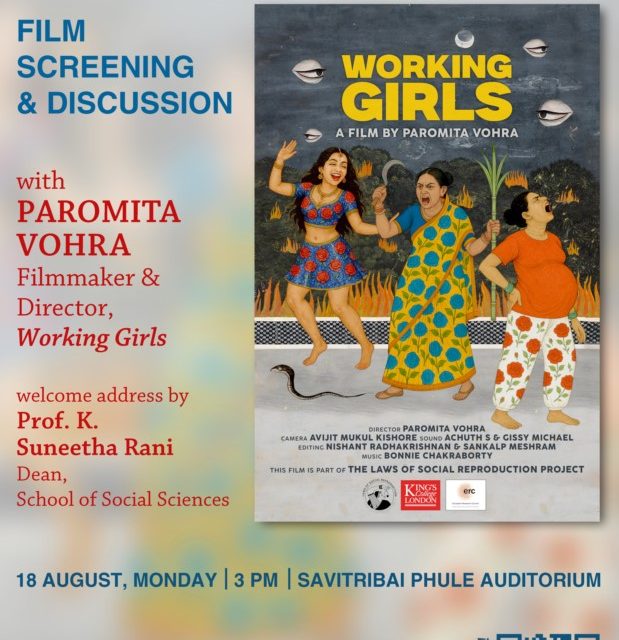
The School of Social Sciences hosted the screening of Paromita Vohra’s latest film Working Girls on 18 August 2025, at the Savitribai Phule Auditorium. The film was made as part of The Laws of Social Reproduction Project, hosted at King’s College London and funded by the European Research Council and the EU’s Horizon 2020 research and innovation programme. The film carefully explores the intersections of caste, class and gender, and shares the lived experiences of working women from different parts of the country often underrepresented in mainstream media. Dr. Sneha Banerjee from the Department of Political Science introduced the film and the filmmaker to the audience.
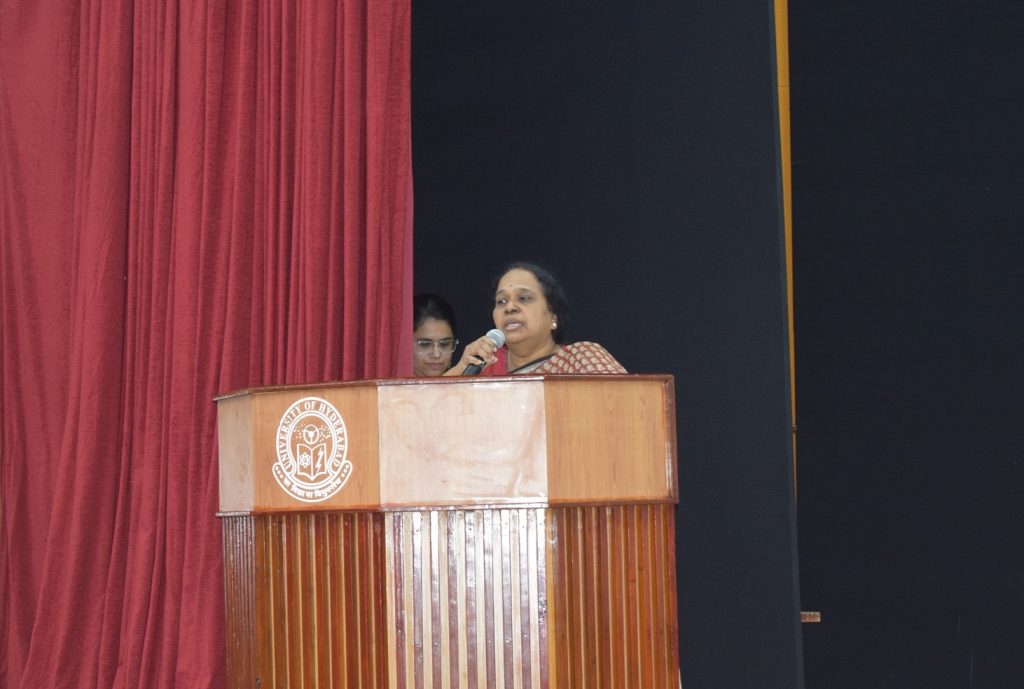
Prof. K. Suneetha Rani (Dean, School of Social Sciences), delivered a Welcome Address and highlighted the film’s significance in illuminating marginalized but essential forms of women’s labour. Ms. Gale Andrews from the Laws of Social Reproduction project also spoke, outlining the five domains of reproductive labour that underpin the film: sex work, erotic dancing, surrogacy and egg donation, paid domestic work, and unpaid domestic and care work.

Paromita Vohra is recognized for her inventive and intimate documentary style, blending fiction and nonfiction with humor, cultural commentary, and feminist critique. Her notable works include Unlimited Girls, Q2P, Cosmopolis: Two Tales of a City, and she has written the screenplay for Khamosh Pani. She also founded Agents of Ishq, a pioneering online multi-media platform recognized as a global sexuality project of excellence by UNESCO.
Her work has been broadcast worldwide, exhibited at major art spaces such as the Tate Modern, the Wellcome Collection, and the National Gallery of Modern Art, and is taught in universities across the globe.
Her film Working Girls traverses Madurai, Kolkata, Mumbai, Pune, Latur, Thiruvananthapuram, Hyderabad, Shillong and many other cities, meeting women engaged in erotic dance, sex work, egg donation, paid and unpaid domestic and care work. The film operates within an intersectional feminist framework, weaving multiple stories together. It highlighted the differences in experiences of women from different backgrounds, while also underscoring their interconnectedness and similarities.
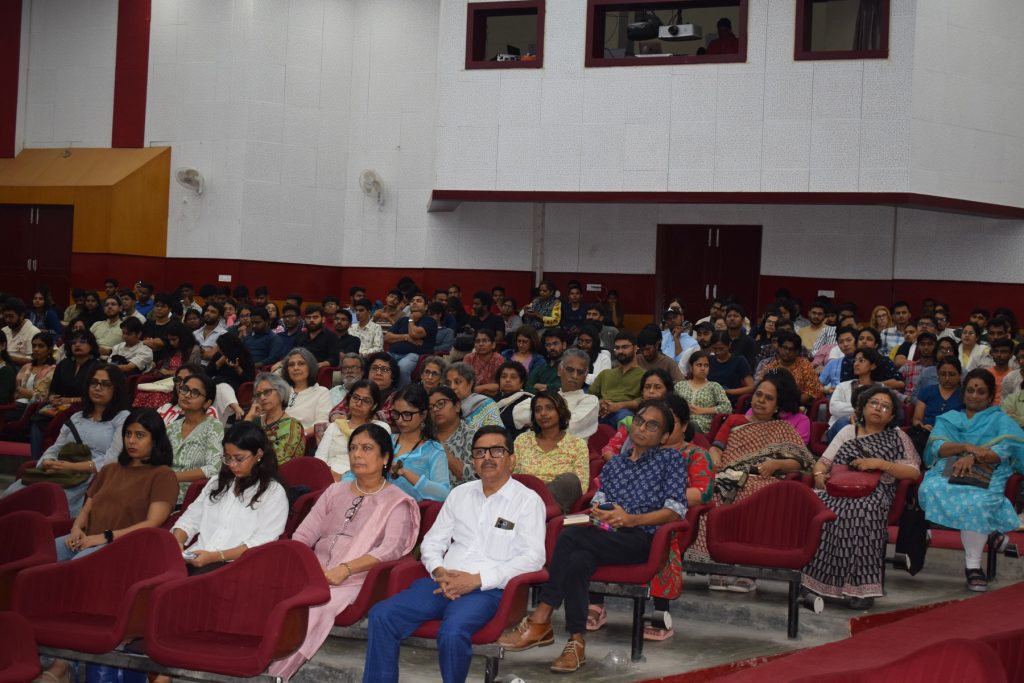
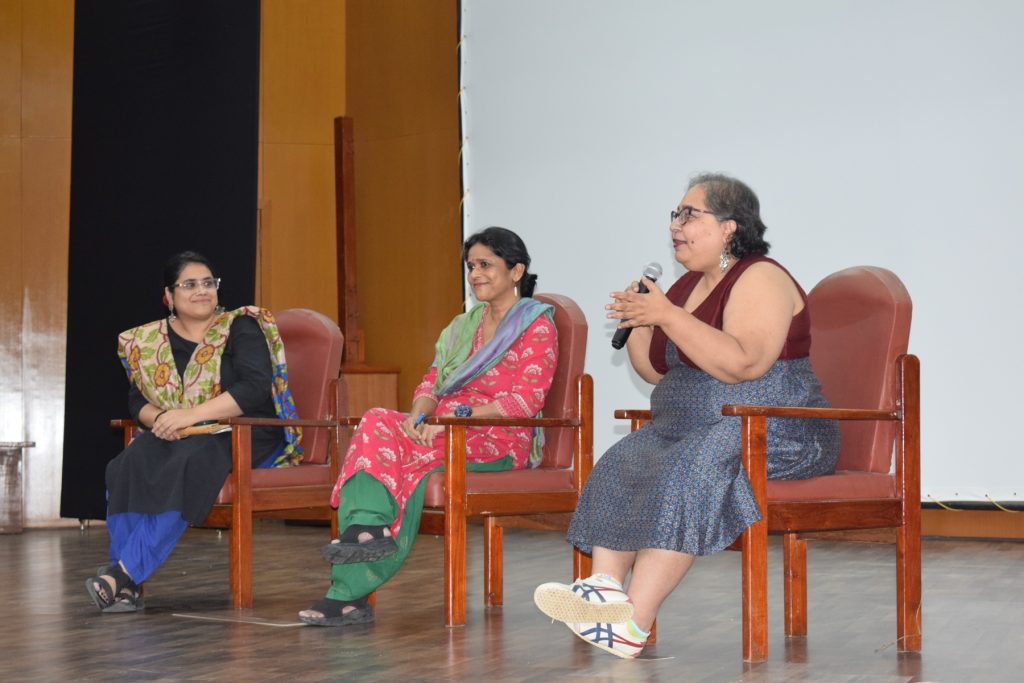
The film screening was followed by an engaged discussion. Prof. Deepa Sreenivas of the Centre for Women’s Studies (CWS) opened the discussion by appreciating Vohra’s commitment to the idea that “pleasure is politics,” a hallmark of her oeuvre. She highlighted how the film was permeated by a “carnivalesque” spirit, subverting official narratives through framing the women not as victims, but as resilient actors navigating inhospitable systems. While focusing centrally on women’s narratives, the film also included an incisive commentary on masculinities that prioritise allyship and challenge dominant views of crude hierarchies. Paromita Vohra responded by sharing how reflective, resonant stories cultivate solidarity and stretch our empathy. Dr. Sneha Banerjee reflected on incorporating Vohra’s films into her pedagogy, championing creative methods in feminist teaching. Both the discussants highlighted how the film beautifully balances political depth with stylistic brevity, humanising layers of reproductive and care labour.
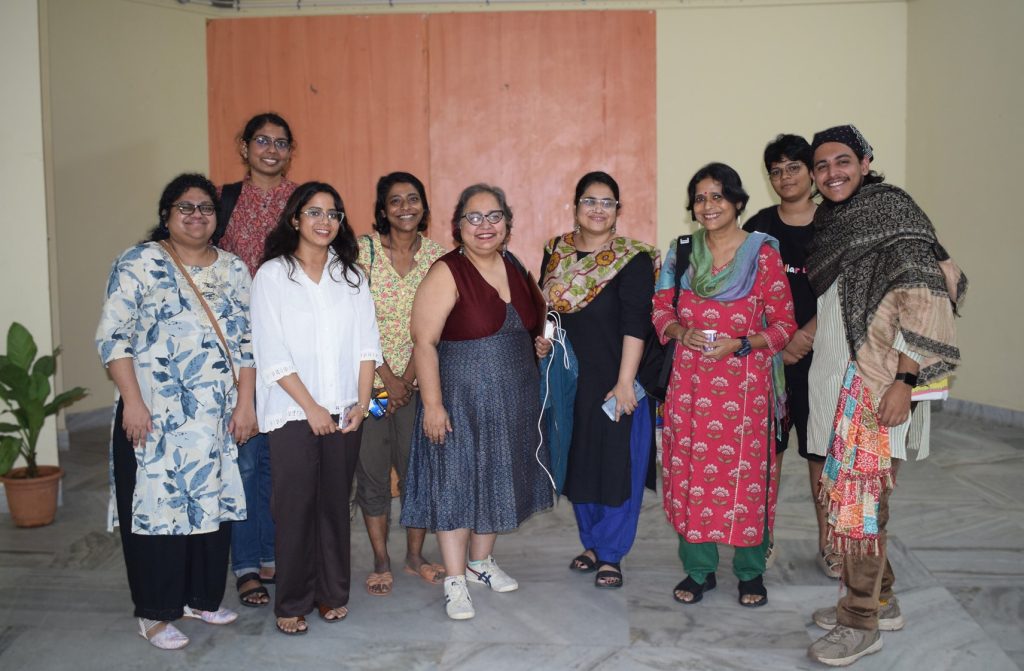
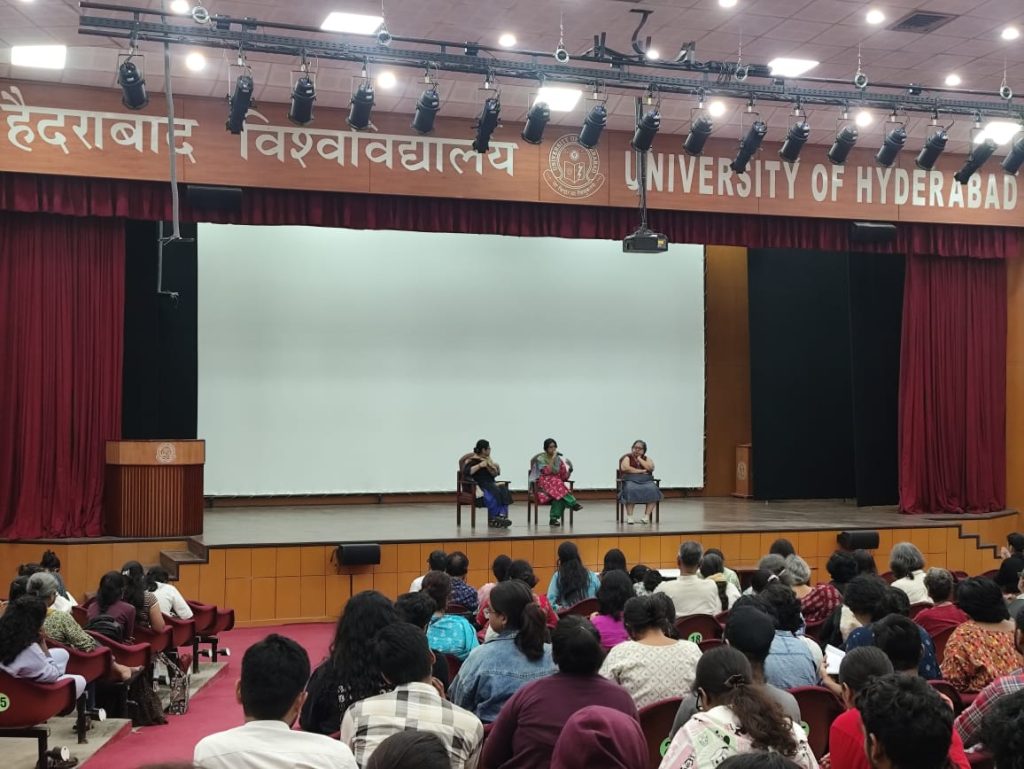
The floor was also open to an engaged audience of students, scholars, film enthusiasts, and faculty. Questions ranged across filmmaking methods, narrative ethics, legal structures, and grassroots resistance. The discussion touched upon how the documentary confronts taboos, reimagines labour, and unpacks socio-legal constraints through evocative stories. Vohra’s craft offers a model of documentary filmmaking that is politically rich, emotionally resonant, and pedagogically vibrant, connecting it deeply with academia.
Contributed by: Ankur Upreti, Research Scholar, Department of Political Science.