
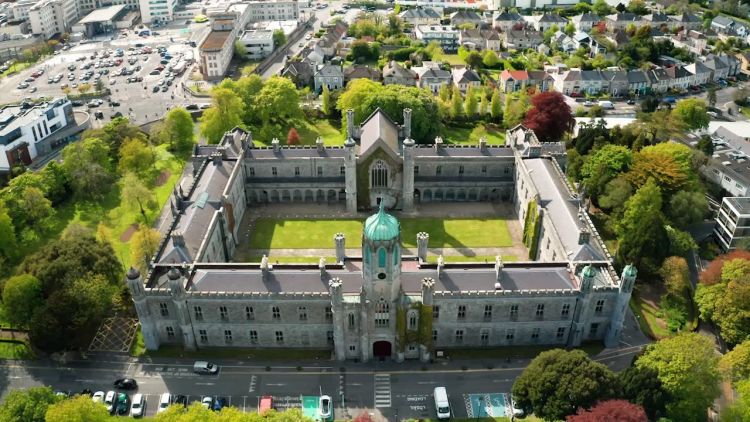
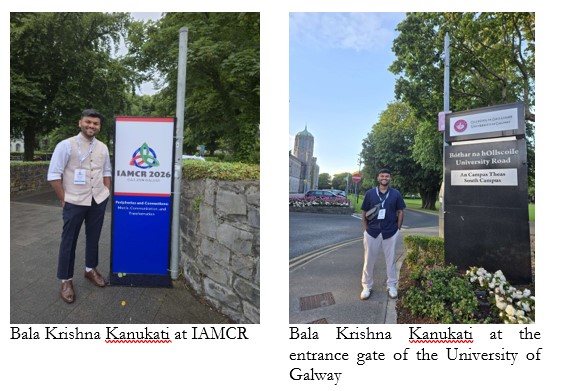
Research scholars Deepika Ratan, Bala Krishna Kanukati, Treesa Reena John and Jumana Parvin from the Department of Communication, University of Hyderabad, presented their research papers at the International Association for Media and Communication Research (IAMCR 2026) hosted by University of Galway in Ireland from 28 June to 2 July 2026. The theme of this year’s IAMCR conference was “Peripheries and Connections: Media, Communication, and Transformation”.
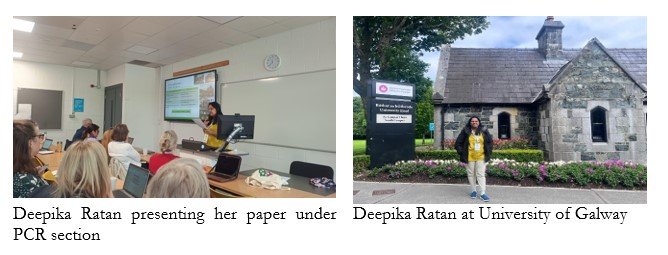
Deepika presented her paper, Community Building as Communicative Spatial Practice: An Ethnographic Study of Working-Class Migrant Life in Hyderabad, in the panel, Voicing Belonging: Participatory Communication, Community Leadership and Everyday Practices of Resistance, organised by the Participatory Communication Research (PCR) Section. Her paper examines how working-class Odia migrants in Hyderabad’s Katedan Industrial Area build community through communicative practices that actively produce and shape urban space, drawing on Henri Lefebvre’s spatial theory. She is a PhD scholar working with Prof. Vinod Pavarala and Dr. Madhavi Ravikumar.
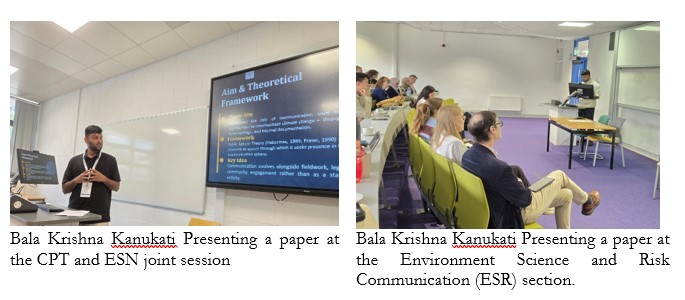
Bala presented his paper, Beyond Naming Climate Change: A Case Study of Climate Change Communication in VATA’s Tipeshwar Project, India, in the panel, Ethnographic Approaches to Global Communication and Media Studies, organised by the Environment Science and Risk Communication (ESR) Section. Drawing on the case study of VATA’s Tippeshwar forest adoption initiative, the paper explores climate change communication within grassroots organisations and communities.
He also presented a paper, From Grassroots to Public Sphere: Communicating Climate Change by Civil Society in India, in the panel, Contemporary Discourses on Policy, Artificial Intelligence, and ICTs, jointly organised by Emerging Scholars Network (ESN) Section and Communication Policy and Technology (CPT) Section. The paper examines how civil society organisations communicate climate change through diverse communication channels and practices, thereby contributing to the larger climate change discourse in India. Bala is a PhD scholar working with Prof. Kanchan K. Malik.
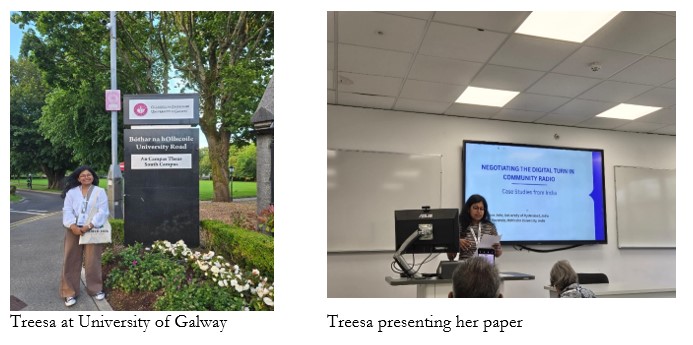
Treesa presented her paper, Negotiating the Digital Turn in Community Radio: Case Studies from India, on the panel Community Radio and Democratic Participation, organised by the Community Communication and Alternative Media (CAM) Section. The paper, co-authored with Prof. Vinod Pavarala, Mahindra University, explored how community radio stations in India negotiate the opportunities and challenges posed by digital transformation in the sector.
She also presented a paper, Transforming MENtalities: Community Radio as a Dialogic Space for Masculinities in India, in the panel, Unmaking silences, remaking publics: Participatory communication across community and digital spaces, organised by Participatory Communication Research (PCR) Section. The paper, co-authored, with Prof. Kanchan K. Malik, University of Hyderabad and Prof. Vinod Pavarala, Mahindra University, draws on communication for social change, masculinity studies, and feminist analyses of patriarchy to examine how community radio can serve as a dialogic space for men and boys to reflect on, deliberate, question and renegotiate masculinities in ways that support gender equality. Treesa is a PhD scholar working with Prof. Vinod Pavarala and Prof. Kanchan K. Malik.
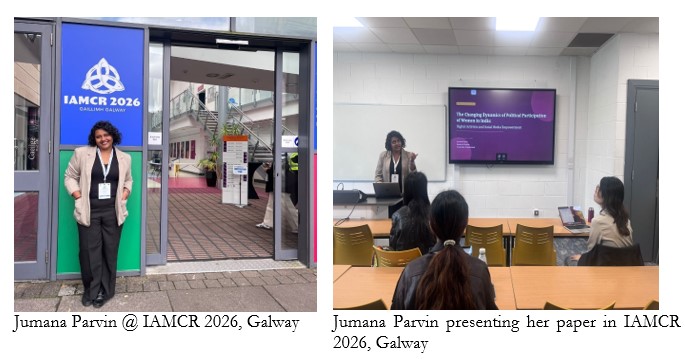
Jumana presented her paper, The Changing Dynamics of Political Participation of Women in India: Digital Activism and Social Media Empowerment, on the panel Intersectional Gendered Digitalities: Between Democracy and Intimacy, jointly organised by the Emerging Scholars Network (ESN) Section and the Gender and Communication (GEN) Section. Her presentation examined the digital feminist movements in India, which leveraged social media as a tool of political mobilisation, while critically analysing the structural limits of that transformation in terms of class, caste, and digital exclusion. Jumana is a PhD scholar working with Prof. Kanchan K Malik.
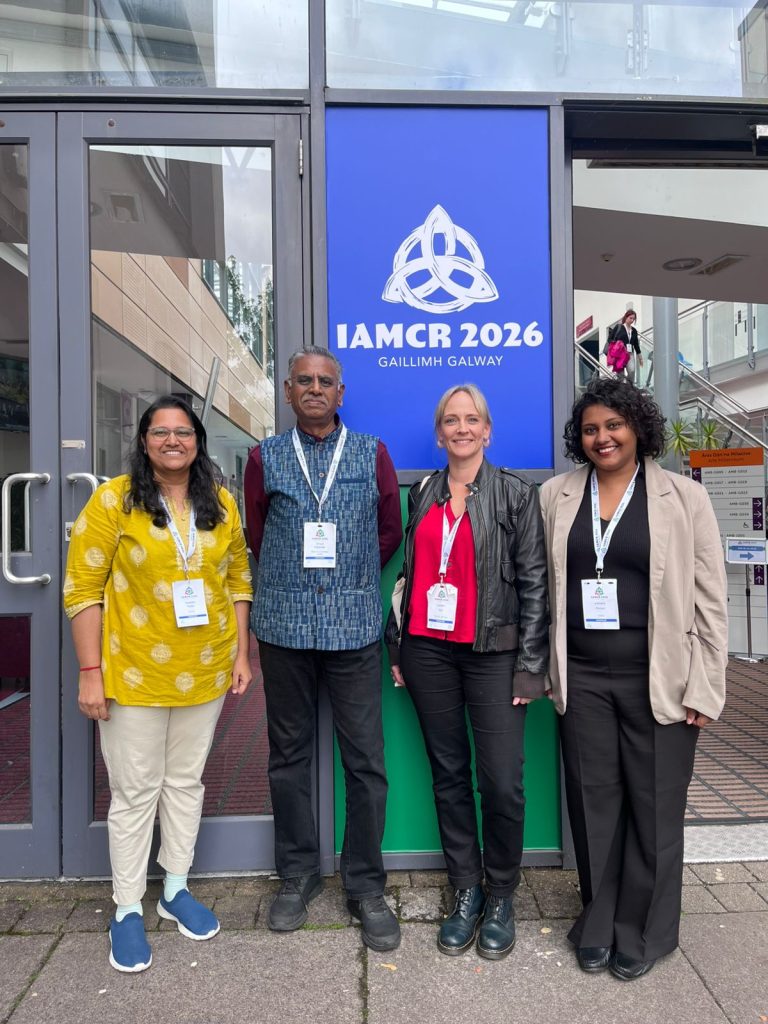
Deepika Ratan, Prof. Vinod Pavarala & Jumana Parvin at IAMCR
This year, the IAMCR conference was hosted by the University of Galway, Ireland. It brought together academicians, early researchers and media professionals from across the globe to deliberate on the theme through panel discussions, plenary sessions and informal interactions.