
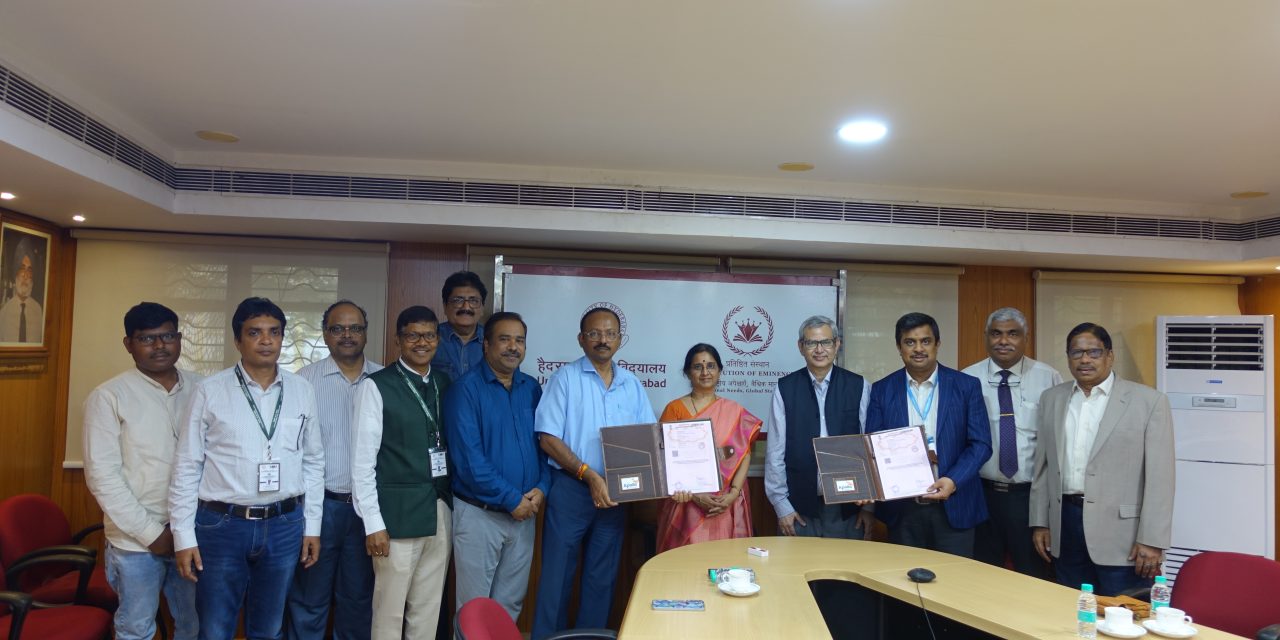
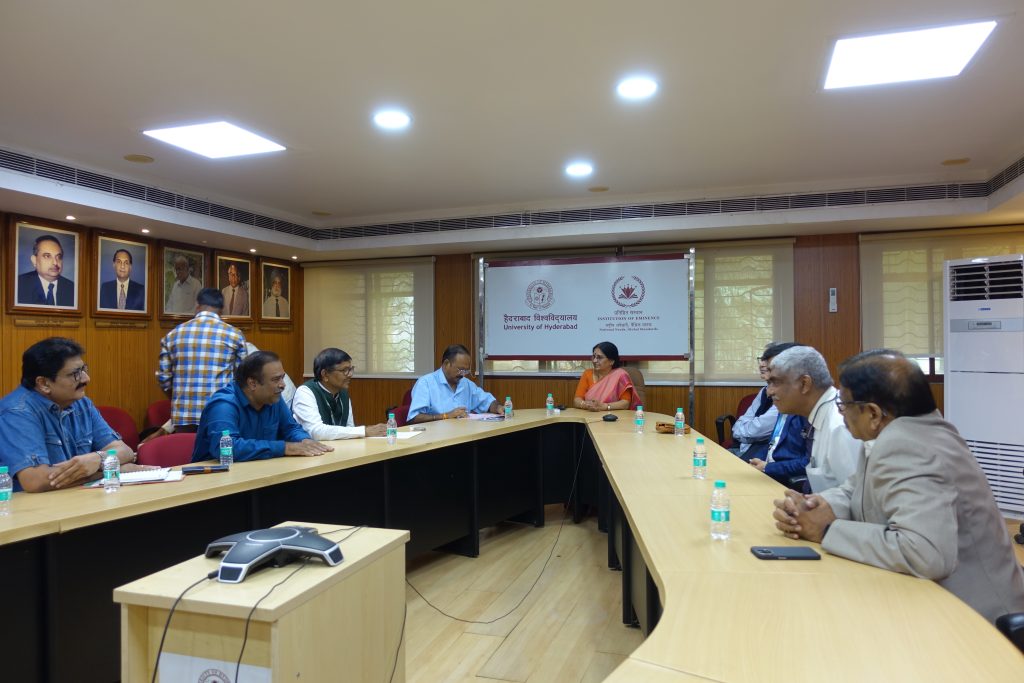
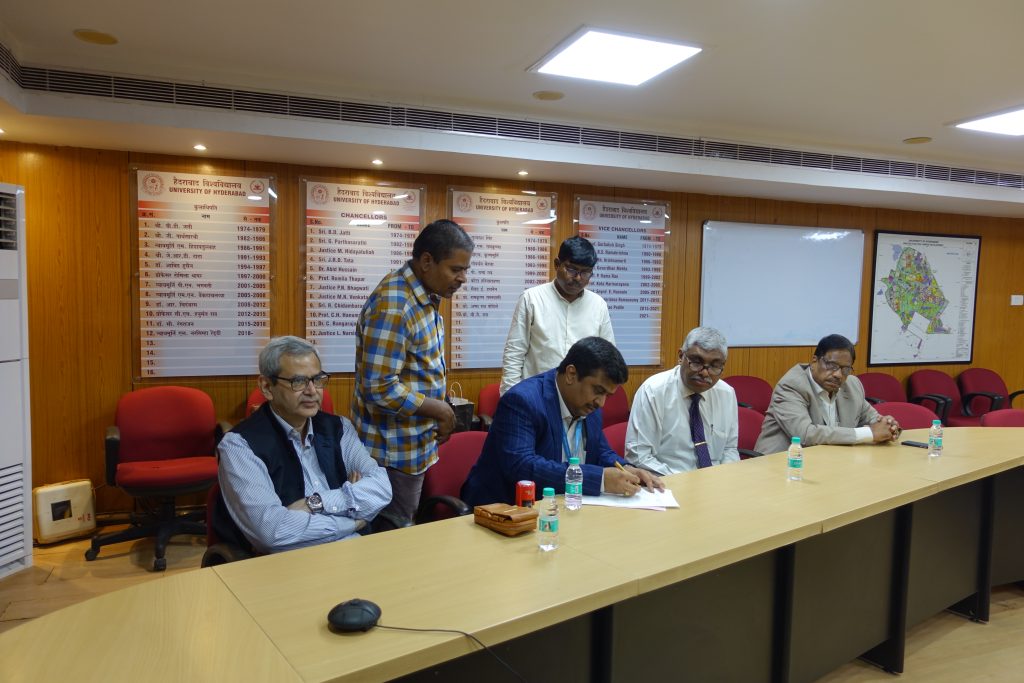
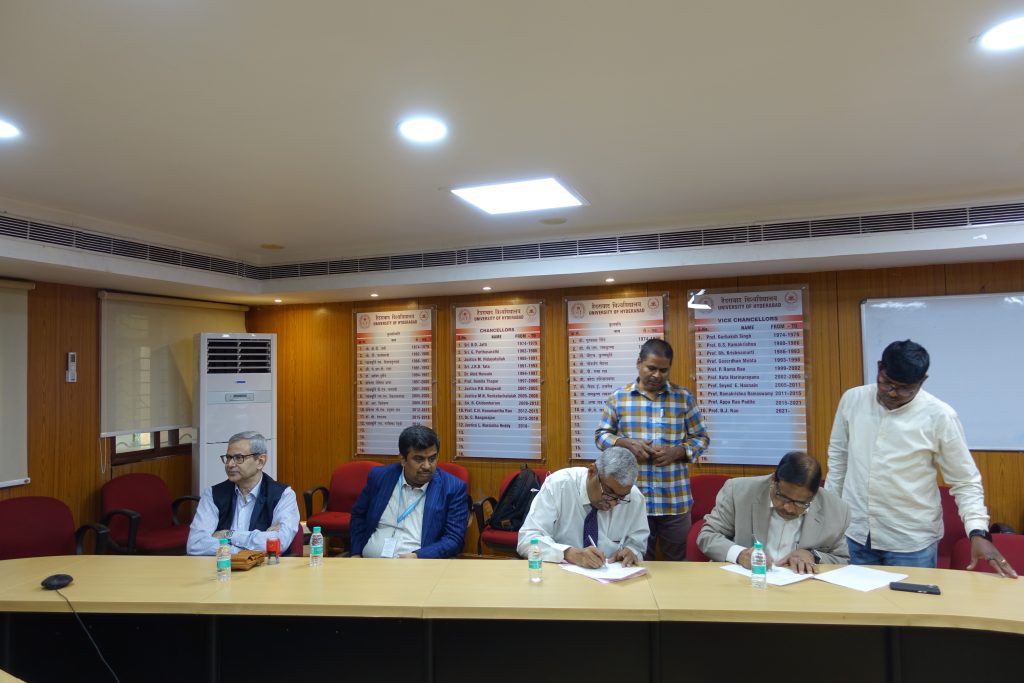
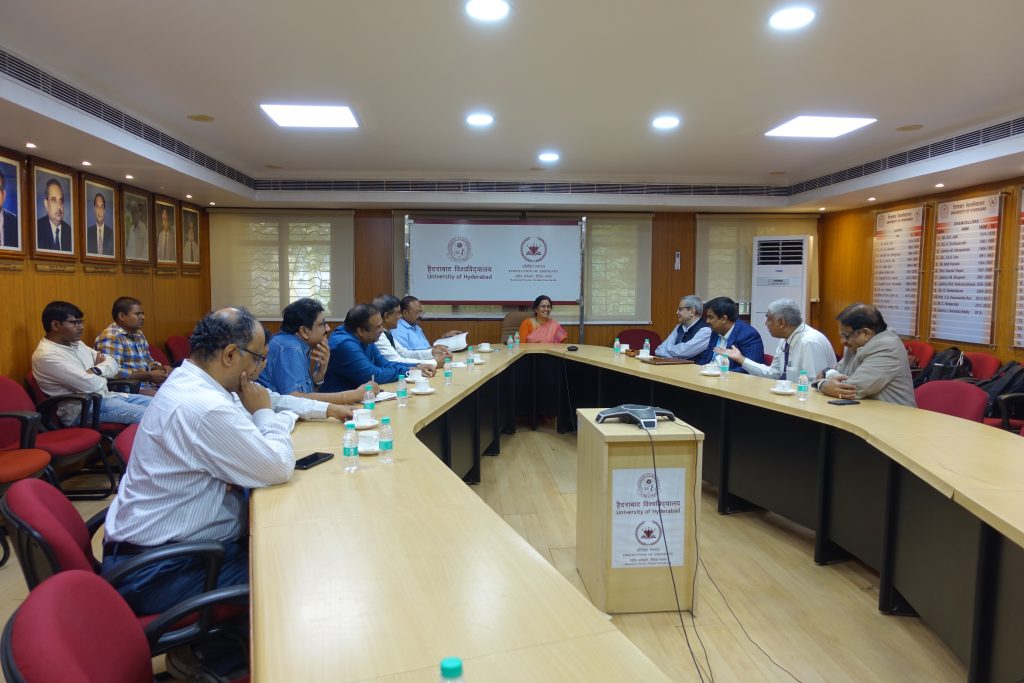
Strengthening its commitment to interdisciplinary research, innovation, and academic excellence, the University of Hyderabad (UoH) renewed its Memorandum of Understanding (MoU) with The Apollo University (TAU), Chittoor, on 6 August 2026 for a further period of three years, reaffirming the shared vision of both institutions to create a future-ready ecosystem in higher education, healthcare, management, and emerging technologies. The renewed agreement builds upon the successful partnership initiated through the original MoU signed on 24 August 2022, extending the collaboration until 2029 while significantly broadening its academic and research scope.
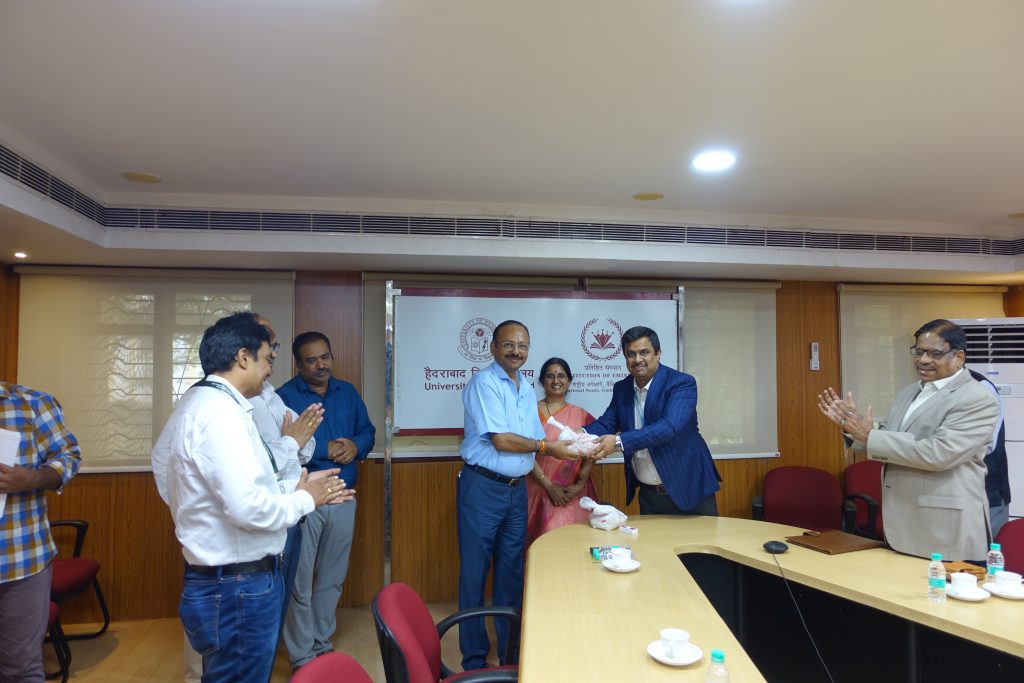
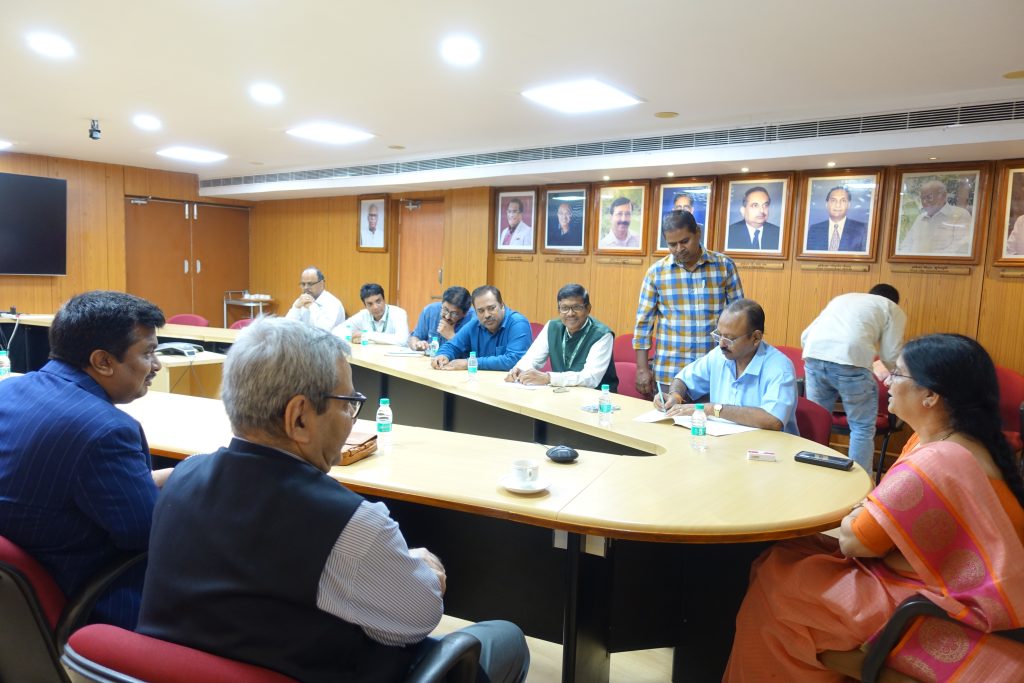
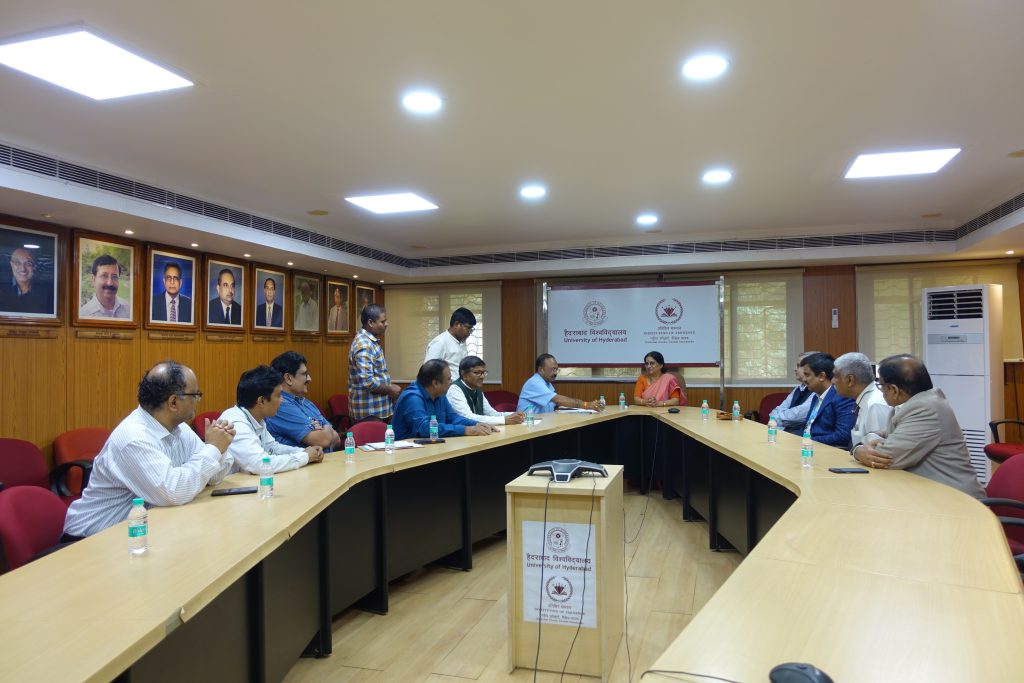
The renewal ceremony was held in the distinguished presence of Prof. J. Anuradha, Vice-Chancellor (In-charge), University of Hyderabad; Dr. Devesh Nigam, Registrar; Prof. Samrat Sabat, Director, Research & Development; Prof. G.V.R.K. Acharyulu, Dean, School of Management Studies; and Dr. Ranjit Kumar Dehury from the University of Hyderabad. Representing The Apollo University were Dr. Nitin Ngarkar, Vice-Chancellor; Dr. Alfred Augustine, Pro-Vice Chancellor; Mr. Anil Kumar S., Registrar; and Dr. K. Prabhakar, Head–Academic Affairs, Apollo Knowledge, who participated in the renewal ceremony, reflecting the strong institutional commitment of both universities towards a long-term strategic partnership.
The renewed MoU marks the evolution of a partnership that began in 2022 between the School of Life Sciences, University of Hyderabad, and The Apollo University, primarily focusing on collaborative teaching and research. During the initial phase (2022–2025), both institutions established a strong foundation through summer internships for undergraduate students, faculty interactions, knowledge-sharing initiatives, participation in cancer awareness programmes, and exposure of students to emerging technologies including Artificial Intelligence and Data Science in healthcare. More than twenty undergraduate students from Biomedical Sciences and Genetics underwent advanced research training at the School of Life Sciences, University of Hyderabad, while faculty members from both institutions actively engaged in academic exchanges, laying the groundwork for a deeper and more impactful collaboration. The previous phase successfully demonstrated the complementary strengths of both institutions and created a strong platform for expanding the partnership beyond Life Sciences into multidisciplinary domains.
Recognizing the success of the earlier collaboration and the rapidly evolving landscape of healthcare, digital transformation, and artificial intelligence, the renewed MoU significantly expands its scope to include three major academic units of the University of Hyderabad—the School of Life Sciences, School of Medical Sciences, and School of Management Studies – thereby creating a comprehensive interdisciplinary collaboration spanning biological sciences, medical sciences, healthcare management, digital health, behavioural sciences, public health, and technology.
Under the School of Life Sciences, both institutions will collaborate on advanced research in Biotechnology, Bioinformatics, Animal Sciences, Health Technologies, and translational biomedical research. The partnership envisages structured student internships, postgraduate dissertation support, curriculum development, joint certification programmes, collaborative publications, faculty exchange, conferences, workshops, and capacity-building initiatives designed to strengthen research competencies and employability among students while fostering innovation in biological and health sciences.
The collaboration under the School of Medical Sciences encompasses Public Health, Tribal Health, Psychology, and Optometry, aiming to strengthen academic programmes through joint teaching, collaborative research, faculty and student exchanges, dissertation mentoring, and interdisciplinary healthcare innovations. Special emphasis has been placed on emerging domains such as Public Health Analytics, Behavioural Sciences, Mental Health, Cognitive Sciences, Vision Science, Tele-optometry, Artificial Intelligence in Eye Care, Digital Eye Health, and Community Health Systems, creating new opportunities for evidence-based research and technology-enabled healthcare solutions. The institutions also plan to organize annual public health conferences, specialized training programmes, workshops, and certificate courses in emerging areas to enhance national visibility and societal impact.
The School of Management Studies, University of Hyderabad, and the School of Management, The Apollo University, will jointly pursue interdisciplinary initiatives in Hospital and Healthcare Management, Digital Health, Artificial Intelligence in Healthcare, Healthcare Analytics, Operations and Supply Chain Management, Sustainability, Public Health, and Business Management. The collaboration will facilitate national and international research projects, consultancy assignments for healthcare organizations, executive education programmes, faculty development programmes, management development programmes, curriculum innovation, student internships, case development, healthcare analytics, digital health transformation, and knowledge-sharing activities. The partnership is expected to create a strong academic-industry interface while addressing contemporary healthcare challenges through research-driven management solutions. Prof. G.V.R.K. Acharyulu will serve as the institutional coordinator for the University of Hyderabad, with Dr. Ranjit Kumar Dehury coordinating activities under the School of Management Studies.
A defining feature of the renewed collaboration is its strong emphasis on Artificial Intelligence, Machine Learning, Digital Technologies, Data Analytics, Digital Health, Health Informatics, and intelligent healthcare systems. Both institutions envision collaborative research on AI-enabled diagnostics, predictive healthcare analytics, intelligent clinical decision-support systems, healthcare operations optimization, digital supply chains, smart hospital management, telemedicine, biomedical data science, and technology-driven healthcare innovations. By integrating expertise from management, medical sciences, life sciences, computer sciences, and engineering, the partnership seeks to create interdisciplinary solutions aligned with India’s Digital Health Mission and global advances in precision healthcare. This strategic focus positions the collaboration as a model for translating cutting-edge technologies into real-world healthcare applications while preparing graduates for emerging careers in AI-driven healthcare and digital transformation.
Beyond academic collaboration, the renewed MoU aims to foster a vibrant ecosystem of joint research grants, high-impact publications, international collaborations, faculty mobility, student exchanges, innovation challenges, incubation support, executive education, industry engagement, and translational research. The partnership also envisages developing joint certification programmes, value-added courses, interdisciplinary centres of excellence, and collaborative projects with hospitals, healthcare organizations, government agencies, and industry partners. Through these initiatives, both institutions aspire to enhance research productivity, strengthen innovation capacity, improve graduate employability, and contribute meaningfully to national priorities including Digital India, Skill India, National Education Policy (NEP) 2020, and Viksit Bharat 2047.
The renewal of this strategic partnership reflects the shared vision of the University of Hyderabad and The Apollo University to build an internationally competitive academic and research ecosystem where science, medicine, management, artificial intelligence, and digital technologies converge to address complex societal and healthcare challenges. By combining the academic excellence and research strengths of the University of Hyderabad with the healthcare expertise and clinical ecosystem of The Apollo University, the renewed MoU is expected to create significant opportunities for collaborative innovation, transformative education, impactful research, and sustainable societal development over the next three years and beyond.