
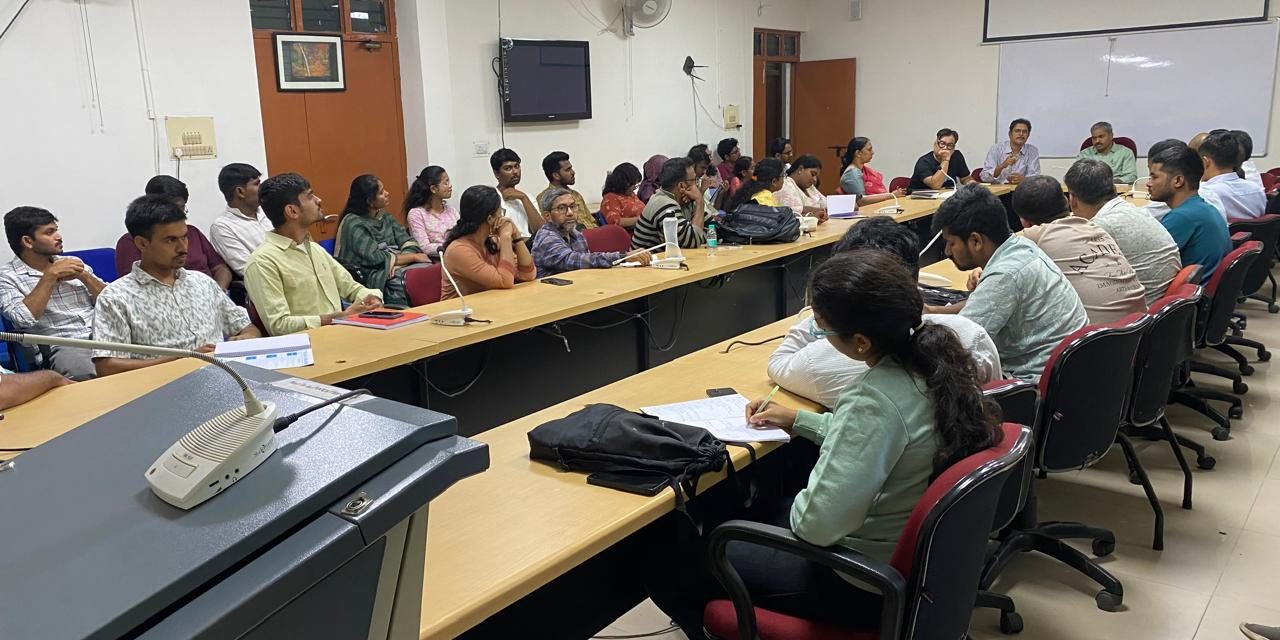
The Department of Anthropology, School of Social Sciences, University of Hyderabad, commemorated the International Day of the World’s Indigenous Peoples (August 9) with a day-long event on August 10, 2026 at the Seminar Hall of the Department.
Prof. Apparao Thamminaina, Head of the Department, moderated the morning session, which included reflections on health, well-being, and Indigenous knowledge.
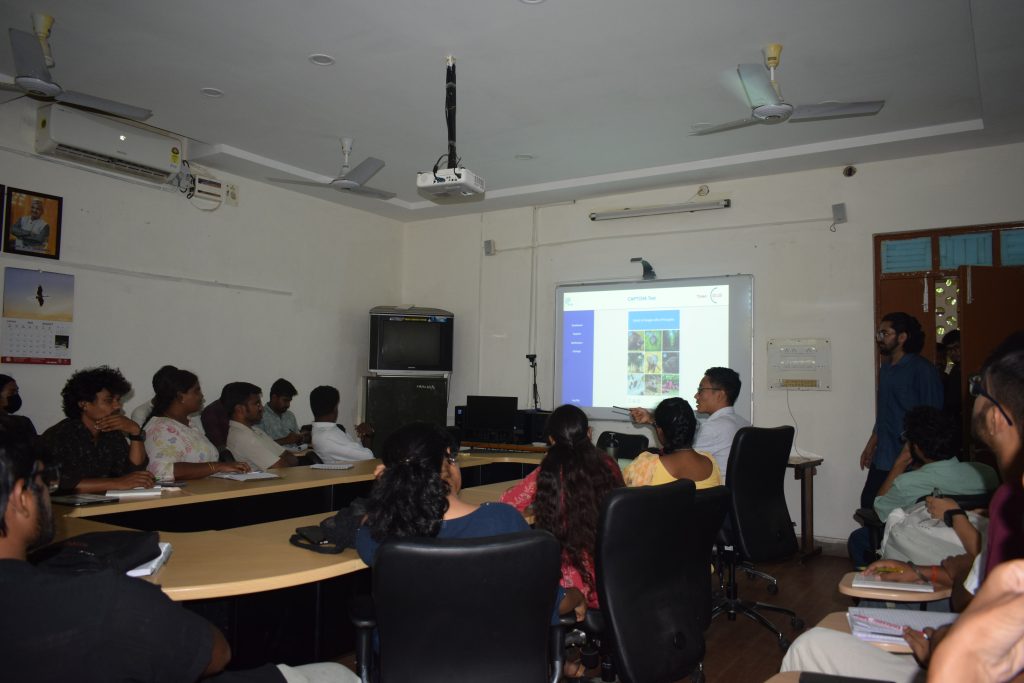
Dr. Nanda Kishore Kannuri, Associate Professor, opened the reflections with perspectives into health and well-being, connecting midwifery to public health policy. He linked traditional caregiving with the ASHA (Accredited Social Health Activist) programme, and stressed the responsibility of anthropologist. He urged the academic community to seriously consider its duty to Indigenous communities, going beyond documentation and work towards culture specific interventions as collaborators.
In a philosophical reflection, Dr. Alok Kumar Pandey, Assistant Professor, asked about the way knowledge is generally viewed through a rigid hierarchy. He made a clear difference between lived experience (which moves in full circle) and collected experience (defined often in linearity). He urged the audience to rethink indigenous knowledge, learning as a lived process rather than an act of extraction, questioning how meaningful engagement can address global challenges. He argued that learning is lived within the relationship between people and their environment.
Broadening the discussion to community rights and development, Dr. George Tharakan C., Associate Professor, emphasised the interconnected concerns of community, rights, and development among Indigenous populations. He stressed the need to empower Indigenous communities and strengthen their rights over land, forests, and other resources. He also highlighted the importance of documenting rapidly changing Indigenous knowledge systems.
Bringing attention to cultural preservation, Mr. Shaik Abdul Munaf, Assistant Professor, reflected on anthropology’s contribution to the documentation and preservation of Indigenous material culture and languages. He drew attention to the vulnerability of Indigenous languages and emphasised the need to preserve them as an important part of cultural heritage.
The afternoon session featured a screening of the acclaimed documentary “Humans in the Loop” (2025), directed by Aranya Sahay.
The film follows Nehma, an Oraon Adivasi woman who returns to her village in Jharkhand after a divorce and takes up work at a local AI data-labelling centre. Through her journey, the documentary raises profound questions about invisible labour, AI bias, the erasure of Indigenous knowledge systems, and the clash between Indigenous wisdom and the demands of global technology. The motif of a porcupine runs through the film, symbolising resilience, caution, and the need for mindfulness in our engagement with the world.
The screening was followed by a discussion facilitated by Dr. Rongsenzulu Jamir, Guest Faculty. Participants reflected on the film’s central argument that AI is not a neutral technology but carries the biases and worldviews of its creators. The conversation explored how the documentary serves as a powerful ethnographic text, offering anthropologists a lens to study globalised digital labour and the ethical responsibilities of representation and intervention.
The daylong event reaffirmed the Department’s commitment to engaging with Indigenous knowledge systems and the ethical responsibilities of anthropological practice